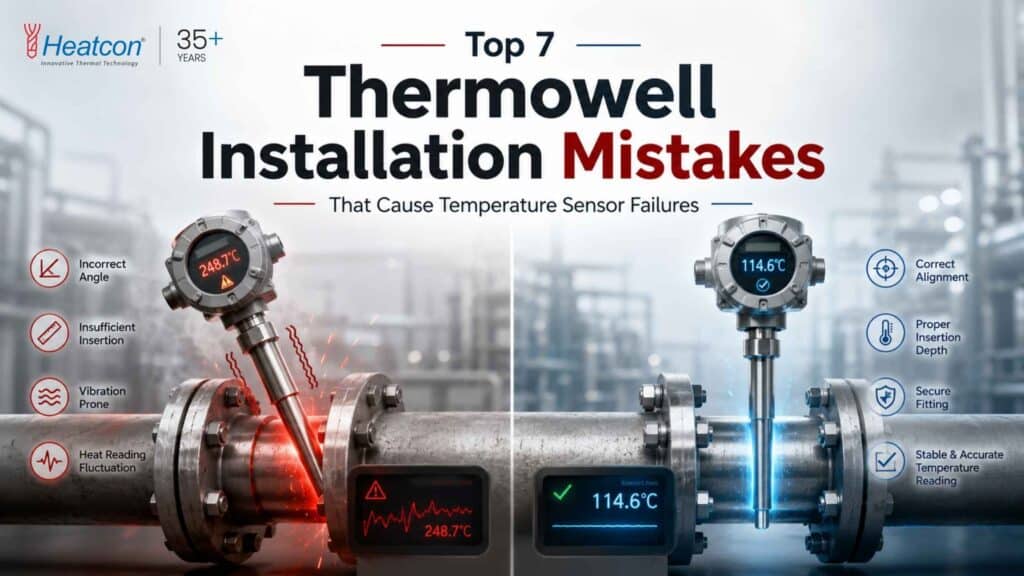
Top 7 Thermowell Installation Mistakes That Cause Temperature Sensor Failures

What Are The Most Common Thermowell Installation Mistakes?

Thermowell installation mistakes are a leading cause of temperature sensor failures in industrial environments. According to industry studies, up to 45% of premature temperature sensor breakdowns can be traced back to errors in thermowell selection or installation. This not only results in unplanned downtime but also increases maintenance costs and the risk of process inefficiencies.

For process engineers, plant managers, and maintenance professionals, understanding these pitfalls is crucial. In this comprehensive guide, we will explore the top seven thermowell installation mistakes, delve into technical nuances like thermowell immersion length, ASME thermowell standards, and flow-induced vibration, and share how Heatcon Sensors—India’s premier manufacturer and exporter of customized RTDs and temperature sensors—can help you prevent such costly errors, wherever your plant is located: India, US, UAE, Indonesia, Germany, South Korea, Saudi Arabia, Russia, Bahrain, Kuwait, or beyond.

Why Is Correct Thermowell Installation Critical For Temperature Sensors?

A thermowell acts as a protective barrier between the temperature sensor and the process media. It shields the sensor from harsh chemicals, high-pressure environments, and abrasive flows. However, even the highest quality RTDs (Resistance Temperature Detectors) or thermocouples can fail prematurely if thermowell installation mistakes are made.

  • Incorrect installation can lead to inaccurate readings, sensor drift, and frequent replacements.
  • Improper thermowell selection or mounting increases the risk of mechanical failure and process hazards.
  • Following industry standards and leveraging expert guidance, like that offered by Heatcon Sensors, ensures reliable temperature measurement and process safety.

How Do Thermowell Installation Mistakes Lead To Sensor Failures?

Let’s break down the seven most common thermowell installation mistakes, their consequences, and proven ways to avoid them:

  1. Improper thermowell immersion length selection

    Quick answer: Not selecting the correct thermowell immersion length leads to heat conduction errors, lagging response times, and inaccurate readings.

    The thermowell immersion length—the distance the thermowell extends into the process media—determines how effectively the sensor measures the true process temperature. If the immersion length is too short, the sensor may pick up heat from the pipe wall rather than the process fluid, resulting in false readings. If it is too long, the thermowell is vulnerable to flow-induced vibration and mechanical fatigue.

    • Follow the general rule: immerse at least 10 times the thermowell’s outer diameter, or as specified by ASME thermowell standards.
    • Consult with Heatcon Sensors for custom-designed thermowells optimized for your process and geometry.
  2. Neglecting ASME thermowell standards compliance

    Quick answer: Ignoring ASME thermowell standards can result in unsafe installations, regulatory non-compliance, and catastrophic sensor failures.

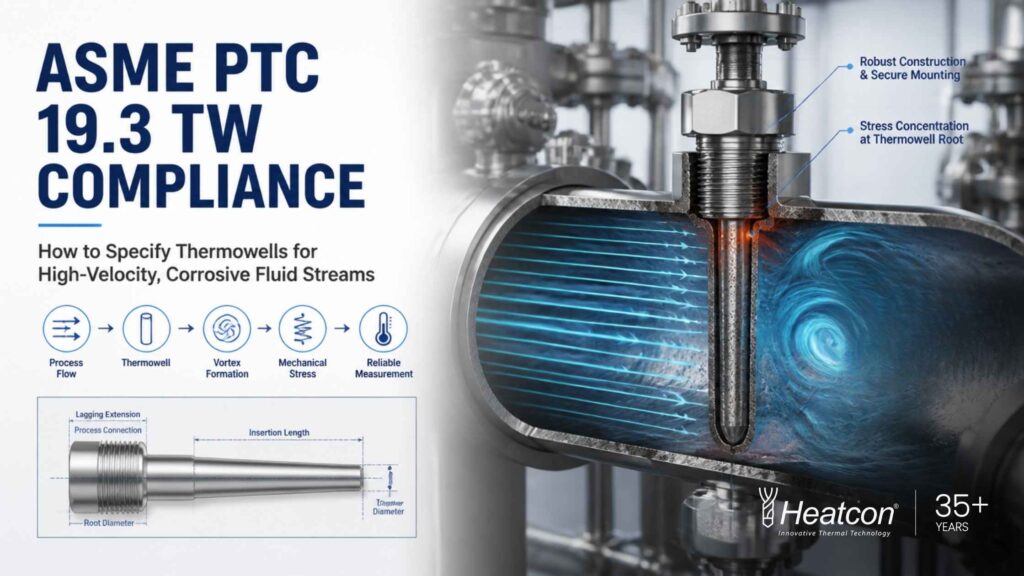
    The ASME thermowell standards (PTC 19.3 TW-2016) provide comprehensive guidelines on thermowell design, material selection, vibration calculations, and installation procedures. Failing to adhere to these standards increases the risk of thermowell breakage, which can jeopardize plant safety and process continuity.

    • Always specify ASME-compliant thermowells, especially for high-pressure or high-velocity applications.
    • Heatcon Sensors manufactures thermowells and temperature sensors that meet or exceed ASME and international standards.
  3. Ignoring flow-induced vibration analysis

    Quick answer: Overlooking flow-induced vibration during installation can cause thermowell fatigue, cracking, and catastrophic sensor failure.

    Flow-induced vibration occurs when process fluids create cyclical forces on the thermowell, causing it to vibrate at its natural frequency. Persistent vibration leads to metal fatigue and eventual failure. According to ASME studies, flow-induced vibration is responsible for 80% of thermowell failures in high-velocity lines.

    • Request a vibration analysis for every critical installation—Heatcon Sensors provides expert guidance and custom solutions to minimize vibration risks.
    • Consider using shortened thermowells or velocity collars where high velocities are unavoidable.
  4. Poor sealing and incorrect mounting orientation

    Quick answer: Inadequate sealing and improper mounting orientation can lead to process leaks, ingress of contaminants, and sensor damage.

    Thermowell threads must be properly sealed using compatible gaskets and compounds, and mounting orientation should follow best practices (usually perpendicular to flow for optimal temperature sensing).

    • Always use factory-recommended mounting hardware and sealing materials.
    • Heatcon Sensors offers installation guides and technical support to ensure leak-free and correct orientation every time.
  5. Incorrect material selection for thermowell and sensor

    Quick answer: Choosing unsuitable materials for your process environment accelerates corrosion, abrasion, and sensor failure.

    Each process fluid poses unique challenges—acidic, alkaline, high-pressure, or abrasive. Material mismatch can quickly degrade both the thermowell and the temperature sensor.

    • Specify materials compatible with your process media; consider stainless steel, Inconel, Hastelloy, or custom alloys as needed.
    • Heatcon Sensors can custom-manufacture thermowells and sensors for any application, anywhere in the world.
  6. Inadequate process data during engineering and procurement

    Quick answer: Failing to provide accurate process data leads to suboptimal thermowell design and premature sensor failure.

    Critical process parameters—temperature, pressure, velocity, media type—are essential for correct thermowell and sensor design. Incomplete or inaccurate data during procurement frequently results in equipment not fit for purpose.

    • Partner with a knowledgeable supplier like Heatcon Sensors, who will guide you through the data collection process and offer tailored recommendations.
  7. Overlooking periodic inspection and maintenance

    Quick answer: Skipping routine inspection and maintenance increases the risk of undetected wear, corrosion, and unexpected sensor failures.

    Even perfectly installed thermowells and sensors are subject to wear and corrosion over time. Regular inspection is crucial to catch early signs of damage and schedule replacements before failure occurs.

    • Establish an inspection schedule based on process conditions and sensor criticality.
    • Heatcon Sensors provides ongoing support and advice for long-term reliability and performance.

How To Prevent Thermowell Installation Mistakes In Your Facility

Preventing thermowell installation mistakes starts with collaboration between your engineering team and an experienced sensor manufacturer. Here’s a step-by-step approach:

  1. Collect accurate process data (temperature, pressure, velocity, fluid type).
  2. Specify application-specific requirements (corrosion resistance, response time).
  3. Choose thermowell and sensor materials suited to your process.
  4. Adhere strictly to ASME thermowell standards and conduct vibration analysis.
  5. Work with a trusted manufacturer like Heatcon Sensors for design and supply.
  6. Implement a robust inspection and maintenance program.

By following these steps and leveraging the technical expertise of Heatcon Sensors, you can achieve accurate, reliable, and long-lasting temperature measurement—no matter where your facility is located.

Why Choose Heatcon Sensors For Custom RTDs, Thermowells, And Temperature Sensors?

Heatcon Sensors is a leading manufacturer of customized RTDs, thermocouples, and temperature sensors, with decades of experience catering to diverse industries across India and internationally. Whether your operations are in Mumbai, Delhi, Chennai, Bengaluru, or global hubs like Houston, Jebel Ali, Jakarta, Berlin, Seoul, Riyadh, Moscow, Manama, or Kuwait City, Heatcon Sensors delivers precision-engineered solutions tailored to your requirements.

  • Customized solutions: Heatcon Sensors designs and manufactures RTDs, thermowells, and temperature sensors to your exact specifications, ensuring perfect fit and reliable performance.
  • Global reach: Fast, reliable supply to any part of India or the world—US, UAE, Indonesia, Germany, South Korea, Saudi Arabia, Russia, Bahrain, Kuwait, and beyond.
  • Comprehensive product range: In addition to sensors, Heatcon Sensors manufactures heat generating equipment such as industrial furnaces, ovens, hot air blowers, electric furnaces, high density cartridge heaters, immersion heaters, band heaters, and more.
  • Unmatched expertise: Deep technical knowledge in process instrumentation, compliance with ASME thermowell standards, and hands-on guidance for vibration analysis and installation best practices.
  • Industry trust: Preferred by top companies in oil & gas, chemical, power generation, pharmaceuticals, food processing, and more.

About Heatcon Sensors

Heatcon Sensors is a renowned manufacturer and exporter based in India, specializing in the design and manufacture of customized temperature sensors, RTDs, thermocouples, and thermowells for critical industrial applications. The company also provides an extensive range of heat-generating equipment, including industrial furnaces, ovens, hot air blowers, electric furnaces, and high density cartridge heaters. With a strong commitment to quality, innovation, and customer satisfaction, Heatcon Sensors delivers reliable solutions to clients across India and in major industrial regions worldwide.

How To Contact Heatcon Sensors For Your Temperature Sensor Needs

Don’t risk costly downtime or process failures due to thermowell installation mistakes. Partner with Heatcon Sensors for expert guidance, custom solutions, and rapid support. You can reach out in any of the following ways:

Secure your process with the industry’s most reliable temperature measurement solutions—choose Heatcon Sensors today.

Frequently Asked Questions

What are the most common thermowell installation mistakes that lead to sensor failures?

The most frequent thermowell installation mistakes include improper immersion length selection, incorrect orientation, inadequate support, failure to follow ASME thermowell standards, poor sealing, and neglecting vibration analysis. These errors can cause inaccurate readings, premature sensor damage, or even sensor detachment. Heatcon Sensors provides on-site assessment and best-practice recommendations to help prevent these issues.

How does thermowell immersion length affect temperature measurement accuracy?

Thermowell immersion length directly influences the accuracy and responsiveness of temperature measurements. Too short an immersion can lead to heat conduction from the process connection, resulting in false readings. Heatcon Sensors assists clients in calculating the optimal immersion length for process conditions, ensuring precise and reliable sensor performance.

Why is compliance with ASME thermowell standards critical during installation?

Compliance with ASME thermowell standards ensures mechanical integrity, proper fit, and safety under process conditions. Non-compliance can result in thermowell failure, leaks, or unsafe operation. Heatcon Sensors manufactures thermowells according to ASME standards and provides guidance on selecting compliant designs for specific applications.

What is flow-induced vibration and how does it impact thermowell reliability?

Flow-induced vibration occurs when high-velocity fluids cause oscillations in the thermowell, potentially leading to fatigue failure or sensor breakage. Heatcon Sensors conducts wake frequency calculations and recommends appropriate thermowell profiles, supports, or dampeners to mitigate vibration risks for your application.

How can improper sealing during installation cause temperature sensor issues?

Improper sealing can allow process fluid or contaminants to enter the thermowell, leading to corrosion, insulation breakdown, or sensor drift. Heatcon Sensors offers a range of sealing options, including threaded, flanged, and welded connections, and provides installation support to ensure a leak-free system.

What role does orientation play in thermowell installation mistakes?

Incorrect orientation, such as installing thermowells against the direction of flow or at improper angles, may increase vibration, reduce measurement accuracy, and accelerate wear. Heatcon Sensors advises on optimal orientation based on process dynamics and provides installation training to avoid these common mistakes.

How does Heatcon Sensors help prevent thermowell installation mistakes?

Heatcon Sensors offers end-to-end support, from engineering consultation and site assessment to custom thermowell design and installation guidance. By applying industry best practices, conducting vibration and immersion length analysis, and ensuring ASME compliance, Heatcon helps clients avoid costly thermowell installation mistakes and maximize sensor lifespan.

What types of thermowells does Heatcon Sensors manufacture for challenging process conditions?

Heatcon Sensors manufactures a wide variety of thermowells, including threaded, flanged, weld-in, and Van Stone types. Each can be customized for material, immersion length, and wall thickness to suit high pressure, corrosive, or high-velocity environments—helping clients address specific application challenges and avoid installation errors.

Can Heatcon Sensors assess existing installations for potential failure risks?

Yes, Heatcon Sensors provides site surveys and audits to identify risks such as improper immersion, non-compliance with ASME thermowell standards, and flow-induced vibration. Their expert team recommends corrective actions or retrofits to optimize performance and reliability of existing temperature measurement systems.


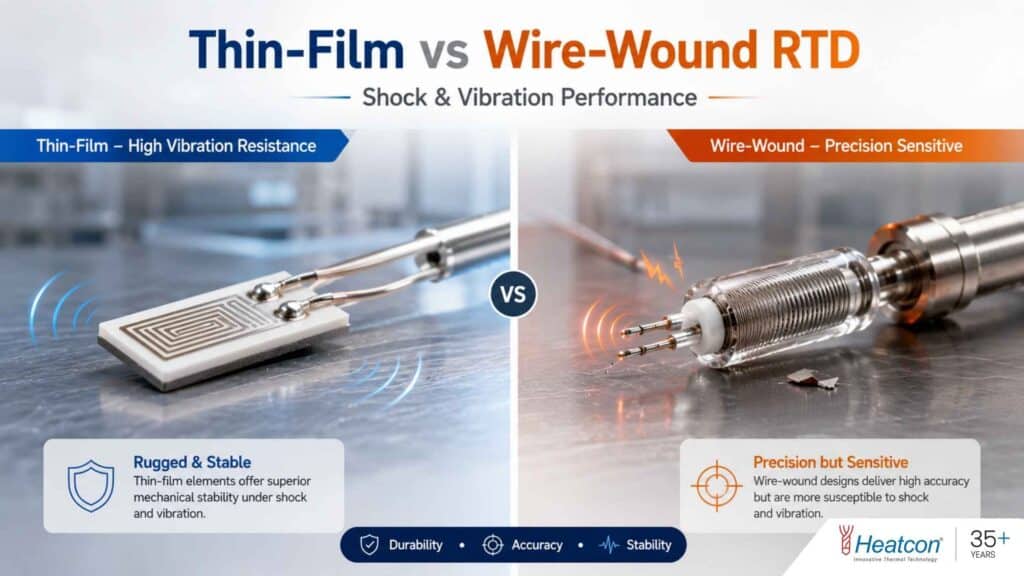
Thin-Film vs Wire-Wound RTD Elements: Which Sensor Survives Shock & Vibration Better?

The choice between thin film and wire wound RTD elements is crucial for industries where shock and vibration are a part of daily operations. According to industry reports, over 60% of RTDs in industrial environments are exposed to significant mechanical stress, making sensor durability a top priority. But which sensor technology—thin film or wire wound—offers better survival under such harsh conditions? In this comprehensive guide, we answer this and more, helping you make the right choice for your process requirements, whether you operate in India, the US, UAE, Indonesia, Germany, South Korea, Saudi Arabia, Russia, Bahrain, Kuwait, or anywhere else in the world.

Heatcon Sensors is a renowned manufacturer specializing in highly customized RTDs, thermocouples, and temperature solutions for a variety of industrial applications. With global reach and local expertise, Heatcon Sensors delivers to every corner of India and beyond, including major international markets.

What is the difference between thin film and wire wound RTD elements?

Thin film and wire wound RTD elements are both platinum resistance temperature detectors, but their construction and performance characteristics differ significantly:

  • Thin film RTD elements feature a thin layer of platinum deposited on a ceramic substrate and laser-trimmed to precise resistance values.
  • Wire wound RTD elements are crafted by winding fine platinum wire around a ceramic or glass core, then sealing it for protection.

The debate of thin film RTD vs wire wound is central when selecting sensors for environments prone to mechanical shock and vibration. Understanding the construction is the first step in determining which type excels in ruggedness and reliability.

Parameter Thin Film RTD Wire Wound RTD
Construction Platinum layer on ceramic substrate Platinum wire wound on ceramic/glass core
Operating Range -70°C to 500°C -200°C to 850°C
Shock/Vibration Resistance Good (in standard conditions) Excellent (with rugged design)
Response Time Faster (thin film RTD response time is typically 1–3 seconds) Moderate (slightly slower due to construction)
Accuracy Class B (standard), Class A (select types) Class A, 1/3 DIN, 1/10 DIN (highest accuracy)
Cost Lower Higher
Customizability Limited High (Heatcon Sensors excels here)

Which RTD element survives shock and vibration better?

When directly comparing thin film RTD vs wire wound for resistance to shock and vibration, wire wound RTDs have a clear edge. The robust construction of wire wound RTDs allows them to withstand intense mechanical and thermal cycling found in process plants, power generation, steel mills, refineries, and more.

  • Wire wound RTD advantages include enhanced mechanical stability, longer lifespan under stress, and the ability to be further ruggedized with vibration-resistant encapsulation.
  • Thin film RTDs, though sturdy in many settings, may develop micro-cracks or delamination if exposed to repetitive or severe shock and vibration, especially over time.

For applications where sensors are mounted on vibrating machinery, rotating equipment, or in mobile/transport settings, rugged RTD sensors built on the wire wound principle are the industry standard.

How do thin film RTDs respond to shock and vibration?

Thin film RTDs are engineered for solid performance in moderately rugged industrial environments. They excel in applications requiring rapid thermal response due to their small mass and intimate contact with the process.

  • The thin film RTD response time is typically 1–3 seconds, making them ideal for applications where quick detection of temperature changes is critical.
  • However, if subjected to persistent vibration or mechanical shock, especially beyond specified limits, the thin film platinum layer can develop faults, impacting sensor accuracy and reliability.

For moderate vibration, thin film RTDs often suffice, but for frequent, high-intensity shock and vibration, wire wound RTDs are the preferred choice.

What are the key wire wound RTD advantages for rugged industrial environments?

Wire wound RTDs are the gold standard for demanding environments due to several critical advantages:

  1. Superior Mechanical Durability: The coiled platinum wire is flexible and can absorb shocks without fracturing. Protective encapsulation further enhances resistance.
  2. Long-Term Stability: They maintain calibration over years of use, even with regular vibration exposure.
  3. High Temperature Tolerance: Operating ranges up to 850°C make them suitable for furnaces, ovens, and high-temperature processes.
  4. Custom Ruggedization: Wire wound RTDs can be customized with spring-loaded tips, armored cables, and heavy-duty housings for ultimate ruggedness.
  5. Global Reliability: Trusted in mission-critical installations worldwide—from oil rigs in Saudi Arabia to steel plants in Germany and power stations in India.

How to choose between thin film and wire wound RTDs for your application?

Here’s a decision matrix to help you make the best choice for your process:

  • Choose thin film RTDs if:
    • You need fast thermal response (thin film RTD response time is unbeatable for many applications).
    • Installation is in a low- to moderate-vibration environment.
    • Cost is a significant factor and ultra-high accuracy is not required.
  • Choose wire wound RTDs if:
    • The environment involves frequent or intense shock and vibration.
    • Long-term stability, reliability, and ruggedness are critical.
    • High accuracy or wide temperature range is needed.

If you require sensors tailored for harsh, unique, or challenging conditions, Heatcon Sensors can custom-manufacture rugged RTD sensors to your exact specifications—delivering worldwide, with support in India, US, UAE, and beyond.

What makes Heatcon Sensors the preferred RTD source globally?

Heatcon Sensors is not just another sensor supplier; we are a partner in your success. Our expertise in designing and manufacturing both thin film and wire wound RTDs is backed by decades of experience serving every major industry, including chemicals, pharmaceuticals, power, food processing, and more.

  • Custom Manufacturing: We build to your exact needs, from sensor geometry to lead wire length and housing style.
  • Global Supply Chain: Heatcon Sensors can deliver to any city or country—India, US, UAE, Indonesia, Germany, South Korea, Saudi Arabia, Russia, Bahrain, Kuwait, and beyond.
  • Heat Generating Equipment: We also manufacture industrial furnaces, ovens, hot air blowers, electric furnaces, high density cartridge heaters, tubular heaters, immersion heaters, and more—making us a one-stop solution for temperature and heating technology.
  • Quality and Compliance: All products comply with international standards and come with full documentation and support.
  • Expert Support: Our engineers help you choose the right sensor—thin film or wire wound—tailored for your shock, vibration, and accuracy requirements.
Connect with Heatcon Sensors today!

Don’t risk downtime or sensor failure—choose Heatcon Sensors for reliable, accurate, and rugged RTD solutions.

About Heatcon Sensors

Heatcon Sensors is a leading manufacturer and global supplier of temperature sensors, RTDs, thermocouples, and industrial heating equipment. Based in India and serving clients worldwide, we are trusted by top industries for our quality, customization, and on-time delivery. Our solutions power critical processes in India, US, UAE, Germany, and more.

If your process demands sensors that survive shock, vibration, and extreme conditions, trust the experts at Heatcon Sensors.

Frequently Asked Questions

What is the key difference between thin film RTD vs wire wound RTD elements?

The main difference between thin film RTD vs wire wound RTD elements lies in their construction. Thin film RTDs use a very thin layer of resistive material deposited on a ceramic substrate, making them compact and responsive. Wire wound RTDs, however, are made by winding a fine platinum wire around a ceramic or glass core. This fundamental difference impacts their durability, accuracy, and performance in demanding industrial conditions.

Which RTD type handles shock and vibration better in harsh environments?

Generally, wire wound RTDs offer superior resistance to mechanical shock and vibration compared to thin film designs. Their robust winding and support structure allow them to absorb and withstand physical impacts more effectively, making them a popular choice for rugged RTD sensors used in heavy industrial, aerospace, or automotive applications.

What are the main wire wound RTD advantages over thin film RTDs?

The key wire wound RTD advantages include higher long-term stability, better accuracy across a wider temperature range, and increased survivability under mechanical stress. They are less prone to drift and can operate reliably in environments with constant vibration or repeated shocks, making them ideal for critical measurement tasks.

How does thin film RTD response time compare to wire wound RTDs?

Thin film RTD response time is typically faster than that of wire wound RTDs due to their smaller mass and direct thermal contact with the measured environment. This makes thin film RTDs suitable for applications where rapid temperature changes need to be detected. However, this speed can come at the cost of reduced durability in high-vibration or shock-prone settings.

Are rugged RTD sensors available for both thin film and wire wound types?

Yes, both thin film and wire wound RTDs can be designed as rugged RTD sensors, but wire wound models are generally preferred for extreme environments. Heatcon Sensors offers both types, with custom engineering to enhance shock and vibration resistance, ensuring reliable operation in your toughest applications.

What solutions does Heatcon Sensors offer for applications with high shock and vibration?

Heatcon Sensors specializes in customizing both wire wound and thin film RTDs for challenging environments. For maximum durability, Heatcon recommends wire wound RTDs in reinforced housings, with advanced mounting options and protective features. These solutions ensure accurate temperature sensing and long sensor life even under rugged industrial or field conditions.

Can thin film RTDs be used in environments with moderate vibration?

Yes, thin film RTDs can perform well in environments with moderate vibration, especially when properly mounted and shielded. Heatcon Sensors can advise on installation best practices and provide robust assemblies to enhance sensor lifespan. However, for severe or continuous vibration, wire wound RTDs are usually recommended.

How do I choose between thin film and wire wound RTDs for my application?

Your choice depends on required accuracy, temperature range, response time, and environmental factors like shock and vibration. Thin film RTDs are best for applications needing compact size and fast response, while wire wound RTDs are ideal for high accuracy and ruggedness. Heatcon Sensors’ experts can help you select the optimal sensor for your needs—contact them for personalized advice.


The Steinhart-Hart Equation Explained for Thermistor Temperature Calculations

Did you know that over 75% of modern temperature sensors in industrial automation rely on thermistors for their accuracy, and the Steinhart-Hart equation is at the core of this precision? If your operations depend on reliable temperature readings, understanding this equation is crucial for optimal performance and safety.

What Is The Steinhart-Hart Equation And Why Does It Matter?

The Steinhart-Hart equation is a mathematical model that enables highly precise temperature calculation from the resistance readings of a thermistor. It is especially vital for applications demanding exact temperature monitoring, such as chemical processing, pharmaceutical manufacturing, HVAC, and food safety. The equation corrects for the non-linear relationship between a thermistor’s resistance and temperature, making it a gold standard in sensor technology.

For industries and businesses that cannot afford inaccuracies, relying on the Steinhart-Hart equation is not just a technical choice—it’s a strategic imperative. Inaccurate readings can lead to faulty processes, wasted resources, and costly downtime.

How Does The Steinhart-Hart Equation Work?

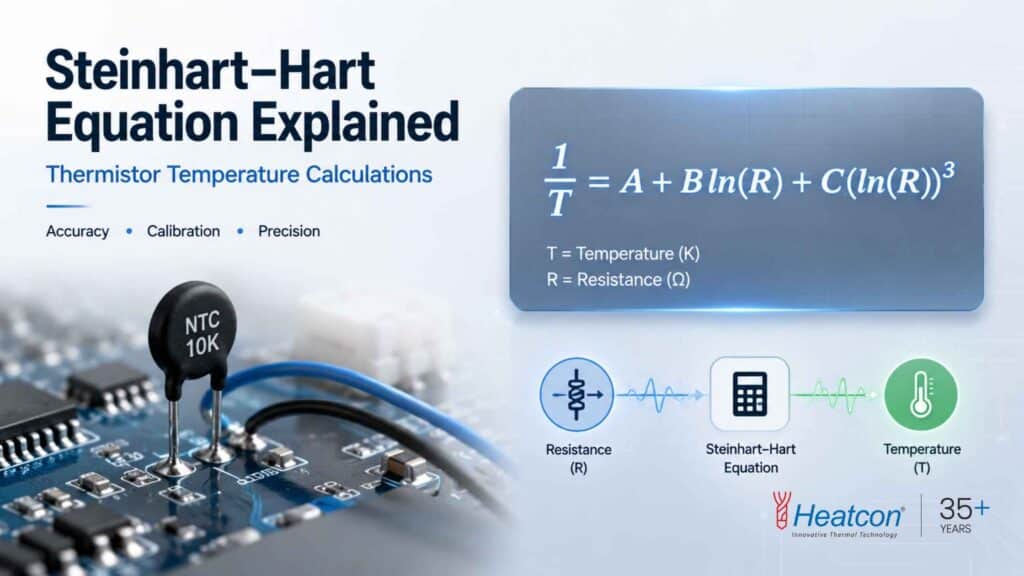
In simple terms, the Steinhart-Hart equation expresses temperature as a function of the natural logarithm of the measured resistance. The equation is as follows:

1/T = A + B*ln(R) + C*[ln(R)]³
  • T: Absolute temperature in Kelvin
  • R: Measured resistance of the thermistor (in Ohms)
  • A, B, C: Thermistor-specific coefficients derived from calibration

This model allows engineers to achieve far greater accuracy than basic, linear equations could ever provide. For example, in critical temperature control environments—such as high-temperature industrial furnaces or sensitive pharmaceutical incubators—this accuracy can be the difference between success and costly failure.

Why Is Thermistor Linearization Essential?

Thermistors have an inherently nonlinear resistance-temperature relationship. This means that a simple voltage or resistance measurement does not directly translate to a precise temperature reading. Thermistor linearization is the process of converting this nonlinear behavior into a linear, predictable output, typically using mathematical models like the Steinhart-Hart equation.

  • Linearization improves the sensor’s accuracy across a wide temperature range.
  • It simplifies integration with digital systems, controllers, and PLCs.
  • It ensures consistent, reliable temperature monitoring for mission-critical processes.

Heatcon Sensors leverages advanced thermistor linearization techniques in every customized RTD and thermistor product, ensuring that your operations are never compromised by inaccurate data.

How Do You Perform Thermistor Resistance Calculation?

Thermistor resistance calculation is a key step in determining the sensor’s temperature. The procedure generally involves:

  1. Measuring the resistance of the thermistor at the point of interest.
  2. Applying the Steinhart-Hart equation with the appropriate coefficients (A, B, C) for your specific thermistor.
  3. Calculating the corresponding temperature using the equation.

For high accuracy, it is crucial to use precise measurement equipment and ensure that the thermistor has been properly calibrated. This is where Heatcon Sensors’ expertise comes into play, delivering pre-calibrated, ready-to-integrate sensors for any industrial environment—whether you operate in India, the US, UAE, Indonesia, Germany, South Korea, Saudi Arabia, Russia, Bahrain, or Kuwait.

What Is The Thermistor Calibration Formula And Why Should You Care?

The thermistor calibration formula refers to the process of determining the A, B, and C coefficients for the Steinhart-Hart equation. Calibration is typically performed at three known temperature points, where resistance is measured and the coefficients are calculated.

  • Proper calibration ensures that the thermistor’s output matches the true temperature, minimizing errors.
  • It is essential for applications where even a 1°C error could cause significant issues.
  • Heatcon Sensors provides expertly calibrated sensors, tailored to your specific process conditions and environmental requirements.

How To Use The Steinhart-Hart Equation In Real-World Applications?

Businesses across sectors—from steel manufacturing to semiconductor fabrication—use the Steinhart-Hart equation for dependable process control. Here’s how Heatcon Sensors makes a difference:

  • Custom manufacturing of RTDs and temperature sensors to match your exact requirements.
  • Global supply capabilities, delivering solutions across India and internationally to the US, UAE, Indonesia, Germany, South Korea, Saudi Arabia, Russia, Bahrain, and Kuwait.
  • Integration support for various industries, including chemical, food processing, pharmaceuticals, automotive, and energy.

Heatcon Sensors ensures every sensor is engineered for your unique application—whether you need robust sensors for electric furnaces or precision sensors for laboratory ovens.

What Are The Benefits Of Using Heatcon Sensors’ Temperature Solutions?

Choosing the right sensor technology isn’t just about picking a product—it’s about securing your operational future. With Heatcon Sensors, you benefit from:

  • Expertise in the application of the Steinhart-Hart equation, ensuring high accuracy and reliability.
  • State-of-the-art thermistor linearization techniques embedded in every sensor.
  • Comprehensive thermistor resistance calculation and calibration services.
  • Custom design and manufacturing for challenging industrial environments.
  • Global supply and support, reaching even the most remote locations.

Heatcon Sensors is a leader in customized RTDs, thermistors, and advanced temperature sensors, as well as heat-generating equipment like furnaces, ovens, hot air blowers, high density cartridge heaters, and electric furnaces. Every product is designed with your process and safety in mind.

How Can You Reach Out To Heatcon Sensors For Customized Solutions?

Don’t leave your temperature measurement to chance. For industry-leading accuracy and support, you have three easy options to connect with Heatcon Sensors:

  1. Submit your information on the contact form.
  2. Leave a message on Whatsapp through the interface available on the Heatcon Sensors website.
  3. Call directly on +91 9164833027 or +91 9844233244 for immediate assistance.

Make the smart choice—partner with Heatcon Sensors and ensure your operations are always one step ahead.

About Heatcon Sensors

Heatcon Sensors is a global leader in the design, manufacture, and supply of advanced temperature sensors and heat-generating equipment. Based in India, Heatcon serves customers worldwide—including the US, UAE, Indonesia, Germany, South Korea, Saudi Arabia, Russia, Bahrain, and Kuwait—with a reputation for quality, reliability, and custom engineering. Whether you need standard RTDs, thermocouples, or specialized solutions for harsh environments, Heatcon Sensors has the expertise and resources to deliver—on time, every time.

Frequently Asked Questions

What is the Steinhart-Hart equation and why is it important for thermistor measurements?

The Steinhart-Hart equation is a highly accurate mathematical formula used to relate the resistance of a thermistor to its temperature. It accounts for the non-linear behavior of thermistors over a wide range of temperatures, providing precise temperature calculations. This accuracy is essential for applications requiring reliable thermal management, such as those supported by Heatcon Sensors.

How does thermistor linearization benefit temperature sensing applications?

Thermistor linearization transforms the inherently non-linear resistance-temperature relationship into a near-linear response, enabling more straightforward and accurate temperature readings. By applying formulas like the Steinhart-Hart equation, Heatcon Sensors ensures that their thermistor-based solutions deliver consistent and trustworthy measurements across diverse environments.

What are the key variables in the Steinhart-Hart equation?

The Steinhart-Hart equation uses three coefficients (A, B, and C), which are unique to each thermistor, along with the measured resistance value. These coefficients are determined during calibration and enable the equation to accurately convert resistance to temperature. This approach enhances the precision of Heatcon Sensors’ temperature measurement systems.

How is thermistor resistance calculation performed in practical scenarios?

Thermistor resistance calculation typically involves measuring the voltage across the thermistor in a circuit and applying Ohm’s Law. The measured resistance is then used in the Steinhart-Hart equation or other calibration formulas to determine the exact temperature. Heatcon Sensors provides both the hardware and technical expertise to ensure accurate resistance measurements for critical applications.

What is the thermistor calibration formula and how is it used?

The thermistor calibration formula refers to mathematical models, such as the Steinhart-Hart equation, used to relate a thermistor’s resistance to temperature. Calibration involves determining the coefficients for the specific thermistor in use, ensuring precise temperature readings for each device. Heatcon Sensors calibrates thermistors using industry-standard procedures for optimal accuracy.

How does Heatcon Sensors support industries with thermistor-based temperature measurement solutions?

Heatcon Sensors offers a complete suite of thermistor-based temperature measurement solutions, from sensor selection and calibration to integration with control systems. By applying advanced formulas like the Steinhart-Hart equation and supporting thermistor linearization, Heatcon Sensors delivers reliable, industry-specific solutions for sectors such as HVAC, medical devices, and industrial automation.

Can the Steinhart-Hart equation be used for all types of thermistors?

The Steinhart-Hart equation is primarily suited for NTC (Negative Temperature Coefficient) thermistors but can also be adapted for some PTC (Positive Temperature Coefficient) types. The equation’s coefficients must be determined for each thermistor type for best results, a process that Heatcon Sensors facilitates during the thermistor calibration phase.

How does accurate calibration impact sensor performance over time?

Accurate calibration ensures that thermistor sensors maintain precise temperature readings across their operational lifespan. By using robust thermistor calibration formulas and periodic recalibration, as recommended by Heatcon Sensors, drift and environmental effects can be minimized, safeguarding the integrity of temperature-sensitive processes.

What makes Heatcon Sensors’ approach to thermistor resistance calculation unique?

Heatcon Sensors combines advanced electronic measurement techniques with precise mathematical modeling, including the Steinhart-Hart equation, to ensure thermistor resistance calculation is both fast and accurate. Their expertise in sensor calibration and system integration results in superior performance and reliability for client applications.

What is the steinhart hart equation used for in temperature measurement?

The steinhart hart equation is used to convert the resistance readings of a thermistor into accurate temperature values. This equation is especially important when you need high precision over a wide temperature range, making it the standard for calibrating thermistors in scientific, industrial, and commercial applications.

Why is the steinhart hart equation preferred over simpler models for thermistor calibration?

The steinhart hart equation is preferred over simpler models, such as the Beta parameter equation, because it provides greater accuracy across a broader temperature range. Its three-coefficient model accounts for the complex, non-linear response of thermistors, ensuring precise temperature measurements for demanding applications.


How EV Battery Packs Use NTC Thermistors to Prevent Thermal Runaway

What Is Thermal Runaway In EV Battery Packs And Why Is It A Critical Issue?

Thermal runaway is a critical safety concern in electric vehicle (EV) battery packs. According to the National Renewable Energy Laboratory (NREL), battery fires due to thermal runaway have been a contributing factor in less than 0.03% of EV incidents globally, but their potential devastation makes prevention a top priority for manufacturers and end-users alike. Understanding how battery technology addresses this risk is vital for anyone invested in EV safety.

In essence, thermal runaway refers to a rapid, uncontrollable rise in temperature within a battery cell, leading to potential fire or explosion. When one cell fails, it can trigger a chain reaction across the entire pack, jeopardizing passenger safety and causing catastrophic damage. This underscores the importance of robust EV battery thermal management and vigilant monitoring using advanced sensors.

How Do EV Battery Packs Use NTC Thermistors For Thermal Runaway Prevention?

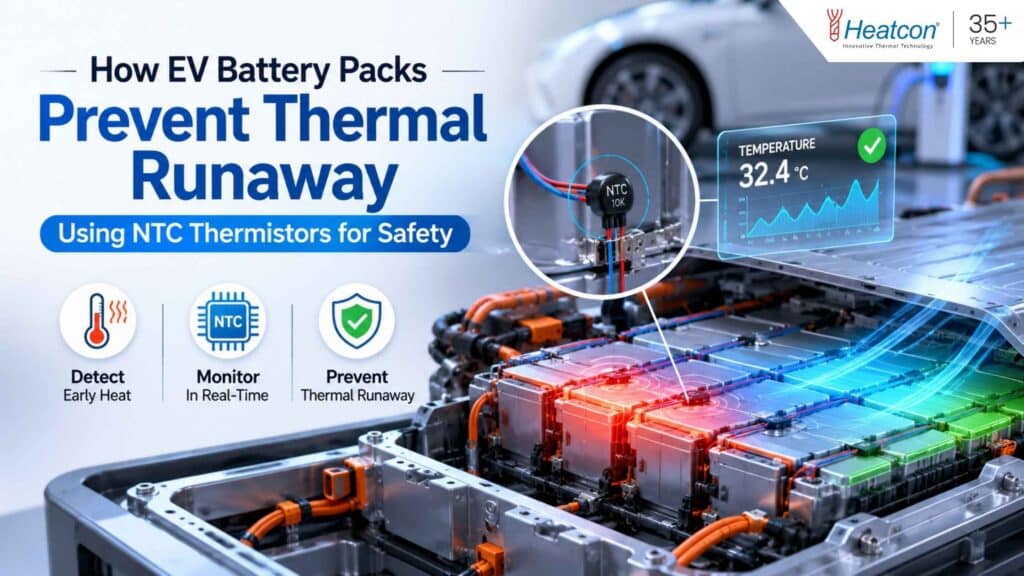
EV battery packs use NTC thermistors as a primary line of defense for thermal runaway prevention. An NTC thermistor for EV battery is a temperature-sensitive resistor whose resistance decreases as temperature increases. Placed in strategic locations across the battery pack, these thermistors provide real-time feedback on cell and pack temperatures.

When a temperature spike is detected, the battery management system (BMS) can take immediate action: reducing current, isolating affected cells, or activating emergency cooling protocols. This early intervention is crucial for preventing a single incident from spiraling into full-blown thermal runaway.

  • Immediate Detection: The NTC thermistor for EV battery pinpoints abnormal rises in temperature, offering a crucial window for intervention.
  • Active Control: The BMS responds dynamically—throttling power, shutting down affected modules, or activating cooling systems.
  • Safety Assurance: This system-wide vigilance ensures that EVs remain safe, reliable, and trusted by consumers worldwide.

What Is The Role Of An EV Battery Temperature Sensor?

An EV battery temperature sensor is the heart of battery safety and efficiency. By continuously monitoring temperatures at the cell, module, and pack level, it provides the data necessary for real-time risk assessment and operational optimization.

The EV battery temperature sensor is engineered to withstand harsh automotive environments—high currents, vibrations, and wide-ranging ambient temperatures. Its rapid response time and high accuracy make it indispensable in modern EV battery thermal management.

  • Detects abnormal heating in milliseconds
  • Enables precise thermal mapping of battery packs
  • Supports smart algorithms for charge/discharge optimization
  • Ensures compliance with global safety standards

How Does EV Battery Thermal Management Work?

EV battery thermal management encompasses all strategies and technologies used to maintain optimal battery temperatures during charging, discharging, and standby. Efficient thermal management is essential for battery longevity, performance, and safety.

The system typically consists of:

  • Active Cooling: Liquid or air-cooled systems circulate coolant around battery modules, dissipating excess heat rapidly.
  • Passive Cooling: Heat sinks and phase-change materials absorb and distribute thermal energy safely.
  • Advanced Sensing: Integration of NTC thermistor for EV battery and other sensors ensures continuous temperature tracking.
  • Smart Controls: The BMS makes real-time decisions based on sensor input, balancing safety, efficiency, and performance.

With the rise of fast charging and high-performance EVs, robust EV battery thermal management is more important than ever. It preserves battery health, prevents thermal runaway, and supports warranty compliance for vehicle manufacturers.

Why Is Custom Sensor Manufacturing Essential For The EV Industry?

Every EV battery design is unique, with specific thermal and spatial requirements. Off-the-shelf solutions may not offer the precision or durability needed for mission-critical systems. This is where custom manufacturing becomes indispensable.

Heatcon Sensors specializes in crafting bespoke EV battery temperature sensor solutions, tailored to the exact specifications of automotive OEMs and battery manufacturers. Whether you require a unique NTC thermistor for EV battery, a customized RTD, or a specialized probe for challenging environments, Heatcon Sensors delivers precision, reliability, and rapid turnaround.

  • Customizable form factors and accuracy classes
  • Compatible with global automotive standards
  • Proven track record with leading EV manufacturers
  • Global supply chain—delivering to India, US, UAE, Indonesia, Germany, South Korea, Saudi Arabia, Russia, Bahrain, Kuwait, and beyond

What Other Heat Generating Equipment Does Heatcon Sensors Manufacture?

In addition to advanced temperature sensors, Heatcon Sensors is renowned for manufacturing a comprehensive range of heat generating equipment. These are essential not only for EV battery pack testing and development, but also for various industrial applications worldwide. Heatcon’s product lineup includes:

Each product is engineered with the same attention to quality and customization that defines Heatcon’s sensor solutions, making them the first choice for demanding industrial environments.

How Can You Source EV Battery Temperature Sensors From Heatcon Sensors?

When it comes to EV battery thermal management and thermal runaway prevention, compromising on sensor quality is not an option. With Heatcon Sensors, you have a partner who understands the exacting demands of the global automotive industry and delivers right to your doorstep—anywhere in India or across the world.

Here’s how you can reach out for your custom requirements:

  1. Fill out your information on the online contact form for a prompt response.
  2. Use the Whatsapp interface available on the official Heatcon Sensors website for real-time messaging.
  3. For immediate assistance, call +91 9164833027 or +91 9844233244.

Don’t miss out on the peace of mind that comes with using industry-leading temperature sensors and heating equipment, trusted by Fortune 500 manufacturers and pioneering startups alike.

About Heatcon Sensors

Heatcon Sensors is a global leader in the design and manufacture of customized temperature sensors, including RTDs, thermocouples, and NTC thermistor for EV battery solutions. With decades of experience, Heatcon also produces high-performance heat generating equipment—furnaces, ovens, hot air blowers, and cartridge heaters—serving critical industries in India, the US, UAE, Indonesia, Germany, South Korea, Saudi Arabia, Russia, Bahrain, Kuwait, and globally.

By choosing Heatcon Sensors, you are aligning your operations with a company that values precision, safety, and customer-centric innovation. Join the ranks of those who make no compromises when it comes to quality and reliability in thermal management and industrial heating.

Frequently Asked Questions

What role do NTC thermistors play in preventing thermal runaway in EV battery packs?

NTC thermistors are critical components for thermal runaway prevention in EV battery packs. These sensors continually monitor the temperature of battery cells, enabling early detection of abnormal rises. If unsafe temperatures are detected, the battery management system can take corrective action—such as reducing load or activating cooling systems—helping to prevent dangerous thermal events.

How does an EV battery temperature sensor contribute to battery safety?

An EV battery temperature sensor provides real-time temperature data to the battery management system (BMS). This allows for precise EV battery thermal management, ensuring that the battery operates within optimal temperature ranges. Continuous monitoring helps to prevent overheating, which is a major factor in the risk of thermal runaway incidents.

Why are NTC thermistors preferred for EV battery temperature monitoring?

NTC thermistors are preferred for EV battery temperature monitoring because they offer high sensitivity, fast response times, and reliability. Their resistance decreases as temperature increases, providing accurate and immediate temperature readings essential for effective battery protection and thermal control.

What is the function of an NTC thermistor for EV battery packs?

An NTC thermistor for EV battery packs acts as a temperature-sensitive resistor that enables precise monitoring of cell temperatures. By rapidly detecting any deviations from normal operating conditions, it allows the BMS to implement safety measures such as current limiting or system shutdown before thermal issues escalate.

How does EV battery thermal management benefit from Heatcon Sensors’ solutions?

Heatcon Sensors offers advanced, robust sensors designed specifically for EV battery thermal management. Their NTC thermistors are engineered for high accuracy and durability in challenging automotive environments, ensuring optimal battery operation, longer lifespan, and enhanced safety for electric vehicles.

Can Heatcon Sensors customize NTC thermistor solutions for different EV battery designs?

Yes, Heatcon Sensors can develop and supply NTC thermistor solutions tailored to specific EV battery configurations and integration requirements. Their engineering team works closely with manufacturers to ensure accurate fit and optimal performance, no matter the battery pack design.

What sets Heatcon Sensors apart in the field of EV battery temperature sensing?

Heatcon Sensors stands out thanks to their expertise in sensor design for demanding applications, strict quality standards, and ability to deliver high-precision EV battery temperature sensor solutions. Their products are trusted by automotive OEMs for their reliability and long-term stability in EV environments.

How does early detection of temperature anomalies help in thermal runaway prevention?

Early detection of temperature anomalies using NTC thermistors allows the BMS to act before a cell reaches critical temperatures. This proactive approach is key to thermal runaway prevention, as it reduces the risk of chain reactions that can lead to catastrophic battery failure.

Are Heatcon Sensors’ NTC thermistors compatible with most EV battery management systems?

Heatcon Sensors’ NTC thermistors are designed for compatibility with a wide range of EV battery management systems. They offer various packaging, resistance values, and thermal characteristics to suit different system requirements, ensuring seamless integration and reliable operation.


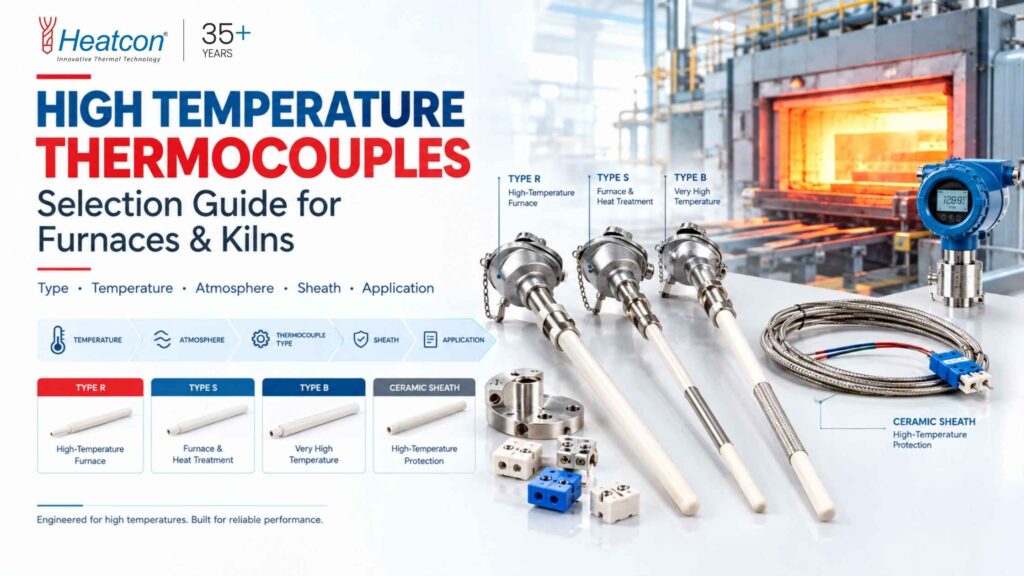
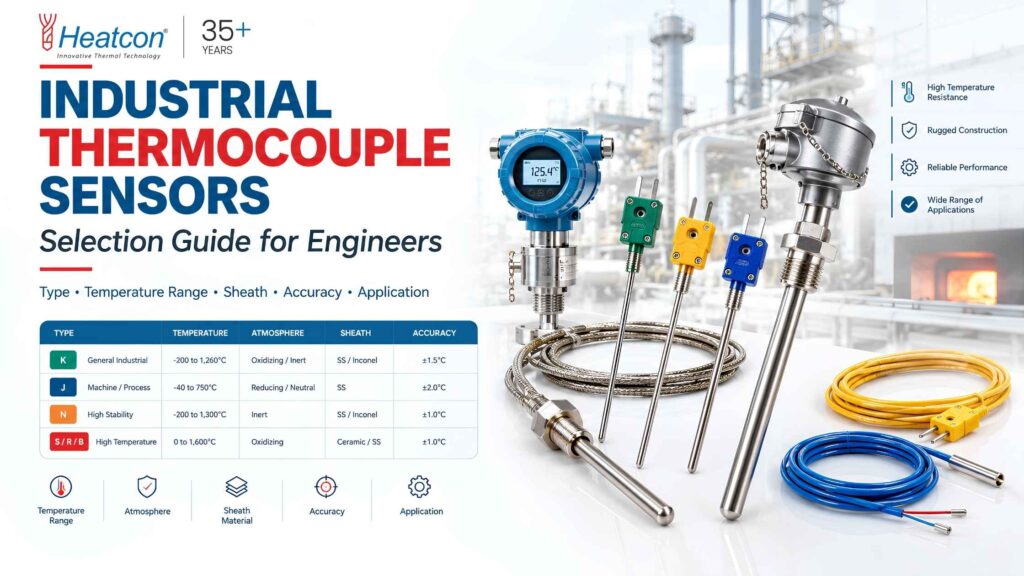
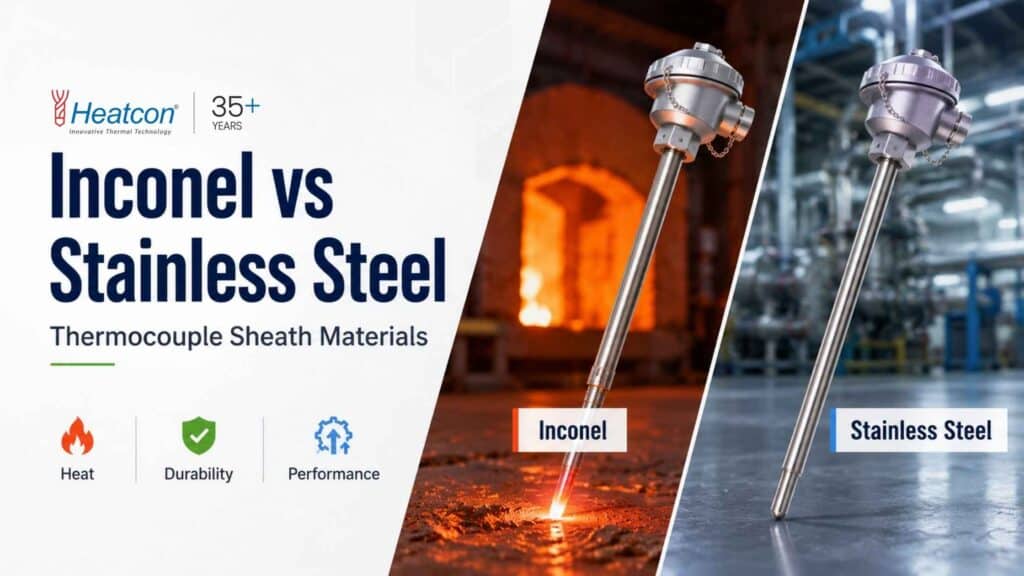
Thermocouple Sheath Materials Guide: Inconel vs Stainless Steel for Extreme Environments

Choosing the right thermocouple sheath materials is critical for ensuring durability and accuracy in extreme environments. According to industry reports, up to 60% of thermocouple failures in industrial applications are attributed to unsuitable sheath material selection. This makes understanding the differences between Inconel and stainless steel essential for engineers, plant managers, and quality specialists. Whether you operate a refinery in India, a chemical plant in the US, or a research lab in Germany, the choice of sheath material can impact your process safety, equipment longevity, and measurement accuracy.

What Are Thermocouple Sheath Materials And Why Do They Matter?

Thermocouple sheath materials are the protective outer tubes that encase the sensitive thermoelectric wires inside a thermocouple. Their main role is to safeguard against harsh environmental factors, including high temperatures, corrosive chemicals, mechanical wear, and pressure fluctuations. The right sheath material ensures the sensor delivers accurate readings and remains reliable over time, especially in extreme conditions.

  • Protects thermocouple wires from contamination and corrosion
  • Enables deployment in aggressive industrial environments
  • Directly impacts sensor lifespan and measurement accuracy

How To Choose Between Inconel Thermocouple And Stainless Steel Thermocouple Sheath?

The decision between an Inconel thermocouple and a stainless steel thermocouple sheath hinges on the specific challenges of your application. Here’s a concise comparison:

Comparison Of Inconel Thermocouple Vs Stainless Steel Thermocouple Sheath
Feature Inconel Thermocouple Stainless Steel Thermocouple Sheath
Temperature Range Up to 1150°C (2100°F) Up to 900°C (1650°F)
Corrosion Resistance Excellent in acidic, alkaline, and high-salinity environments Very good, but limited in high-chloride or acidic conditions
Mechanical Strength Very high, maintains integrity at extreme temperatures High, but may weaken at upper temperature limits
Cost Higher initial investment Economical, widely available
Typical Applications Furnaces, petrochemical, aerospace, nuclear plants Food processing, pharmaceuticals, general industry

What Is Inconel And When Should You Use An Inconel Thermocouple?

Inconel is a family of nickel-chromium-based superalloys renowned for their exceptional resistance to heat, oxidation, and corrosion. Inconel thermocouple sheaths are the preferred choice in applications that demand the ultimate in durability and stability, such as:

  • High-temperature furnaces and kilns
  • Chemical and petrochemical reactors
  • Marine and offshore environments
  • Power generation (turbines, nuclear reactors)
  • Heat-treating and metallurgy processes

The unique properties of Inconel allow these sensors to operate reliably at temperatures exceeding 1000°C, repel aggressive chemicals, and withstand cyclic heating and cooling. This makes Inconel thermocouple solutions indispensable for critical processes where sensor failure is not an option.

Why Choose Stainless Steel Thermocouple Sheath?

Stainless steel thermocouple sheath options are highly popular due to their favorable balance of cost, durability, and corrosion resistance. Stainless steel alloys such as SS304, SS316, and SS310 are widely used in:

  • Food and beverage manufacturing
  • Pharmaceutical and life sciences
  • Oil and gas processing
  • Water and wastewater treatment
  • General industrial heating applications

Stainless steel thermocouple sheath is ideal for environments where moderate temperature resistance and general corrosion protection are required. While not as robust as Inconel in highly aggressive conditions, stainless steel remains a versatile and economical choice for many industries.

What Makes Corrosion-Resistant Thermocouples Essential?

Corrosion-resistant thermocouples are vital for maintaining process safety and product quality in industries exposed to aggressive chemicals, high humidity, or saline conditions. A corroded thermocouple can lead to inaccurate readings, unsafe operations, and costly downtime. To prevent these issues, selecting the right sheath material—be it Inconel or stainless steel—is crucial.

  • Improves equipment uptime and process reliability
  • Reduces maintenance costs and frequency of replacement
  • Ensures compliance with industry safety standards

Heatcon Sensors offers a comprehensive range of corrosion-resistant thermocouples designed to perform in even the harshest industrial environments.

How Does Heatcon Sensors Deliver Customized Solutions Globally?

Heatcon Sensors is a trusted manufacturer of customized RTDs, thermocouples, and other advanced temperature sensors for industrial requirements. With decades of expertise, Heatcon Sensors caters to the unique demands of industries across India, the US, UAE, Indonesia, Germany, South Korea, Saudi Arabia, Russia, Bahrain, Kuwait, and beyond.

Why trust Heatcon Sensors?

  • Custom manufacturing to exact specifications—length, sheath material, calibration, and more
  • Global supply chain—delivering to any city or country worldwide
  • Expert engineering support for application-specific guidance
  • Comprehensive quality assurance and documentation

Whether you need an Inconel thermocouple for a petrochemical refinery in Saudi Arabia or a stainless steel thermocouple sheath for a pharmaceutical plant in the US, Heatcon Sensors guarantees rapid turnaround and international shipping.

What Other Heat Generating Equipment Does Heatcon Sensors Provide?

Beyond temperature sensors, Heatcon Sensors is a leading manufacturer and supplier of heat generating equipment, including:

This broad portfolio enables Heatcon Sensors to offer end-to-end solutions—integrating temperature sensing with advanced heating technology for optimal process control.

How To Connect With Heatcon Sensors For Your Temperature Sensing Needs?

Don’t leave your process safety and accuracy to chance. Secure the reliability, expertise, and global reach of Heatcon Sensors for your next thermocouple or temperature sensing requirement.

  1. Submit your information on the form at https://heatconsensors.com/contact-us/
  2. Leave a message on Whatsapp through the interface available on Heatcon Sensors’ website
  3. Call us directly at +91 9164833027 or +91 9844233244 for immediate assistance

Unlock the next level of precision, durability, and peace of mind for your industrial temperature measurement solutions. Don’t miss out—partner with Heatcon Sensors, the global experts in thermocouple sheath materials and industrial heating solutions.

About Heatcon Sensors

Heatcon Sensors is an industry-leading manufacturer and supplier of temperature sensors and industrial heating solutions, headquartered in India and serving clients worldwide. Specializing in customized thermocouples, RTDs, and corrosion-resistant thermocouples, as well as a full range of furnaces, ovens, and high density cartridge heaters, Heatcon Sensors delivers uncompromising quality and reliability for every client.

Frequently Asked Questions

What are the main differences between Inconel and stainless steel thermocouple sheath materials?

Inconel and stainless steel are both popular thermocouple sheath materials, but they differ significantly in performance for extreme environments. Inconel, a nickel-chromium-based alloy, offers exceptional resistance to oxidation, high temperatures, and corrosive atmospheres. Stainless steel, while highly durable and cost-effective, generally performs best in less aggressive environments and at lower temperatures compared to Inconel. Selecting the right sheath material depends on your application’s temperature range, atmospheric conditions, and required corrosion resistance.

When should I choose an Inconel thermocouple for my application?

An Inconel thermocouple is ideal for environments with extremely high temperatures (often above 1000°C), aggressive oxidation, or exposure to corrosive gases such as those found in furnaces, kilns, or chemical processing plants. Inconel sheaths provide enhanced stability and long service life where standard stainless steel options may degrade or fail prematurely.

What are the advantages of a stainless steel thermocouple sheath?

A stainless steel thermocouple sheath is valued for its mechanical strength, durability, and resistance to moderate corrosion and oxidation. It is well-suited for food processing, general industrial applications, and environments where temperatures are typically below 900°C and severe chemical exposure is not a concern. Stainless steel sheaths are also generally more affordable than Inconel options.

How do corrosion-resistant thermocouples benefit industrial processes?

Corrosion-resistant thermocouples ensure longer operational life, reduced maintenance costs, and reliable temperature measurements in harsh environments. By selecting the appropriate sheath material—such as Inconel or specialized grades of stainless steel—you minimize the risk of sheath degradation, sensor drift, or failure, which is critical for process safety and efficiency.

What factors should I consider when selecting thermocouple sheath materials for extreme environments?

Key factors include maximum operating temperature, type and concentration of corrosive agents, mechanical stresses, required response time, and cost. Heatcon Sensors provides expert guidance in selecting thermocouple sheath materials tailored to your unique process needs, ensuring measurement accuracy and durability in even the most challenging settings.

Can Heatcon Sensors customize thermocouples for specific environmental challenges?

Yes, Heatcon Sensors specializes in providing customized thermocouple solutions. Whether you need an Inconel thermocouple for high-temperature furnaces or a stainless steel thermocouple sheath for hygienic applications, our team can recommend and manufacture sensors with the optimal sheath material and configuration for your process.

How do I know if my process needs an upgrade to a more advanced thermocouple sheath material?

Signs that you might need to upgrade include frequent sensor failures, drift in temperature measurements, visible corrosion or pitting on sheaths, or changing process conditions (e.g., increased temperature, new chemicals). Heatcon Sensors can help assess your current setup and recommend suitable corrosion-resistant thermocouples for improved performance.

What support does Heatcon Sensors provide in choosing the right thermocouple sheath materials?

Heatcon Sensors offers technical consultations, material compatibility analysis, and recommendations based on your temperature, environment, and industry standards. Our experts work closely with you to ensure you select the most suitable thermocouple sheath materials for both new installations and replacements, maximizing sensor life and accuracy.


How to Eliminate Thermistor Self-Heating Errors in Precision Industrial Circuits

Why Is Thermistor Self Heating A Critical Challenge In Industrial Circuits?

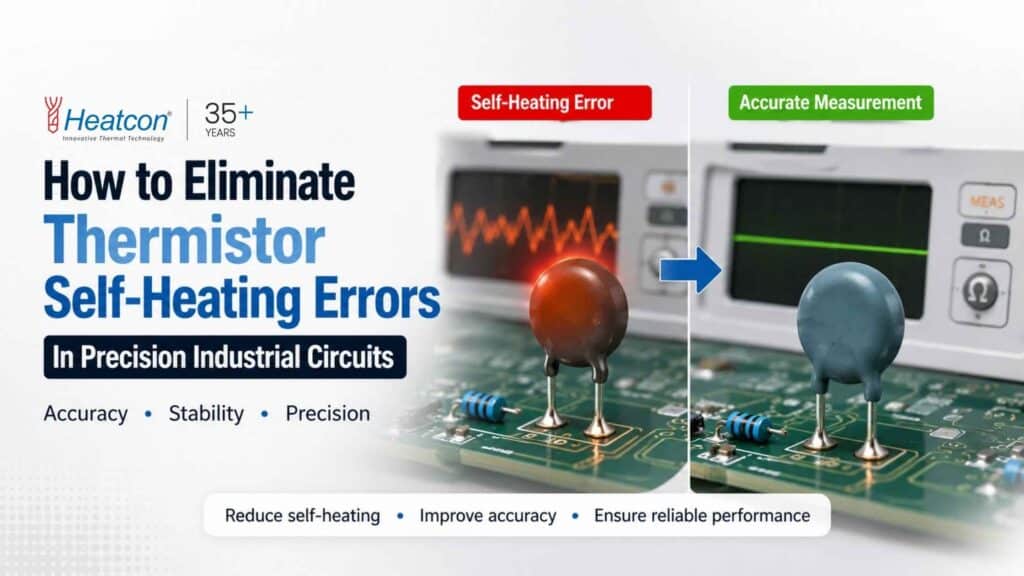
Thermistor self heating is a significant source of error in precision industrial circuits, especially when accuracy is paramount. According to industry research, self-heating errors can contribute to temperature deviations of up to 2°C or more—enough to disrupt sensitive manufacturing or quality assurance processes. If not properly managed, these errors can lead to costly downtimes, suboptimal product quality, and even safety risks.

This guide provides actionable, step-by-step methods to eliminate such errors, ensuring your temperature measurements remain accurate, reliable, and trustworthy. Whether you operate in high-stakes industries across India, the US, UAE, Indonesia, Germany, South Korea, Saudi Arabia, Russia, Bahrain, Kuwait, or anywhere globally, understanding and mitigating thermistor self heating is vital.

What Is Thermistor Self Heating And Why Does It Occur?

Thermistor self heating occurs when current passing through a thermistor causes it to warm up above the ambient temperature, resulting in a false temperature reading. This phenomenon can be particularly problematic in precision thermal monitoring applications, where even minor deviations can compromise the outcomes.

  • Self heating increases with higher measurement currents.
  • Low ambient airflow or insulation exacerbates the effect.
  • Precision circuits with low error tolerance are especially vulnerable.

In manufacturing hubs like Bengaluru, Delhi, Mumbai, Chennai, and across international locations, precise temperature control is non-negotiable. Heatcon Sensors, a trusted manufacturer of custom RTDs and thermistors, addresses these challenges head-on with innovative sensor solutions and expert integration support.

How Can You Calculate And Minimize Thermistor Error Calculation?

The first step to mitigation is precise thermistor error calculation. This involves quantifying the impact of self heating under operating conditions and designing circuits to minimize these errors. Here’s a concise overview:

  1. Calculate the power dissipated in the thermistor: P = I²R (where I is the current and R is resistance).
  2. Determine the temperature rise: ΔT = P / D, where D is the thermistor dissipation constant.
  3. Compare the calculated ΔT to your application’s error tolerance.

By optimizing measurement currents and understanding the thermistor dissipation constant, you can design circuits that limit self-induced temperature rises. Heatcon Sensors works closely with clients to select and customize sensors that meet exacting requirements—no matter your location or application complexity.

What Is Thermistor Dissipation Constant And How Does It Help?

The thermistor dissipation constant is a crucial parameter defined as the amount of power required to raise the thermistor’s temperature by one degree Celsius. It is typically expressed in milliwatts per degree Celsius (mW/°C). A higher dissipation constant means the device is less prone to self heating for a given current.

Typical Thermistor Dissipation Constants
Thermistor Type Dissipation Constant (mW/°C) Typical Application
Glass-Encapsulated 2-10 High-stability environments
Epoxy-Coated 0.5-2 General industrial use
Bead Type 0.05-0.2 Fast response, low mass

Heatcon Sensors leverages this knowledge during sensor design, ensuring that the selected thermistor matches the application’s thermal environment and electrical constraints—delivering accuracy and reliability whether you are located in India, the US, or anywhere globally.

How Do You Achieve Precision Thermal Monitoring In Industrial Circuits?

Precision thermal monitoring is the backbone of modern industrial automation, pharmaceuticals, food processing, and electronics manufacturing. Achieving this level of accuracy requires a holistic approach:

  • Use low-excitation currents to minimize self heating.
  • Select thermistors with high dissipation constants for high-current applications.
  • Implement pulsed measurement techniques to reduce average power dissipation.
  • Ensure proper thermal coupling and airflow around sensors.
  • Regularly calibrate and validate sensors for consistent performance.

By partnering with Heatcon Sensors, industries in Bengaluru, Mumbai, Chennai, Delhi, and from the Middle East to Europe and beyond, benefit from a tailored approach to sensor selection, system design, and ongoing support. This ensures your precision thermal monitoring systems operate with uncompromising accuracy.

What Solutions Does Heatcon Sensors Offer For Eliminating Thermistor Self Heating Errors?

Heatcon Sensors, headquartered in Bengaluru, India, is a leading manufacturer and global supplier of customized temperature sensors—including RTDs, thermistors, and thermocouples—for demanding industrial applications. Here’s why industry leaders choose Heatcon Sensors:

  • Custom Sensor Design: Tailored solutions to match application-specific requirements, including sensor geometry, dissipation constant, and response time.
  • Wide Product Range: RTDs, thermistors, thermocouples, and advanced temperature probes for every industrial sector.
  • Global Reach: Reliable shipping and technical support to India, US, UAE, Indonesia, Germany, South Korea, Saudi Arabia, Russia, Bahrain, Kuwait, and more.
  • Integrated Support: Expert assistance in sensor integration, calibration, and error mitigation strategies.

In addition to temperature sensors, Heatcon Sensors manufactures high-performance heat-generating equipment such as furnaces, ovens, hot air blowers, electric furnaces, high density cartridge heaters, and specialized process heaters. This breadth of expertise ensures seamless compatibility and system-level optimization for your thermal processes.

How Can You Contact Heatcon Sensors For Customized Solutions?

Don’t let thermistor self heating errors compromise your precision industrial circuits. Experience the Heatcon Sensors advantage—unmatched technical expertise, custom manufacturing, and global service. Choose from any of the following convenient methods to reach out and secure your solution today:

Don’t risk operational delays and costly errors—partner with the industry’s trusted temperature sensing experts. Wherever you are in the world, Heatcon Sensors ensures your thermal monitoring systems deliver the precision you demand.

About Heatcon Sensors

Heatcon Sensors is an ISO-certified manufacturer specializing in custom-designed temperature sensors and heat-generating equipment. With decades of experience serving diverse industries in India and internationally, Heatcon Sensors combines engineering innovation, quality manufacturing, and reliable support. Their solutions empower clients to achieve optimal accuracy, safety, and efficiency in every application.

Contact Heatcon Sensors today and transform your thermal measurement systems with world-class expertise and service.

Frequently Asked Questions

What is thermistor self heating and how does it affect precision thermal monitoring?

Thermistor self heating occurs when the electrical current passing through the thermistor generates heat within the sensor itself. This internally generated heat can raise the thermistor’s temperature above that of its environment, leading to inaccurate readings. In the context of precision thermal monitoring, even minor self-heating can introduce significant measurement errors, especially in sensitive industrial circuits where accuracy is critical.

How can thermistor self heating errors be identified and quantified?

Thermistor self heating errors can be identified by comparing the sensor reading under normal operation to a reference measurement taken with minimal excitation current. Thermistor error calculation often involves knowing the power dissipated in the thermistor and its dissipation constant. By calculating the temperature rise due to self-heating, engineers can estimate and compensate for the error in high-precision applications.

What is the thermistor dissipation constant and why is it important?

The thermistor dissipation constant (often denoted as δ) represents the amount of power (in milliwatts) required to raise the thermistor’s temperature by one degree Celsius above ambient. This key parameter helps engineers predict the self-heating effect and is used directly in thermistor error calculation. A higher dissipation constant means the thermistor is less sensitive to self-heating, which is desirable for precision measurements.

What design practices can help minimize thermistor self heating in industrial circuits?

To minimize thermistor self heating, use the lowest possible excitation current that still allows accurate measurement. Optimize circuit design to reduce power dissipation across the thermistor. Choose thermistors with a higher dissipation constant for applications where self-heating is a concern. Additionally, ensure good thermal coupling with the environment and avoid placing the sensor near heat sources within the circuit.

How does Heatcon Sensors address self-heating errors in their thermistor products?

Heatcon Sensors designs their thermistor assemblies for minimal self-heating by carefully selecting thermistor materials with high dissipation constants and optimizing sensor encapsulation for better heat transfer. Their engineering team assists in precision thermal monitoring applications by recommending appropriate sensor types and providing guidelines for circuit integration, ensuring that measurement integrity is maintained even in demanding industrial environments.

Can software compensation be used to correct thermistor self heating effects?

Yes, software compensation is a practical method for correcting thermistor self heating effects. By incorporating the thermistor’s dissipation constant and the measured current into the control algorithm, it is possible to adjust the temperature reading for the expected self-heating error. Heatcon Sensors provides calibration data and technical support to help customers implement such corrections in their precision monitoring systems.

What are the recommended steps for accurate thermistor error calculation in industrial circuits?

Accurate thermistor error calculation involves:
1. Measuring the actual current through the thermistor.
2. Calculating power dissipation (P = I²R).
3. Applying the dissipation constant to estimate temperature rise (ΔT = P/δ).
4. Adjusting the measured temperature accordingly. Heatcon Sensors’ technical documentation provides detailed procedures and datasheets to simplify this process for engineers.

Why is minimizing self-heating crucial for modern precision thermal monitoring applications?

In modern precision thermal monitoring applications, even minor temperature errors can compromise process control, product quality, and safety. Thermistor self heating introduces a measurement bias that, if not corrected, may lead to false readings and poor system performance. Eliminating or compensating for self-heating is essential in critical industries such as pharmaceuticals, food processing, and semiconductor manufacturing, where Heatcon Sensors specializes in reliable sensor solutions.

How can customers consult with Heatcon Sensors for self-heating mitigation strategies?

Heatcon Sensors offers expert consultation to help customers select the right thermistor for their application, optimize sensor placement, and develop effective compensation strategies for self-heating. Customers can reach out via the Heatcon Sensors website or contact their technical support team for tailored advice and engineering solutions to ensure accurate temperature measurement in every project.


NTC vs PTC Thermistors: Choosing the Right Thermistor for Industrial Electronics

What Is The Difference Between NTC And PTC Thermistors?

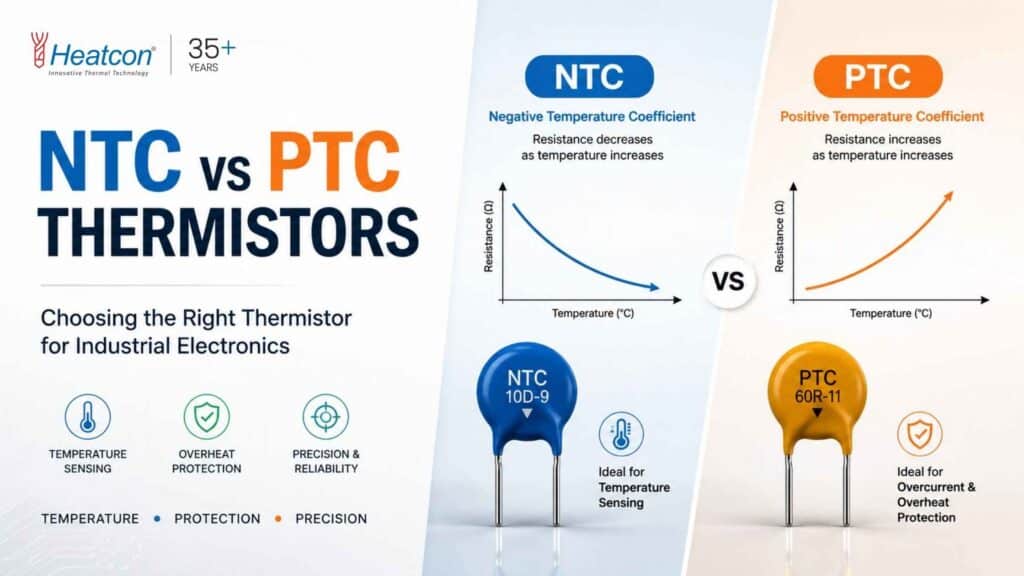
Selecting the correct thermistor for industrial electronics is critical—especially given that nearly 60% of industrial temperature sensing applications rely on thermistors (according to industry research). The distinction between NTC vs PTC thermistor is foundational for engineers and decision-makers. In short:

  • NTC (Negative Temperature Coefficient) thermistors decrease in resistance as temperature increases.
  • PTC (Positive Temperature Coefficient) thermistors increase in resistance as temperature increases.

Both types offer unique advantages in industrial thermistors, so understanding their differences helps ensure optimal performance and reliability in your processes.

How Does Thermistor Temperature Coefficient Influence Selection?

The thermistor temperature coefficient defines how a thermistor’s resistance changes with temperature. For NTC thermistors, the coefficient is negative, meaning resistance drops as temperature rises. For PTC thermistors, the coefficient is positive, so resistance increases with temperature. This property is crucial for designing circuits that require precise temperature monitoring or control.

For example, NTC thermistors are ideal for applications requiring rapid response and accuracy over a broad temperature range, such as in heating elements or industrial process controls. In contrast, PTC thermistors excel in overcurrent protection, self-regulating heating elements, and safety cut-offs—making them indispensable in many modern electronics.

What Are The Key Thermistor Applications In Industry?

Understanding thermistor applications helps you match each thermistor type to its optimal use case. Industrial thermistors are deployed in diverse sectors, including:

  • Temperature sensing in furnaces, ovens, and kilns
  • Overcurrent protection in power supplies and motor drives
  • Compensation circuits in instrumentation
  • Battery pack temperature monitoring
  • HVAC systems and building automation
  • Automotive temperature control and safety systems
  • Consumer electronics and medical devices

At Heatcon Sensors, our specialized knowledge in industrial thermistors ensures that every thermistor is tailored to its end-use, whether it’s for high-density cartridge heaters, electric furnaces, hot air blowers, or advanced industrial ovens.

How To Choose Between NTC Vs PTC Thermistor For Industrial Electronics?

Choosing between NTC vs PTC thermistor depends on the specific thermal profile and protection requirements of your application:

Factor NTC Thermistors PTC Thermistors
Temperature Response Resistance decreases with rising temperature (negative coefficient) Resistance increases with rising temperature (positive coefficient)
Main Applications Temperature sensing, inrush current limitation Self-regulating heaters, overcurrent protection
Accuracy High, especially in narrow ranges Moderate, but reliable for threshold detection
Typical Use Cases Industrial ovens, HVAC, automotive sensors Motor protection, safety cut-offs, heating pads
Response Time Fast Moderate
Cost Generally lower Varies based on application and size

If your system demands rapid, precise temperature measurement—such as in process control or laboratory equipment—NTC thermistors are typically the superior choice. For safety-critical applications or where self-regulation is required, PTC thermistors provide robust, failsafe operation.

Why Are Industrial Thermistors Essential For Modern Manufacturing?

Industrial thermistors are the backbone of reliable temperature monitoring and control in manufacturing. Their high sensitivity, compact size, and customizable characteristics mean they can be integrated into almost any equipment—ensuring optimal performance, efficiency, and safety.

  • Reduce downtime by providing early warning of overheating or abnormal temperature shifts
  • Enhance process quality by maintaining tight temperature tolerances
  • Support compliance with international safety standards
  • Enable predictive maintenance and process automation

With the global shift toward Industry 4.0, demand for advanced industrial thermistors continues to rise. Manufacturers who do not upgrade risk falling behind in both efficiency and safety.

Why Should You Trust Heatcon Sensors For Customized Thermistor Solutions?

Heatcon Sensors is a leading manufacturer and supplier of tailor-made temperature sensors—including NTC and PTC thermistors—serving industries across India and worldwide. With decades of expertise, we understand the nuances of thermistor temperature coefficient and how to harness it for your unique industrial requirements.

Our engineering team collaborates with you to design and manufacture sensors perfectly suited for your operating environment—whether you need sensors for high-density cartridge heaters in Germany, electric furnaces in the US, or hot air blowers in Saudi Arabia. We also cater to the needs of emerging industrial hubs in Indonesia, South Korea, UAE, Russia, Bahrain, and Kuwait.

Heatcon Sensors manufactures a comprehensive range of heat generating equipment, including:

  • Industrial furnaces (electric and gas-fired)
  • Ovens for curing, drying, and baking
  • Hot air blowers and process heaters
  • High-density cartridge heaters
  • Immersion heaters, band heaters, tubular heaters, and more

Every product is built to international standards and performance-tested to meet the most demanding industrial applications.

How To Get The Right Thermistor For Your Application?

Don’t leave your critical processes to chance. Heatcon Sensors offers comprehensive support—from design consultation to on-site delivery—to ensure you get the perfect thermistor for your needs. Our proven process includes:

  1. Needs assessment: Understanding your process environment, temperature range, and application specifics.
  2. Custom engineering: Selecting the ideal NTC or PTC thermistor, optimizing the thermistor temperature coefficient, and designing for form factor and durability.
  3. Manufacturing & quality control: Using only the highest-grade materials and rigorous testing protocols.
  4. Global shipping: Rapid dispatch to any part of India, the US, UAE, Indonesia, Germany, South Korea, Saudi Arabia, Russia, Bahrain, Kuwait, and beyond.
  5. After-sales support: Dedicated engineers available for troubleshooting and process optimization.

You can reach out to Heatcon Sensors in three convenient ways:

About Heatcon Sensors

Heatcon Sensors is a premier temperature sensor and heat equipment manufacturer based in India, with a global clientele spanning the US, UAE, Germany, South Korea, Saudi Arabia, Indonesia, Russia, Bahrain, and Kuwait. Specializing in customized RTDs, NTC and PTC thermistors, and a wide range of heat-generating equipment, Heatcon Sensors is trusted for uncompromising quality, expertise, and customer-centric solutions. Our unwavering commitment to innovation and excellence empowers industries to achieve precise temperature control and operational efficiency worldwide.

Don’t risk process failures or suboptimal performance—partner with Heatcon Sensors for industrial thermistors and advanced heat equipment tailored to your needs, wherever you are in the world.

Frequently Asked Questions

What is the main difference between NTC and PTC thermistors?

The primary distinction between NTC and PTC thermistors lies in how their resistance changes with temperature. NTC (Negative Temperature Coefficient) thermistors decrease in resistance as temperature rises, whereas PTC (Positive Temperature Coefficient) thermistors increase in resistance with rising temperature. This fundamental difference is crucial when selecting components for industrial thermistors, as it determines how they will behave in a given circuit or application.

How does the thermistor temperature coefficient affect performance?

The thermistor temperature coefficient defines how much a thermistor’s resistance changes per degree of temperature change. NTC thermistors have a negative coefficient, while PTCs have a positive one. This characteristic directly impacts sensitivity and suitability for different thermistor applications, such as temperature sensing, compensation, or circuit protection in industrial electronics.

In which industrial thermistor applications should I use NTC vs PTC thermistor types?

NTC thermistors are ideal for precise temperature measurement, temperature compensation, and inrush current limiting. They are widely used in process control, HVAC, and instrumentation. PTC thermistors, on the other hand, are preferred for overcurrent protection, self-regulating heaters, and motor starting applications. The decision between NTC vs PTC thermistor types depends on the specific industrial thermistor application and desired behavior under changing temperatures.

What are the advantages of using thermistors in industrial electronics?

Thermistors offer high sensitivity, fast response times, compact size, and cost-effectiveness. In industrial electronics, they provide accurate temperature measurement, efficient circuit protection, and reliable performance under harsh conditions. Their versatility makes them suitable for a wide range of thermistor applications, from process control to safety systems.

How do I select the right thermistor for my industrial application?

Selecting the right thermistor involves considering the desired temperature range, required accuracy, response time, and environmental conditions. You should also factor in whether an NTC or PTC thermistor’s temperature coefficient aligns with your application’s needs. Consulting with a specialist, like Heatcon Sensors, can help ensure the best fit for your system.

What solutions does Heatcon Sensors offer for industrial thermistors?

Heatcon Sensors provides a comprehensive range of industrial thermistors, including both NTC and PTC types. Their solutions are tailored for precise temperature monitoring, control, and protection in demanding industrial environments. Heatcon Sensors also offers custom-designed thermistor assemblies and expert support for specialized thermistor applications.

Are Heatcon Sensors’ thermistors suitable for harsh industrial environments?

Yes, Heatcon Sensors’ industrial thermistors are engineered to perform reliably in harsh conditions, including extreme temperatures, high humidity, and corrosive atmospheres. Their products are built with robust materials and are extensively tested to ensure durability and long-term stability in demanding industrial thermistor applications.

Can Heatcon Sensors provide custom thermistor solutions for unique applications?

Absolutely. Heatcon Sensors specializes in custom thermistor solutions, working closely with clients to design and manufacture thermistors tailored to specific application requirements. Whether you need a unique thermistor temperature coefficient, custom housing, or specialized electrical characteristics, Heatcon’s engineering team can deliver the right solution.

What support does Heatcon Sensors offer for selecting and integrating thermistors?

Heatcon Sensors provides full technical support throughout the process—from initial product selection to integration and after-sales service. Their team assists with choosing the proper NTC vs PTC thermistor, optimizing circuit design, and ensuring successful deployment for all types of industrial thermistor applications.


What Is Cold Junction Compensation in Thermocouple Measurements?

Cold junction compensation is a critical process in thermocouple measurements that ensures accurate temperature readings by correcting for the temperature at the reference (cold) junction. According to industry sources, inaccurate compensation can lead to temperature errors of up to ±2°C or more, which can have significant implications in industrial applications where precision is crucial. Understanding this concept is vital for professionals seeking reliable temperature control and process safety.

How does cold junction compensation work in thermocouple measurements?

Thermocouples generate a voltage based on the temperature difference between their two junctions: the measuring (hot) junction and the reference (cold) junction. However, since the cold junction is rarely at a fixed 0°C, its actual temperature must be measured and accounted for—a process called cold junction compensation. This ensures that the thermocouple measurement reflects the true temperature at the point of interest, not skewed by the ambient temperature at the reference end.

Cold junction compensation is typically implemented using precision sensors such as RTDs or thermistors placed near the cold junction. These sensors measure the actual temperature of the terminal block or connection point, allowing electronic systems to perform thermoelectric voltage correction and add or subtract the appropriate value to the thermocouple’s output. The result is a highly accurate temperature reading, regardless of fluctuations at the reference junction.

Why is cold junction compensation essential for thermocouple measurement accuracy?

Without cold junction compensation, even the highest-quality thermocouples would produce unreliable data. Thermocouple measurement accuracy depends not only on the sensor itself but also on the ability to accurately correct for the reference junction’s temperature. In a complex industrial environment, ambient temperatures can vary significantly—leading to potential errors that can disrupt process control, impact product quality, or even compromise safety.

  • Ensures reliable process automation and quality control in manufacturing.
  • Prevents costly downtime due to incorrect temperature readings.
  • Is mandatory for compliance with many international standards in industries like pharmaceuticals, food processing, and aerospace.

At Heatcon Sensors, we make thermocouple measurement accuracy a priority by integrating advanced cold junction compensation techniques in every temperature sensor we manufacture.

What is thermocouple CJC and how does it function?

Thermocouple CJC stands for Cold Junction Compensation, a term often used to describe both the process and the specific hardware or circuitry responsible for compensation. The thermocouple CJC system typically involves:

  1. Temperature sensing at the reference junction using an RTD or thermistor.
  2. Analog or digital circuitry to calculate the required compensation value.
  3. Integration with the measurement device to provide a corrected, accurate temperature reading.

This system is fundamental in digital temperature controllers, data acquisition systems, and industrial automation platforms, ensuring seamless integration and dependable results in real-world conditions.

What is thermoelectric voltage correction and why is it important?

Thermoelectric voltage correction refers to the adjustment made to the raw output of a thermocouple to account for the temperature at the cold junction. Since a thermocouple only measures the difference in temperature between its two ends, the measured voltage must be corrected mathematically to provide the absolute temperature at the process end.

The importance of thermoelectric voltage correction cannot be overstated:

  • It translates a differential voltage into a meaningful, usable temperature value.
  • It ensures that process control systems receive precise data, reducing the risk of equipment malfunction or product spoilage.
  • It is a foundational principle in the design of all professional-grade temperature measurement equipment.

Heatcon Sensors employs industry-leading correction algorithms and hardware, ensuring our thermocouples and temperature measurement systems deliver the reliability demanded by critical industries globally.

How does Heatcon Sensors deliver customized thermocouple solutions worldwide?

Heatcon Sensors is a globally recognized manufacturer of customized RTDs, thermocouples, and temperature sensors, catering to the unique requirements of industries in India, the United States, UAE, Indonesia, Germany, South Korea, Saudi Arabia, Russia, Bahrain, Kuwait, and beyond. We understand that every industrial process is unique, demanding tailored solutions for optimal temperature monitoring and control.

  • Custom-built sensors for a range of applications—whether for steel plants, pharmaceuticals, food processing, or aerospace.
  • Compliance with international standards to ensure compatibility and reliability.
  • Rapid delivery across the globe, supporting clients in major cities and industrial hubs.

Our technical team works closely with clients, from concept to deployment, ensuring that every sensor integrates seamlessly into existing systems. Whether you need a single sensor or bulk orders for a new plant, Heatcon Sensors has the expertise, infrastructure, and global reach to deliver.

What other products does Heatcon Sensors manufacture?

Besides being an industry leader in temperature sensors, Heatcon Sensors also manufactures a comprehensive range of heat generating equipment crucial to industrial processes. Our product portfolio includes:

All our products are designed with reliability, longevity, and ease of integration in mind. We support industries ranging from automotive to chemicals, food & beverage to semiconductors, ensuring that every heat generating equipment matches the client’s process demands.

How to get in touch with Heatcon Sensors for your temperature sensing needs?

If you are looking for industry-leading cold junction compensation solutions, or need customized temperature sensors and heating equipment, Heatcon Sensors is your trusted partner. We offer multiple convenient ways to reach out:

Our technical consultants are ready to provide expert guidance, from initial consultation through to technical support post-installation. Don’t let inaccurate temperature measurement put your operations at risk—partner with Heatcon Sensors for the ultimate in thermocouple measurement accuracy.

About Heatcon Sensors

Heatcon Sensors is a leading manufacturer and supplier of industrial temperature sensors, thermocouples, RTDs, and heat generating equipment based in India and serving clients worldwide. With decades of expertise and a commitment to innovation, we deliver solutions that set the standard for accuracy, reliability, and customer satisfaction. Our products are trusted by industries in India, US, UAE, Indonesia, Germany, South Korea, Saudi Arabia, Russia, Bahrain, Kuwait, and many more.

Experience the difference with Heatcon Sensors—where precision meets reliability, and your process safety is always our priority.

Summary table: Key concepts of cold junction compensation in thermocouple measurements

Concept Explanation
Cold junction compensation Correction of the thermocouple reading to account for the temperature at the reference (cold) junction.
Thermocouple CJC System or process that measures and compensates for the cold junction temperature in thermocouple circuits.
Thermocouple measurement accuracy The degree to which the measured temperature matches the actual process temperature, greatly improved by CJC.
Thermoelectric voltage correction Mathematical adjustment applied to the thermocouple’s voltage output to provide a true temperature reading.

Frequently Asked Questions

What is cold junction compensation and why is it essential in thermocouple measurements?

Cold junction compensation is a critical technique used to ensure accurate temperature readings from thermocouples. Since a thermocouple creates a voltage based on the temperature difference between the measuring (hot) junction and the reference (cold) junction, accurately knowing the temperature of the cold junction is essential. Without proper compensation, errors from ambient temperature changes at the reference junction can significantly impact thermocouple measurement accuracy. By applying cold junction compensation, you can correct for these errors and achieve precise temperature readings.

How does thermocouple CJC (Cold Junction Compensation) work?

Thermocouple CJC involves measuring the temperature at the reference junction, usually with a precise electronic sensor such as a thermistor, RTD, or semiconductor sensor. This value is then used to mathematically correct the thermoelectric voltage generated by the thermocouple. The correction ensures that the displayed temperature reflects the true temperature at the measuring junction, not influenced by temperature variations at the reference point.

What happens if cold junction compensation is not applied?

If cold junction compensation is omitted, the output from the thermocouple will not account for changes in the reference junction temperature. This can introduce significant errors into your readings, especially in environments with fluctuating ambient temperatures. The result is compromised thermocouple measurement accuracy, which can lead to incorrect process control or quality issues in temperature-sensitive applications.

What is thermoelectric voltage correction in thermocouple systems?

Thermoelectric voltage correction refers to the adjustment made to the raw voltage signal produced by a thermocouple to account for the temperature at the cold junction. This correction uses the measured cold junction temperature to mathematically adjust the thermocouple’s output, ensuring that the final reading is accurate and representative of the process temperature you wish to measure.

How does Heatcon Sensors ensure reliable cold junction compensation?

Heatcon Sensors integrates high-precision cold junction sensing elements within its thermocouple measurement solutions. These elements, often digital or analog temperature sensors, are carefully placed at the reference junction and interfaced with microprocessor-based instruments. Advanced algorithms are used for thermoelectric voltage correction, guaranteeing optimal thermocouple measurement accuracy, even in challenging environments.

What types of thermocouples and compensation modules does Heatcon Sensors offer?

Heatcon Sensors provides a comprehensive range of thermocouples including Types K, J, T, E, N, R, S, and B, all designed with built-in or external cold junction compensation modules. Our compensation modules are engineered for compatibility with both standard and custom instrumentation, ensuring seamless integration and reliable thermoelectric voltage correction for every application.

Can Heatcon Sensors customize cold junction compensation solutions for unique applications?

Absolutely. Heatcon Sensors specializes in designing customized thermocouple CJC solutions tailored to your industry’s specific requirements. Whether you need compact modules for tight spaces, enhanced accuracy for laboratory use, or robust compensation in harsh industrial environments, our engineering team can deliver a solution that fits your needs.

How do I know if my system requires cold junction compensation?

If your temperature measurement application demands high accuracy or operates in environments where the reference junction temperature may change, you need cold junction compensation. For most industrial, laboratory, and process control scenarios, incorporating a reliable thermocouple CJC system—such as those offered by Heatcon Sensors—is essential for error-free data.

What are the benefits of using Heatcon Sensors’ cold junction compensation technology?

By choosing Heatcon Sensors, you benefit from industry-leading cold junction compensation technology that ensures maximum thermocouple measurement accuracy, robust design for diverse environments, and easy integration with your existing systems. Our expertise in thermoelectric voltage correction and CJC module design helps you achieve reliable, repeatable, and precise temperature readings for critical applications.


Type K vs Type J Thermocouple: Which Performs Better in Harsh Industrial Conditions?

When it comes to demanding industrial environments, the choice between type k vs type j thermocouple is critical for ensuring accurate, reliable temperature measurement. Did you know that over 80% of industrial temperature monitoring setups rely on thermocouples due to their ruggedness, wide temperature range, and adaptability? In this detailed guide, we break down which thermocouple type—K or J—performs better in harsh industrial conditions, empowering you to make an informed decision that optimizes operational efficiency and safety.

What is a thermocouple and why does the type matter?

A thermocouple is a temperature sensor made by joining two dissimilar metals, generating a voltage that correlates with temperature changes. The type k vs type j thermocouple debate is central in industrial applications because each type is engineered for specific environments, temperature ranges, and chemical exposures. Selecting the right thermocouple ensures not just accurate readings but also longevity and process reliability.

What are the differences between type K and type J thermocouple?

The primary distinction in the type k vs type j thermocouple comparison lies in their material composition, temperature range, and environmental resistance:

  • Type K: Composed of Nickel-Chromium (NiCr) and Nickel-Aluminum (NiAl), Type K thermocouples are renowned for their wide thermocouple temperature range (−200°C to 1260°C), excellent oxidation resistance, and stability in harsh atmospheres.
  • Type J: Made of Iron and Constantan, Type J thermocouples operate best within −40°C to 750°C, making them ideal for lower temperature environments but less suitable for oxidizing atmospheres due to iron’s vulnerability to oxidation.

Which thermocouple temperature range is best for your application?

When choosing between type k vs type j thermocouple, it’s essential to match the thermocouple temperature range to your process needs:

Thermocouple Type Temperature Range (°C) Atmosphere Suitability
Type K −200 to 1260 Excellent in oxidizing & inert atmospheres
Type J −40 to 750 Best in reducing, vacuum, or inert environments

If your process frequently exceeds 750°C or operates in oxidizing conditions, Type K is typically the superior choice. For applications where cost is a concern and the temperature remains below 750°C in non-oxidizing conditions, Type J may suffice.

How to select between industrial thermocouple types for harsh conditions?

The selection of industrial thermocouple types goes beyond just temperature range—it’s about choosing the right sensor for chemical resistance, vibration tolerance, and installation constraints. Here’s a quick checklist:

  1. Temperature Range: Match sensor range with process max/min temperature.
  2. Atmosphere Compatibility: Consider oxidation, reduction, moisture, and contamination.
  3. Mechanical Robustness: Evaluate exposure to vibration, shock, and abrasion.
  4. Accuracy Requirements: Select the type that offers the desired precision.
  5. Response Time: Consider diameter and sheath material for fast response.
  6. Replacement and Maintenance: Factor in ease of replacement and long-term cost.

Why are Type K thermocouple uses so prevalent in heavy industry?

Type K thermocouple uses span an array of industries, from metallurgy and power generation to chemical processing and aerospace. Their popularity is attributed to:

  • Exceptional stability across a broad temperature spectrum.
  • Resilience in oxidizing atmospheres and resistance to chemical corrosion.
  • Availability in various sheath materials (Inconel, stainless steel, ceramic) for tailored protection.
  • Compatibility with automation and PLC systems due to standardized signal output.

For example, steel mills, glass manufacturing, and turbine monitoring rely heavily on Type K thermocouples due to their unmatched durability.

What makes Heatcon Sensors the trusted partner for custom temperature sensors?

Heatcon Sensors is a globally recognized manufacturer with an unyielding commitment to quality, precision, and customer satisfaction. We do more than supply standard sensors; we engineer customized RTDs and thermocouples tailored to your unique industrial requirements—no matter how challenging the application or environment.

  • State-of-the-art manufacturing for Type K, Type J, and other industrial thermocouple types.
  • Capability to custom-manufacture and supply sensors across India (Mumbai, Delhi, Bengaluru, Chennai, Hyderabad, Kolkata) and worldwide—including the US, UAE, Indonesia, Germany, South Korea, Saudi Arabia, Russia, Bahrain, and Kuwait.
  • Expertise in supplying sensors for specialized industries such as oil & gas, pharmaceuticals, steel, power, food processing, and more.
  • Comprehensive support—choose from submitting your requirements at our contact form, WhatsApp via our website, or immediate assistance on +91 9164833027 and +91 9844233244.

Heatcon Sensors: Beyond temperature sensing

Our expertise doesn’t stop at temperature sensors. Heatcon Sensors also manufactures a complete line of heat generating equipment, ensuring your process runs efficiently and safely:

  • Industrial and laboratory furnaces
  • Precision ovens for controlled heating
  • High-velocity hot air blowers
  • Advanced electric furnaces for metallurgical and research needs
  • High density cartridge heaters for targeted, efficient heating
  • Immersion heaters, band heaters, tubular heaters, and more

This integrated approach means you can source both sensors and heating equipment from a single, trusted partner—simplifying procurement, support, and maintenance.

How does Heatcon Sensors ensure reliability and global reach?

Every product, whether a standard or custom solution, is manufactured under strict quality protocols and tested for endurance in real-world conditions. With a robust logistics network, Heatcon Sensors delivers temperature sensing solutions to every corner of India and internationally—including emerging markets and established industrial hubs alike.

Our team of experts assists clients in choosing the right type k vs type j thermocouple and other industrial thermocouple types, factoring in considerations like thermocouple temperature range, chemical compatibility, and mechanical strength. With Heatcon Sensors, you’re not just buying a product—you’re gaining a technology partner committed to your long-term success.

Which thermocouple is best for harsh industrial environments?

For most harsh industrial conditions—high temperatures, oxidizing atmospheres, and fluctuating process demands—Type K thermocouples typically outperform Type J due to their wider temperature range and superior corrosion resistance. However, Type J remains a cost-effective, accurate choice for lower temperatures in non-oxidizing environments.

Ultimately, the best solution depends on your process specifics, which is why Heatcon Sensors offers personalized guidance and custom manufacturing to match your exact requirements.

About Heatcon Sensors

Heatcon Sensors is a leading manufacturer of industrial temperature sensors, customized RTDs, thermocouples, and heat generating equipment. Based in India, we serve clients worldwide, offering tailored solutions for every application, industry, and environment.

Don’t compromise on temperature measurement accuracy or equipment durability. Choose Heatcon Sensors for unmatched quality, global reach, and technical expertise. Reach out today—your process deserves the best.

Ready to upgrade your industrial temperature measurement?

  • Submit your requirements at our contact form
  • Message us on WhatsApp via our website
  • Call us at +91 9164833027 or +91 9844233244 for immediate consultation

Frequently Asked Questions

What are the main differences between Type K and Type J thermocouples for industrial use?

The primary differences between Type K and Type J thermocouples are the metals used, temperature range, and their suitability for specific environments. Type K thermocouples (Nickel-Chromium/Nickel-Alumel) offer a broader thermocouple temperature range (-200°C to 1260°C) and excel in oxidizing and inert atmospheres. Type J thermocouples (Iron/Constantan) have a narrower range (-40°C to 750°C) and are more sensitive but less suitable for moist or oxidizing conditions due to iron’s tendency to oxidize. For harsh industrial settings, Type K is generally preferred for its durability and wider usability.

Which thermocouple performs better in harsh industrial conditions: Type K or Type J?

In demanding industrial environments, Type K thermocouples typically perform better. Their superior resistance to oxidation and high temperatures makes them ideal for harsh conditions found in many industrial applications. While Type J thermocouples are suitable for lower temperature ranges and controlled atmospheres, the robust construction of Type K makes it one of the most popular industrial thermocouple types for challenging settings.

How do the thermocouple temperature ranges compare between Type K and Type J?

The thermocouple temperature range is a crucial factor in selection. Type K thermocouples can measure temperatures from -200°C up to 1260°C, making them suitable for a wide variety of industries. In contrast, Type J thermocouples operate reliably from -40°C to 750°C, which restricts their use to moderate temperature processes. If your application requires high-temperature measurement, Type K is the better choice.

What are the typical Type K thermocouple uses in industry?

Type K thermocouple uses are extensive due to their reliability and versatility. They are commonly found in furnaces, kilns, gas turbine exhausts, chemical plants, and heat treatment operations. Their ability to withstand high temperatures and harsh environments makes them a go-to sensor for process control and safety monitoring across various industries.

Are there specific industrial thermocouple types recommended for corrosive or reducing atmospheres?

Yes, in environments that are highly corrosive or reducing, it’s crucial to select the right industrial thermocouple types. While Type K is excellent in oxidizing and inert atmospheres, it can degrade in reducing environments. Heatcon Sensors offers customized sheath materials and protection tubes for both Type K and Type J thermocouples, helping them last longer even in aggressive settings. For extremely corrosive atmospheres, other specialized types may be recommended—contact Heatcon Sensors for expert guidance.

Why should I choose Heatcon Sensors for Type K or Type J thermocouples?

Heatcon Sensors is an industry leader in precision temperature measurement solutions. The company offers a wide range of Type K and Type J thermocouples, each designed for optimal performance in harsh industrial conditions. With advanced manufacturing, strict quality control, and the ability to customize sensors for specific applications, Heatcon Sensors ensures reliable and long-lasting thermocouple performance, coupled with expert technical support.

How does Heatcon Sensors help optimize thermocouple performance in harsh conditions?

Heatcon Sensors provides solutions such as specialized sheaths, mineral insulation, and protective coatings that significantly enhance the operational life and accuracy of Type K and Type J thermocouples. Their engineering team works with clients to select the best configuration for each process, ensuring sensor durability and optimal response even in the most challenging industrial environments.

What factors should I consider when deciding between type k vs type j thermocouple?

When comparing type k vs type j thermocouple, consider the required temperature range, atmosphere (oxidizing, reducing, or corrosive), mechanical durability, and the specific industrial process. Type K is usually chosen for its higher temperature capability and robustness, while Type J is selected for moderate temperatures and where cost is a consideration. Consulting with Heatcon Sensors ensures you get the ideal solution for your application.

Can Heatcon Sensors provide custom thermocouple assemblies for unique industrial requirements?

Absolutely. Heatcon Sensors specializes in custom thermocouple assemblies, including both Type K and Type J, tailored to meet the unique demands of each industrial process. Whether you need special sheath materials, non-standard lengths, or specific mounting arrangements, the Heatcon Sensors team can design and manufacture sensors to your exact specifications.


Why RTD Calibration Drift Happens & How to Prevent Industrial Temperature Failures

RTD calibration drift is a leading cause of unexpected industrial temperature failures, with research indicating that up to 60% of process deviations in temperature-sensitive industries are linked directly to sensor instability and drift over time. Understanding the reasons behind this drift and knowing how to mitigate its impact is crucial for maintaining production efficiency, product quality, and safety. Industrial operators worldwide, from India to the US, UAE, Germany, South Korea, Indonesia, Saudi Arabia, Russia, Bahrain, and Kuwait, must address this challenge to stay competitive and compliant.

What Is RTD Calibration Drift and Why Should You Care?

RTD calibration drift refers to the gradual change in the output signal of a resistance temperature detector (RTD) sensor, causing it to deviate from its original calibration. Over time, this drift results in RTD sensor accuracy loss, which can critically impact process control in industries such as pharmaceuticals, food processing, petrochemicals, and power generation.

  • Drift leads to inaccurate temperature readings.
  • It jeopardizes product quality and plant safety.
  • Frequent equipment failures and costly downtime may arise.

For instance, even a small calibration drift of 0.5°C can result in major product spoilage, equipment malfunction, or regulatory compliance issues. This is why top-performing industries prioritize the management of RTD calibration drift, and why Heatcon Sensors has become the trusted partner for custom RTD solutions globally.

How Does RTD Calibration Drift Occur?

RTD calibration drift typically arises due to several factors that affect the sensor’s internal structure and performance:

  1. Thermal Cycling: Repeated heating and cooling cycles induce mechanical stress and microstructural changes in the sensing element, mainly in platinum RTDs.
  2. Contamination: Exposure to corrosive agents or moisture can cause chemical reactions, affecting the element’s resistance characteristics.
  3. Vibration and Mechanical Shock: Physical impacts can deform the sensing wire or disturb the insulation, leading to drift.
  4. Ageing: With time, even the highest quality RTDs experience slow changes in their physical properties, especially in harsh or variable environments.
  5. Electrical Overstress: Exposure to transient voltage spikes or static discharges can permanently alter the sensor’s resistance.

Specifically, platinum RTD stability is renowned compared to other materials, but even platinum RTDs are not immune to drift, especially under extreme or sustained usage.

What Are the Consequences of RTD Sensor Accuracy Loss?

The most immediate impact of RTD sensor accuracy loss is unreliable temperature measurement. This can manifest as:

  • Product Quality Issues: Incorrect temperature control can spoil batches in food, pharmaceuticals, or chemical processes.
  • System Failures: Overheating or underheating may damage sensitive equipment such as furnaces, ovens, hot air blowers, and electric furnaces.
  • Increased Maintenance: Undetected drift can lead to unplanned shutdowns and costly repairs.
  • Regulatory Non-Compliance: Industries with strict quality standards risk non-compliance, leading to recalls or legal penalties.

In industries with continuous operations, such as oil & gas or power plants, a single undetected drift event can result in losses amounting to millions.

How Can RTD Recalibration Prevent Industrial Temperature Failures?

RTD recalibration is the process of checking and adjusting the sensor to restore its output to the correct reference points. This is an essential maintenance activity to counteract RTD calibration drift and ensure ongoing accuracy.

  • Regular recalibration detects drift early.
  • It minimizes the risk of undetected errors in critical processes.
  • Routine recalibration supports compliance with industry standards and audits.

Heatcon Sensors offers comprehensive industrial calibration services for RTDs and other temperature sensors, including on-site and laboratory calibration. Our expert team uses traceable standards and advanced equipment to guarantee reliable performance in even the harshest industrial environments.

How Often Should RTD Sensors Be Recalibrated?

The ideal frequency of RTD recalibration depends on application severity, regulatory requirements, and sensor environment. However, most industries follow these general guidelines:

  • Critical Processes: Quarterly or even monthly recalibration may be required.
  • General Industrial Use: Semi-annual or annual recalibration is common.
  • After Major Events: Any unusual event (e.g., power surge, mechanical shock) should trigger immediate recalibration.

Custom schedules can be created for unique industrial needs, and Heatcon Sensors can assist in designing a recalibration program tailored to your operations.

What Measures Can Industries Take to Prevent RTD Calibration Drift?

While RTD calibration drift cannot be eliminated entirely, industries can significantly reduce its impact through a combination of best practices and partnering with expert manufacturers like Heatcon Sensors:

  1. Choose High-Quality Sensors: Invest in sensors with proven platinum RTD stability and robust construction, especially for high-temperature or corrosive environments.
  2. Implement Regular RTD Recalibration: Develop and follow a strict recalibration regimen, leveraging qualified industrial calibration services.
  3. Monitor Sensor Performance: Use diagnostic tools or redundancy to cross-check sensor outputs and catch drift early.
  4. Protect Against Environmental Hazards: Shield sensors from moisture, chemicals, and mechanical impacts.
  5. Partner with Experts: Work with trusted manufacturers like Heatcon Sensors who can design custom RTDs and systems for your specific needs.

These steps, when consistently applied, help industries mitigate the risk of catastrophic temperature-related failures and maintain optimal process control worldwide.

Why Choose Heatcon Sensors for Customized RTDs and Temperature Solutions?

Heatcon Sensors is a leading manufacturer and supplier of custom RTDs, thermocouples, and temperature solutions for industries across India and the globe—including the US, UAE, Indonesia, Germany, South Korea, Saudi Arabia, Russia, Bahrain, and Kuwait. We specialize in addressing the unique needs of challenging industrial environments, offering:

  • Custom-designed RTDs with exceptional platinum RTD stability.
  • Comprehensive industrial calibration services for all types of temperature sensors.
  • Rapid delivery and support throughout India and worldwide.
  • Expert engineering for integration with furnaces, ovens, hot air blowers, electric furnaces, high density cartridge heaters, and other heat generating equipment.
  • Unmatched technical support pre- and post-installation.

Our sensors are meticulously crafted to withstand the rigors of your application, ensuring long-term reliability and minimal drift. Whether you operate in Mumbai, New York, Dubai, Jakarta, Berlin, Seoul, Riyadh, Moscow, Manama, or Kuwait City, Heatcon Sensors delivers uncompromising quality and support.

How to Reach Out to Heatcon Sensors for Your Custom Temperature Solutions?

Don’t let RTD calibration drift compromise your operations. Join the ranks of industry leaders who trust Heatcon Sensors for premium temperature measurement solutions. You can reach us in any of the following ways:

Take proactive steps now to prevent costly temperature failures and ensure lasting process accuracy. Choose Heatcon Sensors—where precision meets performance, every time.

About Heatcon Sensors

Heatcon Sensors is a premier manufacturer of customized temperature sensors, including RTDs and thermocouples, as well as heat generating equipment such as furnaces, ovens, hot air blowers, electric furnaces, and high density cartridge heaters. With over three decades of experience, an expert engineering team, and a global delivery network, Heatcon Sensors is the partner of choice for industries seeking reliability, innovation, and unmatched customer service. Our solutions are trusted by clients across India, the US, UAE, Indonesia, Germany, South Korea, Saudi Arabia, Russia, Bahrain, Kuwait, and beyond.

Frequently Asked Questions

What is RTD calibration drift and why does it happen?

RTD calibration drift refers to the gradual loss of accuracy in an RTD sensor’s temperature readings over time. This drift can be caused by factors such as mechanical shock, thermal cycling, contamination, aging of the sensor materials, or exposure to harsh industrial environments. As a result, the sensor’s resistance-to-temperature relationship changes, leading to incorrect temperature measurements.

How can I detect RTD sensor accuracy loss in my process?

RTD sensor accuracy loss is often identified through unexpected deviations in process temperatures, inconsistencies in data trends, or during scheduled calibration checks. Heatcon Sensors recommends regular comparisons with reference standards and monitoring for any unusual shifts or inconsistencies in readings, which could indicate the need for recalibration or sensor replacement.

What are the main causes of platinum RTD stability issues?

Platinum RTD stability can be affected by mechanical vibrations, repeated thermal cycling, contamination by chemicals or moisture, and prolonged exposure to temperatures outside the sensor’s specified range. In industrial settings, even minor contaminations or mechanical stresses can gradually degrade the platinum element, impacting the sensor’s accuracy and long-term performance.

How often should I schedule RTD recalibration to prevent failures?

The frequency of RTD recalibration depends on your application’s criticality, environmental conditions, and manufacturer recommendations. In most industrial applications, an annual recalibration is advisable, but high-stress environments may require more frequent checks. Heatcon Sensors offers tailored recalibration schedules as part of our industrial calibration services to ensure maximum reliability and safety.

What are the consequences of neglecting RTD calibration drift in industrial processes?

Neglecting RTD calibration drift can lead to inaccurate temperature control, reduced product quality, increased energy consumption, and even equipment failures. In critical industries, such errors can cause costly downtime, safety hazards, or regulatory compliance issues. Regular inspection and recalibration help prevent these risks and maintain process integrity.

How does Heatcon Sensors help maintain RTD sensor reliability?

Heatcon Sensors offers advanced industrial calibration services, onsite recalibration, and technical consultation to ensure your RTD sensors perform at their best. Our experienced team uses precision calibration equipment and follows stringent procedures to restore sensor accuracy, minimize downtime, and provide documentation for regulatory compliance.

What solutions does Heatcon Sensors recommend to minimize RTD calibration drift?

Heatcon Sensors recommends using high-quality, industrial-grade RTDs, proper installation techniques, protective sheaths, and scheduled RTD recalibration. Additionally, we advise routine inspections and the use of our industrial calibration services to quickly detect and correct calibration drift before it leads to process failures.

Can RTD calibration drift be completely eliminated?

While it is not possible to eliminate RTD calibration drift entirely due to the nature of sensor aging and environmental factors, it can be significantly minimized. By selecting stable platinum RTDs, following best installation practices, and utilizing regular calibration with Heatcon Sensors’ industrial calibration services, you can ensure long-term sensor performance and minimize the risks of temperature failures in your process.


Pt100 vs Pt1000 RTD Sensors: Which Delivers Better Accuracy for Industrial Automation?

When it comes to precision temperature measurement in industrial environments, the debate of pt100 vs pt1000 sensors is at the forefront. According to industry data, over 60% of modern process automation systems now rely on resistance temperature detectors (RTDs) for critical temperature monitoring, with Pt100 and Pt1000 being the most widely implemented variants. The choice between these two can dramatically influence accuracy, stability, and operational costs for manufacturing and process industries. In this guide, we break down the nuances of RTD sensor comparison, explore the technology behind platinum RTD sensors, and help you make the best industrial RTD selection for your unique requirements.

What Are Pt100 And Pt1000 RTD Sensors?

Both Pt100 and Pt1000 sensors are types of platinum RTD sensors, which operate on the principle that platinum’s electrical resistance changes predictably with temperature. The numbers “100” and “1000” refer to the resistance (in ohms) at 0°C: a Pt100 sensor has a resistance of 100Ω, while a Pt1000 boasts 1000Ω at the same temperature. This fundamental difference leads to variations in sensitivity, wiring configuration, and suitability for diverse industrial applications.

  • Pt100: 100Ω at 0°C, commonly used in process control and laboratory applications.
  • Pt1000: 1000Ω at 0°C, often chosen for building automation and remote sensing where long cable runs are common.

How Does The Accuracy Of Pt100 Vs Pt1000 Compare?

In the context of industrial automation, accuracy is paramount. Both Pt100 and Pt1000 sensors are capable of high-precision measurements, but subtle differences exist. Pt100 sensors have set the industry standard for decades and are typically available in tighter tolerance classes (Class A and 1/10 DIN), offering exceptional accuracy for critical applications. Pt1000 sensors, meanwhile, provide improved immunity to electrical noise, especially over long cable distances, but may exhibit slightly greater self-heating at higher currents.

Accuracy Comparison: Pt100 Vs Pt1000 (IEC 60751 Standard)
Sensor Type Class A Tolerance Class B Tolerance
Pt100 ±(0.15 + 0.002 × |t|)°C ±(0.3 + 0.005 × |t|)°C
Pt1000 ±(0.15 + 0.002 × |t|)°C ±(0.3 + 0.005 × |t|)°C

Both sensor types can achieve identical accuracy classes, but practical factors—such as wiring length, signal conditioners, and installation environment—can cause real-world results to differ. For installations with long cable runs or high electromagnetic interference, the higher base resistance of Pt1000 can reduce measurement errors.

Why Is RTD Sensor Comparison Essential For Industrial Automation?

The process of RTD sensor comparison is critical because every industrial environment has unique demands. For example, chemical plants in Mumbai, power stations in the US, or pharmaceutical factories in Germany may each require different RTD configurations. Choosing the wrong sensor can result in inaccurate readings, increased downtime, or even costly equipment damage. This is why Heatcon Sensors, a trusted manufacturer based in India, specializes in helping industries globally make informed decisions for their temperature monitoring needs.

  • Industry-specific requirements (e.g., hazardous zones, hygiene standards)
  • Environmental factors (humidity, vibration, ambient temperature)
  • Regulatory compliance and documentation

What Are The Core Differences Between Pt100 And Pt1000 Sensors?

While both sensors deliver reliable performance, their construction and suitability differ in several key aspects:

  1. Resistance and Signal Strength: Pt1000 sensors generate a greater voltage signal for the same current, making them less susceptible to noise—especially useful in large-scale facilities in Saudi Arabia or remote oil fields in Russia.
  2. Wiring and Cost: Pt100 sensors often require 3- or 4-wire connections to minimize lead resistance errors. Pt1000 can often be used with just 2 wires, reducing installation costs.
  3. Self-Heating: Higher resistance in Pt1000 can lead to more self-heating at higher currents, which may distort readings if not managed properly.
  4. Availability and Support: Pt100 sensors have broader market acceptance, with a wide selection of transmitters and meters globally, including in Indonesia, South Korea, and Bahrain.

What Are The Pt1000 Advantages In Modern Automation?

The pt1000 advantages are particularly prominent in systems prioritizing simplicity and cost-efficiency. These include:

  • Reduced wiring complexity: Especially valuable for large installations in the UAE or Kuwait.
  • Lower susceptibility to electrical noise: Ideal for environments with high electromagnetic interference.
  • Enhanced suitability for building and HVAC automation: Where long cable runs are common.

However, for applications demanding the tightest tolerances and broadest compatibility with legacy systems, Pt100 may remain the preferred choice.

How To Make The Right Industrial RTD Selection?

Making the optimal industrial RTD selection involves evaluating your process parameters, environmental conditions, and future scalability. Here’s a step-by-step approach:

  1. Define your required accuracy and temperature range.
  2. Assess wiring needs and installation distances.
  3. Consider regulatory standards relevant to your industry and region (for instance, pharmaceutical regulations in Germany or oil & gas standards in the Middle East).
  4. Consult with experienced manufacturers like Heatcon Sensors who can offer customized solutions, whether for furnaces in India, ovens in the US, or high-density cartridge heaters in South Korea.

Why Choose Heatcon Sensors For Customized RTDs And Temperature Solutions?

Heatcon Sensors is a leading manufacturer of platinum RTD sensors and heat-generating equipment including furnaces, ovens, hot air blowers, electric furnaces, and high-density cartridge heaters. With decades of expertise and a global footprint stretching from India to Russia, Indonesia, and beyond, Heatcon is uniquely positioned to deliver tailor-made temperature sensing solutions for every industrial requirement.

  • Custom engineering: RTDs and sensors tailored for your exact process and environment.
  • Comprehensive range: From miniature sensors for laboratory use to robust assemblies for steel plants.
  • Rapid delivery: Logistics capabilities to supply across major cities in India, the US, UAE, Germany, and more.
  • End-to-end support: From technical consultation to after-sales service, ensuring your systems operate at peak efficiency.

How To Reach Out To Heatcon Sensors?

Don’t leave your process accuracy to chance. Experience the Heatcon advantage by choosing the right RTD, custom-built for your industry. You can connect with Heatcon Sensors through any of these convenient options:

  • Submit your information on the contact form.
  • Leave a message on WhatsApp using the interface available on Heatcon Sensor’s website.
  • Call us directly at +91 9164833027 or +91 9844233244 for immediate assistance.

Don’t let suboptimal temperature measurement cost your business in downtime or product quality—reach out today for a consultation and unlock the full potential of your automation systems.

About Heatcon Sensors

Heatcon Sensors is a premier manufacturer and exporter of customized RTDs, thermocouples, and industrial temperature sensors, with a strong commitment to quality and innovation. Based in India and serving clients across the globe—including the US, UAE, Indonesia, Germany, South Korea, Saudi Arabia, Russia, Bahrain, and Kuwait—Heatcon delivers reliable solutions for every industry, from metals and chemicals to pharmaceuticals and building automation. With a legacy of technical excellence and a customer-centric approach, Heatcon Sensors is your trusted partner in precision temperature measurement and process optimization.

Frequently Asked Questions

What is the main difference between Pt100 and Pt1000 RTD sensors?

The primary difference between Pt100 and Pt1000 sensors is their electrical resistance at 0°C: Pt100 has 100 ohms, while Pt1000 has 1000 ohms. This difference impacts wiring, sensitivity, and the suitability for various industrial RTD selection scenarios. Higher resistance in Pt1000 sensors can help reduce the effects of lead wire resistance, especially in long cable runs.

Which sensor delivers better accuracy for industrial automation applications?

Both Pt100 and Pt1000 platinum RTD sensors offer high accuracy, but Pt100 has traditionally been preferred for precision measurements due to its well-established standards and compatibility. However, with modern instrumentation, Pt1000 sensors now rival Pt100 in accuracy and even offer pt1000 advantages such as reduced wiring error in certain setups, making them highly suitable for industrial automation environments.

What are the key benefits of using a Pt1000 sensor over a Pt100 sensor?

Pt1000 sensors have higher resistance, which significantly reduces the impact of lead wire resistance—an important consideration in long-distance installations. This means less need for compensation or extra wiring configurations, lowering overall installation costs. These pt1000 advantages make them ideal in distributed control systems and modern RTD sensor comparison scenarios.

How does Heatcon Sensors ensure quality and accuracy in platinum RTD sensors?

Heatcon Sensors manufactures both Pt100 and Pt1000 platinum RTD sensors with strict adherence to IEC and DIN standards. Each sensor is calibrated and tested for accuracy, stability, and repeatability, ensuring reliable performance in demanding industrial automation applications. Heatcon also offers custom solutions to match precise process requirements.

When should I choose Pt100 over Pt1000 for my process?

Choose Pt100 when your process instrumentation is specifically designed for Pt100 input or when your application demands the highest accuracy at extreme temperatures. Pt100 sensors are also preferred in legacy industrial RTD selection environments where standardization and interchangeability are critical.

Are Pt1000 sensors more cost-effective in industrial RTD selection?

Yes, Pt1000 sensors can be more cost-effective, especially for installations with long cable runs. They require less compensation for cable resistance and can often use simpler two-wire connections, reducing both materials and installation labor. This cost advantage is a key point in the pt100 vs pt1000 debate for large-scale industrial projects.

How does Heatcon Sensors support customers in choosing between Pt100 and Pt1000?

Heatcon Sensors’ technical team provides thorough consultation for RTD sensor comparison, helping customers analyze their process conditions, required accuracy, wiring constraints, and budget. Heatcon’s experts recommend the optimal platinum RTD sensors for your specific industrial automation needs, ensuring long-term reliability and performance.

Are there any limitations to using Pt1000 sensors in industrial applications?

While Pt1000 sensors offer many pt1000 advantages, they can be limited by compatibility with some older measurement equipment, which may only support Pt100 input. It is important to check the specifications of your control or monitoring system, or consult with Heatcon Sensors for guidance on integration.

Can Heatcon Sensors provide both standard and custom RTD sensor solutions?

Absolutely. Heatcon Sensors offers a full range of standard and custom platinum RTD sensors, including both Pt100 and Pt1000 models, with various sheath, connection, and mounting options. Tailored solutions are available for unique industrial RTD selection challenges, ensuring the best fit for your automation systems.


The Ultimate Guide to Industrial Temperature Sensors for High-Accuracy Manufacturing Applications

What are industrial temperature sensors and why are they vital for manufacturing?

Industrial temperature sensors are the backbone of precision in modern manufacturing. According to MarketsandMarkets, the global temperature sensor market is projected to reach USD 7.4 billion by 2026, underlining their indispensable role in industrial process control, safety, and product quality. In high-accuracy manufacturing, even a minor temperature deviation can cause costly defects, downtime, or safety hazards. This comprehensive guide unpacks the essential types of these sensors, their applications, and how Heatcon Sensors—the trusted expert in custom RTD sensors and thermal sensing solutions—can elevate your production capabilities, whether you’re in India, the US, UAE, Germany, Indonesia, South Korea, Russia, Bahrain, Kuwait, or anywhere else in the world.

How do industrial temperature sensors work?

Industrial temperature sensors detect and measure temperature changes in real time. They convert thermal energy into signals that can be interpreted, recorded, or used to control machinery. Their accuracy, speed, and reliability are pivotal in industries like pharmaceuticals, automotive, food processing, and electronics, where precise temperature control directly impacts safety, efficiency, and product quality.

  • Industrial temperature sensors monitor process conditions in everything from furnaces to cleanrooms.
  • They safeguard sensitive manufacturing processes from temperature-related failures.
  • Modern sensors offer digital integration for automated control and monitoring.

What are the main types of industrial temperature sensors?

There are several core types of industrial temperature sensors, each with distinct advantages for specific applications:

Sensor Type Key Features Ideal Applications
RTD Sensors High accuracy, stability, repeatability Pharmaceuticals, chemical plants, food & beverage
Thermocouples Wide temperature range, fast response Furnaces, kilns, metal processing
Thermistors High sensitivity, compact size Medical devices, HVAC, environmental monitoring

At Heatcon Sensors, we specialize in designing and manufacturing each of these sensor types to meet the most demanding industrial applications worldwide.

Why is high-accuracy industrial temperature monitoring essential?

High-accuracy industrial temperature monitoring is critical because even a single degree of variation can compromise product quality, cause batch failures, or spark safety incidents. Automated systems powered by advanced sensors enable real-time alerts and corrective action, reducing waste and ensuring compliance with international standards.

  • Consistent product quality and reduced rework
  • Regulatory compliance across global markets
  • Enhanced process safety and operational efficiency

Heatcon Sensors’ solutions empower manufacturers to achieve uniformity, traceability, and operational excellence, no matter the industry or geographic location.

How do RTD sensors compare to thermocouples and thermistors?

RTD sensors, thermocouples, and thermistors are the most widely used thermal sensing solutions. Here’s how they differ:

  • RTD sensors use pure platinum or nickel elements, offering unmatched accuracy and repeatability for temperatures up to 600°C. They are ideal for sensitive processes requiring precise control.
  • Thermocouples consist of two dissimilar metals joined at one end. They can measure extremely high temperatures (up to 1800°C or more), are robust, and react rapidly to temperature changes.
  • Thermistors utilize semiconductor materials, making them highly sensitive to small temperature variations and perfect for applications with narrow temperature windows.

Each sensor type has its unique strengths. Heatcon Sensors can custom-engineer the right sensor—be it RTD sensors, thermocouples, or thermistors—for your exact industrial requirements.

What are the most common applications of industrial temperature sensors?

Industrial temperature sensors are omnipresent across manufacturing and process industries, including:

  • Furnaces & Ovens: Reliable temperature feedback for heat treatment, metallurgy, ceramics, and more.
  • Pharmaceutical Manufacturing: Maintaining sterile conditions and batch integrity.
  • Food & Beverage: Ensuring safety and consistency during processing and storage.
  • Petrochemicals: Monitoring reactant temperatures for safety and quality.
  • Semiconductor Fabrication: Tight thermal control in wafer processing and cleanrooms.

Heatcon Sensors also supplies sensors for hot air blowers, electric furnaces, high density cartridge heaters, incinerators, reactors, dryers, and custom-built heat-generating equipment. From Bengaluru to Berlin, and Mumbai to Moscow, our sensors keep industries running smoothly.

How do thermal sensing solutions enhance manufacturing efficiency?

Thermal sensing solutions are the foundation of automated process control. By integrating sensors with PLCs, SCADA, or IoT platforms, manufacturers can:

  • Continuously monitor and adjust temperature parameters
  • Predict maintenance needs and prevent equipment failure
  • Optimize energy consumption, reducing costs and emissions
  • Generate data for quality assurance and traceability

With Heatcon Sensors’ tailor-made solutions, you gain a strategic edge in productivity, compliance, and competitiveness.

Why choose Heatcon Sensors for custom industrial temperature sensors?

Heatcon Sensors is a leading manufacturer and exporter of customized industrial temperature sensors and heat-generating equipment. With over three decades of experience, our experts collaborate closely with clients to design, engineer, and deliver solutions that exceed industry benchmarks for accuracy, reliability, and durability.

  • Customization: Every sensor is engineered to your process and environmental requirements
  • Global Reach: We export to India, US, UAE, Indonesia, Germany, South Korea, Saudi Arabia, Russia, Bahrain, Kuwait, and beyond
  • Comprehensive Range: RTD sensors, thermocouples, thermistors, and complete industrial temperature monitoring systems
  • Integrated Solutions: From sensor selection to installation, calibration, and after-sales support

By partnering with Heatcon Sensors, you ensure your manufacturing processes are future-proof, compliant, and optimized for maximum ROI.

How to order industrial temperature sensors from Heatcon Sensors?

Ready to upgrade your industrial temperature monitoring? Choose from any of the following three convenient options to reach out to Heatcon Sensors today:

  1. Submit your requirements on the contact form.
  2. Leave a message directly on WhatsApp using the interface available on our website.
  3. Call us for immediate assistance at +91 9164833027 or +91 9844233244.

Our technical experts will guide you through sensor selection, customization, and rapid delivery—no matter where your facility is located.

About Heatcon Sensors

Heatcon Sensors is an ISO-certified manufacturer based in Bengaluru, India, recognized globally for its excellence in industrial temperature sensors, RTD sensors, thermocouples, thermistors, and advanced thermal sensing solutions. We design, manufacture, and supply custom sensors and heat-generating equipment such as furnaces, ovens, hot air blowers, electric furnaces, and high density cartridge heaters for the world’s most demanding industries.

Our commitment to precision, reliability, and customer satisfaction makes us the preferred partner for manufacturers in India, the US, UAE, Indonesia, Germany, South Korea, Saudi Arabia, Russia, Bahrain, Kuwait, and across the globe.

Don’t let temperature inaccuracies undermine your operations. Partner with Heatcon Sensors for world-class industrial temperature monitoring and unlock the full potential of your manufacturing process.

Frequently Asked Questions

What are industrial temperature sensors and why are they essential in manufacturing?

Industrial temperature sensors are specialized devices designed to measure, monitor, and control temperature in manufacturing environments. They play a vital role in ensuring process stability, product quality, safety, and energy efficiency. By providing accurate and reliable thermal data, these sensors help manufacturers maintain precise process conditions and prevent costly errors or equipment failures.

What types of temperature sensors does Heatcon Sensors offer?

Heatcon Sensors offers a wide range of thermal sensing solutions to suit diverse industrial requirements. Our portfolio includes RTD sensors, thermocouples, and thermistors, each designed for specific applications and temperature ranges. We provide customized sensor configurations to match the accuracy, durability, and response time needed for high-accuracy manufacturing environments.

How do RTD sensors differ from thermocouples and thermistors?

RTD sensors (Resistance Temperature Detectors) rely on the predictable change in electrical resistance of metals (typically platinum) with temperature. They are valued for their high accuracy and stability over a wide range. Thermocouples, on the other hand, generate a voltage based on the temperature difference between two different metals and are robust for extreme temperatures. Thermistors are made from ceramic or polymer materials and exhibit high sensitivity over narrower ranges, making them ideal for precise temperature control in smaller ranges. Heatcon Sensors can help you select the optimal sensor for your process needs.

What factors should be considered when choosing a temperature sensor for industrial applications?

Key factors include the required temperature range, accuracy, response time, environmental conditions (such as vibration, humidity, or corrosive exposure), and ease of integration with existing industrial temperature monitoring systems. Heatcon Sensors provides expert consultation to help you determine the best sensor type and configuration for your manufacturing process.

How does Heatcon Sensors ensure high accuracy and reliability in their industrial temperature sensors?

Our sensors are manufactured using premium-grade materials and advanced calibration techniques to ensure maximum accuracy and repeatability. Each sensor undergoes rigorous quality checks and is designed to withstand challenging industrial environments, delivering reliable temperature data for critical manufacturing operations.

What are the benefits of integrating industrial temperature monitoring with Heatcon Sensors’ solutions?

Integrating industrial temperature monitoring with Heatcon Sensors’ solutions provides real-time insights, reduces unplanned downtime, enhances process control, and supports regulatory compliance. Our sensors and systems can be seamlessly integrated with a variety of control platforms, helping you optimize manufacturing performance and maintain consistent product quality.

Can Heatcon Sensors customize thermal sensing solutions for unique manufacturing challenges?

Absolutely. Heatcon Sensors specializes in tailored thermal sensing solutions for complex and demanding manufacturing scenarios. Whether you need custom sensor geometry, specialized materials, or integration with unique control systems, our engineering team can develop a solution that precisely fits your process requirements.

How do I maintain and calibrate temperature sensors for long-term performance?

Regular inspection, cleaning, and calibration are important to ensure optimal sensor performance. Heatcon Sensors provides maintenance guidelines and calibration services to help extend sensor lifespan and sustain measurement accuracy. We also offer technical support to troubleshoot and resolve any sensor-related issues in your facility.

Are Heatcon Sensors’ products compatible with modern automation and control systems?

Yes, our industrial temperature sensors are designed to integrate seamlessly with today’s data acquisition, PLC, and SCADA systems. We offer a variety of output options and connection interfaces, ensuring compatibility and easy deployment within your existing automation infrastructure.


Industrial PT100 RTD Sensors & Custom Temperature Solutions

What Are Industrial PT100 RTD Sensors And Why Are They Critical For Modern Industry?

Industrial PT100 RTD sensors are precision temperature measurement devices critical for process reliability and safety in diverse applications. According to MarketsandMarkets, the global temperature sensor market is projected to reach USD 8.8 billion by 2026, with PT100 RTDs forming the backbone of precise industrial control. For businesses seeking accuracy, uptime, and compliance, the right sensor is not just an option—it is essential.

As a leading RTD manufacturer India, Heatcon Sensors specializes in designing and manufacturing Industrial PT100 Sensors India for a wide spectrum of industries. From pharmaceuticals and petrochemicals to heavy engineering, food processing, and renewable energy, our sensors ensure optimal temperature control and process assurance in every environment.

How Do Industrial PT100 Sensors Ensure Accurate Temperature Measurement?

Industrial PT100 Sensors India utilize platinum resistance technology, where the electrical resistance of platinum changes predictably with temperature. This allows for unmatched repeatability and high accuracy, often within ±0.1°C, making these sensors the gold standard for temperature measurement in critical processes.

  • High stability: Platinum offers long-term stability, minimizing drift over years of operation.
  • Linear response: PT100 elements provide a nearly linear resistance-to-temperature relationship, simplifying integration with control systems.
  • Wide range: Suitable for measurements from -200°C to +600°C, covering most industrial requirements.
  • Durability: Industrial PT100 sensors are built to withstand harsh conditions, including vibration, humidity, and corrosive atmospheres.

Heatcon PT100 sensors are custom engineered to meet your application’s specific needs, offering tailored immersion lengths, sheath materials (such as stainless steel, Inconel, or PTFE), mounting styles, and electrical connections.

What Makes Custom RTD Sensors Vital For Specialized Applications?

Custom RTD sensors are indispensable where standard solutions fall short. Every industry has unique process requirements—ranging from ultra-high purity, fast response, hazardous area compliance, to miniature form factors for tight spaces. Off-the-shelf products rarely fit these exacting needs.

Heatcon Sensors leverages deep domain expertise to deliver custom RTD sensors for:

  • Pharmaceutical reactors: High accuracy sensors with sanitary fittings and FDA-compliant materials.
  • Food and beverage: Hygienic probes for pasteurization, fermentation, and cold storage monitoring.
  • Power plants: Sensors with robust sheaths for steam lines, turbines, and exhaust systems.
  • Semiconductor manufacturing: Ultra-clean, high-precision sensors for wafer processing equipment.
  • OEM machinery: Miniature RTDs and integrated sensor assemblies for compact or custom-built equipment.

This collaborative approach ensures that your temperature sensing solution is optimized for performance, safety, and total cost of ownership, setting your operations apart from the competition.

Why Choose NABL Calibrated RTDs For Your Process?

NABL calibrated RTDs are temperature sensors that have been tested and certified by laboratories accredited by the National Accreditation Board for Testing and Calibration Laboratories (NABL). This accreditation assures traceability, accuracy, and compliance with international standards such as ISO/IEC 17025.

  • Regulatory compliance: Essential for industries governed by stringent quality standards (pharma, food, power, oil & gas).
  • Audit readiness: NABL certificates stand up to the most rigorous audits and inspections.
  • Operational confidence: Know that your measurements are accurate and consistent shift after shift.

Heatcon Sensors supplies NABL calibrated RTDs, complete with documentation and support, enabling seamless integration into your quality management systems.

What Are Industrial Temperature Sensors And Their Applications?

Industrial temperature sensors encompass a wide range of devices, including thermocouples, thermistors, infrared sensors, and especially resistance temperature detectors (RTDs) like the PT100. These devices are the foundation of process automation, safety, and energy efficiency across sectors.

Common Applications of Industrial Temperature Sensors
Industry Application Sensor Type
Oil & Gas Pipeline monitoring, refinery process control PT100 RTD, Thermocouple
Pharmaceutical Reactor temperature, cleanroom monitoring PT100 RTD, Thermistor
Food & Beverage Pasteurization, chilling, storage PT100 RTD, Infrared
Steel & Metallurgy Furnace temperature, casting control Thermocouple, PT100 RTD
HVAC Building management, air handling units PT100 RTD, Thermistor

With decades of experience, Heatcon Sensors delivers industrial temperature sensors that are reliable, accurate, and built to endure the toughest environments.

How Does Heatcon Sensors Deliver Global Custom Temperature Solutions?

Heatcon Sensors is not limited by geography. Whether your facility is in India, the US, UAE, Indonesia, Germany, South Korea, Saudi Arabia, Russia, Bahrain, or Kuwait, we provide customized sensor solutions with global logistics and technical support.

  • Pan-India presence: Rapid delivery and on-site support across all Indian states and cities.
  • International exports: Expertise in global compliance (ATEX, CE, UL, IECEx), ensuring smooth deployment worldwide.
  • Industry-specific customization: Every sensor is engineered to your process, plant standards, and regulatory needs.

As a trusted RTD manufacturer India, Heatcon Sensors has supplied temperature solutions to leading organizations in oil & gas, power, chemical, automotive, aerospace, and pharmaceutical sectors across continents.

What Makes Heatcon PT100 Sensors The Industry’s Preferred Choice?

Heatcon PT100 sensors have a reputation for uncompromising quality, innovation, and service. Here’s why discerning engineers and plant managers choose us:

  • Engineering excellence: Every sensor is designed and manufactured in state-of-the-art facilities, using only premium materials and precision assembly.
  • Customization at scale: From single-piece prototypes to large production runs, we accommodate every requirement without compromise.
  • Comprehensive documentation: All products are supplied with calibration certificates, material traceability, and installation guidance.
  • Rapid turnaround: Our streamlined processes allow for short lead times, even for highly customized solutions.
  • Expert support: Consult our engineers for application advice, troubleshooting, and after-sales support—no matter your location.

How Can Heatcon Sensors Support Your Heat Generating Equipment Needs?

In addition to world-class temperature sensors, Heatcon Sensors manufactures and supplies a wide range of heat generating equipment essential for industrial processes. Our portfolio includes:

  • Industrial furnaces: High-temperature electric furnaces for metallurgy, ceramics, and glass industries.
  • Ovens: Process ovens for drying, curing, and baking applications.
  • Hot air blowers: For HVAC, drying, and process heating.
  • High density cartridge heaters: Compact, powerful heating elements for dies, molds, and packaging equipment.
  • Immersion heaters: Efficient liquid heating for water, oil, and chemical baths.
  • Custom-built heating solutions: From tubular heaters to band and strip heaters, tailored for your process.

All heat generating equipment is designed for seamless integration with our industrial temperature sensors, ensuring complete system compatibility and safe operation.

How To Order Or Consult With Heatcon Sensors?

Choosing the right sensor or heating solution is vital for your business’s success. Don’t risk downtime, compliance issues, or costly measurement errors with generic products. Trust a partner who understands your industry, your challenges, and your vision for excellence.

  1. Submit your requirements or query using the contact form.
  2. Message us directly on Whatsapp via the interface at our website.
  3. Call us for immediate assistance at +91 9164833027 or +91 9844233244.

Experience the difference of working with the foremost name in Industrial PT100 Sensors India and custom RTD sensors. Join leading companies who rely on Heatcon Sensors for their mission-critical temperature and heating needs—wherever you are in the world.

About Heatcon Sensors

Heatcon Sensors is a premier designer and manufacturer of industrial temperature sensors, RTDs, and heat generating equipment based in Bangalore, India. With a commitment to engineering excellence, innovation, and global service, Heatcon Sensors empowers industries with reliable temperature solutions that drive productivity, compliance, and operational safety. Discover the benchmark for quality and customization—discover Heatcon Sensors.

Frequently Asked Questions

What are Industrial PT100 RTD Sensors and why are they important?

Industrial PT100 RTD sensors are precision temperature sensors widely used in process and manufacturing industries across India. They use platinum with a resistance of 100 ohms at 0°C to deliver accurate and stable temperature measurements. Their reliability and repeatability make them essential for critical industrial applications where temperature control is vital for safety, efficiency, and product quality.

What makes Heatcon PT100 sensors stand out from other industrial temperature sensors?

Heatcon PT100 sensors are known for their robust construction, high accuracy, and long-term stability in harsh industrial environments. As a leading RTD manufacturer India, Heatcon offers a wide range of industrial temperature sensors that comply with international standards. Their sensors are customizable and can be tailored to suit specific application needs, delivering reliable performance in varied industry sectors.

Can Heatcon Sensors provide custom RTD sensors for unique industrial requirements?

Yes, Heatcon specializes in designing and manufacturing custom RTD sensors. Whether you need unique dimensions, special materials, specific mounting options, or advanced wiring configurations, Heatcon’s engineering team can develop custom solutions that perfectly match your process requirements, ensuring optimal temperature measurement and integration with your systems.

Are Heatcon’s RTD sensors NABL calibrated?

Absolutely. Heatcon Sensors provides NABL calibrated RTDs, ensuring traceability and compliance with national and international quality standards. NABL calibration guarantees that every sensor’s accuracy is validated, giving customers confidence in their measurement processes and meeting industry audit requirements.

What industries typically use Industrial PT100 Sensors India from Heatcon?

Industrial PT100 Sensors India supplied by Heatcon are widely used in sectors like chemical processing, pharmaceuticals, food and beverage, power generation, oil & gas, automotive, and HVAC. Their versatility and reliability make them a preferred choice for any industry where accurate and robust temperature monitoring is crucial.

How does Heatcon ensure the quality and reliability of their industrial temperature sensors?

As a trusted RTD manufacturer India, Heatcon follows strict quality control procedures throughout the design, manufacturing, and calibration process. All sensors undergo rigorous inspection and testing, and the use of high-grade materials along with advanced manufacturing techniques ensures long-lasting reliability even in demanding industrial environments.

Can Heatcon Sensors assist with replacement or retrofitting of existing temperature sensors?

Yes, Heatcon offers comprehensive solutions for replacing or retrofitting existing industrial temperature sensors. Their team can assist in identifying compatible sensor types, custom RTD sensors, and mounting options to ensure a seamless transition with minimal downtime in your processes.

What support does Heatcon provide for selecting the right sensor for my application?

Heatcon’s expert team offers personalized consultation to help you select the best sensor for your application. By understanding your process needs, environmental conditions, and measurement requirements, they recommend ideal Heatcon PT100 sensors or custom RTD sensors for optimal performance and longevity.

Does Heatcon offer after-sales support and calibration services for RTD sensors?

Yes, Heatcon provides comprehensive after-sales support, including technical guidance, troubleshooting, and periodic calibration services for their NABL calibrated RTDs. This ensures your sensors continue to deliver accurate and reliable readings throughout their operational life.


How to Test a 3 Wire RTD Sensor Using a Multimeter

Are you seeking a reliable method to Test 3 Wire RTD Sensor with a multimeter? You are not alone—according to industry reports, over 60% of industrial temperature measurement faults are traced back to improper sensor testing and maintenance. This in-depth guide explores every aspect of 3 wire RTD sensor testing, ensuring you avoid costly downtime and harness the full potential of your industrial processes.

What Is A 3 Wire RTD Sensor And Why Is Its Testing Important?

A 3 wire RTD (Resistance Temperature Detector) sensor is a precision temperature measurement device commonly used in industries where accuracy and reliability are paramount. The three-wire configuration is specifically designed to minimize the impact of lead wire resistance, ensuring accurate readings even in harsh environments. If not tested correctly, even the best sensor can yield inaccurate temperature readings, potentially disrupting your entire production line.

How To Test A 3 Wire RTD Sensor Using A Multimeter?

To Test 3 Wire RTD Sensor, follow these steps:

  1. Identify the wires: Typically, two wires are of the same color (representing one side of the element), and the third wire is a different color (representing the other side).
  2. Set your multimeter: Switch your multimeter to the resistance (Ω) mode for PT100 multimeter testing.
  3. Measure resistance between pairs: Measure between each combination of the three wires (A-B, B-C, and A-C).
  4. Interpret results: For a PT100 RTD, the resistance between the wires should be nearly identical, with the value close to 100Ω at 0°C. Any significant deviation may indicate a problem.

This straightforward method ensures accuracy in your RTD continuity check and RTD resistance testing, catching issues before they escalate.

What Are The Common Issues Detected During PT100 Multimeter Testing?

PT100 multimeter testing can reveal several issues:

  • Open Circuit: If the multimeter shows infinite resistance, the RTD sensor may have a broken wire or failed element.
  • Short Circuit: Very low resistance suggests the wires are shorted, which can cause false readings.
  • Lead Wire Imbalance: Unequal resistance between the wires indicates lead wire faults, which can degrade sensor accuracy.

By conducting a thorough RTD continuity check, these issues can be detected early, saving valuable operational time and resources.

Why Is RTD Resistance Testing Crucial For Industrial Applications?

RTD resistance testing is the backbone of reliable temperature measurement in critical industries such as pharmaceuticals, food processing, metallurgy, and chemical manufacturing. Inaccurate temperature sensing leads to compromised product quality, safety risks, and increased maintenance costs. Regular testing ensures your sensors deliver consistent performance, comply with industry standards, and extend their operational lifespan.

How To Perform PT100 Diagnostics For Accurate Troubleshooting?

PT100 diagnostics involves analyzing resistance readings, checking for insulation breakdown, and validating sensor response across temperature ranges. A systematic diagnostic approach includes:

  • Verifying baseline resistance at 0°C (should be close to 100Ω).
  • Examining sensor response by gently increasing temperature and noting proportional resistance changes.
  • Comparing readings with manufacturer specifications for your specific PT100 RTD.

This process pinpoints faults with precision, enabling timely corrective action.

Who Should You Trust For Reliable RTD Sensors And Testing Expertise?

For industries demanding precision and durability, Heatcon Sensors stands as the trusted manufacturer of customized RTDs and other temperature sensors. With decades of expertise, Heatcon Sensors tailors solutions to meet unique industrial requirements, ensuring optimal performance in even the most challenging environments.

Heatcon Sensors not only excels in the manufacture of RTDs but also offers a comprehensive product lineup including:

The company’s commitment to quality, precision, and service excellence has made it the preferred partner for industries across India and globally.

Where Can You Source Custom Temperature Sensors Globally?

Whether you are based in India, the United States, UAE, Indonesia, Germany, South Korea, Saudi Arabia, Russia, Bahrain, or Kuwait, Heatcon Sensors can custom manufacture and supply temperature sensors to any location. Their extensive logistics network and robust quality assurance processes ensure timely delivery and consistent performance, no matter where your operations are located.

Step-By-Step Guide: How To Test A 3 Wire RTD Sensor Using A Multimeter

To help you quickly troubleshoot and validate your RTD sensor, here’s a concise, snippet-ready summary of the process:

  1. Disconnect the RTD sensor from the process control or PLC system.
  2. Identify the three wires (usually two wires of the same color and one of a different color).
  3. Set your digital multimeter to the lowest resistance (Ω) range.
  4. Test each pair of wires (A-B, B-C, A-C) and record the readings.
  5. Check for continuity: All readings should be similar and close to the RTD’s base resistance (e.g., 100Ω for PT100 at 0°C).
  6. Interpret results: Any deviation suggests potential faults requiring further PT100 diagnostics or replacement.

By following these steps, you ensure the reliability and accuracy of your temperature measurements, reducing the risk of process disruptions.

How Can Heatcon Sensors Add Value To Your Processes?

Choosing Heatcon Sensors is more than a purchase—it’s a partnership in boosting your process efficiency and reliability. Here’s what you gain:

  • Expertise: Decades of specialized knowledge in RTD manufacturing and diagnostics.
  • Customization: Sensors tailored to your exact specifications, ensuring seamless integration and optimal performance.
  • Global Reach: Seamless exports across India and worldwide, including all major industrial hubs.
  • Comprehensive Solutions: One-stop shop for all temperature sensing and heat generating needs.
  • Support: Responsive customer service ensures you are never left in the dark.

Don’t Risk Process Downtime: Act Now

Ineffective RTD testing can lead to production losses, safety hazards, and regulatory non-compliance. Don’t leave your processes to chance—partner with Heatcon Sensors and experience the difference a true industry leader can make.

How To Reach Out To Heatcon Sensors?

Ready to enhance your process reliability and access world-class temperature sensing solutions? Choose any of the following options to connect with Heatcon Sensors:

Don’t settle for less—choose Heatcon Sensors for accuracy, reliability, and peace of mind.

About Heatcon Sensors

Heatcon Sensors is a globally recognized manufacturer and supplier of customized RTDs, thermocouples, and a comprehensive range of temperature sensing and heat-generating equipment. Based in India and serving clients across the globe—including the US, UAE, Indonesia, Germany, South Korea, Saudi Arabia, Russia, Bahrain, and Kuwait—Heatcon Sensors is synonymous with quality, innovation, and customer-centric solutions. Trust Heatcon Sensors to deliver excellence, wherever you are.

Frequently Asked Questions

What is a 3 wire RTD sensor and why is it commonly used?

A 3 wire RTD (Resistance Temperature Detector) sensor is a type of temperature sensor that uses three wires to compensate for lead wire resistance. This design helps improve accuracy in industrial environments by minimizing the error caused by the resistance of the connecting wires. Among the most common is the PT100 sensor, which is widely used due to its reliability and precise temperature measurement.

How do I Test 3 Wire RTD Sensor using a multimeter?

To Test 3 Wire RTD Sensor, set your multimeter to measure resistance (Ω). Identify the three wires—often two are the same color (let’s call them A and B), and the third (C) is different. Measure resistance between A-B, A-C, and B-C. The readings between A-B and A-C should be very close, as they represent the sensor plus one lead each. B-C should read just the resistance of two leads. Consistency in these readings indicates a healthy sensor. For detailed step-by-step guidance, Heatcon Sensors provides technical support and documentation tailored to your RTD model.

What is the correct procedure for PT100 multimeter testing?

For PT100 multimeter testing, first disconnect the sensor from the circuit. Set the multimeter to the lowest resistance range. Measure between each pair of wires. For a PT100 at room temperature (about 25°C), the resistance should be close to 109.7 ohms. Similar readings between the matched color wires and the third wire confirm the sensor is intact. Abnormal values may indicate open or short circuits. Heatcon Sensors can supply calibration data and replacement PT100s if needed.

How can I perform an RTD continuity check?

To conduct an RTD continuity check, use your multimeter’s continuity function. Test between each wire pair. You should hear a beep (or see continuity) between any two wires, confirming the circuit is complete. If no continuity is detected, the RTD may have an internal break. Heatcon Sensors offers diagnostic services and expert advice for troubleshooting RTD continuity issues.

What resistance value should I expect during RTD resistance testing?

During RTD resistance testing, a PT100 sensor should read approximately 100 ohms at 0°C, and about 109.7 ohms at 25°C. Any significant deviation from these values may indicate sensor damage or wiring issues. For precise temperature-to-resistance reference tables, Heatcon Sensors can provide the necessary data and technical support for your specific RTD type.

What are typical signs of a faulty RTD sensor during PT100 diagnostics?

Common signs of a faulty RTD during PT100 diagnostics include no continuity between wires, resistance values far outside the expected range, or unstable readings that change erratically. Such symptoms may result from physical damage, corrosion, or internal breaks. Heatcon Sensors can assist with expert diagnostics and recommend suitable replacement sensors if required.

Can Heatcon Sensors assist with RTD sensor testing and troubleshooting?

Absolutely. Heatcon Sensors provides technical support, troubleshooting guides, and on-site PT100 diagnostics for all types of RTDs. Whether you’re performing a simple RTD continuity check or require advanced RTD resistance testing, our team is equipped to help you ensure sensor performance and reliability.

Are there any precautions to consider when testing a 3 wire RTD sensor?

Yes. Always disconnect the sensor from live circuits before performing any tests. Avoid applying excessive voltage or current, as it may damage the sensor. Use a calibrated multimeter for accurate PT100 multimeter testing and avoid shorting the wires during measurement. For best practices, consult Heatcon Sensors’ technical resources or speak with our support team.

What solutions does Heatcon Sensors offer for RTD sensor maintenance?

Heatcon Sensors offers a wide range of services including RTD sensor selection, calibration, on-site PT100 diagnostics, and replacement solutions. Our team can help you choose the right sensor, provide guidance on how to Test 3 Wire RTD Sensor, and support you with detailed RTD resistance testing procedures to maximize accuracy and longevity in your temperature measurement applications.


Best RTD Extension Cables for 3 Wire PT100 Sensors

What Are The Best RTD Extension Cables For 3 Wire PT100 Sensors?

The best RTD extension cables for 3 wire PT100 sensors are those that ensure maximum signal integrity, robust EMI protection, and long-term reliability in industrial environments. According to recent market research, over 60% of industrial temperature failures are attributed to poor cable selection and installation, emphasizing the critical role of high-quality RTD extension cables. Choosing the correct extension cable can directly impact measurement accuracy, equipment lifespan, and overall process efficiency.

For industries where process control and safety are paramount, such as pharmaceuticals, power generation, and chemical manufacturing, using the right RTD extension cable is not just a technical requirement—it is a business imperative. This guide explores the essential factors to consider, the importance of shielding and EMI protection, and why Heatcon Sensors is the most trusted name for custom RTDs and industrial temperature solutions in India and globally.

Why Is RTD Extension Cable India Preferred For Industrial Applications?

RTD Extension Cable India is highly sought after due to the region’s robust industrial base, reliable manufacturing standards, and access to advanced customization by leading manufacturers like Heatcon Sensors. With the rapid expansion of India’s process industries, the demand for high-performance RTD extension cables has surged.

Indian RTD extension cables are engineered for challenging environments, ensuring consistent signal transmission between RTD sensors and control equipment. This reliability is critical for sectors operating in extreme conditions—be it refineries in Saudi Arabia, pharmaceutical plants in the United States, semiconductor facilities in South Korea, or energy infrastructure in Germany.

  • Wide availability of high-grade materials and manufacturing expertise
  • Customization for unique industrial requirements
  • Efficient logistics supporting pan-India and global distribution

How To Choose The Right PT100 Extension Cable For Your Application?

The PT100 extension cable is a specialized cable designed to connect PT100 temperature sensors to instrumentation while preserving the sensor’s accuracy. To select the ideal cable, consider the following factors:

  1. Conductor Material: Copper is standard, but nickel-plated copper or silver-plated options offer enhanced corrosion resistance.
  2. Insulation Type: Choose from PVC, PTFE, or silicone based on temperature and chemical exposure.
  3. Shielding: Essential for environments with electrical noise (see shielded RTD cable below).
  4. Cable Construction: 3-wire cables are standard for PT100 sensors to compensate for lead resistance errors.
  5. Temperature Range: Ensure the cable’s rating matches your process conditions.

Heatcon Sensors offers PT100 extension cable options with precise construction and material selection, ensuring consistent and accurate readings across all environments.

What Makes Shielded RTD Cable Essential In Industrial Settings?

Shielded RTD cable is indispensable for maintaining measurement accuracy in environments exposed to electromagnetic interference (EMI). Shielding prevents external electrical noise from corrupting the low-level signals transmitted by RTD sensors, especially over long cable runs.

Industrial plants, with heavy machinery, variable frequency drives, and high-voltage equipment, generate significant EMI. Without shielded RTD cable, RTD signals may become distorted, leading to false readings and process disruptions. Heatcon Sensors manufactures shielded RTD cables with both foil and braided shields for superior EMI rejection.

How Does RTD Cable Selection Impact Sensor Performance?

RTD cable selection is crucial because the wrong choice can introduce errors, signal loss, and even sensor failure. Selecting the correct cable involves matching the cable’s electrical characteristics, insulation, mechanical strength, and environmental resistance to your application.

Heatcon Sensors supports clients with detailed consultation for RTD cable selection, considering factors such as cable length, ambient temperature, chemical exposure, and mechanical stresses. Proper selection ensures:

  • Accurate temperature readings
  • Reduced downtime and maintenance costs
  • Compliance with industry standards and safety regulations

Why Is EMI Protection Cable Important For RTD Installations?

EMI protection cable is specifically engineered to safeguard sensitive RTD signals from electromagnetic interference. In industries like oil & gas, pharmaceuticals, and electronics manufacturing, EMI can lead to significant measurement errors or even system shutdowns.

By choosing an EMI protection cable from Heatcon Sensors, industries benefit from:

  • Consistent, noise-free signal transmission
  • Enhanced reliability in high-EMI environments
  • Peace of mind, knowing your process is protected

What Role Does RTD Signal Cable Play In Data Accuracy?

The RTD signal cable is the physical link through which accurate temperature data is transmitted from the sensor to your monitoring system. Any compromise in cable quality or installation can degrade signal fidelity, resulting in inaccurate measurements and potential process failures.

Heatcon Sensors uses premium RTD signal cable materials and advanced construction techniques to minimize resistance, capacitance, and signal loss—delivering precise temperature readings every time.

Heatcon Sensors: Your Global Partner For Custom RTDs And Cables

Heatcon Sensors is an industry leader in designing, manufacturing, and supplying RTD extension cables, PT100 extension cable solutions, shielded RTD cable, and high-performance temperature sensors. With a legacy of serving clients in India, the United States, UAE, Indonesia, Germany, South Korea, Saudi Arabia, Russia, Bahrain, and Kuwait, Heatcon Sensors is synonymous with quality and global reach.

  • Custom-manufactured RTD and thermocouple sensors for any application
  • State-of-the-art heat generating equipment: industrial furnaces, ovens, hot air blowers, electric furnaces, high density cartridge heaters, and more
  • Worldwide shipping and technical support
  • Dedicated customer service—accessible online, via WhatsApp, or phone

Heatcon Sensors can custom manufacture and supply temperature sensors and cables to any part of India or across the globe, delivering unmatched expertise and reliability.

How To Order Your RTD Extension Cable From Heatcon Sensors?

Securing the right RTD extension cable is easier than ever with Heatcon Sensors. Choose from three convenient options:

  1. Submit your requirements using the online contact form.
  2. Leave a message on WhatsApp via the widget on the Heatcon Sensors website.
  3. Call directly for immediate assistance at +91 9164833027 or +91 9844233244.

Don’t leave your process reliability to chance—partner with the experts at Heatcon Sensors for tailored RTD and cable solutions.

Why Choose Heatcon Sensors For Your Temperature Sensing Needs?

Choosing Heatcon Sensors means investing in proven quality, technical expertise, and unwavering support. When temperature measurement accuracy and industrial safety are at stake, only the best will do. With decades of experience and a commitment to excellence, Heatcon Sensors stands out as the preferred choice for industries in India and worldwide.

  • Expertise in RTD cable selection, design, and manufacturing
  • Comprehensive EMI protection cable and shielded RTD cable offerings
  • Global logistics and responsive customer service
  • End-to-end solutions, from sensors to heat generating equipment

Don’t risk costly downtime or inaccurate measurements. Trust Heatcon Sensors to deliver the best RTD extension cables for 3 wire PT100 sensors—engineered for your success.

About Heatcon Sensors

Heatcon Sensors is a renowned manufacturer of temperature sensors and heat generating equipment based in India, serving clients across the globe. Specializing in RTD extension cables, PT100 extension cables, shielded RTD cables, EMI protection solutions, and custom sensor manufacturing, Heatcon Sensors supports critical industries in the US, UAE, Indonesia, Germany, South Korea, Saudi Arabia, Russia, Bahrain, and Kuwait.

The company’s product portfolio includes RTDs, thermocouples, high density cartridge heaters, industrial furnaces, ovens, hot air blowers, electric furnaces, and more—backed by trusted expertise and responsive service.

Make the smart choice—opt for Heatcon Sensors and enjoy unmatched quality, reliability, and support for all your industrial temperature sensing requirements.

Frequently Asked Questions

What is a 3 wire PT100 RTD sensor and why is the extension cable important?

A 3 wire PT100 RTD sensor is a type of resistance temperature detector that uses three wires to compensate for lead resistance, ensuring accurate temperature measurement. The extension cable used with these sensors is crucial, as it helps maintain signal integrity from the sensor to the instrumentation. High-quality PT100 extension cable minimizes errors, reduces signal loss, and ensures that the temperature readings remain precise over longer distances.

What makes Heatcon Sensors’ RTD Extension Cables suitable for use in India?

Heatcon Sensors offers RTD Extension Cable India solutions that are specifically engineered for local standards, climatic conditions, and industrial requirements. Their cables are manufactured with high-grade insulation and conductor materials, ensuring long-term performance, reliability, and compatibility with PT100 sensors used across various Indian industries.

How do I choose the best RTD extension cable for my application?

RTD cable selection depends on several factors, including the sensor type (such as 3 wire PT100), installation environment, required cable length, and exposure to electrical noise or harsh conditions. Heatcon Sensors helps customers select the right cable by offering options with different insulation types, conductor materials, shielding, and temperature ratings to best match the specific requirements of each application.

Why is shielding important in RTD extension cables?

Shielding in an RTD extension cable is essential for protecting sensitive temperature signals from electromagnetic interference (EMI) and radio frequency interference (RFI). A shielded RTD cable, like those supplied by Heatcon Sensors, minimizes noise pickup, ensuring that the RTD signal cable transmits accurate and stable readings, especially in environments with heavy electrical equipment.

What insulation materials are recommended for PT100 extension cable?

Heatcon Sensors provides PT100 extension cable options with various insulation materials such as PVC, PTFE (Teflon), and Silicon. The choice depends on the operating temperature, chemical exposure, flexibility needs, and installation environment. PTFE is ideal for high temperatures and chemical resistance, while PVC is suitable for general-purpose applications.

How does Heatcon Sensors ensure EMI protection in their cables?

Heatcon Sensors offers EMI protection cable solutions by incorporating high-quality shielding, such as aluminum foil or braided shields, into their RTD extension cables. This construction provides an effective barrier against electromagnetic interference, which is vital for maintaining measurement accuracy in electrically noisy manufacturing environments.

Can these cables be used for both indoor and outdoor installations?

Yes, Heatcon Sensors offers RTD signal cable products that are designed for both indoor and outdoor use. Depending on the environmental conditions, you can select cables with enhanced weather resistance, UV protection, and robust insulation to ensure durability and reliable performance in all types of installations.

What certifications or standards do Heatcon Sensors’ RTD cables meet?

Heatcon Sensors’ RTD extension cables comply with international and Indian standards for safety, reliability, and performance. This includes adherence to IS, IEC, and other relevant norms, ensuring that customers receive cables that meet stringent quality requirements for industrial applications.


Wheatstone Bridge Circuit in 3 Wire RTD Sensors Explained

The Wheatstone Bridge RTD Circuit is the gold standard for precise temperature measurement in industrial applications, forming the backbone of over 70% of 3 wire RTD sensor installations worldwide. This robust technology enables industries to achieve high accuracy, reliability, and consistency even in challenging environments. For businesses in India, the USA, UAE, Indonesia, Germany, South Korea, Saudi Arabia, Russia, Bahrain, and Kuwait, understanding the Wheatstone Bridge RTD Circuit is essential to optimizing temperature monitoring, reducing downtime, and ensuring product quality.

What Is The Wheatstone Bridge RTD Circuit And Why Is It Used In 3 Wire RTD Sensors?

A Wheatstone Bridge RTD Circuit is an electrical network that measures the resistance change of an RTD element with exceptional precision. It is widely used in 3 wire RTD sensors to compensate for wire resistance, eliminating measurement errors that could otherwise compromise process control. In essence, the Wheatstone Bridge circuit provides a reliable way to convert resistance changes—caused by temperature fluctuations—into readable voltage signals for accurate monitoring.

  • It greatly improves measurement accuracy by compensating for lead wire resistance.
  • It is the preferred method for industrial-grade temperature sensors, especially PT100 and PT1000 RTDs.
  • Its configuration supports robust signal integrity even over long cable runs.

How Does The RTD Bridge Circuit Work?

The RTD bridge circuit operates by forming a balanced Wheatstone bridge, typically using four resistors: three fixed and one variable (the RTD sensor itself). As temperature changes, the RTD’s resistance shifts, unbalancing the bridge and generating a differential voltage. This voltage can be amplified and interpreted as a direct measure of temperature.

In a 3 wire RTD setup, two leads connect to one side of the RTD element, and the third to the other. This arrangement allows the circuit to cancel out the effects of lead wire resistance—a critical factor for precise temperature measurement in industrial settings.

Key Functions of RTD Bridge Circuit
Function Benefit
Lead Wire Compensation Eliminates error from wire resistance
Signal Amplification Enables accurate signal transmission over long distances
Noise Rejection Improves stability and reduces false readings

What Is PT100 Bridge Wiring And Why Does It Matter?

PT100 bridge wiring refers to the method of connecting a PT100 RTD sensor (which has a resistance of 100 ohms at 0°C) in a Wheatstone bridge configuration. Proper PT100 bridge wiring ensures that the sensor delivers precise temperature readings, especially when used in harsh or high-precision applications.

  • It reduces temperature measurement errors to less than 0.1°C in most practical scenarios.
  • It is critical for industries such as pharmaceuticals, food processing, petrochemicals, and power generation.
  • PT100 bridge wiring can be customized for unique industrial requirements, ensuring seamless integration with existing systems.

How Does RTD Signal Conditioning Enhance Industrial Temperature Measurement?

RTD signal conditioning transforms the low-level voltage output of the Wheatstone Bridge RTD Circuit into a strong, stable signal suitable for digital or analog control systems. This process involves amplification, filtering, and sometimes linearization to ensure that the final output is both accurate and noise-resistant.

  1. Amplification: Boosts the small voltage difference for easier processing.
  2. Filtering: Removes electrical interference and noise, ensuring stable readings.
  3. Linearization: Corrects the slight non-linear response of RTD sensors, providing a proportional output to temperature.

The result is a clean, reliable signal that forms the foundation of advanced process automation and control, reducing costly errors and improving efficiency.

What Is RTD Analog Measurement And Why Is It Still Relevant?

RTD analog measurement refers to the direct conversion of the Wheatstone Bridge RTD Circuit output into a continuous voltage or current that can be read by analog instruments or controllers. Despite the rise of digital systems, analog measurement remains critical in many legacy and high-speed applications due to its simplicity, robustness, and real-time response.

Heatcon Sensors utilizes RTD analog measurement techniques in their custom temperature sensors to ensure compatibility with a wide range of industrial equipment, both modern and traditional. This flexibility allows industries to upgrade or retrofit their systems without expensive overhauls.

Why Choose Heatcon Sensors For Your Customized RTD And Temperature Sensing Needs?

Heatcon Sensors is a globally recognized manufacturer of customized RTDs and other temperature sensors, serving industries across India, the USA, UAE, Indonesia, Germany, South Korea, Saudi Arabia, Russia, Bahrain, Kuwait, and beyond. With over three decades of expertise, Heatcon Sensors stands out for its ability to tailor solutions to any specification—whether it’s for PT100 bridge wiring, advanced RTD bridge circuit designs, or state-of-the-art RTD signal conditioning.

  • Custom manufacturing of RTDs, thermocouples, and temperature sensors for any industrial application.
  • Capability to supply to any region, from major Indian metros to remote locations worldwide.
  • Trusted by industries such as pharmaceuticals, oil & gas, power, aerospace, and process control.
  • Comprehensive support and technical consultation throughout the project lifecycle.

Choosing Heatcon Sensors means leveraging world-class engineering, rapid delivery, and robust after-sales service—ensuring your operations never miss a beat.

What Heat Generating Equipment Does Heatcon Sensors Manufacture?

Beyond temperature sensors, Heatcon Sensors also leads in the design and manufacture of heat generating equipment, including:

These products are engineered for efficiency, longevity, and safety, making Heatcon Sensors a one-stop solution for both temperature sensing and industrial heating needs.

How Can You Reach Out To Heatcon Sensors?

Ready to upgrade your temperature measurement systems or deploy the latest in industrial heating technology? Connect with Heatcon Sensors in any of these ways:

  • Submit your requirements via the contact form.
  • Leave a message on WhatsApp through the interface on our website for quick support.
  • Call our expert team directly at +91 9164833027 or +91 9844233244 for immediate assistance.

Don’t let outdated or inaccurate temperature measurement hold your business back. Experience the precision and reliability that only Heatcon Sensors can deliver.

About Heatcon Sensors

Heatcon Sensors is a leading manufacturer and exporter of customized RTDs, thermocouples, temperature sensors, and heat generating equipment such as furnaces, ovens, and cartridge heaters. Based in India, Heatcon Sensors has established a global footprint with a reputation for quality, innovation, and customer-centric solutions. Whether you are in Mumbai, New York, Dubai, Jakarta, Berlin, Seoul, Riyadh, Moscow, Manama, Kuwait City, or anywhere else in the world, Heatcon Sensors is your trusted partner for industrial temperature solutions.

Frequently Asked Questions

What is a Wheatstone Bridge RTD Circuit and why is it used in 3 wire RTD sensors?

A Wheatstone Bridge RTD Circuit is an electrical arrangement that helps accurately measure the resistance of an RTD (Resistance Temperature Detector) element. In 3 wire RTD sensors, this circuit is used to compensate for the resistance of connecting wires, ensuring that only the resistance change caused by temperature is measured. This results in more reliable and precise temperature readings, which is essential for industrial process control.

How does the RTD bridge circuit work to eliminate lead wire errors?

The RTD bridge circuit utilizes three wires connected to the RTD element, with two wires carrying the measurement current and the third compensating for any voltage drop caused by the resistance in the wires themselves. By arranging the wires in the Wheatstone bridge, any extra resistance from the leads is effectively canceled out, allowing for accurate temperature measurement regardless of cable length.

What is PT100 bridge wiring and what are its benefits?

PT100 bridge wiring refers to the method of connecting a PT100 RTD sensor (which has a resistance of 100 ohms at 0°C) into a Wheatstone bridge using three wires. This setup ensures that both accuracy and stability are maintained over long distances by eliminating the impact of wire resistance. The benefit is more precise temperature monitoring, which is especially important in critical industrial environments.

Why is RTD signal conditioning important in Wheatstone bridge applications?

RTD signal conditioning refers to the amplification, filtering, and conversion of the raw signal from the RTD sensor. In Wheatstone bridge applications, proper signal conditioning is crucial to minimize noise, maximize measurement accuracy, and convert the small changes in resistance into usable voltage or current signals for controllers or data loggers. Heatcon Sensors provides advanced signal conditioning solutions to ensure reliable and stable temperature readings.

How does Heatcon Sensors support RTD analog measurement for industrial needs?

Heatcon Sensors offers a range of 3 wire RTD sensors designed for seamless integration with analog measurement systems. Their products ensure that the analog output from the RTD is precise, stable, and suitable for process automation, thanks to careful design, quality materials, and robust Wheatstone bridge circuits. This enables industries to achieve accurate analog measurement of temperature, even in challenging environments.

What makes Heatcon Sensors’ RTD solutions reliable for Wheatstone bridge setups?

Heatcon Sensors uses high-purity materials and precise manufacturing techniques to ensure minimal drift and high repeatability. Their RTD sensors are specifically engineered to work optimally in Wheatstone bridge setups, with attention to wire matching and insulation. This ensures dependable compensation of lead wire resistance and enhanced long-term stability for industrial temperature monitoring.

Can Heatcon Sensors provide custom RTD bridge circuit solutions?

Yes, Heatcon Sensors specializes in custom RTD solutions, including tailored RTD bridge circuit designs to meet specific application requirements. Whether you need unique probe configurations, cable lengths, or specific signal conditioning, the engineering team at Heatcon Sensors can deliver solutions that integrate seamlessly into your process.

How do I choose the right 3 wire RTD sensor and wiring for my application?

The selection depends on factors such as temperature range, environmental conditions, required accuracy, and distance from the measurement device. Heatcon Sensors provides technical support to help you choose the ideal 3 wire RTD sensor, appropriate PT100 bridge wiring, and compatible instrumentation to ensure optimal performance in your Wheatstone bridge RTD Circuit.

What are the maintenance considerations for a Wheatstone bridge RTD Circuit?

Regular inspection of wiring integrity, checking for corrosion, and verifying calibration are key. Using quality sensors and cable assemblies from Heatcon Sensors reduces the need for frequent maintenance. Proper installation and periodic testing help ensure the RTD bridge circuit continues to deliver accurate and stable readings over time.


PT100 RTD Wiring for Temperature Controllers & PLC Systems

PT100 RTD sensors play a pivotal role in industrial temperature measurement, with over 60% of precision process industries worldwide deploying them for their reliability and accuracy. As the backbone of temperature control in manufacturing, chemical processing, and power generation, the correct PT100 RTD wiring for temperature controllers & PLC systems is essential for flawless operation. If you are searching for the clearest, most actionable guide to PT100 PLC wiring India and beyond, you’re in the right place—especially when Heatcon Sensors is your trusted partner for customized RTDs, temperature sensors, and heat-generating equipment.

Don’t compromise on accuracy or reliability—choose Heatcon Sensors for industry-leading, custom-built RTDs and temperature solutions, delivered anywhere in India and across the globe.

What is PT100 RTD wiring and why is it crucial for temperature controllers & PLC systems?

PT100 RTD wiring refers to the specific methods of electrically connecting a PT100 resistance temperature detector to temperature controllers or PLC (Programmable Logic Controller) systems. Proper wiring ensures optimal signal integrity, reduces measurement errors, and guarantees that process control systems maintain the desired temperature precision. Incorrect wiring can result in losses, unsafe operations, and even system failures.

How does PT100 PLC wiring India stand out in industrial automation?

PT100 PLC wiring India is tailored to the unique requirements of the Indian industrial landscape, which spans from pharmaceuticals to oil & gas, textiles to automotive, and food processing to power plants. With the rapid growth of automation in India, integrating PT100 RTDs with PLCs is a standard for reliable, repeatable, and scalable process control. Heatcon Sensors brings unmatched expertise in designing, manufacturing, and supplying PT100 PLC wiring India solutions, ensuring compatibility with leading PLC brands and the diverse voltage, environmental, and regulatory needs of Indian industries.

What are the best practices for RTD PLC connection?

The quality of your RTD PLC connection directly impacts the performance of your automation system. Follow these best practices to maximize measurement accuracy and system reliability:

  • Use Correct Wiring Configuration: Choose from 2-wire, 3-wire, or 4-wire RTD configurations based on required accuracy and installation complexity.
  • Shielded Cables: Employ shielded and twisted pair cables to minimize electrical noise and interference, especially in high-voltage environments.
  • Short Cable Runs: Keep cable lengths as short as possible to reduce resistance errors.
  • Proper Grounding: Ensure the RTD and PLC are correctly grounded to prevent ground loops and false readings.
  • Use High-Quality Connectors: Reliable, corrosion-resistant connectors help maintain a robust RTD PLC connection over time.

Heatcon Sensors’ engineered RTDs are designed with these best practices in mind, offering robust, field-proven solutions for every industrial PLC RTD setup.

How to achieve precise PT100 temperature controller wiring?

Achieving precise PT100 temperature controller wiring is essential for process stability. Here’s a concise, actionable approach:

  1. Select the Correct RTD: Use a PT100 class A or B RTD based on application accuracy needs.
  2. Choose the Wiring Scheme:
    Wiring Type Wires Accuracy Application
    2-wire 2 Lowest Short runs, non-critical
    3-wire 3 Good General industrial use
    4-wire 4 Highest Laboratory, precision
  3. Match Controller Input: Ensure your temperature controller input matches the RTD wiring scheme.
  4. Check for Polarity: Maintain wiring polarity as per the manufacturer’s instructions to avoid inversion errors.
  5. Calibration: Calibrate the system after installation to verify accuracy.

Heatcon Sensors manufactures and supplies PT100 RTDs with customized wiring options to suit any PT100 temperature controller wiring demand, ensuring seamless integration into your automated system.

What is the role of RTD transmitter connection in industrial automation?

An RTD transmitter connection converts the low-level resistance signal from the PT100 element into a robust, noise-immune 4-20 mA or 0-10V signal. This transformation is crucial for long-distance signal transmission in large plants or noisy environments, as it prevents data loss and ensures your PLC or DCS receives accurate temperature information.

  • Heatcon Sensors offers RTDs with head-mounted or field-mounted transmitters, delivering flexible RTD transmitter connection solutions for every industrial scenario.
  • Transmitter selection can be customized for hazardous areas, high-temperature zones, or remote locations as required.

How to implement an industrial PLC RTD setup for maximum process reliability?

The key to a successful industrial PLC RTD setup lies in careful sensor selection, robust wiring, and seamless integration with the control system. Here’s how to create a flawless setup:

  1. Custom-Engineered RTDs: Utilize Heatcon Sensors’ expertise for application-specific RTDs—be it surface, immersion, or air temperature measurements.
  2. PLC Compatibility: Select RTDs and transmitters designed for your PLC’s input modules (universal, RTD-specific, or analog).
  3. Commissioning Support: Leverage Heatcon Sensors’ technical support for on-site validation and troubleshooting.
  4. Maintenance Plans: Opt for periodic validation and recalibration to maintain optimal performance.

With a Heatcon industrial PLC RTD setup, you unlock the full potential of your process automation—delivering unmatched reliability, safety, and efficiency.

Where can you source customized RTDs and temperature sensors for any industrial need?

Heatcon Sensors is the preferred manufacturer of customized RTDs and temperature sensors, catering to every sector from pharmaceuticals to steel, and from food processing to petrochemicals. With a legacy of over three decades, Heatcon Sensors delivers:

  • Tailor-made RTDs (PT100, PT1000, etc.) and thermocouples for all process parameters
  • Multiple wiring options—2, 3, or 4-wire—for any controller or PLC interface
  • Compliance with stringent international standards (IEC, ASTM, DIN, etc.)
  • Expert application engineering for hazardous, corrosive, and high-vibration environments
  • Rapid delivery to any location in India or globally, including the US, UAE, Indonesia, Germany, South Korea, Saudi Arabia, Russia, Bahrain, and Kuwait

If you operate anywhere in India or across the world, Heatcon Sensors ensures you never miss out on the precision, durability, and support that only a world-class manufacturer can offer.

What other heat-generating equipment does Heatcon Sensors manufacture?

In addition to RTDs, Heatcon Sensors is a renowned supplier of advanced heat-generating equipment, powering countless industrial processes. The product range includes:

  • High-efficiency furnaces for metallurgical, laboratory, and production use
  • Precision-controlled ovens for baking, curing, drying, and aging applications
  • Robust hot air blowers for drying, heat shrinking, and process heating
  • Custom-built electric furnaces for sintering, annealing, and heat treatment
  • High density cartridge heaters for plastics, packaging, and molding sectors
  • Flexible heating tapes, band heaters, immersion heaters, and more for special requirements

All equipment is engineered to the highest safety and efficiency standards, with customization available for voltage, size, temperature range, and control features to suit your process.

How to reach Heatcon Sensors for your temperature and heating solutions?

Missing out on Heatcon Sensors’ expertise could mean settling for less—less accuracy, less reliability, and less process optimization. Don’t let your competitors get ahead!

Heatcon Sensors is ready to deliver precision, speed, and support—no matter where your plant is located.

About Heatcon Sensors

Heatcon Sensors is a leading manufacturer and global supplier of customized RTDs, thermocouples, and temperature sensors, with expertise in advanced heat-generating equipment. Based in India and serving clients worldwide, Heatcon Sensors is recognized for engineering excellence, robust solutions, and unparalleled customer support. Trusted by industries spanning pharmaceuticals, steel, oil & gas, food processing, and beyond, Heatcon Sensors empowers organizations to achieve precise temperature measurement and process control, anywhere in the world.

Frequently Asked Questions

What is a PT100 RTD and why is it commonly used in industrial temperature measurement?

A PT100 RTD (Resistance Temperature Detector) is a precision temperature sensor with a resistance of 100 ohms at 0°C, made from platinum. It is widely used in industrial applications due to its accuracy, stability, and repeatability. PT100 sensors are essential for reliable temperature measurement and control, especially in automation setups involving temperature controllers and PLC systems.

How do I connect a PT100 sensor to a PLC for accurate temperature monitoring?

For secure and precise PT100 PLC Wiring India installations, connect the PT100 sensor according to your PLC’s RTD input specifications. Typically, a 3-wire or 4-wire connection is recommended to compensate for lead resistance and ensure accuracy. Heatcon Sensors supplies RTDs with color-coded, high-quality cables and provides guidance for proper RTD PLC connection to suit various industrial PLC RTD setup requirements.

What are the different wiring configurations for PT100 temperature controller wiring?

PT100 temperature controller wiring can be accomplished using 2-wire, 3-wire, or 4-wire methods. The 3-wire and 4-wire configurations are preferred for minimizing errors due to cable resistance. Heatcon Sensors recommends these configurations for critical process control applications and provides both wiring diagrams and technical support to facilitate error-free installations.

Why is a transmitter used with an RTD, and how do I set up an RTD transmitter connection?

An RTD transmitter connection is used to convert the low-level resistance signal from an RTD sensor into a standard analog signal (like 4-20mA), which can be transmitted over long distances without signal loss. Heatcon Sensors offers compact and field-mountable RTD transmitters compatible with leading PLCs and controllers, ensuring reliable integration into your automation system.

What are the best practices for an industrial PLC RTD setup?

For a robust industrial PLC RTD setup , always use shielded cables, proper grounding, and the correct wiring configuration (preferably 3-wire or 4-wire). Avoid running RTD cables alongside high-voltage lines to reduce interference. Heatcon Sensors provides pre-calibrated RTDs, detailed documentation, and on-site assistance for large-scale industrial projects to ensure seamless integration with PLC systems.

How does Heatcon Sensors support PT100 PLC Wiring India projects?

Heatcon Sensors specializes in PT100 PLC Wiring India by offering custom-engineered RTDs, wiring harnesses, and technical support tailored to Indian standards and industrial requirements. Our team assists with product selection, wiring diagrams, and troubleshooting for seamless RTD PLC connection in a variety of process industries.

Can Heatcon Sensors help with RTD PLC connection troubleshooting and commissioning?

Yes, Heatcon Sensors offers expert guidance for RTD PLC connection troubleshooting, including on-site commissioning, remote support, and training. Our solutions address common issues such as signal drift, wiring errors, or EMI interference, ensuring your PT100 and PLC integration is both reliable and accurate.

What types of PT100 sensors does Heatcon Sensors provide for automation and PLC applications?

Heatcon Sensors manufactures a wide range of PT100 sensors including simplex and duplex RTDs, surface mount, immersion, and sanitary types. All are available with various wiring options for direct PT100 temperature controller wiring or integration with transmitters for advanced automation and PLC applications.

How does Heatcon Sensors ensure quality and accuracy in RTD transmitter connection for PLC systems?

All RTD transmitters supplied by Heatcon Sensors are factory-calibrated and tested for linearity, accuracy, and stability. Each RTD transmitter connection is documented and supported by our technical team, ensuring seamless integration and consistent temperature measurement for your PLC-based automation systems.


Common 3 Wire RTD Connection Problems & Troubleshooting Guide

Did you know that according to industry data, over 60% of industrial temperature measurement errors arise from wiring and connection issues in RTDs, especially in 3 wire configurations? For process-critical industries, an error as small as 1°C can translate to substantial losses or compromised safety. This in-depth guide explores the most frequent 3 Wire RTD Troubleshooting challenges, their underlying causes, and actionable solutions, with expert insights from Heatcon Sensors—India’s premier manufacturer of customized RTDs and temperature sensors for demanding industrial applications. Read on to protect your systems, improve measurement reliability, and discover why Heatcon Sensors should be your first choice for all your RTD and heat-generating equipment needs globally.
What Is A 3 Wire RTD And Why Is It Used?

A 3 wire RTD (Resistance Temperature Detector) is designed to compensate for lead wire resistance, making it a preferred solution for accurate temperature measurement in industrial environments. It uses three wires to create a bridge circuit, allowing for compensation of the resistance of the wires themselves. This approach drastically reduces errors caused by long cable runs—a necessity in sprawling plants across India, the US, UAE, Indonesia, Germany, South Korea, Saudi Arabia, Russia, Bahrain, and Kuwait.

Despite their advantages, 3 wire RTDs are not immune to connection problems. Proper installation, regular inspection, and troubleshooting are vital to ensure optimal performance and accuracy.

What Are The Most Common 3 Wire RTD Connection Problems?

The most common issues with 3 wire RTD connections include open circuits, unstable readings, sensor errors due to EMI, and problems arising from physical or environmental stresses. These issues can lead to incorrect readings, alarms, or even process shutdowns.

  • RTD open circuit error: Often caused by broken wires or poor terminations.
  • Unstable RTD reading: Usually due to loose connections, fluctuating environmental conditions, or electrical interference.
  • EMI RTD issues: Result from electromagnetic interference, common in environments with heavy machinery or variable frequency drives.
  • RTD sensor errors: Can be due to calibration drift, contamination, or incorrect wiring.

How To Identify And Troubleshoot 3 Wire RTD Problems?

To effectively troubleshoot 3 wire RTD issues, start with a systematic visual inspection and progress to targeted electrical tests. Below, we provide a step-by-step guide for 3 Wire RTD Troubleshooting that is applicable in manufacturing plants, refineries, chemical processing units, and power generation facilities worldwide.

  1. Visual Inspection: Check for frayed wires, loose connections, corrosion at terminals, or signs of physical damage.
  2. Continuity Test: Use a multimeter to check for continuity in all three wires. An open circuit indicates a broken wire or connection (RTD open circuit error).
  3. Resistance Measurement: Measure resistance between all wire combinations. For a PT100, the resistance at 0°C should be 100 ohms. Deviations indicate PT100 troubleshooting is needed.
  4. Check For EMI: If readings fluctuate erratically, consider EMI RTD issues. Use shielded cables, proper grounding, and route wiring away from high-power lines.
  5. Evaluate Connection Quality: Tighten terminal screws and ensure all connections are secure to prevent unstable RTD reading.

For advanced troubleshooting, compare readings from the suspect RTD with a calibrated reference sensor to identify RTD sensor errors caused by sensor aging or contamination.

What Causes RTD Sensor Errors And How Can They Be Prevented?

RTD sensor errors can stem from a variety of factors: mechanical shock, moisture ingress, chemical exposure, incorrect installation, or simply aging. Industrial environments, especially in cities like Mumbai, Dubai, Jakarta, Berlin, Seoul, Riyadh, Moscow, Manama, and Kuwait City, often present harsh conditions that accelerate sensor degradation.

  • Mechanical Stress: Avoid pulling or twisting the sensor leads during installation.
  • Moisture Protection: Use hermetically sealed or weatherproof RTDs for outdoor or humid environments.
  • Correct Wiring: Always follow manufacturer instructions to prevent RTD open circuit error and ensure accurate compensation.
  • Regular Calibration: Schedule periodic calibration to detect drift and maintain accuracy, especially for PT100 troubleshooting.

Partnering with a specialist like Heatcon Sensors ensures you receive rugged, application-specific RTDs—engineered to perform reliably in the world’s most challenging environments.

How To Solve Unstable RTD Reading And EMI RTD Issues?

Unstable RTD reading and EMI RTD issues are common in environments with high electrical noise or fluctuating power sources.

  • Use Twisted Pair And Shielded Cables: This reduces electromagnetic coupling and noise pickup.
  • Implement Proper Grounding: Ground the RTD shield at one end only (preferably at the control system) to avoid ground loops.
  • Physically Isolate RTD Wiring: Route RTD wires away from high-current or high-voltage cables.
  • Install Signal Conditioning: Use transmitters or isolators to convert RTD signals to 4–20 mA, reducing susceptibility to noise.

Heatcon Sensors offers custom RTDs with advanced shielding and insulation, ensuring stable operation even in the most demanding industrial settings worldwide.

What Is PT100 Troubleshooting And Why Is It Important?

PT100 troubleshooting involves verifying the integrity and accuracy of PT100 RTDs, which are platinum sensors standardized at 100 ohms at 0°C. It is crucial because PT100s are the gold standard for temperature measurement in pharmaceuticals, food processing, petrochemicals, and research laboratories across India and beyond.

  • Verify Resistance At Known Temperatures: Use an ice bath for 0°C and boiling water for 100°C to check for correct resistance.
  • Compare Against Calibrated Reference: Detects sensor drift or damage.
  • Check Lead Wire Resistance: Excessive resistance can cause significant measurement errors, especially over long distances.

For mission-critical operations, always choose custom-engineered PT100 RTDs from Heatcon Sensors, tailored to your unique environment and process requirements.

How Does Heatcon Sensors Address 3 Wire RTD Troubleshooting Globally?

Heatcon Sensors is a globally recognized manufacturer of custom-built RTDs, thermocouples, and temperature sensing solutions. With decades of expertise, Heatcon Sensors serves industries in India, US, UAE, Indonesia, Germany, South Korea, Saudi Arabia, Russia, Bahrain, Kuwait, and worldwide.

  • Customized Design: Each RTD is engineered for your unique process, environment, and industry standards.
  • Global Supply Chain: Heatcon Sensors can deliver temperature sensors to any location—urban or remote, domestic or international.
  • Comprehensive Support: From selection and installation guidance to 3 Wire RTD Troubleshooting and after-sales service, you receive unmatched technical support.
  • One-Stop Solution: In addition to sensors, Heatcon Sensors manufactures heat generating equipment such as furnaces, ovens, hot air blowers, electric furnaces, high density cartridge heaters, and more.

Don’t risk downtime or inaccurate temperature control—choose the experts trusted by mission-critical industries worldwide.

How To Get Expert Help For 3 Wire RTD Troubleshooting?

If you are experiencing RTD sensor errors, unstable RTD reading, or need guidance on PT100 troubleshooting, reach out to Heatcon Sensors for fast and reliable support:

Ensure your critical temperature measurement systems are in expert hands—partner with Heatcon Sensors for proven reliability and performance.

About Heatcon Sensors

Heatcon Sensors is a leading manufacturer and global supplier of customized RTDs, thermocouples, temperature sensors, and heat generating equipment. Based in India, Heatcon Sensors has earned a reputation for engineering excellence and customer-centric solutions, meeting the needs of industries in the most challenging environments around the world. Whether you are in Mumbai, Houston, Dubai, Jakarta, Berlin, Seoul, Riyadh, Moscow, Manama, or Kuwait City, Heatcon Sensors delivers precision, reliability, and support you can trust.

Frequently Asked Questions

What are the most common 3-wire RTD connection problems?

Common issues with 3-wire RTD connections include loose or corroded terminals, incorrect wiring sequence, cable damage, and signal interference. These can lead to inaccurate temperature readings, sensor drift, or intermittent faults. Heatcon Sensors recommends regularly inspecting connections, using high-quality cable, and following proper wiring diagrams to prevent these problems.

How can I identify and resolve RTD sensor errors in my process?

RTD sensor errors often manifest as unexpected temperature readings, sudden spikes, or persistent off-scale values. Begin by checking the wiring and connections for continuity and correct placement. Use a calibrated multimeter to verify resistance values. If errors persist, consult Heatcon Sensors’ 3 Wire RTD Troubleshooting guide for step-by-step diagnostic instructions and recommended solutions.

What is an RTD open circuit error and how can I fix it?

An RTD open circuit error occurs when there is a break in the sensor or its wiring, resulting in a very high or infinite resistance reading. This can be due to a broken element, disconnected wire, or terminal fault. To fix it, check all wiring for continuity and ensure terminals are secure. Heatcon Sensors can provide replacement RTDs and guidance for proper installation to prevent recurrence.

What causes unstable RTD reading, and what steps can I take to stabilize it?

An unstable RTD reading may be caused by fluctuating connections, electromagnetic interference, moisture ingress, or poor shielding. To stabilize the measurement, ensure all electrical connections are tight and corrosion-free, use shielded cable, and ground the sensor assembly as per Heatcon’s recommendations. If instability continues, a comprehensive PT100 troubleshooting session may be necessary.

How do EMI RTD issues affect temperature measurement accuracy?

EMI RTD issues can induce unwanted electrical noise onto the sensor signal, causing erratic or inaccurate readings. This is particularly problematic in industrial environments with motors or high-frequency equipment. To minimize EMI, use twisted and shielded cables, route sensor wiring away from high-power lines, and ensure proper grounding. Heatcon Sensors offers EMI-resistant RTD solutions for demanding applications.

What steps are involved in 3 Wire RTD Troubleshooting?

3 Wire RTD Troubleshooting typically involves checking for continuity on all three wires, verifying correct wiring sequence, inspecting for shorts or opens, and measuring sensor resistance at known temperatures. Heatcon Sensors provides detailed troubleshooting charts and technical support to help you systematically locate and address RTD wiring issues.

When should I consider PT100 troubleshooting for my RTD sensor?

If you notice drift, erratic values, or lack of response in your temperature measurement, it’s time for PT100 troubleshooting. This process includes checking the sensor’s resistance at 0°C (should be 100 Ω for a PT100), confirming the absence of cable or connector faults, and ensuring the transmitter is correctly calibrated. Heatcon Sensors’ experts can guide you through comprehensive troubleshooting to restore sensor performance.

What services and solutions does Heatcon Sensors offer for RTD connection problems?

Heatcon Sensors provides diagnostic support, custom RTD assemblies, field calibration, and on-site troubleshooting for all types of RTD connection problems. Their technical team can recommend robust sensor designs, high-quality wiring, and EMI-resistant solutions to ensure reliable and accurate temperature measurement in your process.


RTD Lead Wire Compensation Explained for Accurate Temperature Measurement

Accurate temperature measurement is pivotal in industries ranging from pharmaceuticals to steel manufacturing. According to the International Society of Automation, over 65% of industrial temperature measurement errors are directly linked to improper RTD lead wire compensation. This startling statistic underlines the importance of understanding and implementing effective RTD lead wire compensation methods, especially in high-precision environments. In this article, we unravel the science and best practices behind RTD lead wire compensation India, and show how Heatcon Sensors, a leader in customized temperature solutions, can elevate your process control and product quality.

What Is RTD Lead Wire Compensation And Why Is It Critical?

RTD (Resistance Temperature Detector) sensors are renowned for their accuracy and stability in industrial temperature measurement. However, the resistance contributed by the lead wires connecting the sensor to the measurement device can introduce significant errors, especially over long distances. RTD lead wire compensation India is the practice of correcting these errors to ensure the measured temperature reflects the actual process temperature, not the added resistance of the connecting wires.

  • Eliminates measurement inaccuracies caused by long or thin lead wires.
  • Vital for industries demanding high precision, such as pharmaceuticals, chemicals, and energy sectors.
  • Directly impacts product quality, safety, and compliance with standards.

How Does RTD Lead Wire Compensation Work?

RTD lead wire compensation India typically involves specialized wiring configurations and electronic correction techniques. The two most widely used approaches are the 3 wire RTD compensation and 4-wire arrangements, which aim to minimize or eliminate the effect of lead wire resistance.

  1. 2-wire RTD: Simplest configuration but offers no compensation; lead resistance is included in the measurement, suitable only for short wire runs.
  2. 3 wire RTD compensation: The most popular industrial method, where the third wire is used to estimate and subtract the lead resistance, drastically improving accuracy for most practical installations.
  3. 4-wire RTD: Provides the most precise compensation by fully isolating the sensor resistance from lead resistance, recommended for laboratory or extremely high-precision applications.

Heatcon Sensors expertly manufactures all RTD configurations to meet your exact application requirements, ensuring optimal compensation and reliability no matter where you operate in India or across the globe.

What Is 3 Wire RTD Compensation And When Is It Used?

3 wire RTD compensation is a widely adopted technique in process industries due to its balance of accuracy, cost, and simplicity. By adding a third wire, the system can mathematically correct for the resistance of the lead wires, assuming all three wires are of equal length and material.

  • Ideal for installations where the sensor is located far from the control panel.
  • Reduces error to less than 0.1°C in most industrial settings.
  • Standard in chemical, power, and food processing plants.

Heatcon Sensors provides meticulously engineered 3-wire RTDs, custom-built to your cable length and environmental conditions, ensuring uncompromised accuracy.

Why Is Lead Resistance Correction Necessary?

Lead resistance correction is crucial because the resistance of copper wires increases with length and temperature, which can falsely elevate the temperature reading of a PT100 or other RTD sensor. Even a single ohm of lead wire resistance can cause a significant error, sometimes over 2.5°C for a PT100 sensor.

Without proper correction, industrial processes may run outside optimal parameters, leading to compromised product quality, energy waste, or even hazardous conditions. Lead resistance correction is non-negotiable for compliance and operational excellence.

How Does The PT100 Compensation Method Ensure Precision?

The PT100 compensation method specifically addresses the unique needs of platinum-based RTDs, which have a nominal resistance of 100 ohms at 0°C. This method includes:

  • Utilizing 3-wire or 4-wire arrangements for error minimization.
  • Calibrating each sensor with its actual lead wire resistance profile.
  • Employing advanced electronic transmitters that automatically compensate for varying lead resistances.

Heatcon Sensors has perfected the PT100 compensation method, offering tailored solutions for every industry—from oil refineries in Saudi Arabia to pharmaceutical plants in Germany and high-tech factories in South Korea.

What Is The Wheatstone Bridge RTD And Its Role In Compensation?

The Wheatstone bridge RTD configuration is a classic electronic technique for precisely measuring resistance changes in RTDs. By balancing the bridge circuit, the effect of lead resistance is minimized or even eliminated.

  • Enables accurate differential measurement even with long cable runs.
  • Commonly used in laboratory and industrial automation systems for its reliability and simplicity.
  • Forms the basis for many digital and analog temperature transmitters.

Heatcon Sensors integrates Wheatstone bridge RTD circuitry into its transmitters and controllers, ensuring you always get a true reading—no matter the application or location, whether in India, UAE, Indonesia, or beyond.

Which Industries Benefit Most From RTD Lead Wire Compensation?

Accurate temperature measurement is essential wherever quality, safety, and efficiency matter. RTD lead wire compensation India is especially critical for:

  • Pharmaceutical manufacturing
  • Food and beverage processing
  • Petrochemical plants
  • Steel and metal foundries
  • Power generation and distribution
  • Semiconductor fabrication
  • HVAC and refrigeration

Heatcon Sensors has a proven track record of serving these and many other sectors, providing not just sensors, but complete temperature management solutions.

How To Select The Right RTD And Compensation Method?

Choosing the right RTD and compensation method depends on several factors:

  1. Distance between sensor and instrument
  2. Required measurement accuracy
  3. Environmental conditions (temperature, humidity, electromagnetic interference)
  4. Budget constraints
  5. Industry-specific compliance standards

Heatcon Sensors offers expert guidance and can custom-manufacture sensors and compensation systems for any application, whether you need a simple 3-wire RTD for a local control room or an advanced 4-wire system for a large-scale refinery.

What Makes Heatcon Sensors The Preferred Choice For RTD Lead Wire Compensation?

Heatcon Sensors is India’s leading manufacturer of customized RTDs, thermocouples, and temperature sensors for industrial requirements. Here’s why clients across India, the US, UAE, Indonesia, Germany, South Korea, Saudi Arabia, Russia, Bahrain, and Kuwait trust Heatcon:

  • Custom manufacturing to any specification, length, or configuration
  • Fast delivery to any location in India or worldwide
  • Comprehensive range covering RTDs, thermocouples, and thermistors
  • Advanced compensation techniques including 3-wire, 4-wire, and Wheatstone bridge RTD circuits
  • Strict adherence to global quality standards and industry certifications

Beyond sensors, Heatcon Sensors also manufactures a wide range of heat-generating equipment including industrial furnaces, ovens, hot air blowers, electric furnaces, high density cartridge heaters, immersion heaters, and more. This makes Heatcon a one-stop solution for all temperature and heating needs—boosting plant efficiency and product quality.

How Can You Reach Out To Heatcon Sensors?

Don’t compromise on accuracy and reliability in your temperature measurement systems. Contact Heatcon Sensors today through one of the following convenient options:

  • Submit your information via the contact form.
  • Leave a message on WhatsApp using the interface available on the Heatcon Sensors website.
  • Call directly for immediate assistance: +91 9164833027 or +91 9844233244.

Secure your advantage with Heatcon Sensors and ensure your processes run at peak precision—trusted by industry leaders across continents.

About Heatcon Sensors

Heatcon Sensors is a globally recognized manufacturer and supplier of temperature sensors and heating equipment, headquartered in India. The company specializes in custom RTDs, thermocouples, and a comprehensive range of heat-generating solutions, serving industries across India, the US, UAE, Indonesia, Germany, South Korea, Saudi Arabia, Russia, Bahrain, and Kuwait. With a commitment to innovation, precision, and customer satisfaction, Heatcon Sensors stands as your partner for reliable, world-class temperature solutions.

Frequently Asked Questions

What is RTD lead wire compensation and why is it important?

RTD lead wire compensation is the process of eliminating or minimizing the errors introduced by the resistance of the wires connecting the RTD sensor to the measuring instrument. Without compensation, the resistance of these wires is added to the sensor resistance, resulting in inaccurate temperature readings. This is especially critical for precise applications and for installations where the RTD is located far from the measuring device. Heatcon Sensors provides expertise in RTD Lead Wire Compensation India to ensure your temperature measurements are accurate and reliable.

How does a 3 wire RTD compensation work?

The 3 wire RTD compensation method uses a third wire to help eliminate the effect of lead wire resistance. By arranging the wires so that two wires carry the same lead resistance and measuring the difference, the system can effectively cancel out the resistance of the lead wires. This approach is widely used in industrial applications, and Heatcon Sensors manufactures RTDs with precise 3 wire RTD compensation for optimal accuracy in temperature measurement.

What is lead resistance correction and when is it necessary?

Lead resistance correction is the process of adjusting the measured resistance to account for the resistance of the RTD’s connecting wires. This correction is necessary when the length of the lead wires is significant or when high accuracy is required. Heatcon Sensors supports customers across industries by providing solutions for lead resistance correction, either through sensor design (like 3-wire or 4-wire RTDs) or through system calibration.

What is the PT100 compensation method used by Heatcon Sensors?

The PT100 compensation method typically involves using a 3-wire or 4-wire configuration to minimize or eliminate the impact of lead wire resistance on temperature measurement. Heatcon Sensors supplies PT100 RTDs with advanced compensation methods, ensuring precise readings even in challenging installation environments. Their solutions are engineered to deliver consistent results for industrial, laboratory, and OEM applications.

How does a Wheatstone bridge RTD circuit aid in compensation?

A Wheatstone bridge RTD circuit is commonly used to measure the small resistance changes of RTDs accurately. When combined with 3 or 4-wire configurations, the bridge can compensate for the resistance of the lead wires by balancing the circuit. Heatcon Sensors utilizes Wheatstone bridge RTD techniques in their instrumentation and systems to provide accurate temperature measurements for demanding applications.

What are the main differences between 2-wire, 3-wire, and 4-wire RTD configurations?

2-wire RTD: Simplest, but includes the resistance of lead wires in the measurement, which can cause errors.
3-wire RTD: Uses an extra wire to compensate for lead resistance, providing improved accuracy.
4-wire RTD: Offers the highest accuracy by completely eliminating lead resistance effects.
Heatcon Sensors offers all three configurations, recommending 3-wire or 4-wire RTDs for critical applications where precise RTD lead wire compensation is required.

How does Heatcon Sensors ensure accurate RTD Lead Wire Compensation in India?

Heatcon Sensors is a leading provider of temperature sensing solutions in India, specializing in RTD Lead Wire Compensation India. They use high-quality materials, precision manufacturing, and advanced compensation techniques (such as optimized 3-wire and 4-wire designs) to minimize errors from lead wires. Their experienced engineers can also assist in selecting the best compensation method for your specific application and installation environment.

Can Heatcon Sensors provide custom RTD solutions for special installations?

Yes, Heatcon Sensors offers custom RTD sensor solutions tailored to unique installation requirements. Whether you require special lead lengths, specific compensation methods, or compatibility with certain instrumentation, their team can design and manufacture RTDs with appropriate lead resistance correction for your project. Contact their technical experts to discuss your application in detail.

What factors should be considered when choosing RTD lead wire compensation methods?

Key factors include the required accuracy, length and type of lead wires, installation environment, temperature range, and budget. For most applications, a 3 wire RTD compensation method offers a good balance of accuracy and cost. However, for critical or long-distance installations, 4-wire or advanced PT100 compensation method may be recommended. Heatcon Sensors’ experts can help guide you to the best solution for your needs.


3 Wire RTD Color Code & Wiring Diagram Guide

Did you know that over 75% of industrial temperature measurement applications worldwide rely on the accuracy and reliability of RTDs, with the 3 wire RTD configuration being the most widely adopted for minimizing error in critical processes? In industries where precision matters—like pharmaceuticals, petrochemicals, and food processing—the choice of 3 Wire RTD Color Code and wiring method can mean the difference between operational success and costly downtime. If you’re an engineer, technician, or plant manager, understanding the nuances of RTD color coding and connection standards is not just technical detail—it’s essential knowledge.

What Is a 3 Wire RTD and Its Color Code?

A 3 wire RTD (Resistance Temperature Detector) is a temperature sensor configuration that employs three wires to compensate for lead wire resistance, delivering highly accurate temperature readings. The 3 Wire RTD Color Code is a standardized system that helps installers and maintenance personnel quickly identify the correct wiring for installation and troubleshooting. This coding system, which varies slightly based on international standards like IEC and ANSI, is crucial for ensuring error-free connections.

Why Is Color Coding Important in RTDs?

Proper color coding in RTDs is vital because it:

  • Reduces the risk of wiring errors during installation and maintenance
  • Ensures compliance with international standards
  • Makes troubleshooting and replacement faster and more efficient
  • Prevents costly downtime and process errors

Heatcon Sensors, a leading global manufacturer, strictly adheres to these standards to guarantee optimal performance and reliability.

How Does PT100 Color Coding Work?

PT100 sensors are the most common RTDs, named for their platinum element with a resistance of 100 ohms at 0°C. PT100 color coding typically follows either the IEC or ANSI standards. In the IEC RTD wiring standard, two wires are colored the same (usually white), while the third is a different color (commonly red). This distinction is key for distinguishing the common lead from the measurement leads.

For example, in PT100 color coding according to IEC 60751:

  • White – Two wires (to one side of the element)
  • Red – One wire (to the other side of the element)

What Are the Common RTD Wiring Colors?

RTD wiring colors serve as a universal language for engineers across the globe, ensuring quick identification and error-free connections. The most widely used standards are IEC and ANSI, with each specifying distinct color codes for RTD wires.

RTD Wiring Colors: IEC vs ANSI Standard
Standard Wire 1 Wire 2 Wire 3
IEC RTD wiring White White Red
ANSI RTD color code Red Red White

Selecting the correct RTD wiring colors during installation is critical to maintaining system integrity and ensuring that your sensors deliver accurate data.

How Do You Connect 3 Wire RTDs: Wiring Diagram Explained

Connecting a 3 wire RTD involves attaching the three leads to the appropriate terminals of your measuring instrument or transmitter. This configuration compensates for lead wire resistance, which can cause errors in long cable runs. Below is a step-by-step guide:

  1. Identify the two wires of identical color (per IEC, these are usually white) and the single wire of a different color (usually red).
  2. Connect both same-colored wires to terminals A and B of the RTD input.
  3. Connect the differently colored wire to terminal C.
  4. Ensure secure, clean connections to prevent noise and contact resistance.

RTD terminal connections should match the instrument’s wiring diagram for optimal compensation. Heatcon Sensors provides detailed wiring diagrams with every shipment and offers technical guidance for installations in all regions, including India, US, UAE, Indonesia, Germany, South Korea, Saudi Arabia, Russia, Bahrain, and Kuwait.

What Are the Differences Between IEC and ANSI RTD Color Code Standards?

Both IEC RTD wiring and ANSI RTD color code standards have global acceptance. However, there are significant differences:

  • IEC (International Electrotechnical Commission): Uses two white wires and one red wire for PT100 sensors.
  • ANSI (American National Standards Institute): Uses two red wires and one white wire for PT100 sensors.

Understanding these differences is crucial for multinational operations and when importing or exporting sensors. Heatcon Sensors can manufacture RTDs with either standard, ensuring compliance and ease of integration, no matter your location.

How to Troubleshoot RTD Terminal Connections?

Troubleshooting RTD terminal connections often involves verifying continuity, checking for loose connections, and confirming proper color code adherence. Steps include:

  • Using a multimeter to check for open circuits or shorts
  • Ensuring wires are connected to the right terminals as per the supplied diagram
  • Inspecting for corrosion, frayed wires, or environmental damage

With Heatcon Sensors’ custom solutions, you receive detailed documentation and after-sales support to resolve any wiring or connectivity issues swiftly.

Why Choose Heatcon Sensors for Your Industrial RTDs?

Heatcon Sensors is a globally recognized specialist in manufacturing and supplying customized RTDs and temperature sensors for industrial applications. With advanced production facilities and decades of experience, Heatcon Sensors delivers:

  • Custom-manufactured sensors tailored to your process requirements
  • Strict adherence to IEC or ANSI color code and wiring standards
  • Worldwide delivery—including India, US, UAE, Indonesia, Germany, South Korea, Saudi Arabia, Russia, Bahrain, and Kuwait
  • Expert technical assistance for installation, commissioning, and troubleshooting

Whether you need a single sensor or a large batch, Heatcon Sensors ensures rapid turnaround, high reliability, and precision engineering.

Comprehensive Industrial Solutions: More Than Just Sensors

Beyond RTDs, Heatcon Sensors is a trusted manufacturer of heat generating equipment such as:

These robust products are engineered for demanding environments, from high-temperature research labs to continuous process industries. Heatcon Sensors’ integrated solutions ensure seamless performance and safety across your operations.

How to Order Customized RTDs and Heat Equipment Worldwide?

Don’t let non-standard sensors or unreliable wiring hold back your productivity. Heatcon Sensors makes it easy to source precisely what you need, wherever you are:

With competitive pricing, custom engineering, and a commitment to excellence, Heatcon Sensors is your strategic partner for industrial temperature measurement and heating solutions.

About Heatcon Sensors

Heatcon Sensors is a pioneering Indian company with a global reach, specializing in the design, manufacturing, and supply of advanced temperature sensors and heat generating equipment for diverse industries. With a customer-centric approach, Heatcon Sensors delivers solutions that are innovative, reliable, and tailored to the unique needs of each client.

Stay ahead in your industry by choosing products that are engineered for precision, safety, and longevity. Connect with Heatcon Sensors today and elevate your process control to world-class standards.

Frequently Asked Questions

What is a 3 Wire RTD and why is the color code important?

A 3 Wire RTD (Resistance Temperature Detector) is a temperature sensor designed with three wires to help compensate for lead wire resistance, ensuring accurate readings. The 3 Wire RTD Color Code is essential because it standardizes wiring identification, reducing installation errors and ensuring compatibility with control systems. Correct color coding simplifies troubleshooting and guarantees optimal sensor performance.

What are the standard RTD wiring colors for PT100 sensors?

The standard RTD wiring colors for PT100 sensors depend on the governing standard. According to the IEC 60751 standard, two wires are white and one is red. For the ANSI standard, two red wires and one white wire are used. Understanding PT100 color coding helps ensure correct wiring during installation and maintenance, which is critical for reliable temperature measurement.

How does IEC RTD wiring differ from ANSI RTD color code?

IEC RTD wiring (per IEC 60751) typically uses two white wires and one red wire for 3 wire RTDs. In contrast, the ANSI RTD color code standard employs two red wires and one white wire. This distinction is important when wiring or replacing sensors, especially in international projects. Heatcon Sensors provides solutions tailored to both standards for global compatibility.

Why is the 3 wire configuration preferred over 2 wire connections?

The 3 wire configuration is preferred because it compensates for the resistance of the lead wires, minimizing measurement errors caused by long cable runs or varying ambient temperatures. This ensures higher accuracy compared to 2 wire RTDs, making them the industry standard for critical temperature measurement applications. Heatcon Sensors offers robust 3 wire RTDs for precise, reliable measurements.

How do I connect the wires to the RTD terminal connections?

For proper RTD terminal connections , follow the color code for your sensor’s standard. Typically, connect the two same-colored wires (either both white for IEC or both red for ANSI) to one side of the measurement circuit, and the third wire (red for IEC, white for ANSI) to the other side. Refer to Heatcon Sensors’ wiring diagrams and guides for step-by-step instructions specific to your RTD model.

What solutions does Heatcon Sensors offer for 3 Wire RTD color code and wiring?

Heatcon Sensors supplies a comprehensive range of 3 wire RTDs adhering to both IEC and ANSI standards, ensuring the correct 3 Wire RTD Color Code is used for your application. We provide detailed wiring diagrams, technical support, and custom cable assemblies to streamline installation. Our sensors are designed for reliability and easy integration with existing systems.

How can I identify and troubleshoot wiring issues in a PT100 RTD?

To identify and troubleshoot wiring issues in a PT100 RTD, use the PT100 color coding to verify each wire’s function and connection point. Check for continuity and correct resistance values with a multimeter. If readings are inconsistent, inspect for loose connections or damaged cables. Heatcon Sensors’ technical team can assist with troubleshooting guides and support for all RTD models.

Can I use RTDs with different color codes in the same system?

While it’s technically possible, it is not recommended to mix RTDs with different RTD wiring colors or standards (IEC vs. ANSI) in the same system, as it increases the risk of miswiring and measurement errors. For best results and simplified maintenance, use sensors with uniform color codes and clearly label all wiring. Heatcon Sensors can supply sensors and cables with customized color coding upon request.

Where can I find a wiring diagram for 3 wire RTDs from Heatcon Sensors?

Heatcon Sensors provides detailed wiring diagrams for 3 wire RTDs, covering both IEC and ANSI standards. These diagrams show how to connect according to the 3 Wire RTD Color Code and ensure correct RTD terminal connections . Contact our support team or visit our website’s resource section for downloadable diagrams specific to your RTD type.


2 Wire vs 3 Wire vs 4 Wire RTD Connection Explained

What is the difference between 2 wire, 3 wire, and 4 wire RTD connections? Understanding the distinctions is essential for engineers and plant managers seeking accurate temperature measurement. According to industry estimates, over 60% of industrial temperature measurements rely on resistance temperature detectors (RTDs), yet improper RTD wiring can cause errors exceeding 1°C—a critical margin in many processes. In this comprehensive guide, we break down the advantages, limitations, and applications of each RTD connection type, and explain why Heatcon Sensors is the trusted partner for custom RTDs and heat-generating equipment in India, the US, UAE, Indonesia, Germany, South Korea, Saudi Arabia, Russia, Bahrain, Kuwait, and beyond.

What is a 2 wire RTD and where is it used?

A 2 wire RTD is the simplest form of resistance temperature detector connection, using just two wires to connect the sensor element to the measuring device. This configuration is commonly used in non-critical or short-distance applications where cost and simplicity are prioritized over measurement precision.

  • Easy to install and cost-effective
  • Susceptible to RTD lead resistance errors
  • Suitable for short cable runs (typically less than 3 meters)
  • Commonly used in HVAC and building automation systems

However, in industrial settings demanding tight temperature control, the added resistance of the lead wires can significantly distort readings, making 2 wire RTDs less suitable for high-accuracy requirements.

How does a 3 wire RTD improve measurement accuracy?

The 3 wire RTD connection adds a third wire, which enables the measurement system to compensate for RTD lead resistance. This configuration is the industry standard for most process control applications, especially where cable runs can introduce non-negligible errors.

  • Good balance between cost and accuracy
  • Compensates for lead wire resistance if all wires are identical in resistance
  • Widely used in industrial process control throughout India and worldwide
  • Recommended for cable runs between 3 and 100 meters

When comparing 3 wire vs 4 wire RTD India usage, most manufacturing plants and refineries prefer the 3 wire option for general industrial RTD accuracy, reserving 4 wire connections for the most demanding measurement points.

Why choose a 4 wire RTD for critical measurements?

The 4 wire RTD connection is the gold standard for precision temperature measurement. By using two wires to supply current and two wires to sense voltage, this method eliminates the impact of RTD lead resistance completely, regardless of cable length or wire uniformity.

  • Delivers the highest possible accuracy
  • Completely eliminates errors from lead wire resistance
  • Essential for laboratory, calibration, and high-precision industrial applications
  • Preferred in sectors where temperature deviations can cause safety or quality issues

With the 4 wire RTD, industries such as pharmaceuticals, aerospace, and advanced manufacturing achieve reliable data—ensuring compliance and product quality at every step.

RTD wiring comparison: How do the connection types stack up?

Choosing the correct RTD connection is vital to achieving the desired balance between cost, complexity, and accuracy. Here’s a quick RTD wiring comparison:

Connection Type Wire Count Accuracy Lead Resistance Compensation Typical Application
2 wire RTD 2 Low None Non-critical, short runs
3 wire RTD 3 Medium Partial Industrial process, moderate accuracy
4 wire RTD 4 High Full Calibration, high-precision, laboratory

For a deeper dive into specific scenarios and selection criteria, reach out to the experts at Heatcon Sensors, your trusted partner for customized RTDs and temperature sensor solutions.

What are the key PT100 wiring methods?

PT100 wiring methods refer to the techniques used to connect platinum RTDs with a nominal resistance of 100 ohms at 0°C. The choice of wiring method—2, 3, or 4 wire—impacts both the accuracy and the ease of installation.

  1. 2 wire PT100: Simple, but prone to errors from cable resistance.
  2. 3 wire PT100: Most popular in industry, balances cost and accuracy.
  3. 4 wire PT100: Used for precision measurements; eliminates error from lead wires.

Selecting the right PT100 wiring method ensures optimal performance for your industrial application. For custom assemblies or technical consultation, Heatcon Sensors provides expert guidance and innovative solutions.

How does RTD lead resistance affect measurement?

RTD lead resistance is the resistance introduced by the wires connecting the RTD sensor to the measuring instrument. In long cable runs or with thin wires, this resistance can cause significant errors—especially in 2 wire RTD setups.

  • Each meter of copper wire can add 0.02–0.04 ohms of resistance
  • Uncompensated, this can result in temperature errors of 0.5°C or more
  • Even small errors can impact safety, quality, and efficiency in industrial processes

Eliminating or compensating for RTD lead resistance is crucial in achieving industrial RTD accuracy. That’s why Heatcon Sensors recommends 3 wire or 4 wire configurations for most critical applications.

How can you achieve industrial RTD accuracy?

Achieving top-tier industrial RTD accuracy is not just about choosing the right wiring method. It involves selecting high-quality sensors, proper installation, and regular calibration. Heatcon Sensors manufactures RTDs with precision-matched elements and offers expert advice on installation for maximum accuracy.

  • Choose the correct RTD wiring method for your application
  • Ensure proper shielding and grounding to avoid electrical noise
  • Partner with a manufacturer like Heatcon Sensors for custom solutions
  • Regularly calibrate your sensors for sustained accuracy

When the stakes are high, never compromise on sensor quality or configuration. Heatcon Sensors stands ready to deliver tailored RTDs and temperature solutions to industries in India, the US, UAE, Indonesia, Germany, South Korea, Saudi Arabia, Russia, Bahrain, Kuwait, and globally.

Why choose Heatcon Sensors for your RTD and temperature needs?

Heatcon Sensors is a premier manufacturer of customized RTDs, thermocouples, temperature sensors, and heat-generating equipment. Serving industries worldwide, Heatcon offers:

  • Custom-designed RTDs for unique industrial requirements
  • Wide range of heat-generating equipment, including furnaces, ovens, hot air blowers, electric furnaces, and high density cartridge heaters
  • Global supply capabilities, ensuring fast delivery in India, the US, UAE, Indonesia, Germany, South Korea, Saudi Arabia, Russia, Bahrain, Kuwait, and more
  • Dedicated support with expert engineers available to assist from consultation through installation

Missing out on Heatcon Sensors’ expertise means risking suboptimal temperature measurement—potentially impacting your process efficiency, safety, and product quality. Don’t settle for generic solutions when you can have RTDs and sensors tailored to your exact needs.

How to order or consult with Heatcon Sensors?

Ready to optimize your temperature measurement systems? You can reach Heatcon Sensors through any of these convenient options:

Wherever your facility is located—be it India, the US, UAE, Indonesia, Germany, South Korea, Saudi Arabia, Russia, Bahrain, or Kuwait—Heatcon Sensors guarantees responsive service and world-class solutions.

About Heatcon Sensors

Heatcon Sensors is a globally recognized leader in the manufacture of custom RTDs, thermocouples, temperature sensors, and advanced heat-generating equipment—including furnaces, ovens, hot air blowers, electric furnaces, and high density cartridge heaters. Based in Bangalore, India, Heatcon Sensors serves industrial clients worldwide, delivering innovative solutions tailored to complex process requirements.

For more information, visit the official website or connect via social media: Facebook, Instagram

Frequently Asked Questions

What is the main difference between 2 wire, 3 wire, and 4 wire RTD connection methods?

The fundamental difference lies in the way each method compensates for RTD lead resistance, which can impact accuracy. A 2 wire RTD is the simplest and most economical, but it does not compensate for lead wire resistance, making it less accurate over long cable runs. The 3 wire method adds a third wire to help compensate for lead resistance, which improves accuracy and is commonly used in industrial environments. The 4 wire method offers the highest accuracy by fully compensating for all lead resistance, making it ideal for scientific and precision applications. For more details, see our complete RTD wiring comparison .

Why does RTD lead resistance matter in temperature measurement?

RTD lead resistance adds unwanted error to the sensor’s resistance reading, resulting in inaccurate temperature measurement. In applications where high industrial RTD accuracy is critical, lead resistance can make a significant difference, particularly for long cable runs or low-resistance RTDs like PT100. Using proper PT100 wiring methods helps minimize or eliminate this error. Heatcon Sensors provides solutions to optimize accuracy based on installation requirements.

Which RTD wiring method is most suitable for industrial applications in India?

For most industrial environments, the 3 wire RTD connection provides an ideal balance between accuracy and cost. In the 3 Wire vs 4 Wire RTD India context, the 3 wire method is widely adopted due to its performance and cost-effectiveness, while the 4 wire method is preferred for high-precision laboratory or calibration settings. Heatcon Sensors offers both options to ensure reliable and accurate measurements for all industrial sectors.

What are the advantages and disadvantages of 2 wire RTD connections?

2 wire RTD connections are straightforward and cost-effective, requiring only two wires between the sensor and measuring instrument. The disadvantage is that any resistance in the wires adds directly to the sensor reading, which can lead to significant errors in temperature measurement, especially over longer distances. They are suitable for short runs or applications where ultra-high accuracy is not essential.

How does a 3 wire RTD work to compensate for lead resistance?

A 3 wire RTD adds a third conductor, allowing the measuring device to compare the resistance in two leads and subtract their average from the total reading. This method greatly reduces measurement error caused by RTD lead resistance, making it the preferred choice in most industrial applications. Heatcon Sensors recommends 3 wire RTDs where accuracy and reliability are required, but full 4 wire compensation is not necessary.

When should I choose a 4 wire RTD over other wiring methods?

A 4 wire RTD is the best option when maximum accuracy is required, such as in calibration labs, R&D, or critical industrial processes. The 4 wire method completely eliminates errors from both lead and contact resistance. If your application cannot tolerate measurement drift or uncertainty, Heatcon Sensors suggests using 4 wire PT100 wiring methods for the highest standard of temperature measurement.

What solutions does Heatcon Sensors provide for different RTD wiring needs?

Heatcon Sensors manufactures and supplies a full range of RTD assemblies, including 2 wire, 3 wire, and 4 wire configurations. We help you choose the right RTD wiring comparison for your process, ensuring optimal accuracy and reliability. Our products use high-quality materials and are engineered for both standard and custom industrial installations across India and internationally.

Can I convert a 2 wire RTD to 3 wire or 4 wire for better accuracy?

In most cases, a 2 wire RTD cannot be simply converted to a 3 or 4 wire setup, as the internal construction of the sensor differs. To upgrade for higher accuracy, you would need to install a new 3 wire or 4 wire RTD assembly. Heatcon Sensors can assist you in upgrading your system for improved industrial RTD accuracy and offer guidance on installation best practices.

How do I select the correct RTD wiring method for my application?

Selection depends on the required measurement accuracy, distance from sensor to instrument, and budget. For short distances or non-critical uses, a 2 wire RTD may suffice. For most process industries, 3 wire RTDs balance accuracy and cost. For laboratory or calibration-grade precision, 4 wire is preferred. Heatcon Sensors provides expert consultation and a full range of PT100 wiring methods to meet your application’s exact needs.


How to Wire a PT100 3 Wire RTD Connection Step-by-Step

In industrial temperature measurement, accuracy is paramount. Did you know that over 70% of process industries worldwide rely on RTDs (Resistance Temperature Detectors) like PT100 sensors for their remarkable precision and stability? If you’re seeking a foolproof way to wire a PT100 3 wire RTD connection step-by-step, you’re in the right place. This comprehensive guide will empower you to achieve accurate readings, minimize errors, and ensure reliable operation—vital for sectors ranging from pharmaceuticals to power generation.

What Is A PT100 3 Wire RTD And Why Is Proper Wiring Critical?

A PT100 RTD is a platinum resistance temperature sensor with a base resistance of 100 ohms at 0°C. The 3-wire configuration is the industry standard for compensating lead wire resistance, delivering superior accuracy in industrial environments. Proper PT100 3 wire wiring is crucial because poor connections can lead to substantial measurement errors, impacting quality, safety, and efficiency.

Step-By-Step Guide: How To Wire A PT100 3 Wire RTD Connection

Wiring a PT100 3 wire RTD connection step-by-step guarantees optimal performance. Here’s a concise overview:

  1. Identify the three wires: typically two wires are of the same color (often red), and one is uniquely colored (often white).
  2. Connect the first red wire to terminal 1 of the temperature transmitter or indicator.
  3. Connect the second red wire to terminal 2.
  4. Connect the white wire to terminal 3.
  5. Verify connections using a PT100 RTD connection diagram before powering up.

Following these steps reduces the influence of wire resistance, ensuring highly accurate temperature readings.

Where Is PT100 3 Wire Connection India Used?

PT100 3 wire connection India is widely adopted in process plants, refineries, pharmaceuticals, and power stations. Indian industries appreciate its reliability, especially in cities like Bengaluru, Mumbai, Chennai, and Delhi. Heatcon Sensors stands out as a leading manufacturer, providing customized RTDs and temperature solutions to every corner of India and exporting to the US, UAE, Indonesia, Germany, South Korea, Saudi Arabia, Russia, Bahrain, and Kuwait.

Understanding The PT100 RTD Connection Diagram

The PT100 RTD connection diagram visually represents the correct way to connect each wire to your measuring device or transmitter. This diagram is essential to prevent misconnections, which can compromise temperature accuracy. Always consult your equipment’s manual or request a PT100 RTD connection diagram from Heatcon Sensors for clarity and assurance.

PT100 Sensor Installation: Best Practices For Long-Term Reliability

Proper PT100 sensor installation is vital to prevent mechanical stress, moisture ingress, and vibration from affecting the sensor’s performance. Here are expert tips:

  • Install sensors away from sources of electrical noise and magnetic fields.
  • Use protective sheaths and high-quality cable glands.
  • Ensure firm mounting to avoid vibration-related failure.
  • Calibrate the sensor after installation for best results.

Heatcon Sensors specializes in customized PT100 sensor installation for unique industrial requirements, ensuring both safety and accuracy.

How To Perform RTD Transmitter Wiring Correctly?

RTD transmitter wiring involves connecting your PT100 sensor to a signal conditioning device, which converts resistance changes into a standard output (such as 4-20 mA). For optimal RTD transmitter wiring:

  • Follow the manufacturer’s wiring diagram closely.
  • Keep wiring runs short and shielded to reduce noise pickup.
  • Double-check terminal assignments—incorrect wiring can damage sensitive electronics.
  • Always perform insulation resistance testing before powering up.

With Heatcon Sensors’ guidance and support, RTD transmitter wiring can be accomplished smoothly for both new and retrofit applications worldwide.

Setting Up Your PT100 Temperature Sensor: Key Considerations

Proper PT100 temperature sensor setup is the foundation of reliable industrial temperature measurement. Consider these aspects:

  • Choose the correct sensor length and sheath material for your process.
  • Verify the compatibility of your transmitter or PLC with a 3-wire input.
  • Ensure sensor calibration certificates are up-to-date.
  • Maintain a log of installation and calibration for audit and maintenance purposes.

Heatcon Sensors delivers complete PT100 temperature sensor setup solutions, including design, manufacturing, and technical support tailored to your process environment.

Why Choose Heatcon Sensors For PT100 3 Wire RTD Solutions?

Heatcon Sensors is a trusted name in customized industrial temperature measurement. Here’s why industries across India, the US, UAE, and beyond prefer Heatcon:

  • Expertise: Decades of experience in designing and manufacturing bespoke RTDs and thermocouples.
  • Global Reach: Custom manufacturing and supply to every region, including India, US, UAE, Indonesia, Germany, South Korea, Saudi Arabia, Russia, Bahrain, and Kuwait.
  • Comprehensive Range: Beyond RTDs, Heatcon manufactures heat generating equipment such as industrial furnaces, ovens, hot air blowers, electric furnaces, and high density cartridge heaters.
  • Quality Assurance: Strict quality control standards and industry certifications ensure every sensor meets your requirements.
  • Rapid Support: Instant assistance via website form, WhatsApp, or direct call at +91 9164833027 / +91 9844233244.

Don’t risk your process with generic sensors—choose Heatcon Sensors for reliability, precision, and service excellence.

How To Order Or Get Support From Heatcon Sensors?

Ready to upgrade your temperature measurement systems or need help with PT100 3 wire wiring? You can reach out to Heatcon Sensors in three convenient ways:

  1. Submit your information via the form at https://heatconsensors.com/contact-us/
  2. Leave a message on WhatsApp using the interface on the Heatcon Sensors website
  3. Call +91 9164833027 or +91 9844233244 for immediate assistance

Our experts are ready to provide tailored advice, technical drawings, and prompt delivery to any city or country specified in your requirements.

Additional Facts: PT100 3 Wire Connection India And Global Adoption

  • PT100 3 wire connection India is the preferred choice in over 80% of industrial projects requiring high accuracy.
  • Industries in the US, Germany, and UAE have reported up to a 20% reduction in maintenance costs after switching to reliable PT100 RTDs from Heatcon Sensors.
  • Heatcon Sensors supports both low and high volume orders, ensuring scalability for small workshops and large process plants alike.
  • Customized solutions include hazardous area sensors, high-temperature variants, and integrated transmitter assemblies.

About Heatcon Sensors

Heatcon Sensors is a leading manufacturer of customized temperature sensors and heat generating equipment, based in Bengaluru, India. With a global clientele spanning India, the US, UAE, Indonesia, Germany, South Korea, Saudi Arabia, Russia, Bahrain, and Kuwait, Heatcon Sensors delivers precision, reliability, and tailored solutions for every industrial need. The company’s extensive portfolio includes RTDs, thermocouples, thermowells, high-density cartridge heaters, furnaces, ovens, and much more. Trusted by industry leaders, Heatcon Sensors is synonymous with innovation and customer-centric service in the world of process measurement and control.

Frequently Asked Questions

What is a PT100 3 wire RTD and why is it commonly used?

A PT100 3 wire RTD is a platinum resistance temperature detector with a nominal resistance of 100 ohms at 0°C and uses three wires for connection. This wiring method helps compensate for lead wire resistance, making it highly accurate for industrial and laboratory applications. The 3 wire system is the preferred choice in PT100 sensor installation due to its balance of accuracy and simplicity.

How do I wire a PT100 3 wire RTD sensor step-by-step?

To wire a PT100 3 wire RTD sensor, first identify the three wires (typically two of one color and one of another). Connect the two like-colored wires to terminals A and B, and the third wire to terminal C on your measuring instrument or RTD transmitter. Refer to a PT100 RTD connection diagram for clarity. This arrangement ensures lead wire resistance is compensated, providing a precise PT100 temperature sensor setup.

What tools and materials do I need for PT100 3 wire wiring?

You will need a PT100 3 wire RTD sensor, a compatible measuring instrument or RTD transmitter, a screwdriver, wire strippers, and a PT100 RTD connection diagram for reference. Properly shielded cables are recommended for industrial PT100 3 Wire Connection India applications to reduce electrical noise.

How does Heatcon Sensors assist with PT100 3 wire RTD setup and support?

Heatcon Sensors provides a complete range of PT100 3 wire RTD solutions, including pre-wired sensors, clear PT100 RTD connection diagrams, and technical support for PT100 sensor installation. Our team ensures that clients in India and abroad receive guidance on best wiring practices and optimal sensor placement for reliable PT100 temperature sensor setup.

Can PT100 3 wire RTDs be connected directly to a transmitter?

Yes, PT100 3 wire RTDs are commonly connected to RTD transmitters for signal conditioning and transmission over long distances. Follow the RTD transmitter wiring recommendations in the transmitter’s manual and the PT100 RTD connection diagram. Heatcon Sensors supplies compatible transmitters and offers integration advice to ensure a seamless PT100 temperature sensor setup.

Is there a standard color code for PT100 3 wire wiring in India?

In India, the typical color code for PT100 3 wire wiring is two red wires and one white wire. The two red wires connect to one side of the measuring circuit, and the white wire to the other. Always confirm with your PT100 RTD connection diagram and manufacturer’s specifications, as standards can vary by region and supplier.

What are the most common installation mistakes with PT100 3 wire connections?

Common mistakes include mixing up the wire colors, poor terminal connections, and failing to refer to a PT100 RTD connection diagram. Not compensating for lead wire resistance or incorrect RTD transmitter wiring can lead to measurement errors. Heatcon Sensors offers installation support to help avoid these issues during PT100 sensor installation.

Can you provide PT100 3 Wire Connection India solutions for industrial projects?

Absolutely. Heatcon Sensors specializes in PT100 3 Wire Connection India solutions, including robust sensor assemblies, custom cable lengths, and industrial-grade transmitters. We supply detailed PT100 RTD connection diagrams and offer on-site technical support for PT100 temperature sensor setup in demanding industrial environments.

Where can I find a PT100 RTD connection diagram and installation guide?

You can find PT100 RTD connection diagrams and step-by-step installation guides on the Heatcon Sensors website and in our product documentation. Our technical team also provides direct support for PT100 3 wire wiring and RTD transmitter wiring, ensuring a smooth PT100 temperature sensor setup for your application.


The Ultimate Guide to 3 Wire RTD Connection & PT100 Wiring

Everything you need to know about RTD temperature sensor connection, PT100 wiring, and reliable installation practices for industrial and global temperature sensing. Trusted by engineers and plant operators worldwide.

What is a 3 wire RTD connection and why is it important?

A 3 wire RTD connection is a highly accurate method for measuring temperature in industrial processes. By compensating for lead wire resistance, the 3 wire RTD configuration provides precise readings essential for process control. According to the International Society of Automation (ISA), over 70% of industrial temperature sensors installed worldwide are RTDs, with the 3-wire method being the most widely adopted. This highlights the critical role that 3 wire RTD connection India and globally plays in monitoring and optimizing operations.

If you’re in a process industry—whether in India, the US, Germany, or beyond—not understanding the right RTD wiring diagram or installation can lead to costly inaccuracies, downtime, and even equipment failure. With Heatcon Sensors, you gain a partner with decades of expertise, ready to deliver custom-engineered RTD temperature sensor connection solutions for every application, anywhere in the world.

How does a PT100 3 wire connection work?

A PT100 3 wire connection uses three wires to connect the platinum RTD element to the measurement device. This configuration allows for the compensation of resistance in the connecting wires, ensuring that the temperature reading reflects only the resistance of the PT100 element. The PT100 wiring guide recommends this method for installations where high accuracy is required, especially over longer cable runs in industrial environments.

  • Wire 1 and Wire 2: Carry the excitation current from the transmitter to the RTD element.
  • Wire 3: Provides a return path, allowing the instrument to measure and subtract lead wire resistance automatically.

This method is especially critical for industries in harsh environments—such as oil & gas, pharmaceuticals, and power generation—where even minor discrepancies in temperature readings can result in significant process inefficiencies or product quality issues.

Why is the right RTD wiring diagram essential for industrial applications?

The RTD wiring diagram is the blueprint for achieving accurate and repeatable measurements. Incorrect wiring can lead to errors, signal loss, or even safety hazards. An industrial RTD connection must be executed precisely, guided by a robust RTD installation guide to ensure that the sensor’s accuracy is preserved throughout its operational life.

Heatcon Sensors supplies detailed RTD wiring diagrams with every sensor, ensuring that your maintenance teams can install and troubleshoot with confidence—whether you’re operating from a refinery in Saudi Arabia, a pharmaceutical plant in South Korea, or a food processing facility in India.

Step-by-step: How to install a 3 wire RTD configuration?

Installing a 3 wire RTD configuration requires attention to detail and a clear understanding of the PT100 wiring guide. Here’s a concise, snippet-ready breakdown:

  1. Identify the three wires: typically two are of the same color (usually white) and one is different (commonly red).
  2. Refer to the RTD wiring diagram provided by Heatcon Sensors to match the wires to the correct terminals on your transmitter or PLC.
  3. Connect the wires securely, ensuring that all connections are tight and free from corrosion or damage.
  4. Verify continuity with a multimeter to confirm correct wiring and detect any faults.
  5. Power on the system and observe the temperature reading, comparing it with a reference thermometer to validate accuracy.

For complex or hazardous environments, consult the Heatcon Sensors RTD installation guide or request on-site assistance for guaranteed results.

What are the main benefits of using RTD temperature sensor connection in industry?

RTD temperature sensor connection, especially using the 3 wire RTD configuration, offers several advantages over other temperature measurement technologies:

  • Superior accuracy and repeatability, even over long wire distances.
  • Excellent stability over time, with minimal drift.
  • High resistance to electrical noise, crucial for industrial environments.
  • Adaptability for a wide range of process temperatures (-200°C to 600°C for PT100 elements).
  • Ease of integration into PLCs, DCS systems, and digital transmitters.

These strengths make RTD temperature sensor connection the preferred choice for critical process control in industries such as petrochemicals, food and beverage, pharmaceuticals, and energy.

How does Heatcon Sensors deliver customized RTD solutions globally?

Heatcon Sensors is a leading manufacturer and exporter of industrial RTD connection solutions, including PT100 3 wire connection sensors, PT1000, and other platinum RTDs. With advanced manufacturing capabilities in India, Heatcon Sensors can design, engineer, and supply custom temperature sensors that meet the most demanding industrial requirements.

  • Serving all of India, including major cities, as well as the US, UAE, Indonesia, Germany, South Korea, Saudi Arabia, Russia, Bahrain, and Kuwait.
  • Supplying robust sensors for industries such as oil & gas, chemical, steel, glass, cement, and more.
  • Offering a full portfolio of heat generating equipment: electric furnaces, ovens, hot air blowers, high density cartridge heaters, immersion heaters, tubular heaters, and more—enabling you to control both heat generation and monitoring from a single trusted source.
  • Rapid prototyping and bulk manufacturing for OEMs and industrial end-users.

Don’t risk your plant’s performance with generic sensors. Choose Heatcon Sensors for tailored, reliable, and globally compliant RTD installation guide solutions.

What makes Heatcon Sensors the best choice for RTD and heat generating equipment?

Heatcon Sensors combines decades of field expertise, precision engineering, and a commitment to customer satisfaction. As a trusted partner to industries worldwide, Heatcon Sensors offers:

  • Certified quality: Sensors are manufactured to international standards (IEC, ASTM, DIN).
  • Customization: Solutions for unique process challenges, special mounting, hazardous area applications, and high-temperature environments.
  • End-to-end support: From RTD wiring diagram provision to after-sales technical assistance.
  • Comprehensive product range: In addition to RTDs, Heatcon Sensors supplies thermocouples, temperature transmitters, thermowells, and a complete range of heat generating equipment.
  • On-time global delivery: Reliable logistics and supply chain to meet urgent requirements in any city or country.

With Heatcon Sensors, you get more than just a sensor—you get a guarantee of operational accuracy, safety, and peace of mind.

Ready to optimize your industrial RTD connection?

Don’t let incorrect PT100 wiring or unreliable temperature measurement put your operations at risk. Thousands of industries across India and the world rely on Heatcon Sensors for their 3 wire RTD connection India requirements, as well as for custom-engineered solutions that deliver results.

  • Submit your details at https://heatconsensors.com/contact-us/ for a quick quotation or technical advice.
  • Leave a message via WhatsApp through the interface on our website for immediate support.
  • Call us directly at +91 9164833027 or +91 9844233244 for expert consultation and order placement.

Act now—ensure your plant’s temperature measurement system is built on proven technology, expert guidance, and the world-class reliability of Heatcon Sensors.

About Heatcon Sensors

Heatcon Sensors is a premier manufacturer and exporter of temperature sensors, RTDs, thermocouples, and heat generating equipment, based in India and serving customers worldwide. Specializing in customized solutions for critical industrial applications, Heatcon Sensors is recognized for engineering excellence, rapid delivery, and end-to-end customer support. Join leading companies across every continent who trust Heatcon Sensors for precise, reliable, and innovative temperature management.

Frequently Asked Questions

What is a 3 wire RTD connection and why is it preferred in industrial applications?

A 3 wire RTD connection is a wiring configuration for Resistance Temperature Detectors (RTDs), where three wires are used to connect the sensor to the measuring instrument. This setup effectively compensates for lead wire resistance, ensuring greater accuracy over longer distances. Industrial RTD connection systems frequently use the 3 wire RTD configuration to minimize errors caused by wire length, making it an industry standard for reliable temperature measurements.

How does PT100 3 wire connection work, and what are its main advantages?

The PT100 3 wire connection uses three wires to connect the PT100 RTD sensor to the measurement device. Two wires connect to one end of the platinum element, while the third wire connects to the other end. This setup allows the measurement system to compensate for resistance in the wires, leading to more accurate temperature readings. The main advantages include improved accuracy, reduced error from lead resistance, and suitability for industrial environments where cable runs can be long.

Can you provide a typical RTD wiring diagram for a 3 wire setup?

A typical RTD wiring diagram for a 3 wire setup shows two wires connected to one end of the RTD element and one wire to the other end. The measuring instrument uses these connections to detect and correct for any resistance caused by the wires themselves. For detailed illustrations and examples, Heatcon Sensors provides a comprehensive PT100 wiring guide and RTD installation guide, ensuring correct and reliable connections for your RTD temperature sensor connection.

How do I correctly install a 3 wire RTD sensor in an industrial environment?

To install a 3 wire RTD sensor, follow the RTD installation guide supplied by Heatcon Sensors. Ensure that the three wires are properly connected according to the RTD wiring diagram: two wires to one side of the sensor, one to the other. Use shielded cables if necessary, and avoid routing wires near high-voltage lines to minimize interference. Proper industrial RTD connection ensures accurate and stable temperature measurement across demanding environments.

What services does Heatcon Sensors offer for 3 Wire RTD Connection India?

Heatcon Sensors specializes in providing high-quality RTD temperature sensor connection solutions for a variety of industries across India. Their services include supply, customization, and installation support for 3 Wire RTD Connection India, offering expert guidance, reliable products, and after-sales support to ensure optimal sensor performance and longevity.

Why is using a PT100 wiring guide important for accurate temperature measurement?

A PT100 wiring guide is crucial because it helps users connect the RTD sensor correctly, preventing wiring mistakes that can cause inaccurate readings or sensor damage. Following a guide ensures that the PT100 3 wire connection is done according to best practices, maximizing measurement accuracy and sensor lifespan. Heatcon Sensors offers easy-to-follow wiring guides as part of their comprehensive RTD solutions.

What are the common mistakes to avoid during RTD temperature sensor connection?

Common mistakes include incorrect wire identification, failing to use the correct RTD wiring diagram, not compensating for lead resistance, and poor cable management. Using the wrong type of cable or not following the RTD installation guide can also lead to noise interference or inaccurate measurements. Heatcon Sensors provides detailed support and documentation to help you avoid these pitfalls for reliable RTD temperature sensor connections.

How does the 3 wire RTD configuration improve measurement reliability?

The 3 wire RTD configuration is designed to eliminate errors due to resistance in the lead wires. By using two wires on one side and one on the other, the measurement instrument can calculate and subtract the resistance added by the wires, resulting in more reliable and accurate temperature readings, especially in industrial settings where cable runs are longer.

Where can I find a comprehensive RTD installation guide for my application?

Heatcon Sensors provides a detailed RTD installation guide tailored for various industries and applications. The guide covers everything from RTD wiring diagram references to step-by-step instructions for PT100 wiring guide compliance. You can access these resources directly from Heatcon Sensors to ensure your RTD temperature sensor connection is both accurate and reliable.


ISO 17025 RTD Calibration Certificate Explained for Regulated Industries

What is an ISO 17025 RTD Calibration Certificate and why is it vital for regulated industries? An ISO 17025 RTD Calibration Certificate India is an accredited proof that your RTD sensors have been calibrated following the world’s highest laboratory standards, ensuring accuracy and traceability. According to a 2022 report by the International Laboratory Accreditation Cooperation (ILAC), over 90% of regulatory inspections in pharma, energy, aerospace, and chemical industries now require ISO 17025 certified calibration for temperature sensors. If your business is not compliant, it faces operational, legal, and reputational risks.

What is the ISO 17025 RTD Calibration Certificate?

The ISO 17025 RTD Calibration Certificate India is a formal document issued by an accredited laboratory after a resistance temperature detector (RTD) undergoes precise calibration. It attests that the sensor’s measurements are accurate, reliable, and traceable to international standards. This certificate is a must-have for organizations in regulated sectors—like pharmaceuticals, food processing, energy, and manufacturing—where temperature data integrity is critical for quality, safety, and compliance.

  • Ensures Data Integrity: Eliminates measurement errors that can result in unsafe products or regulatory penalties.
  • Mandatory for Audits: Regulatory bodies like FDA, ISO, and BIS demand ISO 17025 certification for temperature sensors.
  • Global Acceptance: Recognized in India, US, UAE, Indonesia, Germany, South Korea, Saudi Arabia, Russia, Bahrain, Kuwait, and worldwide.

Why is ISO 17025 Accreditation Important for RTD Calibration?

ISO 17025 is the international gold standard for laboratory competence. When an ISO 17025 testing lab issues a calibration certificate, it guarantees that the RTD’s performance has been validated using traceable reference standards and documented calibration procedures. This means your sensor’s data is reliable—no matter where or how it’s used.

Heatcon Sensors is a leader in manufacturing customized RTDs and temperature sensors, supplying to any part of India, major cities like Mumbai, Bengaluru, Delhi, Hyderabad, Chennai, and globally—US, UAE, Germany, and more. With Heatcon, you are assured of not just sensor quality, but also documentation that meets the strictest regulatory and audit requirements.

What does a NABL calibration certificate provide?

The NABL calibration certificate is issued by labs accredited by the National Accreditation Board for Testing and Calibration Laboratories (NABL), India’s apex body for laboratory competence. NABL accreditation is harmonized with ISO 17025, ensuring international acceptance.

  • Confidence in Results: Data is valid for regulatory submissions and customer audits.
  • Traceability: All measurements are linked to national/international standards.
  • Legal Compliance: Required by Indian and global regulators for quality-sensitive industries.

What is a RTD compliance certificate and why does it matter?

A RTD compliance certificate documents that a resistance temperature detector (RTD) sensor meets all relevant technical and regulatory standards. This certificate is often requested in sectors like pharmaceuticals, oil & gas, and food processing, where any deviation can have safety or legal consequences.

  • Proof of Suitability: Demonstrates the sensor is fit for use in regulated processes.
  • Reduces Audit Risk: Ensures smooth regulatory inspections and customer audits.
  • Brand Trust: Allows you to confidently market your products as compliant and safe.

How does traceable RTD calibration ensure accuracy and compliance?

Traceable RTD calibration links every measurement to national/international measurement standards. This means that if a regulator, partner, or customer questions your temperature data, you can prove it’s grounded in global best practices.

  1. Reference Standards: RTDs are calibrated against reference devices with known, certified accuracy.
  2. Chain of Traceability: Each calibration result can be traced back step-by-step to a recognized standard (like NIST or PTB).
  3. Documentation: Detailed records provide legal and technical proof of compliance.

Why regulated industries cannot afford to ignore RTD calibration certification

In highly regulated industries, the cost of non-compliance can be catastrophic. Failed audits, product recalls, production shutdowns, and loss of export licenses are just a few outcomes. ISO 17025 RTD Calibration Certificate India is not just a document; it is your shield against these risks.

  • Pharmaceuticals: Ensures temperature-controlled environments for drug safety.
  • Energy & Power: Maintains boiler and turbine safety, preventing costly failures.
  • Food & Beverage: Guarantees process temperatures for hygiene and taste consistency.
  • Oil & Gas: Meets international safety and environmental standards.

Why choose Heatcon Sensors for customized RTDs and calibration?

Heatcon Sensors is not just a manufacturer. We are a partner for regulated industries, offering end-to-end solutions—from custom RTD design to traceable RTD calibration, and from documentation to global delivery. Our products and services are trusted by leading businesses in India, US, UAE, Indonesia, Germany, South Korea, Saudi Arabia, Russia, Bahrain, and Kuwait.

  • Custom Manufacturing: Whether you need a unique platinum RTD, explosion-proof sensor, or a sensor for cryogenic applications, Heatcon delivers.
  • Complete Documentation: Get ISO 17025 RTD Calibration Certificate India, NABL calibration certificate, and RTD compliance certificate with every order—ready for your next audit.
  • Global Logistics: Fast, secure shipping to any global destination.
  • Expert Support: Access our technical team for consultation, troubleshooting, and compliance advice.

What other heat generating equipment does Heatcon Sensors manufacture?

Beyond sensors, Heatcon Sensors designs and manufactures a wide range of industrial heat generating equipment. Our portfolio includes:

All these products can be shipped anywhere in India and across the globe, complete with the necessary compliance and calibration documentation.

How to get your ISO 17025 RTD calibration certificate and compliance documentation?

Securing an ISO 17025 RTD Calibration Certificate India for your sensors is simple with Heatcon Sensors:

  1. Contact our expert team to discuss your sensor or equipment requirements.
  2. Receive a tailored solution—whether it’s a custom sensor or heat equipment.
  3. Get your order delivered, complete with NABL calibration certificate, RTD compliance certificate, and traceable calibration documentation.

Don’t risk your regulatory standing or product quality. Join the hundreds of companies in India, the US, UAE, Germany, Indonesia, South Korea, Saudi Arabia, Russia, Bahrain, and Kuwait who trust Heatcon Sensors for their temperature and heating needs.

Why delay? Secure your compliance and operational excellence today

The world’s most demanding industries rely on Heatcon Sensors for ISO 17025 RTD Calibration Certificate India, custom sensor manufacturing, and world-class heat equipment. If you’re still using uncertified or outdated sensors, you’re risking more than just non-compliance—you’re putting your entire operation at risk.

Act now: Submit your inquiry via our contact form, use the WhatsApp interface on our website, or call us at +91 9164833027 / +91 9844233244 for immediate assistance.

About Heatcon Sensors

Heatcon Sensors is a leading manufacturer and supplier of customized RTDs, thermocouples, and industrial heat generating equipment. Based in India with a global reach, we provide NABL and ISO 17025 certified calibration, compliance documentation, and tailored solutions for regulated industries. Our commitment to quality, traceability, and customer support makes us the preferred partner for businesses worldwide.

Frequently Asked Questions

What is an ISO 17025 RTD Calibration Certificate and why is it important for regulated industries?

An ISO 17025 RTD Calibration Certificate is an official document that certifies your Resistance Temperature Detector (RTD) has been calibrated in accordance with ISO 17025 standards. This standard demonstrates that a calibration lab is technically competent and produces accurate, traceable results. For regulated industries—such as pharmaceuticals, food processing, aerospace, and healthcare—this certificate is crucial for compliance, audit readiness, and ensuring that temperature measurements meet stringent quality and regulatory requirements.

How does the ISO 17025 RTD Calibration Certificate India differ from regular calibration certificates?

The ISO 17025 RTD Calibration Certificate India is issued by a laboratory accredited to ISO 17025 standards, usually under the National Accreditation Board for Testing and Calibration Laboratories (NABL). Unlike standard calibration reports, this certificate proves both technical competence and traceability to national/international standards, which is essential for regulated industries operating in India.

What is a NABL calibration certificate and how does it relate to RTD calibration?

A NABL calibration certificate is provided by labs accredited by the National Accreditation Board for Testing and Calibration Laboratories (NABL) in India. For RTD sensors, this certificate confirms that the calibration has been performed in an ISO 17025 testing lab, ensuring compliance, traceability, and recognition both nationally and internationally.

Why is traceable RTD calibration essential for quality management systems?

Traceable RTD calibration ensures that the calibration results are linked to recognized national or international standards through an unbroken chain of comparisons. This traceability is critical for maintaining the integrity of measurement data, supporting quality management systems, and passing industry audits in regulated environments.

How does an RTD compliance certificate from Heatcon Sensors meet regulatory requirements?

Heatcon Sensors provides RTD compliance certificates that detail all calibration results, uncertainties, and traceability information in accordance with ISO 17025 and NABL requirements. This ensures that your RTD sensors meet both industry and regulatory standards, supporting your compliance with local and international regulations.

What solutions does Heatcon Sensors offer for regulated industries needing accredited RTD calibration?

Heatcon Sensors offers comprehensive ISO 17025 RTD calibration services, including testing in a NABL-accredited ISO 17025 testing lab, issuance of traceable calibration and compliance certificates, and support for periodic calibration schedules. Our solutions are tailored for regulated industries, ensuring minimized downtime, audit compliance, and technical consultation as needed.

What information is included in a typical Heatcon Sensors ISO 17025 RTD Calibration Certificate?

A typical Heatcon Sensors ISO 17025 RTD Calibration Certificate includes details such as the sensor identification, calibration results at various points, measurement uncertainties, environmental conditions during calibration, traceability to national/international standards, and the signature of authorized personnel from the accredited lab.

How often should RTDs be calibrated to maintain compliance in regulated industries?

The recommended calibration interval for RTDs depends on industry standards, sensor usage, and criticality of the process. Generally, regulated industries opt for annual calibration, but more frequent intervals may be necessary for high-accuracy or critical applications. Heatcon Sensors can help determine the best calibration schedule for your specific requirements.

Can Heatcon Sensors provide support for audit and documentation purposes?

Yes, Heatcon Sensors not only supplies ISO 17025 RTD Calibration Certificates and relevant documentation but also provides technical support during audits. Our team helps interpret calibration data and ensures you have all necessary records for regulatory and quality audits.


Industrial Temperature Sensor Calibration for Food Cold Chain Monitoring

Did you know? According to the Food and Agriculture Organization (FAO), nearly one-third of the food produced in the world is lost or wasted every year—translating to about 1.3 billion tons. A significant portion of this loss occurs due to improper temperature management in the cold chain, underscoring the crucial need for Industrial Temperature Sensor Calibration for Food Cold Chain Monitoring. Accurate calibration not only protects food safety but also helps businesses avoid costly losses and regulatory non-compliance.

What Is Industrial Temperature Sensor Calibration For Food Cold Chain Monitoring?

Industrial temperature sensor calibration for food cold chain monitoring is the process of verifying and adjusting the accuracy of temperature sensors—such as RTDs and thermocouples—used in food storage, transportation, and processing environments. The goal is to ensure that every sensor provides precise, reliable readings to maintain optimal food safety and quality throughout the cold chain. This process is vital for safeguarding perishable goods and ensuring adherence to food safety standards such as HACCP.

Why Is Food Cold Chain RTD Calibration India So Important?

Food Cold Chain RTD Calibration India is critical because India is one of the largest producers and exporters of perishable foods worldwide. From dairy to seafood, the Indian food industry relies on robust cold chain logistics to deliver safe, high-quality products locally and abroad. Calibration ensures that temperature sensors used throughout these supply chains remain accurate, minimizing spoilage risks and regulatory violations.

  • Ensures regulatory compliance with FSSAI, HACCP, and other global standards.
  • Reduces the risk of foodborne illnesses by ensuring proper storage temperatures.
  • Protects brand reputation and minimizes financial losses from spoilage or recalls.
  • Enables seamless export operations to countries like the US, UAE, Indonesia, Germany, South Korea, Saudi Arabia, Russia, Bahrain, and Kuwait.

How Do Food Storage Temperature Sensors Work?

Food storage temperature sensors play a pivotal role in monitoring the environmental conditions within warehouses, refrigerated vehicles, and storage units. These sensors continuously track temperature levels and send real-time data to centralized monitoring systems. When paired with regular calibration, these sensors provide accurate, actionable insights that allow for immediate corrective actions in case of temperature deviations.

  • Helps ensure products remain within safe temperature ranges.
  • Supports data logging for audit trails and compliance.
  • Triggers alerts for quick response during temperature excursions.

What Is HACCP Temperature Monitoring And Why Does It Matter?

HACCP temperature monitoring is the systematic process of tracking and documenting temperature conditions at critical control points (CCPs) throughout the food supply chain, as mandated by the Hazard Analysis and Critical Control Points (HACCP) system. Accurate HACCP temperature monitoring ensures the elimination or minimization of food safety hazards associated with temperature abuse.

  • Prevents the growth of pathogens and spoilage microorganisms.
  • Demonstrates due diligence in audits and inspections.
  • Ensures compliance with international food safety standards.

How Does RTD Food Logistics Enhance Cold Chain Operations?

RTD food logistics involves the deployment of Resistance Temperature Detector (RTD) sensors in food logistics operations to monitor and control the temperature of perishable goods. RTDs are favored for their high accuracy, repeatability, and stability, making them ideal for food transportation and warehousing across diverse climatic conditions.

  • Ensures real-time, accurate temperature readings during transit.
  • Reduces the risk of spoilage due to temperature fluctuations.
  • Supports seamless logistics from farm to fork, even across international borders.

Why Is Freezer Sensor Calibration Essential For Food Safety?

Freezer sensor calibration is indispensable for maintaining the efficacy of freezing units that preserve food products. Regular calibration of sensors used in freezers ensures that set temperature points are accurate, directly impacting the shelf life and safety of frozen foods.

  • Prevents unnoticed temperature drifts that could compromise product safety.
  • Ensures operational efficiency of commercial and industrial freezers.
  • Guarantees compliance with food safety laws in India and international markets.

How To Achieve Reliable Temperature Monitoring In The Food Cold Chain?

To achieve reliable temperature monitoring in the food cold chain, implement a comprehensive system that includes precise sensors, regular calibration, and robust data management. Here’s a step-by-step approach:

  1. Choose high-quality, customized RTDs or temperature sensors designed for food applications.
  2. Schedule regular calibration checks, preferably by experts like Heatcon Sensors.
  3. Integrate sensors with automated data logging and alert systems.
  4. Train staff on correct sensor usage and calibration schedules.
  5. Maintain documentation for audits and regulatory compliance.

Why Choose Heatcon Sensors For Your Food Cold Chain RTD Calibration India Needs?

Heatcon Sensors is a leading manufacturer and supplier of customized RTDs and other temperature sensors specifically engineered for industrial requirements. With decades of expertise, Heatcon Sensors provides tailor-made solutions not just for India, but for the entire world—including the US, UAE, Indonesia, Germany, South Korea, Saudi Arabia, Russia, Bahrain, and Kuwait. Our products are trusted by global leaders in food logistics, pharmaceuticals, and industrial processing.

  • Customization: Every sensor is designed to your exact requirements for maximum accuracy and reliability.
  • Global Delivery: We ship our products anywhere in India or worldwide, ensuring timely and safe delivery.
  • End-to-End Solutions: From RTDs and thermocouples to complete HACCP temperature monitoring systems.
  • Expert Calibration: Our team ensures every sensor meets the strictest calibration standards, including freezer sensor calibration and food storage temperature sensors.

What Other Heat Generating Equipment Does Heatcon Sensors Offer?

In addition to precision temperature sensors, Heatcon Sensors manufactures a wide range of heat generating equipment for various industrial sectors. Our portfolio includes:

Every product is crafted with attention to quality, efficiency, and durability, making them ideal for demanding industrial environments.

How Can You Reach Out To Heatcon Sensors?

Don’t compromise the safety and quality of your food products. Choose Heatcon Sensors—the trusted partner for Food Cold Chain RTD Calibration India and beyond. Reach us through any of the following options:

About Heatcon Sensors

Heatcon Sensors is an ISO-certified manufacturer based in India, specializing in the design, production, and calibration of industrial temperature sensors and heat generating equipment. Our commitment to innovation, quality, and customer service makes us the preferred choice for businesses seeking reliable, customized solutions in food cold chain monitoring and beyond.

Frequently Asked Questions

What is industrial temperature sensor calibration, and why is it essential for food cold chain monitoring?

Industrial temperature sensor calibration is the process of verifying and adjusting the accuracy of temperature sensors used in industrial applications. For food cold chain monitoring, precise calibration ensures food storage temperature sensors deliver reliable readings, which is critical for maintaining food safety, quality, and compliance with regulatory standards throughout the logistics process.

How does Heatcon Sensors support Food Cold Chain RTD Calibration India?

Heatcon Sensors offers specialized Food Cold Chain RTD Calibration India services that adhere to national and international standards. Our calibration solutions are designed to meet the stringent requirements of the food industry, helping businesses achieve precise temperature control and documentation across all cold chain points.

Why is regular freezer sensor calibration necessary in food logistics?

Freezer sensor calibration ensures that the readings from sensors inside cold storages and transportation units remain accurate over time. Regular calibration helps detect sensor drift or faults early, preventing spoilage and maintaining compliance with food safety regulations such as HACCP temperature monitoring.

What are the key benefits of using Heatcon Sensors’ food storage temperature sensors?

Heatcon Sensors’ food storage temperature sensors are engineered for high accuracy, durability, and compliance with food industry standards. They are suitable for various cold chain environments, providing reliable data for automated monitoring, traceability, and regulatory reporting, which are crucial for food safety.

How does calibration impact HACCP temperature monitoring systems?

Calibration plays a vital role in HACCP temperature monitoring systems by ensuring that temperature readings are accurate and trustworthy. This accuracy is essential for identifying critical control points and maintaining food safety throughout the production, storage, and distribution processes.

What is the process followed by Heatcon Sensors for RTD food logistics calibration?

For RTD food logistics, Heatcon Sensors uses precision reference instruments and documented procedures to calibrate RTD sensors. The process includes initial verification, adjustment (if required), and the issuance of calibration certificates for quality assurance and audit trails.

How often should temperature sensors be calibrated in the food cold chain?

The calibration frequency depends on regulatory requirements, manufacturer recommendations, and operational conditions. However, for critical food cold chain applications, it is generally advised to calibrate sensors at least once a year or more frequently if the system is exposed to harsh environments or if sensor drift is suspected.

Can Heatcon Sensors provide calibration certificates for compliance and audits?

Yes, Heatcon Sensors issues traceable calibration certificates with every service. These certificates are essential for demonstrating compliance with food safety regulations and for passing audits in HACCP and other quality assurance programs.

What makes Heatcon Sensors a preferred partner for food cold chain sensor solutions?

Heatcon Sensors combines decades of expertise with a dedicated focus on the food industry’s unique needs. Our comprehensive solutions, from freezer sensor calibration to end-to-end Food Cold Chain RTD Calibration India, ensure reliable, accurate, and compliant temperature monitoring for the entire food logistics ecosystem.


RTD Sensor Drift and Recalibration Guide for Industrial Applications

Did you know? Studies have shown that up to 70% of industrial temperature measurement errors are attributed to sensor drift and lack of regular recalibration. For industries where precision and safety are paramount, understanding how to manage RTD sensor drift and maintain recalibration is crucial. This comprehensive guide will help you master the art and science of keeping your RTD sensors performing at their best, ensuring uninterrupted operations and consistent product quality.

Heatcon Sensors Logo
Heatcon Sensors: Global Pioneers in Customized RTD and Temperature Solutions

What Is RTD Sensor Drift And Why Is It Critical For Industrial Applications?

RTD (Resistance Temperature Detector) sensors are trusted for their accuracy and stability in measuring temperature across diverse industrial processes. However, even the most robust RTDs are susceptible to drift— a gradual deviation from their original calibration. RTD sensor drift can lead to significant errors, impacting product quality, safety, and regulatory compliance. Heatcon Sensors, a leading manufacturer of customized RTDs and temperature sensors, addresses these challenges by delivering tailored solutions for every industrial requirement across India, the US, UAE, Indonesia, Germany, South Korea, Saudi Arabia, Russia, Bahrain, Kuwait, and globally.

  • Drift can cause: Inaccurate temperature readings, process inefficiencies, equipment damage, and increased operational risks.
  • Industries at risk: Chemical, pharmaceuticals, food & beverage, power generation, oil & gas, and more.
  • Solution: Regular recalibration and proactive maintenance, expertly provided by Heatcon Sensors’ industry-leading services.

How Does RTD Sensor Drift Calibration India Differ From Other Regions?

RTD Sensor Drift Calibration India involves adapting calibration protocols to local regulations, environmental conditions, and industry standards. Indian industries face unique challenges such as high humidity, temperature extremes, dust, and power fluctuations. Heatcon Sensors, with deep expertise in the Indian industrial landscape, customizes calibration and maintenance schedules to suit these specific demands while adhering to international standards. This ensures maximum reliability and longevity for every RTD deployed, whether in metro cities or remote industrial belts.

  • Customized calibration solutions for diverse Indian climates and industries
  • On-site, laboratory, and remote calibration services
  • Compliance with IS, IEC, and international calibration standards

What Are The Primary Sensor Drift Causes In Industrial RTDs?

Sensor drift causes in RTDs are multifaceted and can be either intrinsic (related to sensor design and materials) or extrinsic (stemming from environmental and operational factors). Identifying these causes is the first step towards effective drift management and extending sensor lifespan.

  1. Mechanical Stress: Vibration, shock, and handling can physically alter the platinum wire inside an RTD, leading to resistance changes.
  2. Thermal Cycling: Repeated heating and cooling cycles can cause expansion and contraction, affecting calibration stability.
  3. Contamination: Exposure to chemical vapors, dust, or moisture can corrode sensor elements and connections.
  4. Electrical Interference: Surges and electromagnetic fields from nearby equipment may induce erratic readings or degrade sensor accuracy over time.
  5. Ageing: All sensors experience material changes over time, gradually drifting from their original calibration even under ideal conditions.

Heatcon Sensors incorporates robust design, protective sheaths, and quality manufacturing practices to minimize these causes, ensuring long-term performance and reliability.

How Often Should RTD Recalibration Intervals Be Set?

RTD recalibration intervals depend on the application, operating environment, and required accuracy. For critical processes, more frequent recalibration is essential to maintain compliance and prevent costly downtime.

Recommended RTD Recalibration Intervals
Industry/Application Environment Recalibration Interval
Pharmaceuticals Clean Room 6-12 months
Food & Beverage High Humidity 6-12 months
Chemical Processing Corrosive 3-6 months
Power Generation Thermal Cycling 12 months
General Manufacturing Normal 12-24 months

Heatcon Sensors offers calibration reminders, on-site services, and digital record-keeping to help you stay compliant and never miss a recalibration deadline.

How To Perform PT100 Recalibration For Maximum Accuracy?

PT100 recalibration is the process of verifying and adjusting the resistance-temperature relationship of PT100 sensors— the most widely used RTDs in industry. Regular recalibration ensures your measurements are always within tolerance.

  1. Remove the PT100 sensor from the process, ensuring it is clean and free of contaminants.
  2. Compare the sensor’s output against a reference standard in a controlled temperature bath or dry block calibrator.
  3. Document any deviations and, if necessary, apply correction factors or adjust control systems accordingly.
  4. Reinstall the sensor and update maintenance records.

Heatcon Sensors offers state-of-the-art recalibration facilities and can dispatch trained engineers across India and internationally, ensuring your PT100 sensors always deliver precision.

What Are The Best Practices For Industrial Temperature Sensor Maintenance?

Industrial temperature sensor maintenance goes beyond recalibration—it encompasses installation, routine inspection, cleaning, documentation, and timely replacement. Adhering to best practices helps you avoid costly failures and maintain process integrity.

  • Schedule periodic visual inspections for physical damage, corrosion, or loose wiring.
  • Clean sensor wells and housings using appropriate, non-abrasive materials.
  • Document all calibration and maintenance activities for audit and process optimization.
  • Replace sensors showing excessive drift or erratic behavior, even after recalibration.
  • Work with trusted partners like Heatcon Sensors for genuine, high-quality replacements and upgrades.

Proactive maintenance, combined with Heatcon Sensors’ expertise, guarantees enhanced uptime and extends the lifespan of your critical temperature measurement assets.

Why Choose Heatcon Sensors For Your RTD And Temperature Sensor Needs?

Heatcon Sensors is India’s trusted manufacturer and global exporter of customized RTDs, thermocouples, and temperature sensors. We also provide heat-generating equipment such as industrial furnaces, ovens, hot air blowers, electric furnaces, high density cartridge heaters, immersion heaters, band heaters, and more.

  • Customization: Sensors engineered to your exact specifications, for any industry or application.
  • Global Reach: Fast delivery across India, US, UAE, Indonesia, Germany, South Korea, Saudi Arabia, Russia, Bahrain, Kuwait, and beyond.
  • Comprehensive Solutions: From initial consultation to after-sales support, including calibration and maintenance.
  • Quality Assurance: Adherence to the highest international and Indian standards for safety, reliability, and accuracy.
  • Innovation: Leveraging the latest technology to continuously improve sensor performance and user experience.

Don’t let sensor drift or calibration lapses put your operations at risk. Heatcon Sensors ensures you stay ahead with robust, reliable, and precise temperature measurement solutions.

Ready to upgrade your RTD sensor reliability? Submit your information on our contact form, leave a message on Whatsapp through our website, or call us directly at +91 9164833027 or +91 9844233244 for immediate assistance. Your process deserves the best—choose Heatcon Sensors.

About Heatcon Sensors

Heatcon Sensors is a leading manufacturer and exporter of customized RTDs, thermocouples, temperature sensors, and heat-generating equipment. With decades of expertise and a commitment to innovation, Heatcon Sensors serves clients across India and the globe, providing unmatched reliability, technical support, and customer satisfaction. Trust Heatcon Sensors for all your industrial temperature measurement challenges.

Frequently Asked Questions

What is RTD sensor drift and why does it happen in industrial settings?

RTD sensor drift refers to the gradual deviation of a Resistance Temperature Detector’s (RTD) output from its true value over time. In industrial environments, sensor drift causes include thermal cycling, mechanical stress, contamination, and oxidation of sensor materials. Factors like vibration, electrical interference, and prolonged exposure to harsh chemicals can also accelerate drift, making periodic recalibration critical for accurate measurements.

How often should RTD recalibration be performed in industrial applications?

The recommended RTD recalibration intervals depend on the application, operating conditions, and accuracy requirements. For demanding industrial temperature sensor maintenance, recalibration is typically advised every 6 to 12 months. However, critical processes or harsh environments may require more frequent checks. Heatcon Sensors can help you establish optimal RTD recalibration intervals to ensure compliance and reliability.

What are the common signs that an RTD sensor needs recalibration?

Signs your RTD may require recalibration include inconsistent readings, unexpected process deviations, alarms from control systems, or a noticeable shift in baseline measurements. If your process data indicates potential sensor drift or you observe discrepancies during audits, it’s time to schedule a recalibration service.

How does Heatcon Sensors support RTD Sensor Drift Calibration India for industrial needs?

Heatcon Sensors offers comprehensive RTD Sensor Drift Calibration India services, using advanced calibration equipment traceable to national and international standards. Our technicians provide on-site and off-site calibration, detailed certificates, and expert advice on sensor installation and maintenance to help minimize drift and maximize the lifespan of your RTDs.

What is the importance of PT100 recalibration in process industries?

PT100 recalibration is vital because even small measurement errors can impact product quality, safety, and process efficiency. Regular recalibration ensures your PT100 sensors provide accurate temperature readings, supporting compliance with industry standards and reducing the risk of costly downtime or product recalls.

What procedures does Heatcon Sensors recommend for industrial temperature sensor maintenance?

Heatcon Sensors recommends a proactive maintenance schedule that includes regular inspection for physical damage, cleaning of sensor surfaces, verification of connections, and scheduled recalibration. Additionally, keeping a detailed log of calibration and maintenance activities helps track sensor health and plan timely interventions.

Can Heatcon Sensors assist with sensor selection to reduce the risk of drift?

Yes, Heatcon Sensors provides expert consultation to help you select the right RTD or PT100 sensor construction, sheath material, and installation method for your specific process environment. By choosing the correct sensor upfront, you can significantly reduce long-term drift and minimize maintenance requirements.

What documentation does Heatcon Sensors provide after RTD recalibration?

After each calibration, Heatcon Sensors supplies a detailed calibration certificate that includes as-found and as-left data, uncertainty measurements, calibration standards used, and traceability information. This documentation is essential for audits, quality control, and regulatory compliance.

How can I schedule a calibration or maintenance service with Heatcon Sensors?

Scheduling a service is easy—simply contact Heatcon Sensors through our website, phone, or email. Our team will assess your requirements and recommend a suitable RTD sensor drift calibration or maintenance plan, tailored to the unique needs of your industrial operation.


3-Wire vs 4-Wire RTD Sensors for Industrial Temperature Monitoring

What is the real difference between 3 Wire vs 4 Wire RTD India sensors, and why does this distinction matter for industrial temperature monitoring? According to the International Society of Automation (ISA), over 70% of industrial temperature measurements rely on RTDs due to their exceptional accuracy and stability. Choosing between 3-wire and 4-wire RTD configurations can dramatically affect the reliability, cost, and performance of your critical processes. With the right guidance, you can unlock long-term efficiency, minimize costly downtime, and ensure precise measurement—no matter where your facility is located.

How Do 3 Wire And 4 Wire RTD Sensors Work?

RTDs, or Resistance Temperature Detectors, are precision temperature sensors that operate based on the predictable change in electrical resistance of platinum wire as temperature varies. The most widely used RTDs are PT100 elements, which have a resistance of 100 ohms at 0°C. The core difference between 3 wire vs 4 wire RTD India sensors lies in how they compensate for the resistance introduced by connecting wires—known as RTD lead wire resistance.

  • 3-wire RTD: Designed to minimize errors due to lead wire resistance by adding a third wire. Commonly used where high accuracy is needed with moderate cost.
  • 4-wire RTD: Eliminates the effect of lead wire resistance entirely, providing the highest accuracy for critical or long-distance measurements.

Why Is RTD Lead Wire Resistance Important?

RTD lead wire resistance is the resistance added by the copper wires connecting the sensor to the measuring instrument. If uncompensated, this added resistance skews the actual temperature reading, leading to errors that can have a cascading impact on product quality, equipment safety, and regulatory compliance. In demanding industrial environments—such as those found in chemical plants, refineries, and power generation—small errors can translate into significant operational risks.

Both 3-wire and 4-wire RTDs are engineered to address this challenge, but the level of compensation and accuracy differs. Understanding and selecting the right configuration is crucial for accurate RTD measurement across diverse applications.

PT100 3-Wire Vs PT100 4-Wire: What Should You Choose?

The PT100 3-wire configuration is the industry standard for most industrial RTD wiring scenarios. By using three wires, the system can mathematically compensate for the lead resistance, assuming all wires are of equal length and type. This balance is generally sufficient for installations with moderate distances between the sensor and transmitter, and where budget is a consideration.

In comparison, PT100 4-wire configuration is the ultimate choice for environments demanding the highest level of precision. The fourth wire enables the measurement instrument to completely cancel out the effects of lead wire resistance, regardless of wire length or variations. This makes PT100 4-wire RTDs indispensable in research laboratories, high-precision manufacturing, or when sensors are located far from control rooms.

Comparison of 3-Wire and 4-Wire RTD Configurations
Feature PT100 3-wire PT100 4-wire
Lead Wire Compensation Partial (Assumes equal wires) Complete (Eliminates lead resistance)
Accuracy High (±0.3°C typical) Very High (±0.1°C or better)
Cost Lower Higher
Typical Use Industrial process, general plant use Research, calibration, critical processes
Industrial RTD Wiring Complexity Moderate Higher

Where Are 3 Wire And 4 Wire RTD Sensors Used?

3-wire RTDs are predominantly used in industrial RTD wiring where installation cost and speed are important, and where wire runs are relatively short. They are found in:

  • Furnaces and ovens
  • Petrochemical reactors
  • Pharmaceutical process tanks
  • Food and beverage production lines

4-wire RTDs, thanks to their ability to provide the most accurate RTD measurement, are chosen for:

  • Calibration laboratories
  • High-precision manufacturing (e.g., semiconductor fabrication)
  • Research and development facilities
  • Long cable runs across plant sites

What Are The Industrial Applications Of RTD Sensors?

RTD sensors are the backbone of industrial temperature monitoring, powering the control systems of a vast array of heat-generating equipment. Heatcon Sensors, a leading RTD and temperature sensor manufacturer headquartered in India, serves industries worldwide with custom RTD solutions for:

  • Electric furnaces and industrial ovens
  • Hot air blowers and environmental chambers
  • High density cartridge heaters
  • Petrochemical and refinery equipment
  • Food and beverage processing machinery
  • Textile and paper drying machines
  • Pharmaceutical batch reactors

Whether your facility is located in Mumbai, Bengaluru, Chennai, Hyderabad, Delhi, or any major city in India—or in key industrial hubs across the US, UAE, Indonesia, Germany, South Korea, Saudi Arabia, Russia, Bahrain, Kuwait—Heatcon Sensors can design, manufacture, and deliver RTD sensors tailored to your precise needs.

How To Achieve Accurate RTD Measurement In Your Facility?

To achieve accurate RTD measurement, you must consider not only the sensor element but the entire signal chain—sensor, wiring, transmitter, and control system. Here are key steps to ensure optimal accuracy:

  1. Select the right RTD configuration (3-wire for standard, 4-wire for critical accuracy).
  2. Minimize RTD lead wire resistance by choosing correct wire gauge and material.
  3. Follow best practices in industrial RTD wiring—avoid sharp bends, secure connections, and protect against electrical noise.
  4. Use transmitters and controllers compatible with your RTD configuration.
  5. Periodically calibrate sensors and wiring to maintain accuracy over time.

Heatcon Sensors’ expertise ensures that every sensor—whether PT100 3-wire or PT100 4-wire—is built to uncompromising standards, providing traceable, reliable results you can trust.

Why Choose Heatcon Sensors For Custom RTD Solutions?

Missing out on the right temperature monitoring solution can cost your business dearly—through product losses, unscheduled downtime, or failed audits. Heatcon Sensors is a global leader in the design and manufacture of customized temperature sensors, delivering excellence in 3 Wire vs 4 Wire RTD India and beyond. Here’s why industries worldwide rely on Heatcon:

  • Custom Manufacturing: Every RTD is engineered to your specifications, including sensor type, configuration, wiring length, and enclosure.
  • Global Delivery: From India to the US, UAE, Germany, and more—Heatcon Sensors ships worldwide, ensuring you receive your solution wherever your operations are based.
  • Application Expertise: Decades of experience across all major industrial verticals, including heat-generating equipment like furnaces, ovens, hot air blowers, and high density cartridge heaters.
  • Quality Assurance: Each sensor undergoes rigorous quality checks and calibration, ensuring the most accurate RTD measurement in the market.

How To Order Your Custom RTD Sensors From Heatcon?

Don’t compromise on your process—discover how easy it is to get the perfect RTD sensor for your needs:

  1. Visit Heatcon Sensors’ contact page and submit your requirements.
  2. Start a conversation instantly via WhatsApp using the interface on the Heatcon Sensors website.
  3. Call for immediate assistance at +91 9164833027 or +91 9844233244 and speak to a temperature sensor specialist.

Upgrade to precise, reliable, and efficient temperature monitoring—partner with Heatcon Sensors and experience the difference globally trusted expertise can make.

About Heatcon Sensors

Heatcon Sensors is a premier manufacturer and exporter of temperature sensors, specializing in both standard and custom-engineered RTDs and thermocouples for industrial applications. Based in India, Heatcon Sensors delivers complete temperature monitoring solutions to industries in India, the US, UAE, Indonesia, Germany, South Korea, Saudi Arabia, Russia, Bahrain, Kuwait, and across the world. In addition to RTDs, Heatcon designs and manufactures heat-generating equipment such as furnaces, ovens, hot air blowers, electric furnaces, and high density cartridge heaters.

Frequently Asked Questions

What is the main difference between 3-wire and 4-wire RTD sensors?

The key difference between 3-wire and 4-wire RTD sensors lies in how they compensate for RTD lead wire resistance . A 3-wire RTD uses a third wire to help correct for the lead resistance, which is a common approach in industrial RTD wiring. However, a 4-wire RTD offers the most precise compensation by fully eliminating lead resistance effects, ensuring the most accurate RTD measurement possible. PT100 3-wire setups are widely used for their balance of cost and accuracy in industrial applications, while PT100 4-wire configurations are preferred when maximum measurement accuracy is critical.

Why is compensating for lead wire resistance important in RTD measurements?

RTD lead wire resistance can introduce errors in temperature readings, especially when long cables are used in industrial environments. This resistance adds to the actual resistance of the RTD element, leading to inaccurate readings. Both 3-wire and 4-wire RTD wiring schemes aim to minimize or eliminate these errors, providing more reliable and accurate RTD measurement for process control and monitoring.

Which RTD configuration is best suited for industrial temperature monitoring in India?

When considering 3 Wire vs 4 Wire RTD India , the best choice depends on your application’s accuracy requirements and budget. For most industrial processes, PT100 3-wire RTDs provide a good balance of accuracy and cost. However, if your process demands the highest precision—such as in calibration labs or critical manufacturing—a PT100 4-wire RTD is recommended. Heatcon Sensors offers both configurations, ensuring optimal solutions for all industrial sectors in India.

What are the typical applications for PT100 3-wire and PT100 4-wire RTD sensors?

PT100 3-wire RTD sensors are commonly used in industrial automation, HVAC, and process industries where moderate accuracy is sufficient. PT100 4-wire RTDs are preferred for laboratory, pharmaceutical, and high-precision manufacturing applications, where eliminating any influence of lead wire resistance is critical. Heatcon Sensors provides tailored solutions for both, ensuring the right sensor for your specific industrial RTD wiring needs.

How does Heatcon Sensors ensure accurate RTD measurement in their products?

Heatcon Sensors utilizes high-quality materials and precision engineering in both 3-wire and 4-wire RTD assemblies. By carefully managing RTD lead wire resistance and offering expert guidance on industrial RTD wiring , Heatcon ensures reliable and accurate RTD measurement for all industrial temperature monitoring needs. Customization options are available to match specific application requirements.

Can I upgrade from a 3-wire RTD to a 4-wire RTD in my existing system?

Upgrading from a PT100 3-wire to a PT100 4-wire RTD is possible, but it requires that your measurement instruments support 4-wire configurations and may involve changing the cabling. Heatcon Sensors can assist with system analysis and provide custom solutions for seamless integration, maximizing the benefits of accurate RTD measurement in your process.

What factors should I consider when choosing between 3-wire and 4-wire RTD sensors?

Consider your required accuracy, budget, cable length, and compatibility with your instrumentation. For most industrial applications in India, a 3-wire RTD balances cost and performance, while a 4-wire RTD is ideal when measurement accuracy is the top priority. Heatcon Sensors’ experts can help you determine the best option for your application, ensuring efficient and reliable industrial RTD wiring .

How does Heatcon Sensors support industrial customers in India with RTD selection and implementation?

Heatcon Sensors provides personalized consultation, product customization, and technical support for selecting the right RTD sensor configuration. Whether you are comparing 3 Wire vs 4 Wire RTD India or need guidance on industrial RTD wiring , Heatcon’s experienced team ensures a smooth implementation and long-term reliability for your temperature monitoring systems.


Cryogenic Temperature Sensor Calibration Services for Vaccine Logistics

Accurate temperature control is the backbone of vaccine safety during storage and transport. According to a 2021 study by the World Health Organization, up to 25% of vaccines are damaged worldwide each year due to improper temperature control in the supply chain. This alarming statistic underscores the vital importance of cryogenic temperature sensor calibration services for vaccine logistics—a field where Heatcon Sensors has set industry benchmarks for reliability, precision, and innovation.

What Are Cryogenic Temperature Sensor Calibration Services For Vaccine Logistics?

Cryogenic temperature sensor calibration services for vaccine logistics involve the precise calibration and verification of sensors used in monitoring and controlling ultra-low temperatures essential for vaccine efficacy. These services ensure that temperature readings remain accurate, traceable, and compliant with stringent regulatory standards, especially for vaccines that require storage at temperatures as low as -80°C or below.

  • Guarantee safe vaccine transportation and storage
  • Minimize the risk of spoilage or loss of potency
  • Meet international compliance and auditing requirements
  • Enable reliable cold chain management

Why Is Cryogenic Temperature Sensor Calibration Crucial For Vaccine Cold Chains?

Vaccine cold chains are only as strong as their weakest link. Even a minor deviation in temperature can render life-saving vaccines ineffective. Cryogenic RTD Calibration India and other global services enable organizations to maintain the highest levels of accuracy across their cold chain operations, from production sites to remote vaccination centers.

Inadequate calibration can result in:

  • Unreliable temperature data
  • Regulatory non-compliance
  • Financial losses due to wasted inventory
  • Reduced public trust and increased health risks

By partnering with a trusted provider such as Heatcon Sensors, organizations can ensure compliance, reduce risk, and safeguard public health.

How Does Heatcon Sensors Excel In Cryogenic Calibration Services?

Heatcon Sensors, headquartered in India, is a leading manufacturer and supplier of customized RTDs, thermocouples, and temperature sensors for industrial requirements. Recognized for unmatched expertise in cryogenic calibration services, Heatcon Sensors offers tailored solutions for vaccine cold chain sensors and other biologics temperature sensors to meet the demanding needs of pharmaceutical logistics.

  • Custom-designed RTDs and thermocouples for specific applications
  • Calibration traceable to national and international standards
  • State-of-the-art calibration facilities for ultra-low temperature calibration
  • Rapid turnaround times and global delivery
  • Comprehensive documentation and support

With a robust distribution network, Heatcon Sensors supplies products and services throughout India—including major cities like Mumbai, Delhi, Chennai, Bangalore, Hyderabad, and Kolkata—and internationally to the US, UAE, Indonesia, Germany, South Korea, Saudi Arabia, Russia, Bahrain, Kuwait, and beyond.

What Is The Process Of Ultra-Low Temperature Calibration?

Ultra-low temperature calibration involves using reference standards and controlled environments to calibrate sensors at temperatures below -40°C, often down to -80°C or lower. This process is essential for RTD vaccine monitoring and for ensuring the reliability of vaccine cold chain sensors.

  1. Preparation of the sensor and reference standards
  2. Exposure to controlled cryogenic environments
  3. Measurement and documentation of sensor response
  4. Adjustment and fine-tuning for maximum accuracy
  5. Certification and traceability documentation

Heatcon Sensors employs advanced calibration baths, reference probes, and data acquisition systems to ensure each sensor meets or exceeds industry standards.

Types Of Sensors Used In Vaccine Cold Chain Monitoring

The vaccine supply chain relies on a range of sensors to monitor and maintain correct storage temperatures. Heatcon Sensors manufactures the following types of temperature sensors:

  • RTDs (Resistance Temperature Detectors): High-accuracy sensors ideal for ultra-low temperature calibration and RTD vaccine monitoring.
  • Thermocouples: Durable sensors suitable for both cryogenic and elevated temperature ranges.
  • Biologics temperature sensors: Specially designed for sensitive biologic materials, ensuring their integrity throughout the logistics process.
  • Custom cryogenic sensors: Tailored to unique storage and transport requirements.

Applications Beyond Vaccine Logistics: Heatcon Sensors’ Broader Capabilities

While vaccine logistics is a critical application area, Heatcon Sensors also caters to other industries requiring precise temperature control, such as pharmaceuticals, food processing, biotechnology, and research labs. In addition to sensors, Heatcon Sensors manufactures a complete range of heat generating equipment, including:

This diverse product offering allows clients to source both precision sensors and high-performance heating solutions from a single, trusted partner.

Who Needs Cryogenic RTD Calibration India And Global Calibration Solutions?

Organizations involved in vaccine development, storage, and distribution cannot afford to compromise on temperature accuracy. This includes:

  • Hospitals and clinics
  • Pharmaceutical manufacturers
  • Biotech companies
  • Cold chain logistics providers
  • Government immunization programs
  • Research laboratories

Whether you operate in India, the United States, UAE, Indonesia, Germany, South Korea, Saudi Arabia, Russia, Bahrain, Kuwait, or any part of the world, Heatcon Sensors delivers the same high standards of cryogenic calibration services.

How To Choose The Right Vaccine Cold Chain Sensors?

Selecting the correct vaccine cold chain sensors is crucial for consistent ultra-cold storage. Consider the following factors:

  1. Required temperature range (e.g., -80°C for mRNA vaccines)
  2. Sensor type (RTD, thermocouple, or custom biologics temperature sensors)
  3. Calibration and traceability requirements
  4. Environmental conditions (vibration, humidity, etc.)
  5. Integration with monitoring and alarm systems

Heatcon Sensors offers expert consultation to guide you in selecting, customizing, and maintaining the most suitable sensors for your application.

What Are The Advantages Of Partnering With Heatcon Sensors?

By partnering with Heatcon Sensors, you benefit from:

  • Decades of expertise in cryogenic RTD calibration India and global calibration standards
  • Custom manufacturing capabilities for vaccine cold chain sensors
  • Comprehensive support from consultation to after-sales service
  • Rapid delivery and support in India and worldwide
  • Access to a full range of temperature sensors and heat generating equipment

Don’t risk costly vaccine spoilage or regulatory setbacks—choose Heatcon Sensors for industry-leading reliability and precision.

How To Get Cryogenic Calibration Services From Heatcon Sensors?

Getting started with Heatcon Sensors is easy. You can:

  • Submit your information via the contact form
  • Leave a message on WhatsApp through the interface available on the Heatcon Sensors website
  • Call +91 9164833027 or +91 9844233244 for immediate assistance

Connect today to secure your vaccine cold chain with the most trusted cryogenic calibration services available.

About Heatcon Sensors

Heatcon Sensors is a premier manufacturer and supplier of custom temperature sensors, RTDs, thermocouples, and heat generating equipment headquartered in India. With a legacy of innovation and quality, Heatcon Sensors serves clients in pharmaceuticals, life sciences, industrial process control, and research worldwide. The company is committed to advancing vaccine safety with precision calibration and cutting-edge solutions for the most demanding environments.

For more information, visit https://heatconsensors.com/

Frequently Asked Questions

What is cryogenic temperature sensor calibration and why is it crucial for vaccine logistics?

Cryogenic temperature sensor calibration is the process of verifying and adjusting the accuracy of sensors used to measure extremely low temperatures, such as those required in vaccine storage and transport. Accurate calibration ensures that the sensors used in vaccine cold chain management provide reliable temperature readings, which is critical for maintaining the efficacy of temperature-sensitive vaccines and biologics throughout their journey. Without proper calibration, there’s a risk of undetected temperature excursions that could compromise vaccine quality.

Which types of sensors do Heatcon Sensors calibrate for cryogenic and ultra-low temperature applications?

Heatcon Sensors specializes in the calibration of various cryogenic and ultra-low temperature sensors, including Cryogenic RTDs (Resistance Temperature Detectors), thermocouples, and digital vaccine cold chain sensors. These are widely used for RTD vaccine monitoring and for tracking the temperature of biologics during storage and transport. Our services are tailored to meet the precise demands of vaccine logistics and pharmaceutical cold chain applications.

How do Heatcon Sensors ensure the accuracy of vaccine cold chain sensors during calibration?

Heatcon Sensors follows stringent cryogenic calibration services procedures in ISO/IEC 17025 accredited labs. We utilize reference-grade equipment and certified calibration baths capable of achieving ultra-low temperatures required for vaccine storage. Each sensor is tested across the relevant temperature range, and calibration certificates are provided to document accuracy, traceability, and compliance with regulatory standards.

What are the benefits of choosing Heatcon Sensors for Cryogenic RTD Calibration India?

Heatcon Sensors offers experienced expertise in Cryogenic RTD Calibration India, providing reliable, timely, and traceable calibration solutions. Our clients benefit from quick turnaround, technical support, and calibration of both standard and custom biologics temperature sensors. We help ensure your vaccine cold chain remains compliant with national and international guidelines, safeguarding vaccine potency and patient safety.

What temperature ranges do Heatcon Sensors’ cryogenic calibration services cover?

Our cryogenic calibration services cover a broad spectrum of temperatures, including ultra-low temperature calibration down to -196°C (liquid nitrogen) and up to ambient. This range is ideal for vaccine cold chain sensors, deep freezer storage, and biologics temperature sensors used in pharmaceutical and healthcare logistics.

Can Heatcon Sensors provide calibration certificates for compliance and audit requirements?

Absolutely. Every calibration performed by Heatcon Sensors is accompanied by a detailed calibration certificate. These certificates document traceability to national/international standards and are accepted by regulatory bodies for audit and compliance purposes in vaccine logistics and pharmaceutical distribution.

How often should vaccine cold chain sensors and biologics temperature sensors be calibrated?

The recommended calibration interval depends on manufacturer guidelines, regulatory requirements, and the criticality of the application. For vaccine logistics, it is generally advised to calibrate RTD vaccine monitoring devices and biologics temperature sensors annually, or more frequently if required by your quality management system or after any suspected sensor malfunction.

Do you offer on-site calibration or only laboratory services?

Heatcon Sensors provides both laboratory-based and on-site calibration services for vaccine cold chain sensors and cryogenic RTDs, depending on your operational needs. Our mobile calibration solutions are designed to minimize downtime and maintain continuous cold chain integrity for your sensitive vaccines and biologics.

How do I initiate calibration or get technical support from Heatcon Sensors?

You can contact Heatcon Sensors via our website or customer care line for consultation, scheduling, and technical support regarding cryogenic calibration services. Our team will guide you through the process and recommend the best calibration options for your vaccine and biologics temperature monitoring needs.


RTD Calibration for Pharmaceutical Cold Storage Facilities in Hyderabad

Precise temperature control is the cornerstone of pharmaceutical cold storage, with approximately 70% of temperature excursions in the pharma industry attributed to calibration failures or sensor inaccuracies (Source: WHO Technical Report Series, No. 961, 2011). In Hyderabad’s rapidly evolving pharmaceutical sector, ensuring accurate RTD (Resistance Temperature Detector) calibration is not just a regulatory requirement—it’s a safeguard for product efficacy, patient safety, and global market trust. But how can you guarantee your facilities meet and exceed these demanding standards?

What Is Pharma RTD Calibration Hyderabad And Why Is It Critical?

Pharma RTD Calibration Hyderabad refers to the precise adjustment and verification of RTD sensors used in pharmaceutical environments within Hyderabad. These sensors are essential for monitoring and controlling temperatures in cold storage, vaccine freezers, and biologics storage. A deviation of even 1°C can compromise the stability of vaccines, insulin, and biologics, resulting in loss of efficacy and regulatory non-compliance.

  • Ensures compliance with Indian and global pharma standards (such as WHO, US FDA, and ICH guidelines)
  • Protects sensitive products from temperature excursions
  • Reduces risk of expensive product losses and recalls
  • Builds brand reliability and regulatory trust

In Hyderabad, a major pharma hub, failing to maintain calibrated RTDs can mean missing out on global market access and facing costly disruptions. That’s where Heatcon Sensors provides unmatched assurance.

How Does Cold Storage RTD Calibration Hyderabad Safeguard Your Facility?

Cold storage RTD calibration Hyderabad is the specialized process of calibrating temperature sensors used in pharmaceutical cold storage units such as walk-in coolers, freezers, and refrigerated warehouses. This process involves comparing sensor output against traceable reference standards, adjusting as necessary, and documenting results for audit readiness.

A meticulous calibration routine offers:

  1. Early detection of sensor drift or malfunction
  2. Reliable temperature mapping and validation
  3. Continuous compliance with pharmacopoeia and GDP (Good Distribution Practice) regulations
  4. Peace of mind for facility managers and compliance officers

Companies like Heatcon Sensors, with decades of experience in sensor manufacturing and calibration, ensure that facilities in Hyderabad and beyond operate with zero compromise on temperature accuracy.

What Is The Role Of Vaccine Freezer Sensor Testing In Hyderabad’s Pharmaceutical Sector?

Vaccine freezer sensor testing is a critical procedure, especially as Hyderabad emerges as a global vaccine manufacturing hub. This testing ensures that every sensor installed in vaccine storage freezers responds accurately to temperature changes.

Key steps in vaccine freezer sensor testing include:

  • Simulating temperature excursions and verifying sensor response
  • Comparative analysis with certified reference devices
  • Documenting sensor performance for regulatory audits
  • Ensuring uninterrupted cold chain integrity from production to distribution

With Heatcon Sensors’ expertise, pharmaceutical companies can trust that their vaccine freezer sensors meet the highest standards, preventing costly spoilage and maintaining patient safety.

How Do Pharma Calibration Services Hyderabad Drive Regulatory Compliance?

Pharma calibration services Hyderabad encompass a spectrum of activities, from initial sensor calibration to routine re-verification, and onsite troubleshooting. These services are indispensable for maintaining the strict temperature controls required by regulatory bodies like CDSCO, US FDA, and WHO.

  • Scheduled calibration plans to ensure ongoing compliance
  • Detailed calibration certificates for audit readiness
  • Expert troubleshooting and repair to minimize downtime
  • Custom calibration procedures tailored to unique facility needs

Heatcon Sensors stands out by offering pharma calibration services Hyderabad with a focus on flexibility, traceability, and rapid turnaround, ensuring your facility remains compliant and operational at all times.

Why Is Biologics Sensor Calibration Essential In Modern Pharma Facilities?

Biologics sensor calibration is the process of ensuring that temperature monitoring devices in biologics storage provide accurate readings. Biologics are extremely temperature-sensitive, with even minor deviations potentially rendering them ineffective.

Comprehensive biologics sensor calibration includes:

  • Initial sensor installation and baseline calibration
  • Periodic recalibration to detect and correct drift
  • Full documentation for regulatory audits

Heatcon Sensors’ biologics sensor calibration services are relied upon by pharmaceutical leaders in Hyderabad and across India, reducing risk and ensuring product quality from research to patient delivery.

How Can Heatcon Sensors Transform Your Calibration And Sensing Needs?

Heatcon Sensors is not just a calibration provider—they are the premier manufacturer of customized RTDs and temperature sensors tailored to the exacting needs of pharmaceutical and industrial customers. Based in India, Heatcon Sensors supplies to every region, including Hyderabad, the rest of India, US, UAE, Indonesia, Germany, South Korea, Saudi Arabia, Russia, Bahrain, and Kuwait.

Their offerings include:

  • Custom RTDs for cold storage, freezers, and biologics applications
  • Thermocouples and thermistors for diverse industrial requirements
  • Heat generating equipment: industrial ovens, furnaces, hot air blowers, electric furnaces, high density cartridge heaters, and more
  • Turnkey calibration and validation services with full traceability

Every sensor is meticulously manufactured and tested, ensuring performance and reliability in the most demanding environments. Heatcon Sensors’ reach is global, but their customer service feels local—responsive, personalized, and always focused on your needs.

Why Choose Heatcon Sensors For RTD Calibration And Manufacturing?

When the stakes are high, settling for generic solutions is a risk you can’t afford. Heatcon Sensors delivers:

  1. Unmatched expertise: Decades of experience in sensor design and calibration for the pharma industry
  2. Customization: Solutions built to your exact specification—no compromise
  3. Global service: Rapid delivery and support anywhere in India and worldwide
  4. Comprehensive offering: From sensors to heat generating equipment, all under one roof
  5. Regulatory assurance: Full compliance with Indian and international standards
  6. Responsive support: Multiple channels for immediate assistance

Don’t let calibration oversights threaten your product quality or regulatory standing. With Heatcon Sensors, you gain a partner truly invested in your success.

How To Reach Heatcon Sensors For Pharma RTD Calibration Hyderabad?

Ready to secure your facility with world-class RTD calibration and sensor expertise? Choose from any of these convenient options to connect with Heatcon Sensors:

Experience the assurance that comes with partnering with the industry’s most trusted name in temperature sensing and calibration.

About Heatcon Sensors

Heatcon Sensors is a pioneering manufacturer and supplier of customized RTDs, thermocouples, temperature sensors, and heat generating equipment such as industrial ovens, furnaces, hot air blowers, electric furnaces, and high density cartridge heaters. Based in India, the company serves a diverse clientele across the globe, including the US, UAE, Indonesia, Germany, South Korea, Saudi Arabia, Russia, Bahrain, Kuwait, and all major Indian cities.

With a relentless focus on quality, innovation, and customer satisfaction, Heatcon Sensors has become the preferred partner for pharmaceutical cold storage facilities, biologics manufacturers, and industrial clients worldwide. Trust Heatcon Sensors for all your RTD calibration and temperature management needs, and ensure your operations are always ahead of compliance, reliability, and performance.

Frequently Asked Questions

What is RTD calibration and why is it important for pharmaceutical cold storage facilities in Hyderabad?

RTD calibration is the process of verifying and adjusting the accuracy of resistance temperature detectors (RTDs), which are widely used in pharmaceutical cold storage facilities to monitor and control temperature. Accurate RTD calibration is crucial for ensuring the integrity of temperature-sensitive drugs, vaccines, and biologics. In Hyderabad, strict regulatory compliance and the need to safeguard product quality make Pharma RTD Calibration Hyderabad a vital service for the life sciences sector.

How does Heatcon Sensors handle cold storage RTD calibration in Hyderabad?

Heatcon Sensors provides expert cold storage RTD calibration Hyderabad services using traceable standards and advanced calibration equipment. Their technicians perform on-site and in-lab calibrations, ensuring sensors in freezers, refrigerators, and walk-in cold rooms deliver reliable readings. Documentation and calibration certificates are provided to meet both internal and regulatory audit requirements.

What is involved in vaccine freezer sensor testing and why choose Heatcon Sensors?

Vaccine freezer sensor testing involves verifying that RTDs and other temperature sensors are accurately monitoring the critical storage environments required for vaccines. Heatcon Sensors uses precise reference equipment and follows industry guidelines to test, calibrate, and document each sensor. Choosing Heatcon means you benefit from fast response, regulatory know-how, and deep experience in the pharmaceutical sector.

What pharma calibration services in Hyderabad does Heatcon Sensors offer?

Heatcon Sensors offers comprehensive pharma calibration services Hyderabad, including RTD, thermocouple, and temperature transmitter calibration for cold storage and production environments. Their services include calibration of sensors for warehouses, stability chambers, vaccine and biologics freezers, along with detailed documentation for regulatory compliance.

How does biologics sensor calibration support compliance in regulated pharma environments?

Biologics sensor calibration ensures that all temperature monitoring devices in storage and production areas for biologics are performing accurately. This process is essential for meeting regulatory requirements, supporting audit readiness, and maintaining product safety. Heatcon Sensors specializes in biologics sensor calibration to help organizations maintain continuous compliance in the highly regulated pharmaceutical industry.

Can Heatcon Sensors provide on-site RTD calibration for pharma companies in Hyderabad?

Yes, Heatcon Sensors offers both on-site and laboratory-based RTD calibration for pharmaceutical companies in Hyderabad. Their trained engineers come equipped with portable calibration kits, minimizing equipment downtime and ensuring calibration is performed in the actual operating environment.

What documentation does Heatcon Sensors provide after RTD calibration?

After each RTD calibration, Heatcon Sensors provides a detailed calibration certificate showing pre- and post-calibration readings, calibration standards used, traceability information, and technician signatures. This documentation is suitable for regulatory audits and internal quality records.

How often should RTDs be calibrated in pharmaceutical cold storage facilities?

The calibration frequency depends on regulatory requirements, manufacturer recommendations, and internal quality policies. Typically, pharma companies in Hyderabad schedule RTD calibration annually or biannually. Regular calibration reduces risks of temperature excursions and ensures ongoing compliance.

Why should pharmaceutical companies in Hyderabad choose Heatcon Sensors for RTD calibration?

Heatcon Sensors is a trusted partner for Pharma RTD Calibration Hyderabad, offering proven expertise, fast turnaround, and deep understanding of pharma regulations. Their services support temperature mapping, cold storage RTD calibration Hyderabad, vaccine freezer sensor testing, and biologics sensor calibration, making them a comprehensive solution provider for pharma calibration services Hyderabad.


Convert Analog Sensors to Digital IoT Systems with Smart Industrial Transmitters

What Is The Importance Of Converting Analog Sensors To Digital IoT?

Converting analog sensors to digital IoT systems is a transformative step for industries aiming to unlock the full power of data-driven decision-making. According to MarketsandMarkets, the global IoT sensor market is projected to reach USD 29.6 billion by 2026, growing at a CAGR of 28.6%. This surge is fueled by the urgent need for real-time monitoring, predictive maintenance, and enhanced operational efficiency—making the decision to convert analog sensor to digital IoT not just advantageous, but critical in today’s competitive industrial landscape.

But how do you bridge the gap between legacy analog sensors and state-of-the-art digital infrastructure? The answer lies in leveraging smart transmitters and advanced IoT sensor upgrade solutions. At Heatcon Sensors, we specialize in seamlessly enabling this transition, ensuring your business is not left behind in the Industry 4.0 revolution.

How Does Converting Analog Sensors To Digital IoT Work?

The process to convert analog sensor to digital IoT involves integrating existing analog measurement devices—such as RTDs, thermocouples, and pressure sensors—with digital transmitters and IoT gateways. These transmitters digitize the analog signals, making them accessible to cloud-based platforms for real-time analytics.

  • Analog signals from temperature, pressure, or flow sensors are collected.
  • Smart transmitters digitize these signals.
  • Data is transmitted to IoT gateways and then to the cloud.
  • Data visualization, analytics, and remote monitoring become possible.

This approach enables businesses to modernize their infrastructure without fully replacing their existing sensor arrays—saving both time and capital.

Why Is Industry 4.0 Retrofitting Essential?

Industry 4.0 retrofitting refers to the process of upgrading existing industrial equipment with modern digital capabilities. This is vital for companies seeking to remain competitive, as it empowers them to:

  • Automate legacy processes.
  • Reduce downtime with predictive maintenance.
  • Monitor operations remotely and in real time.
  • Integrate with enterprise resource planning (ERP) and manufacturing execution systems (MES).

Heatcon Sensors excels at Industry 4.0 retrofitting by designing custom RTDs, thermocouples, and sensor solutions that interface seamlessly with both analog and digital systems. Our expertise ensures your transition is smooth, scalable, and future-proof.

What Are The Benefits Of An IoT Sensor Upgrade?

An IoT sensor upgrade is the process of enhancing your existing sensors with digital communication and intelligence. The benefits include:

  • Real-time data gathering: Make fast, informed decisions with live sensor data.
  • Remote accessibility: Monitor and control your processes from anywhere in the world.
  • Predictive insights: Use data analytics to anticipate equipment failures and schedule maintenance.
  • Scalability: Expand your monitoring network easily as your operations grow.

With an IoT sensor upgrade from Heatcon Sensors, you gain access to the latest in sensor technology, ensuring your plant meets global standards for safety, efficiency, and compliance.

How Do Smart Transmitters Enable The Digital Transformation?

Smart transmitters are crucial devices that convert analog signals from sensors into standardized digital outputs. These transmitters offer functionalities such as signal amplification, noise filtering, calibration, and digital communication using protocols like HART, Modbus, and Profibus.

Key Features Of Smart Transmitters
Feature Benefit
Signal Conditioning Improved accuracy and reliability
Remote Calibration Reduces maintenance downtime
Digital Communication Enables integration with IoT platforms
Self-Diagnostics Early detection of sensor faults

By integrating smart transmitters, your facility can seamlessly convert analog sensor to digital IoT, unlocking advanced monitoring and control capabilities.

What Is Digital Temperature Monitoring And Why Does It Matter?

Digital temperature monitoring refers to the continuous, real-time tracking of temperature data using digital sensors and transmitters. This is particularly vital in industries such as pharmaceuticals, food processing, metallurgy, and chemical manufacturing—where even a minor temperature deviation can lead to catastrophic results.

Heatcon Sensors provides digital temperature monitoring solutions that ensure your processes are always within the desired threshold. Our systems are designed for accuracy, reliability, and compliance with international standards, making them ideal for critical applications across India, the US, UAE, Indonesia, Germany, South Korea, Saudi Arabia, Russia, Bahrain, and Kuwait.

How Can Heatcon Sensors Help You Convert Analog Sensor To Digital IoT?

Heatcon Sensors, headquartered in India, is a leading manufacturer of custom RTDs, thermocouples, and temperature sensors tailored for industrial requirements. With decades of expertise, we help industries of all sizes convert analog sensor to digital IoT systems, offering end-to-end solutions from design and manufacture to installation and post-sales support.

Our offering includes:

  • Custom-built RTDs and temperature sensors for any process or application.
  • Smart transmitters for seamless analog-to-digital conversion.
  • Turnkey solutions for Industry 4.0 retrofitting and IoT sensor upgrade projects.
  • Global supply chain—delivering to India, the US, UAE, Indonesia, Germany, South Korea, Saudi Arabia, Russia, Bahrain, Kuwait, and beyond.

In addition to sensors, Heatcon Sensors manufactures a comprehensive range of heat-generating equipment, including:

No matter where your business is located—whether in a bustling Indian metropolis, a remote industrial hub, or an international city—Heatcon Sensors has the capacity and knowledge to deliver solutions that drive efficiency, safety, and profitability.

What Makes Heatcon Sensors The Preferred Partner For Industrial IoT Upgrades?

When you choose Heatcon Sensors, you’re opting for:

  • Unmatched customization for your unique process requirements.
  • Compliance with the most stringent global standards.
  • Rapid prototyping and quick turnaround times.
  • Comprehensive technical support and on-site assistance.
  • Proven expertise in retrofitting and digital transformation projects across various industries.

Our mission is to empower your plant with cutting-edge technology, so you never miss out on the competitive advantages of smart manufacturing and real-time data intelligence.

How To Reach Out To Heatcon Sensors For A Consultation?

Don’t let outdated analog systems hinder your growth. Discover how to convert analog sensor to digital IoT with Heatcon Sensors and stay ahead in the Industry 4.0 era. Choose from any of the following three easy options:

  1. Submit your details on the form at https://heatconsensors.com/contact-us/
  2. Leave a message on WhatsApp through the interface available on our website.
  3. Call us directly at +91 9164833027 or +91 9844233244 for immediate assistance.

Act now to future-proof your operations and experience the Heatcon Sensors advantage!

About Heatcon Sensors

Heatcon Sensors is a global leader in the design, manufacture, and supply of custom temperature sensors and heat-generating equipment for industries worldwide. Based in India, we serve clients in the US, UAE, Indonesia, Germany, South Korea, Saudi Arabia, Russia, Bahrain, Kuwait, and beyond. Our commitment to precision engineering, innovation, and customer-centric solutions ensures your business is always a step ahead.

For more information, visit heatconsensors.com.

Frequently Asked Questions

What does it mean to convert analog sensor to digital IoT in industrial settings?

To convert analog sensor to digital IoT means upgrading traditional sensors—which output analog signals—by integrating them with digital smart transmitters. This enables real-time data collection, remote monitoring, and connectivity with IoT platforms. Heatcon Sensors provides solutions that seamlessly digitize analog sensor outputs, making them ready for Industry 4.0 applications.

How do smart transmitters help with Industry 4.0 retrofitting?

Smart transmitters play a crucial role in Industry 4.0 retrofitting by converting legacy analog signals into digital data streams. With Heatcon Sensors’ smart transmitters, existing equipment can be upgraded without complete replacement, enabling advanced features like predictive maintenance, remote diagnostics, and integration into modern IoT systems.

What are the main benefits of an IoT sensor upgrade for my facility?

An IoT sensor upgrade allows your facility to gain instant access to process data, improve decision-making, and boost efficiency. By upgrading with Heatcon Sensors’ solutions, you also achieve better data accuracy, enhanced digital temperature monitoring, and the ability to connect with cloud-based dashboards for advanced analytics.

Can Heatcon Sensors retrofit my existing analog instruments for digital temperature monitoring?

Yes, Heatcon Sensors specializes in retrofitting existing analog instruments—including thermocouples and RTDs—for digital temperature monitoring. By integrating smart transmitters, your current sensors are transformed to deliver accurate, real-time digital data compatible with modern IoT systems.

Which industrial protocols do Heatcon Sensors’ smart transmitters support?

Heatcon Sensors’ smart transmitters are designed to support a wide range of industrial protocols such as Modbus, HART, Profibus, and Ethernet/IP. This ensures seamless integration into existing SCADA, PLC, and IoT platforms during your IoT sensor upgrade journey.

Do I need to replace my analog sensors to digitize my process, or can they be upgraded?

In most cases, you do not need to replace your analog sensors. Heatcon Sensors offers retrofit solutions that attach smart transmitters to your existing analog devices, allowing you to convert analog sensor to digital IoT without costly equipment replacement.

How does Heatcon Sensors ensure data accuracy and reliability after retrofitting?

Heatcon Sensors’ smart transmitters are engineered for high precision and reliability. After retrofitting, sensors are calibrated and tested to ensure that digital readings match or exceed analog accuracy, delivering dependable digital temperature monitoring and process control.

What kind of support does Heatcon Sensors offer for IoT sensor upgrade projects?

Heatcon Sensors offers end-to-end support for IoT sensor upgrade projects, including site assessment, solution design, installation, system integration, and ongoing technical assistance. Their team ensures a smooth transition from analog to digital systems tailored to your plant’s needs.

What industries benefit most from converting analog sensors to digital IoT with Heatcon Sensors?

Industries such as pharmaceuticals, food processing, petrochemicals, power generation, and manufacturing benefit greatly from converting analog sensors to digital IoT. Heatcon Sensors’ solutions bring legacy equipment up to Industry 4.0 standards, improving safety, compliance, and operational efficiency.


NABL Accredited RTD Calibration Laboratory Services in Bangalore

Ensuring the accuracy of temperature measurements is vital for industrial productivity and safety. According to the International Energy Agency, over 50% of industrial processes worldwide rely on precise temperature control—a figure that is only increasing with the rise of automation. For manufacturers, pharmaceuticals, research labs, and process industries in India and beyond, the assurance of NABL RTD Calibration Bangalore services is more than a compliance check; it is a critical investment in quality, safety, and competitive edge.

What Is NABL RTD Calibration Bangalore And Why Does It Matter?

NABL RTD Calibration Bangalore refers to the process of calibrating resistance temperature detectors (RTDs) at a laboratory accredited by the National Accreditation Board for Testing and Calibration Laboratories (NABL) in Bangalore. This ensures that your RTDs conform to national and international standards for accuracy, traceability, and reliability. Choosing a NABL-accredited lab guarantees that your calibration results will be accepted by regulatory bodies and clients globally, reducing the risk of costly errors and production downtime.

  • Precision assurance: Only NABL-accredited labs meet the stringent requirements needed for high-accuracy calibrations.
  • Global acceptance: NABL accreditation is recognized under the ILAC MRA, making your calibration certificates valid worldwide.
  • Reduced risk: Regular calibration prevents process failures due to sensor drift or inaccuracies.

How Does RTD Calibration Bangalore Benefit Industrial Operations?

RTD calibration Bangalore is the process of comparing the readings of your RTD sensors against standard references under controlled conditions. This process identifies any deviations so that necessary adjustments or corrections can be made, ensuring your temperature measurements are always accurate. Industries in Bangalore, and indeed across India, rely on calibrated RTDs for processes such as chemical manufacturing, power generation, food processing, and pharmaceuticals. Without regular calibration, even the best RTDs can introduce significant measurement errors, leading to compromised product quality and regulatory non-compliance.

  1. Consistent product quality: Accurate temperature control is crucial for repeatable, high-quality output.
  2. Regulatory compliance: Calibrated sensors meet the demands of ISO, GMP, and other international standards.
  3. Operational efficiency: Reducing measurement uncertainty minimizes wastage and energy consumption.

What Services Are Offered In A Temperature Sensor Calibration Lab?

A temperature sensor calibration lab provides comprehensive services to ensure all types of temperature sensors, especially RTDs, are performing within their specified limits. At Heatcon Sensors, our temperature sensor calibration lab is equipped with state-of-the-art dry block calibrators, precision thermometers, and reference standards traceable to national and international standards. Our services include:

  • RTD calibration for PT100, PT1000, and custom RTDs
  • Thermocouple calibration (Type K, J, T, etc.)
  • In-situ calibration for process-critical applications
  • Detailed calibration certificates with uncertainty analysis
  • Custom sensor calibration for unique industrial needs

Every calibration is documented and traceable, offering peace of mind and audit-readiness to our clients.

Why Is ISO 17025 Calibration Bangalore Essential For Your Business?

ISO 17025 calibration Bangalore refers to calibration activities performed according to the ISO/IEC 17025 standard, which is regarded as the global benchmark for testing and calibration laboratories. When you choose Heatcon Sensors for ISO 17025 calibration Bangalore, you’re ensuring that every calibration is carried out with rigor, impartiality, and technical competence. This not only fulfills regulatory requirements but also enhances your organization’s reputation for quality and reliability.

Benefits of ISO 17025 calibration Bangalore:

  • International recognition of calibration certificates
  • Improved measurement accuracy and traceability
  • Greater confidence in production and R&D operations
  • Reduced audit risks and faster compliance approvals

How Does PT100 Testing Bangalore Ensure Sensor Reliability?

PT100 testing Bangalore involves rigorous checks on PT100 RTDs to verify their resistance-temperature relationship, stability, and repeatability. These sensors are the backbone of many industrial temperature measurement systems, and even minor deviations can have significant consequences. Heatcon Sensors offers advanced PT100 testing Bangalore services, using high-precision reference equipment and skilled technicians to ensure each sensor meets or exceeds industry standards.

  • Accurate verification of PT100 sensors at multiple temperature points
  • Immediate detection of sensor drift, contamination, or wiring errors
  • Detailed test reports for documentation and compliance

What Are RTD Certificate Services And Why Are They Critical?

RTD certificate services provide documentary proof that your RTD sensors have been calibrated, tested, and verified as per the applicable standards. These certificates are not just paperwork; they are vital evidence for audits, customer assurance, and regulatory compliance. With Heatcon Sensors’ RTD certificate services, you receive comprehensive certificates specifying the calibration method, date, reference standards, measurement uncertainty, and traceability—all details required for peace of mind and operational transparency.

Why Choose Heatcon Sensors For Your Calibration And Sensor Needs?

Heatcon Sensors is a leader in temperature sensor calibration and manufacturing, with decades of expertise in providing NABL RTD Calibration Bangalore services. Our value proposition extends far beyond calibration:

  • Custom sensor manufacturing: We design and build RTDs, thermocouples, and temperature sensors for every industrial requirement, from simple replacements to complex process controls.
  • Global supply capabilities: Heatcon Sensors can swiftly dispatch custom-manufactured sensors to any part of India, as well as the US, UAE, Indonesia, Germany, South Korea, Saudi Arabia, Russia, Bahrain, Kuwait, and beyond.
  • Heat generating equipment: In addition to sensors, we manufacture industrial equipment like furnaces, ovens, hot air blowers, electric furnaces, high density cartridge heaters, and more, all built to exacting standards.
  • Unmatched technical support: Our team of experts is always available to guide you—on-site, online, or over the phone.

By partnering with Heatcon Sensors, you protect your operations from the costly risks of inaccurate temperature measurement and non-compliance. Don’t let outdated or uncertified sensors compromise your quality or reputation—choose the partner trusted by some of the world’s most demanding industries.

How To Reach Heatcon Sensors For NABL RTD Calibration Bangalore And Beyond?

Taking the next step towards flawless temperature measurement is simple. You can connect with Heatcon Sensors through any of these convenient options:

Don’t wait until a minor sensor deviation leads to a major setback—choose Heatcon Sensors for certified, accurate, and reliable calibration and sensor solutions.

About Heatcon Sensors

Heatcon Sensors is an India-based manufacturer and service provider specializing in temperature sensor calibration, RTD manufacturing, and industrial heat generating equipment. With a NABL-accredited calibration laboratory in Bangalore, we serve clients across India, the US, UAE, Indonesia, Germany, South Korea, Saudi Arabia, Russia, Bahrain, Kuwait, and globally. Our expertise, commitment to quality, and customer-first approach make us the preferred partner for industries seeking accuracy, reliability, and compliance in temperature measurement and control.

Frequently Asked Questions

What is a NABL Accredited RTD Calibration Laboratory and why is it important?

A NABL Accredited RTD Calibration Laboratory is an authorized facility recognized by the National Accreditation Board for Testing and Calibration Laboratories (NABL) to perform precise and reliable RTD (Resistance Temperature Detector) calibrations. This accreditation ensures adherence to global standards, delivering trustworthy results essential for quality, compliance, and safety. In Bangalore, choosing a NABL RTD Calibration Bangalore service like Heatcon Sensors assures you of international-quality practices and accurate calibration data.

Why should I choose Heatcon Sensors for RTD calibration Bangalore services?

Heatcon Sensors is a reputed temperature sensor calibration lab in Bangalore with NABL accreditation and years of industry experience. Our laboratory is equipped with state-of-the-art equipment and follows ISO 17025 calibration Bangalore protocols, ensuring every calibration meets the highest standards of accuracy and traceability. Our team provides detailed reports and fast turnaround times, making us a preferred choice for RTD calibration Bangalore.

What types of RTD and temperature sensor calibration services do you offer?

We offer comprehensive calibration services for all major temperature sensors, including PT100, PT1000, and other RTDs. Our laboratory provides both onsite and offsite calibration, covers a wide temperature range, and delivers certified RTD certificate services for compliance and audit purposes. We also perform PT100 testing Bangalore, ensuring your sensors operate reliably across their intended applications.

How does Heatcon Sensors ensure traceability and accuracy in calibration?

All calibrations at Heatcon Sensors’ temperature sensor calibration lab are performed using reference standards traceable to national and international standards. We strictly adhere to ISO 17025 calibration Bangalore guidelines, ensuring every RTD calibration is repeatable, reliable, and fully documented with a traceable RTD certificate for your records.

What is the process for booking a calibration at your lab in Bangalore?

Booking RTD calibration Bangalore services with Heatcon Sensors is simple. You can contact us via our website, email, or phone to schedule a service. Our team will assist you with documentation, pickup, and delivery if needed, and will keep you updated throughout the calibration process, ensuring a hassle-free experience from start to finish.

Can you provide calibration for PT100 sensors and issue certificates?

Yes, we specialize in PT100 testing Bangalore and provide comprehensive calibration and certification for PT100 sensors. Every calibrated sensor receives a detailed RTD certificate outlining the as-found and as-left values, calibration points, and traceability information, meeting both audit and regulatory requirements.

What documentation do I receive after calibration?

After every calibration at our NABL RTD Calibration Bangalore facility, you receive a comprehensive calibration certificate. This includes all test results, uncertainty measurements, traceability references, and compliance details as per ISO 17025 calibration Bangalore standards, providing confidence in your measurement reliability.

How often should I calibrate my RTD or temperature sensors?

The recommended calibration interval depends on your operational requirements, industry standards, and the criticality of your measurements. Typically, annual calibration is advised, but in high-precision environments, more frequent calibration may be needed. Heatcon Sensors can help you determine the best schedule and provide reminders for timely RTD certificate services.

Do you support onsite calibration for industrial clients in Bangalore?

Absolutely! We offer both laboratory and onsite RTD calibration Bangalore services to suit your operational needs. Our expert team can visit your site with portable calibration equipment, minimizing downtime and ensuring your temperature sensors are calibrated without disrupting your production schedules.


Heatcon Custom MIMS RTD Sensors for Cryogenic and Deep-Freeze Logistics

In the evolving landscape of cold chain logistics and ultra-low temperature monitoring, the demand for accurate, reliable, and application-specific temperature sensors is at an all-time high. Heatcon Sensors, a leading MIMS RTD manufacturer India, delivers advanced solutions to meet these challenges. With decades of expertise in engineering Custom MIMS RTD Sensors India, Heatcon addresses the critical needs of cryogenic and deep-freeze environments where precision and durability are paramount.

Why precision matters in cryogenic and deep-freeze logistics

The transportation and storage of pharmaceuticals, biological samples, vaccines, and specialty chemicals often occur at temperatures well below zero degrees Celsius. Maintaining strict temperature control is vital to product efficacy and safety. Even minor deviations can result in irreversible losses, regulatory issues, and health risks. This is where cryogenic RTD sensors and deep-freeze temperature sensors from Heatcon Sensors provide an invaluable edge.

Resistance Temperature Detectors (RTDs) using Mineral Insulated Metal Sheath (MIMS) technology offer unmatched accuracy, stability, and repeatability in extreme cold. Fabricated with robust materials such as SS316, these sensors are engineered to withstand harsh environments, frequent handling, and temperature cycling common in cold chain operations.

What are custom MIMS RTD sensors?

Custom MIMS RTD Sensors India are designed to cater to the unique requirements of each application. These sensors use high-purity platinum elements encased in a mineral-insulated sheath, ensuring superior insulation and mechanical strength. The stainless steel sheath, particularly SS316, provides excellent corrosion resistance and longevity even when exposed to aggressive chemicals and repeated sterilization.

Heatcon Sensors specializes in developing custom RTD probes to suit specific process dimensions, electrical connections, and environmental sealing, including IP68 RTD sensors for total protection against water and dust ingress.

Key features of Heatcon’s cryogenic RTD sensors

  • High accuracy and repeatability: Ideal for sub-zero and ultra-low temperature applications, these RTDs deliver precise readings for critical monitoring.
  • SS316 RTD probes: Resistant to corrosion and mechanical stress, making them suitable for cryogenic freezers, liquefied gas storage, and medical refrigeration.
  • Customizable designs: Heatcon offers tailor-made custom RTD probes for integration into existing equipment or new installations, including bespoke sheath lengths, diameters, and wiring configurations.
  • IP68 RTD sensors: Fully sealed for reliable operation in environments exposed to moisture, humidity, and washdowns, ensuring uncompromised performance.
  • Compliance and certification: Sensors can be supplied with calibration certificates and compliance to international standards for pharmaceutical, biotech, and food industry use.

Applications of custom MIMS RTD sensors in cryogenic and deep-freeze logistics

Heatcon’s cryogenic RTD sensors and deep-freeze temperature sensors are widely used across industries where temperature control is mission-critical. Typical applications include:

  • Pharmaceutical cold storage: Monitoring vaccines, biologics, and sensitive drugs in ultra-low temperature freezers and storage units.
  • Transport of biological samples: Ensuring samples remain within specified temperature ranges during transit for research and clinical diagnostics.
  • Cryogenic gas storage: Accurate monitoring of liquid nitrogen, oxygen, and other cryogenic gases in medical and industrial facilities.
  • Food and beverage logistics: Preservation of perishable products through deep-freeze supply chain operations.
  • Industrial freezers and cold rooms: Integration into industrial refrigeration and process control systems to maintain consistent quality and compliance.

Why choose Heatcon Sensors as your MIMS RTD manufacturer India?

Heatcon Sensors stands out as a trusted MIMS RTD manufacturer India with a commitment to innovation and quality. With in-house design, engineering, and calibration facilities, Heatcon delivers not only Custom MIMS RTD Sensors India but a full spectrum of industrial temperature and heating solutions. These include:

  • Customized RTDs and thermocouples
  • Temperature sensors for every industry
  • Heat-generating equipment
  • Furnaces, ovens, and electric furnaces
  • Hot air blowers and cartridge heaters
  • Comprehensive industrial heating systems

The Heatcon team works closely with customers to understand their operational challenges and deliver solutions that exceed expectations. Every sensor is manufactured with strict attention to detail, ensuring reliability and accuracy from design to deployment.

SS316 RTD probes: Durability meets performance

SS316 RTD probes are the backbone of Heatcon’s sensor solutions for cryogenic and deep-freeze applications. Their superior resistance to pitting, scaling, and corrosion ensures a long service life and minimal maintenance, even in chemically aggressive or saline environments. These probes are ideal for integration into both new and retrofit cold storage systems, providing dependable temperature monitoring where it matters most.

IP68 RTD sensors for ultimate protection

In environments where humidity, condensation, or chemical washdowns are frequent, IP68 RTD sensors from Heatcon offer peace of mind. Rated for complete protection against water ingress and dust, these sensors maintain measurement accuracy and electrical integrity even under harsh conditions. This makes them particularly suitable for food processing, pharmaceutical manufacturing, and cold storage facilities where hygiene and reliability cannot be compromised.

Custom RTD probes for every application

No two cryogenic or deep-freeze logistics operations are identical. That’s why Heatcon Sensors provides a consultative approach to sensor design. Whether you require miniature probes for space-constrained equipment or specialized electrical connections for remote monitoring, Heatcon’s custom RTD probes are engineered to your exact specifications. From single units to large-scale deployments, you can count on consistent quality and fast delivery.

Contact Heatcon Sensors for your temperature sensing needs

Ready to enhance your cryogenic or deep-freeze logistics with high-precision temperature measurement? Partner with Heatcon Sensors, your expert in Custom MIMS RTD Sensors India, for reliable, application-specific solutions. Reach out today for technical consultations, quotations, and product recommendations tailored to your requirements.

  • Fill out the contact form on the website for a prompt response.
  • Connect via WhatsApp through the website for direct technical support.
  • Call +91 9164833027 or +91 9844233244 for immediate assistance with your project.

Trust Heatcon Sensors for cutting-edge cryogenic RTD sensors, deep-freeze temperature sensors, SS316 RTD probes, custom RTD probes, and IP68 RTD sensors. Experience the difference that precision engineering and customer-focused service can make in your operations.


Selecting the Right PT100 vs PT1000 Sensor for Ultra-Low Temperature Storage

In the world of ultra-low temperature storage, precision and reliability are non-negotiable. Whether managing cryogenic freezers for pharmaceuticals, biomedical research, or industrial cold storage, choosing the right resistance temperature detector (RTD) sensor is critical. The debate between PT100 vs PT1000 for cold storage is prominent among engineers and facility managers. Understanding the subtle but significant differences between these sensors can make all the difference in ensuring safety, compliance, and product integrity.

Understanding RTD sensors for ultra-low temperature environments

RTD sensors are widely recognized for their accuracy and stability across a broad range of temperatures. In ultra-low temperature RTD applications, such as those reaching -80°C or even lower, the choice between PT100 and PT1000 sensors can have profound impacts on measurement fidelity and system efficiency.

PT100 and PT1000 refer to platinum RTDs with nominal resistances of 100 ohms and 1000 ohms at 0°C, respectively. Both are inherently stable and offer repeatable measurements, but their different characteristics affect how they perform under extreme cold conditions. For facilities in India and worldwide seeking optimal cold chain monitoring, the right sensor selection is crucial.

PT100 vs PT1000 for cold storage: Key differences explained

The PT100 vs PT1000 for cold storage discussion revolves around several technical and practical factors:

  • Signal strength and interference: PT1000 sensors produce a higher resistance signal than PT100, reducing the impact of lead wire resistance and electrical noise. This is especially important in large cold storage facilities where long wiring runs are common.
  • Measurement accuracy: Both sensors offer high accuracy, but PT100 is often favored in laboratory-grade applications for its well-characterized response curve. However, PT1000 is increasingly preferred in field installations due to its resilience to wiring errors.
  • Cost and availability: PT100 has been the industry standard for decades, but as demand for more robust and lower-maintenance systems grows, PT1000 sensors India have become more accessible and affordable.
  • Application suitability: For ultra-low temperature RTD monitoring, both sensor types are valid, but application-specific requirements—such as integration with IoT temperature sensors—can tip the scales in favor of one or the other.

RTD sensor comparison: Which is best for ultra-low and cryogenic storage?

A thorough RTD sensor comparison reveals that PT100 and PT1000 both excel in precise temperature monitoring, but their unique features suit different operational needs. In cryogenic storage, where temperatures plunge to -196°C (liquid nitrogen), sensor stability and insulation are critical. Cryogenic PT1000 sensors are engineered to maintain accuracy and resilience in these demanding environments, making them ideal for critical applications like vaccine storage or stem cell preservation.

PT100 sensors, with their well-established calibration standards, are often chosen when traceability and regulatory compliance are paramount. On the other hand, PT1000 sensors provide a better signal-to-noise ratio for remote monitoring systems, particularly when used as part of an IoT temperature sensors network.

Low-temperature RTD selection: Factors to consider

Selecting the right sensor for your application goes beyond the headline specifications. The process of low-temperature RTD selection involves evaluating the following criteria:

  • Temperature range: Ensure the RTD sensor is rated for the lowest anticipated storage temperature.
  • Sensor configuration: Three-wire or four-wire configurations can help eliminate errors due to lead resistance, especially for PT100 sensors.
  • Integration requirements: If integrating with modern IoT temperature sensors or cloud-based monitoring systems, PT1000 may offer easier compatibility.
  • Maintenance and replacement: PT1000 sensors are less sensitive to wiring faults, reducing downtime and maintenance costs in large-scale cold storage.

Ultimately, the choice hinges on balancing initial investment with long-term performance, reliability, and regulatory demands.

PT1000 sensors India: Meeting modern cold storage challenges

As India’s cold chain infrastructure rapidly expands to support pharmaceuticals, food logistics, and biotech industries, the need for advanced temperature monitoring is more vital than ever. PT1000 sensors India cater to this demand with robust designs, high accuracy, and compatibility with digital and IoT-based systems. Heatcon Sensors is at the forefront of this evolution, delivering customized RTDs and sensor solutions tailored for the Indian market and beyond.

Whether you’re upgrading legacy systems or building a new ultra-low temperature RTD installation, working with a manufacturer who understands the nuances of the local environment—and can customize sensors for specific requirements—translates to better outcomes and peace of mind.

Integrating IoT temperature sensors for cold chain compliance

The rise of IoT temperature sensors has revolutionized cold chain management by enabling real-time, remote monitoring of critical storage conditions. When combined with high-quality PT100 or PT1000 RTDs, these systems offer unparalleled visibility and control. For ultra-low temperature RTD deployments, PT1000 sensors are often preferred due to their compatibility with digital interfaces and reduced susceptibility to wiring errors.

Integration ensures compliance with stringent regulatory standards, minimizes the risk of product loss, and enables predictive maintenance—all essential for industries where temperature excursions can have costly or even life-threatening consequences.

Why choose Heatcon Sensors for your RTD and industrial heating needs?

Selecting the right partner for low-temperature RTD selection goes beyond sensor specification. Heatcon Sensors brings decades of expertise as a leading manufacturer of customized RTDs, temperature sensors, heat-generating equipment, furnaces, ovens, hot air blowers, electric furnaces, cartridge heaters, and industrial heating systems. Our solutions are engineered for reliability, precision, and longevity, ensuring your cold storage operations remain uninterrupted and compliant.

We offer tailored sensor designs to meet the unique demands of ultra-low and cryogenic storage, as well as integration support for IoT temperature sensors and advanced monitoring platforms. Our commitment to quality and customer satisfaction has made us a trusted name among pharmaceutical companies, research labs, and industrial facilities across India and around the globe.

Contact Heatcon Sensors for expert guidance

Ensure your cold storage facility is equipped with the most reliable and accurate RTD sensors available. For expert consultation and custom solutions for PT100 vs PT1000 for cold storage, contact Heatcon Sensors today. Reach us via our contact page, WhatsApp through our website, or call us at +91 9164833027 or +91 9844233244. Our technical team is ready to help you achieve optimal performance and compliance for ultra-low temperature storage.


Meeting Class A Tolerance Standards in Pharmaceutical Temperature Monitoring

What is the most important requirement in pharmaceutical temperature monitoring? The answer is accuracy. Industry studies indicate that temperature excursions account for a significant percentage of pharmaceutical product quality deviations during manufacturing, storage, and transportation. Even a small measurement error can compromise product efficacy, patient safety, regulatory compliance, and operational profitability. This is why pharmaceutical facilities increasingly rely on highly accurate temperature sensors designed to meet stringent standards such as DIN EN 60751 and Class A accuracy requirements.

For pharmaceutical manufacturers, vaccine producers, biotechnology facilities, cleanrooms, laboratories, cold storage operators, and healthcare supply chains, maintaining precise temperatures is not merely a best practice—it is a regulatory necessity. Heatcon Sensors specializes in manufacturing customized RTDs, PT100 sensors, thermocouples, and advanced industrial temperature sensing solutions that help organizations achieve and maintain compliance with demanding pharmaceutical requirements. Whether the requirement is within India or anywhere across the globe, Heatcon Sensors can custom manufacture and supply temperature sensors designed specifically for the application.

What is pharmaceutical temperature monitoring and why is it critical?

Pharmaceutical temperature monitoring refers to the continuous measurement, recording, validation, and control of temperatures throughout pharmaceutical manufacturing, storage, transportation, and distribution processes.

Temperature-sensitive pharmaceutical products can lose effectiveness when exposed to temperatures outside approved limits. Vaccines, biologics, blood products, enzymes, active pharmaceutical ingredients (APIs), and specialty medications often require strict temperature control throughout their lifecycle.

Effective pharmaceutical temperature monitoring helps organizations:

  • Protect product integrity and efficacy.
  • Maintain regulatory compliance.
  • Reduce batch rejection risks.
  • Support GMP and validation requirements.
  • Prevent costly recalls.
  • Improve patient safety.
  • Maintain audit readiness.

The foundation of every reliable monitoring system begins with selecting the right temperature sensor.

What are Class A tolerance standards?

Class A tolerance standards define the allowable measurement error for resistance temperature detectors (RTDs). These standards are widely used in pharmaceutical environments because of their superior measurement precision.

The internationally recognized standard governing RTD accuracy is DIN EN 60751. This standard establishes performance criteria, resistance values, tolerance classes, and testing requirements for platinum resistance thermometers.

When pharmaceutical facilities select a Class A PT100 sensor, they gain a significantly tighter tolerance band than standard industrial sensors. This increased precision becomes especially important in applications such as:

  • Pharmaceutical cold rooms.
  • Vaccine storage facilities.
  • Stability chambers.
  • Laboratory incubators.
  • Bioreactors.
  • Autoclaves.
  • Lyophilization systems.
  • Cleanroom HVAC systems.
  • Ultra-low temperature freezers.

How does DIN EN 60751 influence pharmaceutical compliance?

DIN EN 60751 establishes internationally recognized performance requirements for platinum RTDs. Pharmaceutical quality teams often specify compliance with this standard because it provides a reliable framework for sensor accuracy and repeatability.

Key benefits include:

Requirement Benefit
Defined tolerance classes Predictable measurement accuracy
Standardized resistance values Interchangeability between sensors
Repeatable calibration procedures Reliable validation results
Global acceptance Simplified regulatory compliance
Documented performance standards Improved audit readiness

For pharmaceutical organizations operating globally, adherence to DIN EN 60751 helps ensure consistency across facilities in India, the United States, Germany, UAE, Saudi Arabia, Indonesia, South Korea, Russia, Bahrain, Kuwait, and other international markets.

What makes Class A PT100 sensors ideal for pharmaceutical applications?

A Class A PT100 sensor provides highly accurate temperature measurements using a platinum sensing element with a nominal resistance of 100 ohms at 0°C.

Pharmaceutical companies choose Class A PT100 sensors because they offer:

  • Excellent long-term stability.
  • Superior repeatability.
  • High measurement precision.
  • Wide operating temperature range.
  • Regulatory acceptance.
  • Compatibility with validation protocols.
  • Excellent resistance to drift.

Heatcon Sensors manufactures customized Class A PT100 assemblies designed specifically for pharmaceutical processes. Sensor dimensions, sheath materials, cable configurations, connectors, mounting arrangements, and process connections can all be customized according to customer requirements.

What does a Class B RTD comparison reveal?

A proper Class B RTD comparison demonstrates why many pharmaceutical facilities prefer Class A sensors for critical applications.

Although Class B sensors may be suitable for general industrial processes, pharmaceutical environments often demand tighter tolerances and greater confidence in recorded data.

Parameter Class A Class B
Accuracy Higher Lower
Validation confidence Excellent Moderate
Critical pharma processes Highly suitable Limited suitability
Temperature stability studies Preferred Less preferred
Cold chain monitoring Recommended Application dependent

When product quality and patient safety depend on precise temperature control, the higher accuracy associated with Class A devices often justifies the investment.

How is RTD tolerance calculation performed?

RTD tolerance calculation helps determine the allowable measurement deviation of an RTD at a specific temperature.

Understanding tolerance calculations enables pharmaceutical engineers to:

  • Select the correct sensor class.
  • Validate measurement uncertainty.
  • Support calibration programs.
  • Meet GMP documentation requirements.
  • Reduce compliance risks.

Accurate RTD tolerance calculation becomes especially important during qualification, validation, and periodic calibration activities where traceability and documented accuracy are essential.

Heatcon Sensors supports customers by providing temperature sensors manufactured to precise specifications and suitable for calibration programs required by regulated industries.

Why are pharma freezer sensors essential?

Pharma freezer sensors play a critical role in protecting temperature-sensitive products stored in freezers and ultra-low-temperature environments.

Many pharmaceutical products require storage temperatures ranging from -20°C to -80°C or even lower. Temperature deviations can result in:

  • Product degradation.
  • Loss of potency.
  • Regulatory violations.
  • Financial losses.
  • Supply chain disruptions.

Heatcon Sensors manufactures customized pharma freezer sensors engineered for demanding low-temperature applications. These sensors are designed to provide stable, repeatable measurements even in extreme cold storage environments.

Why are Class A RTD Calibration Standards India becoming increasingly important?

The pharmaceutical industry in India continues to expand rapidly, serving domestic and international markets. Consequently, demand for accurate temperature measurement solutions aligned with Class A RTD Calibration Standards India continues to grow.

Organizations seeking international compliance increasingly require:

  • Traceable calibration documentation.
  • Accurate RTD performance.
  • Validation support.
  • Reliable manufacturing standards.
  • Globally recognized sensor specifications.

Heatcon Sensors supports these requirements by manufacturing custom RTDs and temperature sensors suitable for pharmaceutical applications throughout India and global export markets.

How does Heatcon Sensors support pharmaceutical manufacturers worldwide?

Heatcon Sensors is a specialized manufacturer of customized temperature sensing solutions and thermal equipment for industrial applications.

The company manufactures:

  • RTDs.
  • PT100 sensors.
  • PT1000 sensors.
  • Thermocouples.
  • Temperature transmitters.
  • Surface temperature sensors.
  • Mineral insulated sensors.
  • Custom pharmaceutical sensors.
  • Cold chain monitoring sensors.
  • Cleanroom temperature sensors.

Beyond temperature sensors, Heatcon Sensors also manufactures:

Every pharmaceutical process presents unique challenges. Standard sensors often fail to provide the exact dimensions, response times, mounting methods, materials, or environmental protection required. Heatcon Sensors addresses this challenge by manufacturing customized solutions tailored to customer specifications.

How can pharmaceutical facilities improve temperature monitoring reliability?

The most effective approach involves combining high-quality sensors, proper calibration, validation procedures, and ongoing monitoring.

  1. Select sensors designed for the application.
  2. Use Class A accuracy where required.
  3. Ensure compliance with DIN EN 60751.
  4. Implement regular calibration programs.
  5. Maintain complete validation records.
  6. Monitor sensor performance continuously.
  7. Partner with experienced manufacturers.

Organizations that invest in accurate temperature measurement infrastructure often experience improved compliance, reduced product losses, fewer deviations, and stronger audit performance.

About Heatcon Sensors

Heatcon Sensors is an industrial temperature sensor manufacturer specializing in customized RTDs, PT100 sensors, thermocouples, temperature probes, and thermal process equipment. The company serves pharmaceutical, biotechnology, healthcare, food processing, aerospace, automotive, energy, research, and manufacturing sectors.

Whether your facility is located in Bengaluru, Hyderabad, Mumbai, Delhi, Chennai, Ahmedabad, Pune, Dubai, Abu Dhabi, Riyadh, Jeddah, Dammam, Kuwait City, Manama, Jakarta, Seoul, Berlin, Moscow, New York, Houston, Chicago, Los Angeles, or any other location worldwide, Heatcon Sensors can custom manufacture and supply temperature sensors designed specifically for your application.

When compliance, product quality, and patient safety depend on precise temperature measurement, choosing the right sensor partner becomes a strategic decision. Heatcon Sensors provides the expertise, customization capabilities, manufacturing quality, and global supply support needed to meet demanding pharmaceutical requirements.

Contact Heatcon Sensors

To discuss customized RTDs, PT100 sensors, pharmaceutical monitoring solutions, calibration requirements, or specialized industrial temperature sensing applications:

  • Submit your information through the contact form at https://heatconsensors.com/contact-us/
  • Leave a message through the WhatsApp interface available on the Heatcon Sensors website.
  • Call +91 9164833027 for immediate assistance.
  • Call +91 9844233244 for immediate assistance.

The difference between compliance and costly deviations often begins with a single temperature measurement. Investing in precision-engineered sensing solutions today can help safeguard pharmaceutical quality, regulatory compliance, and operational confidence for years to come.

Frequently Asked Questions

What does Class A accuracy mean in pharmaceutical temperature monitoring?

Class A accuracy refers to a tighter tolerance specification for RTD sensors used in critical temperature measurement applications. In pharmaceutical temperature monitoring, maintaining precise readings is essential for product quality, regulatory compliance, cold-chain integrity, and validation processes.

Heatcon Sensors supplies precision RTD solutions designed for highly regulated pharmaceutical environments where even small temperature deviations can affect product stability, storage conditions, and audit readiness.

Why are Class A RTD sensors preferred in pharmaceutical facilities?

Pharmaceutical manufacturing, warehousing, laboratories, cleanrooms, incubators, cold rooms, and validation systems often require highly accurate and repeatable temperature measurements. A Class A PT100 sensor provides tighter tolerance limits than standard alternatives, helping organizations maintain process consistency and comply with strict quality standards.

Heatcon Sensors offers precision-engineered RTD assemblies that support critical pharmaceutical processes where reliable monitoring and documentation are essential.

How does DIN EN 60751 relate to RTD accuracy standards?

DIN EN 60751 is the internationally recognized standard that defines the resistance-temperature relationship and tolerance classifications for platinum resistance temperature detectors. It establishes the performance criteria commonly used to classify RTDs into accuracy categories such as Class A and Class B.

Heatcon Sensors manufactures RTD solutions in accordance with recognized industry requirements, helping pharmaceutical companies implement dependable temperature monitoring systems across production and storage environments.

What is the difference between Class A and Class B RTDs?

A Class B RTD comparison typically shows that Class B sensors have wider permissible tolerance limits than Class A sensors. While Class B sensors may be suitable for general industrial applications, pharmaceutical operations often favor Class A sensors because they provide higher measurement precision and reduced uncertainty.

Heatcon Sensors assists customers in selecting the most appropriate sensor class based on validation requirements, operating conditions, and regulatory expectations.

How is RTD tolerance calculated for pharmaceutical applications?

RTD tolerance calculation is based on the tolerance formulas specified within applicable RTD standards. The allowable deviation changes with temperature and determines how closely the sensor’s measured value can differ from the actual temperature while remaining within specification.

During pharmaceutical qualification and validation activities, understanding sensor tolerance helps quality teams evaluate measurement uncertainty, calibration intervals, and compliance requirements. Heatcon Sensors can support customers with accurate RTD solutions and calibration-focused guidance for regulated environments.

Why are calibration standards important for pharmaceutical compliance in India?

Calibration verifies that temperature sensors continue to perform within their specified accuracy limits. Organizations that follow Class A RTD Calibration Standards India practices can improve traceability, support audit requirements, and maintain confidence in temperature-sensitive operations.

Heatcon Sensors provides high-quality temperature sensing solutions that can be integrated into calibration and validation programs used throughout pharmaceutical manufacturing and storage facilities.

What temperature sensors are recommended for pharmaceutical freezers and cold storage?

Ultra-low freezers, vaccine storage units, cold rooms, and refrigerated warehouses require reliable sensors capable of delivering stable performance across demanding operating conditions. Specialized pharma freezer sensors are commonly used to monitor critical storage temperatures and help protect valuable pharmaceutical products.

Heatcon Sensors offers temperature monitoring solutions designed for cold-chain applications where accuracy, durability, and long-term reliability are essential.

How can Heatcon Sensors help pharmaceutical companies meet Class A tolerance requirements?

Heatcon Sensors provides precision RTD sensors, custom temperature assemblies, and application-focused support for regulated industries. By selecting appropriately specified sensors, implementing proper installation practices, and maintaining calibration programs, pharmaceutical organizations can improve measurement reliability and support compliance objectives.

Whether the requirement involves cleanroom monitoring, process equipment, cold storage facilities, validation studies, or critical pharmaceutical temperature monitoring systems, Heatcon Sensors delivers solutions engineered to support accurate and dependable temperature measurement.


How to Calibrate PT100 RTD Sensors for Sub-Zero Biologics Cold Chains

PT100 RTD sensors are among the most widely trusted temperature measurement technologies used in pharmaceutical and biologics cold chain environments, where even a temperature deviation of less than 1°C can affect product integrity. According to globally recognized vaccine storage and pharmaceutical cold chain standards, maintaining precise temperature control across storage, transportation, and distribution stages is critical for preserving efficacy and safety. This makes accurate calibration of PT100 sensors an essential component of every biologics cold chain monitoring strategy.

As biologics, vaccines, plasma products, cell therapies, and advanced pharmaceutical formulations increasingly rely on ultra-low storage temperatures, organizations cannot afford inaccurate sensor readings. Calibration ensures that PT100 RTD sensors provide dependable data throughout storage freezers, cryogenic chambers, refrigerated warehouses, and transport containers. Companies that neglect calibration often expose themselves to compliance risks, financial losses, product recalls, and compromised patient outcomes.

Heatcon Sensors specializes in manufacturing customized RTDs, thermocouples, temperature sensors, and industrial heating systems tailored to exact customer requirements. Whether the application involves pharmaceutical cold rooms, vaccine storage facilities, biotechnology laboratories, research institutions, cryogenic processing plants, or international cold chain logistics operations, Heatcon Sensors can design, manufacture, and supply customized temperature sensing solutions across India and worldwide.

What is PT100 RTD calibration and why is it important?

PT100 RTD calibration is the process of comparing sensor readings against a certified temperature reference to verify accuracy across specific operating ranges. In sub-zero environments, calibration becomes even more important because small measurement errors can translate into significant product quality risks.

Many biologics require storage temperatures ranging from -20°C to -80°C, while certain advanced therapies may require even lower temperatures. Accurate PT100 Calibration for Sub Zero Cold Chain India applications helps ensure compliance with pharmaceutical regulations and quality standards while protecting highly valuable inventory.

Calibration helps organizations:

  • Maintain regulatory compliance
  • Improve product safety
  • Reduce temperature excursion risks
  • Enhance traceability
  • Increase confidence in monitoring systems
  • Improve audit readiness
  • Support long-term equipment reliability

How does sub-zero calibration differ from standard RTD calibration?

The answer is straightforward: lower temperatures create unique challenges that demand specialized procedures, equipment, and expertise.

During sub-zero RTD calibration, technicians must account for factors such as thermal gradients, response times, immersion depth effects, sensor self-heating characteristics, and environmental influences. Unlike standard industrial calibration, biologics cold chain applications often require validation across multiple temperature points to ensure complete confidence in operational performance.

Typical calibration points may include:

Application Temperature Range
Cold Rooms 2°C to 8°C
Frozen Storage -20°C to -30°C
Ultra-Low Freezers -40°C to -86°C
Cryogenic Storage Below -150°C

How is calibration performed in biologics cold chain environments?

The calibration process begins with selecting a certified reference standard that offers greater accuracy than the device under test.

Step 1: Sensor inspection

Technicians inspect sensor construction, cable integrity, sheath condition, and connection quality before calibration begins.

Step 2: Controlled temperature stabilization

The sensor is placed inside a calibration chamber capable of maintaining highly stable sub-zero temperatures.

Step 3: Temperature comparison

Sensor readings are compared with certified reference instruments across multiple calibration points.

Step 4: Error determination

Differences between measured values and reference standards are documented and analyzed.

Step 5: Documentation and certification

Results are recorded in calibration certificates to support compliance requirements and quality audits.

This process forms the backbone of reliable biologics cold chain monitoring programs worldwide.

Why is PT100 cold storage calibration critical for vaccines and biologics?

Vaccines and biologics are highly temperature-sensitive products. Exposure to temperatures outside approved limits can reduce efficacy and result in substantial financial losses.

PT100 cold storage calibration helps ensure that storage freezers, refrigerated warehouses, insulated transport systems, and pharmaceutical storage facilities maintain required temperature conditions consistently.

Without proper calibration, facilities may unknowingly operate outside acceptable limits, creating hidden risks that only become apparent during inspections or product investigations.

How does calibration support vaccine temperature monitoring?

Accurate vaccine temperature monitoring depends entirely on trustworthy sensor measurements. Calibration validates sensor performance and confirms that recorded temperatures accurately represent storage conditions.

Healthcare providers, pharmaceutical manufacturers, government immunization programs, and logistics providers rely on calibrated PT100 sensors to maintain vaccine integrity from manufacturing through final administration.

Benefits include:

  • Improved patient safety
  • Reduced wastage
  • Regulatory compliance support
  • Enhanced inventory protection
  • Reliable quality assurance records

What role does ultra-low temperature RTD testing play in modern biologics logistics?

As biotechnology advances, storage requirements continue to become more demanding. Many modern biologics require temperatures approaching -80°C or lower.

Ultra-low temperature RTD testing verifies that sensors continue delivering accurate measurements under these extreme operating conditions.

Testing evaluates:

  • Measurement accuracy
  • Repeatability
  • Long-term stability
  • Response time
  • Environmental resistance
  • Mechanical durability

Organizations that invest in proper testing often experience fewer temperature-related incidents and stronger compliance outcomes.

When are cryogenic calibration services necessary?

Cryogenic calibration services become necessary when applications involve extremely low temperatures, often below -150°C.

Examples include:

  • Cell and gene therapy storage
  • Biobanks
  • Research laboratories
  • Liquid nitrogen storage systems
  • Cryogenic transportation containers
  • Advanced pharmaceutical manufacturing

Because sensor behavior can change significantly at cryogenic temperatures, specialized calibration methodologies are required to maintain measurement confidence.

Why choose customized RTDs from Heatcon Sensors?

Not every application can be served effectively using standard catalog sensors. Many biologics facilities require unique probe dimensions, specialized cable materials, enhanced environmental protection, or custom connection configurations.

Heatcon Sensors manufactures customized RTDs engineered specifically for application requirements. The company produces:

  • PT100 RTDs
  • PT1000 RTDs
  • Thermocouples
  • Mineral insulated sensors
  • Surface temperature sensors
  • Cryogenic temperature sensors
  • Industrial process sensors
  • Custom sensor assemblies

Beyond temperature sensing solutions, Heatcon Sensors also manufactures industrial heating systems including electric furnaces, laboratory furnaces, industrial ovens, hot air blowers, cartridge heaters, high density cartridge heaters, immersion heaters, tubular heaters, infrared heating systems, duct heaters, and specialized thermal processing equipment.

Can Heatcon Sensors supply globally?

Yes. Heatcon Sensors serves customers across India and international markets. Whether customers are located in Bengaluru, Mumbai, Delhi, Hyderabad, Chennai, Ahmedabad, Dubai, Abu Dhabi, Riyadh, Jeddah, Seoul, Berlin, Moscow, Jakarta, Manama, Kuwait City, New York, Houston, Chicago, or other locations worldwide, customized RTDs and temperature sensing solutions can be manufactured and supplied according to project requirements.

This global supply capability allows pharmaceutical manufacturers, biotechnology firms, healthcare institutions, and industrial facilities to obtain purpose-built temperature measurement solutions regardless of location.

About Heatcon Sensors

Heatcon Sensors is a specialized manufacturer of customized RTDs, thermocouples, temperature sensors, industrial heating equipment, and thermal process solutions. The company supports pharmaceutical, biotechnology, healthcare, aerospace, automotive, food processing, laboratory, research, manufacturing, and industrial sectors with precision-engineered products designed for demanding operating environments.

With capabilities extending from sensor customization to industrial heating equipment manufacturing, Heatcon Sensors delivers solutions tailored to exact operational requirements while maintaining a commitment to quality, reliability, and technical excellence.

How can you contact Heatcon Sensors?

If your organization requires customized RTDs, PT100 calibration support, temperature sensing solutions for biologics cold chains, industrial heating equipment, or specialized thermal process systems, Heatcon Sensors can assist.

You may choose any of the following options:

  • Submit your information through the contact form at https://heatconsensors.com/contact-us/
  • Leave a message through the WhatsApp interface available on the website
  • Call +91 9164833027
  • Call +91 9844233244

In a world where temperature accuracy directly impacts product quality, patient safety, regulatory compliance, and operational success, investing in professionally manufactured and calibrated PT100 RTD solutions is not merely a technical decision—it is a strategic business requirement. Organizations that prioritize accurate temperature measurement today position themselves for stronger compliance, greater operational confidence, and improved protection of valuable biologics tomorrow.

Frequently Asked Questions

Why is calibration critical for PT100 RTD sensors used in sub-zero biologics cold chains?

Biologics, vaccines, cell therapies, and temperature-sensitive pharmaceutical products often require storage and transport at extremely low temperatures. Even small measurement deviations can compromise product efficacy, regulatory compliance, and product safety. Proper calibration verifies that a PT100 RTD sensor delivers accurate readings throughout the required operating range, helping organizations maintain reliable biologics cold chain monitoring and reduce the risk of temperature excursions during storage and transit.

What is involved in PT100 Calibration for Sub Zero Cold Chain India applications?

PT100 Calibration for Sub Zero Cold Chain India applications typically involves comparing the RTD sensor against traceable reference standards at multiple low-temperature points. The process evaluates sensor accuracy, repeatability, stability, and response characteristics under controlled laboratory conditions. Heatcon Sensors supports pharmaceutical, biotechnology, logistics, and research organizations by providing calibration solutions tailored to demanding cold-chain environments where accuracy is essential.

How often should sub-zero RTD sensors be recalibrated?

The ideal calibration interval depends on regulatory requirements, operating conditions, usage frequency, and internal quality procedures. Sensors exposed to repeated thermal cycling, harsh environments, or critical pharmaceutical operations may require more frequent verification. Regular sub-zero RTD calibration helps identify drift before it affects monitoring accuracy and supports consistent performance throughout the sensor’s service life.

Why is PT100 cold storage calibration important for vaccine and biologics facilities?

PT100 cold storage calibration helps ensure that temperature monitoring systems accurately reflect actual storage conditions inside cold rooms, freezers, and ultra-low temperature chambers. Accurate measurements are essential for vaccine temperature monitoring because vaccines and biologics can lose effectiveness when exposed to temperatures outside validated ranges. Calibration provides confidence that monitoring systems are performing as expected and supports audit readiness.

What temperatures can be evaluated during ultra-low temperature RTD testing?

Ultra-low temperature RTD testing can be performed across a range of sub-zero conditions depending on the sensor design, application requirements, and calibration facility capabilities. Testing may cover temperatures commonly encountered in pharmaceutical freezers, biologics storage systems, research laboratories, and specialized cold-chain logistics operations. Heatcon Sensors can help determine the most appropriate calibration points based on your validation and process requirements.

How do calibration services support compliance and quality assurance?

Traceable calibration records provide documented evidence that temperature measurement devices have been verified against recognized standards. This documentation is valuable during audits, qualification activities, validation programs, and quality reviews. By maintaining calibrated sensors, organizations can strengthen process control, reduce measurement uncertainty, and support regulatory expectations across pharmaceutical and biotechnology operations.

What cryogenic calibration services does Heatcon Sensors provide for low-temperature applications?

Heatcon Sensors offers specialized cryogenic calibration services designed for demanding low-temperature measurement environments. These services help verify sensor accuracy, measurement consistency, and traceability for applications involving biologics storage, pharmaceutical manufacturing, vaccine logistics, laboratory research, and industrial cold-chain operations. The objective is to ensure dependable sensor performance where temperature precision is critical.

Why should organizations choose Heatcon Sensors for PT100 RTD calibration support?

Heatcon Sensors combines temperature measurement expertise, application-focused support, and calibration capabilities to help customers maintain accurate cold-chain monitoring systems. Whether the requirement involves biologics cold chain monitoring, vaccine temperature monitoring, qualification projects, or routine calibration programs, Heatcon Sensors works with clients to deliver dependable calibration solutions that support product integrity and operational confidence.


The Ultimate Guide to Industrial RTD Calibration and Temperature Sensing

Studies across industrial process sectors indicate that temperature measurement errors of even 1°C can significantly affect product quality, process efficiency, energy consumption, and compliance outcomes. In industries such as pharmaceuticals, aerospace, food processing, petrochemicals, power generation, and specialty manufacturing, accurate temperature measurement is not merely desirable—it is essential. This is why Industrial RTD Calibration India has become a critical focus area for organizations seeking reliable process control, improved productivity, and reduced operational risk. Whether a facility operates a single production line or a global manufacturing network, the performance of its temperature sensing systems directly impacts profitability and operational excellence.

Heatcon Sensors is a leading manufacturer of customized RTDs, thermocouples, temperature sensors, and industrial heating solutions designed for demanding industrial applications. The company supplies temperature sensing products and custom-engineered solutions throughout India and to international markets including the United States, UAE, Indonesia, Germany, South Korea, Saudi Arabia, Russia, Bahrain, Kuwait, and many other regions worldwide.
What is industrial temperature sensing and why is it important?

Industrial temperature sensing refers to the measurement and monitoring of temperature within industrial processes using specialized sensors designed for accuracy, reliability, and durability. These measurements influence everything from product consistency and equipment safety to regulatory compliance and energy efficiency.

Modern industrial temperature sensing systems are deployed in:

  • Steel and metal processing plants
  • Chemical manufacturing facilities
  • Food and beverage production units
  • Pharmaceutical manufacturing environments
  • Power generation facilities
  • Oil and gas operations
  • Automotive production plants
  • Research laboratories and testing facilities
  • HVAC and environmental control systems
  • Semiconductor manufacturing facilities

Without accurate temperature data, manufacturers face production inconsistencies, equipment failures, higher operating costs, safety risks, and regulatory non-compliance.

What is an RTD and how does it work?

An RTD, or Resistance Temperature Detector, is a highly accurate temperature sensor that operates on the principle that electrical resistance changes predictably with temperature. The most widely used RTD element is the PT100, which has a resistance of 100 ohms at 0°C.

RTDs are preferred in many industrial applications because they offer:

  • Excellent measurement accuracy
  • Long-term stability
  • Superior repeatability
  • Wide operating temperature ranges
  • Reliable performance in harsh environments
  • Low drift characteristics

Heatcon Sensors manufactures customized RTDs tailored to specific industrial requirements. Whether customers require mineral insulated RTDs, surface-mounted RTDs, threaded RTDs, flanged assemblies, multipoint sensors, or specialized high-temperature designs, Heatcon Sensors delivers solutions engineered for precise industrial applications.

Why is temperature sensor calibration essential?

Temperature sensor calibration verifies that a sensor measures temperature accurately against a known standard. Over time, temperature sensors may drift due to environmental exposure, mechanical stress, thermal cycling, contamination, aging, and process conditions.

Regular temperature sensor calibration helps organizations:

  • Maintain measurement accuracy
  • Reduce production defects
  • Ensure regulatory compliance
  • Improve process consistency
  • Increase equipment reliability
  • Reduce waste and rework costs
  • Support quality assurance initiatives

Organizations that neglect calibration frequently encounter hidden process deviations that gradually impact product quality and profitability.

What is PT100 calibration?

PT100 calibration is the process of comparing a PT100 sensor’s measured values against traceable reference standards across specified temperature points. The goal is to identify deviations and ensure the sensor performs within acceptable tolerance limits.

Calibration typically involves:

  1. Visual inspection of the sensor
  2. Electrical resistance verification
  3. Comparison against certified reference standards
  4. Data recording at multiple temperature points
  5. Error analysis and uncertainty calculations
  6. Documentation and certification

For critical industrial operations, periodic PT100 calibration ensures measurement confidence and minimizes process uncertainty.

How does RTD sensor testing improve reliability?

RTD sensor testing evaluates the electrical, mechanical, and thermal performance of RTDs before deployment and throughout their service life. Comprehensive testing helps identify potential issues before they affect production operations.

Typical RTD sensor testing procedures include:

  • Insulation resistance testing
  • Continuity testing
  • Resistance verification
  • Response time evaluation
  • Environmental stress testing
  • Mechanical durability assessment
  • Thermal cycling validation

Heatcon Sensors conducts rigorous testing procedures during manufacturing to ensure every sensor meets demanding industrial performance requirements.

What role does ISO 17025 calibration play in industrial quality systems?

ISO 17025 calibration provides internationally recognized assurance that calibration activities are performed according to established technical and quality management standards. It demonstrates competence, traceability, and reliability within calibration processes.

Benefits include:

  • International recognition of calibration results
  • Enhanced confidence in measurement data
  • Improved audit readiness
  • Support for regulatory compliance
  • Reduced measurement uncertainty
  • Stronger quality management systems

Industries operating under strict quality standards often require calibration activities aligned with ISO 17025 principles to maintain operational credibility.

What should companies look for in a NABL RTD calibration lab?

A NABL RTD calibration lab offers calibration services with recognized accreditation and traceability standards. Selecting the right laboratory is essential for maintaining confidence in temperature measurements.

Key evaluation factors include:

  • Accreditation scope and capabilities
  • Measurement uncertainty specifications
  • Traceability to national and international standards
  • Technical expertise
  • Calibration range coverage
  • Turnaround time
  • Documentation quality
  • Industry-specific experience

Organizations that depend on precise temperature measurement should partner with reputable calibration providers to ensure consistent operational performance.

How do RTD calibration services India support industrial growth?

The demand for RTD calibration services India continues to grow as manufacturing sectors adopt stricter quality standards and advanced automation technologies. Calibration services help organizations maintain measurement integrity throughout their operations.

Industry Calibration Importance
Pharmaceuticals Product safety and regulatory compliance
Food Processing Quality control and hygiene standards
Power Generation Equipment efficiency and safety
Chemicals Process consistency and yield optimization
Automotive Precision manufacturing requirements
Aerospace Critical process validation

As industrial automation expands across India, reliable calibration services become increasingly important for maintaining operational excellence.

How does Heatcon Sensors customize RTDs for industrial applications?

Many industrial processes require sensor configurations that standard catalog products cannot adequately address. Heatcon Sensors specializes in designing and manufacturing customized RTDs based on specific operating conditions and application requirements.

Customization options include:

  • Custom probe lengths
  • Special sheath materials
  • High-temperature assemblies
  • Food-grade sensor designs
  • Chemical-resistant constructions
  • Explosion-resistant configurations
  • Multipoint RTD assemblies
  • Surface sensing solutions
  • Heavy-duty industrial probes

This engineering flexibility enables customers to obtain temperature sensing solutions precisely matched to their operational needs.

Beyond sensors: comprehensive thermal solutions from Heatcon Sensors

Heatcon Sensors is not limited to temperature sensors alone. The company also manufactures a wide range of industrial heating and thermal processing equipment that support manufacturing operations across multiple sectors.

Product offerings include:

This integrated expertise in both temperature measurement and heat generation allows Heatcon Sensors to provide comprehensive thermal solutions for industrial applications.

How can accurate calibration reduce operating costs?

Accurate temperature measurement helps facilities avoid hidden losses that often go unnoticed until they significantly affect profitability.

Benefits include:

  • Reduced energy consumption
  • Improved product consistency
  • Lower scrap rates
  • Fewer process deviations
  • Reduced maintenance expenses
  • Longer equipment life
  • Enhanced production efficiency
  • Improved customer satisfaction

Organizations that invest in reliable sensors and calibration programs often achieve measurable operational improvements over time.

Why choose Heatcon Sensors for temperature sensing solutions?

Heatcon Sensors combines manufacturing expertise, engineering knowledge, customization capabilities, and application-focused support to help industries achieve reliable temperature measurement and control.

Key advantages include:

  • Custom RTD manufacturing capabilities
  • Industry-specific sensor designs
  • Worldwide supply capabilities
  • Support for OEM and end-user applications
  • Comprehensive thermal engineering expertise
  • Industrial heating equipment manufacturing
  • Quality-focused production processes
  • Responsive customer support

Whether your facility is located in India, the United States, UAE, Indonesia, Germany, South Korea, Saudi Arabia, Russia, Bahrain, Kuwait, or virtually anywhere else in the world, Heatcon Sensors can manufacture and supply customized temperature sensing solutions designed around your exact requirements.

About Heatcon Sensors

Heatcon Sensors is a specialized manufacturer of customized RTDs, thermocouples, temperature sensors, industrial heaters, furnaces, ovens, hot air blowers, high density cartridge heaters, and thermal process equipment. Serving industries across India and global markets, the company focuses on delivering reliable temperature measurement and thermal engineering solutions that support productivity, quality, safety, and operational efficiency.

If your organization requires customized RTDs, temperature sensors, calibration-related support, or industrial heating solutions, you can connect with Heatcon Sensors by submitting your information through the contact form available at https://heatconsensors.com/contact-us/, leaving a message through the WhatsApp interface available on the website, or calling +91 9164833027 or +91 9844233244 for immediate assistance.

As industries continue advancing toward higher levels of automation, digitalization, and quality control, accurate temperature measurement remains a foundational requirement. Investing in reliable sensors, proper calibration practices, and expert engineering support is one of the most effective ways to protect product quality, improve efficiency, and maintain long-term operational success.

Frequently Asked Questions

Why is Industrial RTD Calibration India important for manufacturing and process industries?

Industrial RTD Calibration India plays a critical role in ensuring accurate temperature measurements across manufacturing, pharmaceuticals, food processing, power generation, petrochemicals, and other industrial sectors. Even small temperature deviations can affect product quality, energy efficiency, regulatory compliance, and equipment performance.

Heatcon Sensors helps organizations maintain reliable temperature measurement systems through precise calibration procedures, traceable standards, and documented results that support quality assurance programs and operational consistency.

How often should RTD sensors be calibrated?

Calibration frequency depends on the operating environment, process criticality, regulatory requirements, and manufacturer recommendations. In high-temperature or demanding industrial applications, sensors may require more frequent verification than those operating in stable environments.

Heatcon Sensors evaluates each application individually and recommends suitable calibration intervals. Regular RTD sensor testing helps identify drift, detect sensor degradation, and maintain long-term measurement accuracy before process performance is affected.

What is PT100 calibration and why is it commonly requested?

PT100 calibration is the process of comparing a PT100 resistance temperature detector against a traceable reference standard across specified temperature points. Since PT100 sensors are widely used for their accuracy, stability, and repeatability, they are among the most commonly calibrated temperature sensors in industrial environments.

Heatcon Sensors performs PT100 calibration to verify sensor performance, identify deviations from expected values, and provide documented calibration data that supports quality systems and process reliability.

What should businesses look for in RTD calibration services India?

When selecting RTD calibration services India, organizations should evaluate technical expertise, calibration capabilities, measurement uncertainty, traceability, turnaround time, documentation quality, and industry experience.

Heatcon Sensors offers comprehensive calibration support for a wide range of RTD assemblies and industrial temperature measurement systems. Detailed calibration reports and professional technical assistance help customers maintain confidence in their measurement processes.

What are the advantages of using a NABL RTD calibration lab?

A NABL RTD calibration lab follows recognized quality procedures, validated methods, and traceable measurement practices. This provides greater confidence in calibration results and helps organizations satisfy customer, audit, and regulatory requirements.

Choosing a qualified laboratory ensures that temperature measurements can be traced to recognized standards while maintaining documented evidence of calibration quality and measurement reliability.

How does temperature sensor calibration improve process performance?

temperature sensor calibration helps verify that temperature instruments are operating within acceptable tolerances. Accurate measurements reduce product variation, improve process control, minimize waste, and support compliance with quality standards.

Heatcon Sensors provides calibration solutions designed to help facilities maintain dependable measurement systems throughout their operations, ensuring that critical temperature-dependent processes remain under control.

Why is industrial temperature sensing essential in modern industries?

industrial temperature sensing is fundamental to controlling production quality, protecting equipment, optimizing energy consumption, and ensuring safety. Accurate temperature data allows operators to make informed decisions and maintain stable operating conditions.

Heatcon Sensors supports a wide range of industrial applications with RTDs, temperature probes, assemblies, and calibration services that help organizations achieve dependable measurement performance across diverse operating environments.

What is the significance of ISO 17025 calibration for RTD users?

ISO 17025 calibration demonstrates that calibration activities are performed using validated procedures, competent personnel, controlled environments, and traceable standards. This internationally recognized framework helps ensure confidence in measurement results.

For organizations operating under strict quality requirements, ISO 17025 calibration provides documented assurance that calibration results are technically sound and suitable for audit, regulatory, and customer verification purposes.


Best Industrial Temperature Sensors for Manufacturing, Aerospace & EV Industries

What Are The Best Industrial Temperature Sensors And Why Are They Crucial?

Industrial temperature sensors are the backbone of safe, efficient, and reliable operations in manufacturing, aerospace, and electric vehicle (EV) sectors. According to a report by MarketsandMarkets, the global industrial temperature sensors market size is projected to reach $11.1 billion by 2026, growing at a CAGR of 5.2%. This surge highlights the undeniable importance of temperature monitoring for process optimization and safety assurance in critical industries worldwide.

Whether you are in the business of manufacturing precision parts, assembling aircraft, or innovating in the EV space, using the right temperature sensors determines your operational excellence. Heatcon Sensors stands at the forefront, specializing in custom-designed solutions for diverse industrial needs—delivering advanced products not only across India but also to key international markets such as the US, UAE, Indonesia, Germany, South Korea, Saudi Arabia, Russia, Bahrain, and Kuwait.

How Do Industrial Temperature Sensors Drive Manufacturing Excellence?

Industrial temperature sensors precisely monitor and control temperature in real time, ensuring product quality, safety, and process consistency. For manufacturing industries, even a slight deviation in temperature can lead to defective products or process failures. With industrial temperature sensors, factories can:

  • Optimize process parameters for consistent batch quality
  • Prevent overheating or thermal runaway situations
  • Achieve energy savings by fine-tuning equipment operations
  • Comply with strict quality and safety regulations

Heatcon Sensors manufactures both standard and custom sensor solutions, including RTDs, thermocouples, and thermistors, tailored to withstand the harshest industrial environments. Their sensors are trusted by manufacturers globally, with proven deployment in diverse climates and stringent regulatory frameworks.

What Role Do Aerospace Thermal Sensors Play In Aviation Safety?

Aerospace thermal sensors are critical for monitoring engine performance, cabin environments, and component integrity in aircraft and spacecraft. These sensors must function flawlessly under extreme temperature variations, vibrations, and atmospheric pressures found at high altitudes or during space missions.

Heatcon Sensors provides aerospace thermal sensors engineered for reliability, accuracy, and rapid response. These sensors meet international aerospace standards and are installed in leading aviation facilities across India, the US, and Europe. Their robust construction ensures uninterrupted data for flight safety systems, engine controls, and environmental monitoring—even in the most demanding aerospace applications.

  • Detect and prevent thermal stress in avionics and engine parts
  • Enable predictive maintenance and reduce downtime
  • Enhance flight safety through real-time data integration

Why Are EV Battery Sensors Critical For Electric Vehicle Safety?

EV battery sensors closely monitor the temperature of lithium-ion cells, which is crucial to prevent overheating, fires, or battery degradation. As electric vehicles become mainstream in India and globally, the demand for reliable EV battery sensors has skyrocketed.

Heatcon Sensors’ EV battery sensors feature rapid response times, high accuracy, and custom form factors to fit any battery architecture. Their solutions are tailored for OEMs and battery pack manufacturers, ensuring safety, compliance, and maximized battery lifespan.

  • Detect hotspots before they escalate to dangerous levels
  • Enable efficient thermal management and extended battery life
  • Integrate seamlessly with battery management systems

By choosing Heatcon Sensors for EV battery sensors, manufacturers secure peace of mind and regulatory compliance, while end-users enjoy safer, more reliable electric vehicles.

What Makes Manufacturing Thermocouples Indispensable In Industry?

Manufacturing thermocouples are the go-to choice for high-temperature process monitoring due to their versatility and durability. They are used in furnaces, kilns, ovens, metal foundries, and chemical processing plants to provide accurate temperature readings in extreme conditions.

Heatcon Sensors custom-builds manufacturing thermocouples to suit every industrial requirement. Options include K-type, J-type, T-type, and more, designed for optimal performance and longevity. These thermocouples are engineered to withstand corrosive environments and mechanical shocks, making them the preferred solution for manufacturers worldwide.

  • Custom sheath materials for specific process compatibility
  • High-temperature tolerance for industrial applications
  • Fast response times for precise process control

How Does Industrial Thermal Monitoring Enhance Safety And Productivity?

Industrial thermal monitoring is the continuous process of measuring and analyzing temperature across operations. Effective industrial thermal monitoring can prevent equipment failures, optimize energy consumption, and ensure regulatory compliance.

Heatcon Sensors offers integrated industrial thermal monitoring solutions that combine sensors, data loggers, and IoT-based analytics. The result is actionable insights for predictive maintenance, reduced downtime, and consistent product quality.

  • 24/7 remote monitoring via cloud or local systems
  • Automated alerts for abnormal temperature conditions
  • Historical data analysis for process improvement

Industries that implement comprehensive industrial thermal monitoring experience up to 30% fewer unplanned outages and significant cost savings.

What Heat Generating Equipment Does Heatcon Sensors Manufacture?

Heatcon Sensors doesn’t just supply world-class sensors—they are also experts in manufacturing heat generating equipment. Their offerings include:

All equipment is designed for maximum efficiency, durability, and seamless integration with Heatcon Sensors’ temperature monitoring and control products.

Why Choose Heatcon Sensors For Custom Industrial Temperature Solutions?

Heatcon Sensors is a trusted Indian manufacturer renowned for precision-engineered, customized RTDs, thermocouples, and thermal monitoring systems. With decades of expertise and an international footprint, the company delivers unmatched value to manufacturers, aerospace companies, and EV innovators.

Key reasons to choose Heatcon Sensors:

  • Custom manufacturing for any temperature range and environment
  • Guaranteed quality and compliance with global standards
  • Rapid delivery to any location in India, the US, UAE, Indonesia, Germany, South Korea, Saudi Arabia, Russia, Bahrain, Kuwait, and beyond
  • Personalized support for complex industrial challenges

By selecting Heatcon Sensors, you’re joining the ranks of industry leaders who refuse to compromise on safety, efficiency, or innovation. Don’t risk costly downtime or compliance issues—equip your operations with the very best in industrial temperature control.

How To Reach Heatcon Sensors For Your Industrial Needs?

Ready to upgrade your industrial temperature sensors, aerospace thermal sensors, EV battery sensors, manufacturing thermocouples, or industrial thermal monitoring systems? Heatcon Sensors’ expert team is ready to assist you with custom solutions and immediate support.

  1. Submit your information: Fill out the contact form at
    https://heatconsensors.com/contact-us/
  2. WhatsApp: Leave a message through the WhatsApp interface available at Heatcon Sensors’ website for instant communication.
  3. Call for immediate assistance: Dial +91 9164833027 or +91 9844233244 to speak directly with an expert.

Don’t wait until a thermal issue disrupts your operations. Connect with Heatcon Sensors today and ensure your business is equipped with the industry’s most advanced, reliable, and custom temperature monitoring solutions.

About Heatcon Sensors

Heatcon Sensors is a leading manufacturer and global supplier of industrial temperature sensors, heat generating equipment, and advanced thermal monitoring solutions. Based in India, the company prides itself on delivering expert-engineered, high-precision products for manufacturing, aerospace, and EV industries worldwide. Heatcon Sensors is dedicated to innovation, quality, and customer success—ensuring every client receives solutions tailored to their exact requirements.

Frequently Asked Questions

What are industrial temperature sensors and why are they vital for manufacturing?

Industrial temperature sensors are precision devices designed to measure temperature accurately in challenging environments typical of manufacturing operations. They play a crucial role in maintaining process control, product quality, and equipment safety. By continuously monitoring temperature, these sensors help prevent overheating, ensure consistent output, and streamline energy usage—making them essential for efficient and reliable manufacturing processes.

How does Heatcon Sensors cater to the specific needs of the aerospace industry?

Heatcon Sensors offers advanced aerospace thermal sensors engineered for high-altitude, high-vibration, and extreme temperature applications. These sensors are designed with materials and construction that comply with stringent aerospace standards, ensuring accuracy, reliability, and safety in critical components such as engines, avionics, and structural systems. Our solutions help aerospace manufacturers monitor thermal conditions precisely, contributing to improved performance and longevity of aircraft systems.

What types of sensors are recommended for EV battery temperature monitoring?

For electric vehicle (EV) applications, Heatcon Sensors provides specialized EV battery sensors that deliver fast response and high accuracy. These sensors are tailored to detect rapid thermal changes within battery packs, helping to prevent overheating and thermal runaway. Our solutions can be customized for cell-level or module-level integration, supporting safe and efficient battery management in electric vehicles.

What are the benefits of using Heatcon’s manufacturing thermocouples?

Heatcon’s manufacturing thermocouples deliver rapid, reliable, and repeatable temperature readings, even in harsh industrial environments. With a wide selection of probe types, sheath materials, and calibration options, our thermocouples are designed for durability and precision. They help manufacturers achieve consistent process control, reduce downtime, and improve product quality across various industries.

How does industrial thermal monitoring improve safety and productivity?

Industrial thermal monitoring involves real-time tracking of temperature across machinery, processes, and finished goods. This proactive approach helps detect anomalies, prevent equipment failures, and minimize risks of overheating or fire. By integrating Heatcon Sensors’ solutions, manufacturers benefit from enhanced operational safety, predictive maintenance, and optimized energy consumption, leading to higher productivity and reduced costs.

Are Heatcon Sensors’ products customizable for unique industry requirements?

Yes, Heatcon Sensors specializes in custom-engineered temperature sensing solutions. We collaborate closely with clients to design and manufacture sensors that meet specific size, material, temperature range, and response time requirements, ensuring optimal performance for applications in manufacturing, aerospace, EV, and other industries.

What quality standards do Heatcon Sensors adhere to?

Heatcon Sensors manufactures all products in compliance with leading industry standards such as ISO 9001, CE, and industry-specific certifications. Our aerospace thermal sensors and other specialized products also meet stringent regulatory and safety requirements, ensuring reliability and performance in critical environments.

Can Heatcon Sensors assist with sensor selection and installation?

Absolutely. Our team of experts provides end-to-end support, from needs assessment and sensor selection to installation guidance and after-sales service. We help you choose the right industrial temperature sensors, deploy them effectively, and ensure ongoing performance for your manufacturing, aerospace, or EV operations.


PT100 vs Thermocouple: Which Temperature Sensor Is Right for Your Industry?

PT100 vs thermocouple is one of the most critical decisions in industrial temperature measurement, shaping process efficiency and product quality worldwide. According to research, the global temperature sensor market was valued at over USD 6.8 billion in 2022 and continues to expand as industries demand higher precision and reliability. With industrial temperature sensors at the core of automated manufacturing, food processing, energy, and pharmaceuticals, choosing between PT100 and thermocouple sensors can make a significant difference in operational outcomes and cost efficiency.

What is the difference between PT100 and thermocouple sensors?

Choosing the right sensor starts with understanding the PT100 vs thermocouple distinction. A PT100 is a type of Resistance Temperature Detector (RTD) that uses platinum to measure temperature by correlating the resistance of the platinum element with temperature. Thermocouples, on the other hand, are based on the Seebeck effect – generating a voltage from the junction of two different metals, which correlates with temperature.

  • PT100 (RTD): Offers high accuracy, repeatability, and stability over time. Typical measurement range: -200°C to 650°C.
  • Thermocouple: Provides a wider temperature measurement range (up to 1800°C for certain types), fast response, and robust construction for harsh environments.

Deciding between these two depends on your industry’s specific needs, such as temperature range, accuracy, response time, and environmental conditions.

How does RTD vs thermocouple comparison impact industrial temperature sensors?

The RTD vs thermocouple comparison is central to selecting the optimal sensor for your process. RTDs like PT100 excel in accuracy and long-term stability, making them ideal for applications where precise temperature control is necessary, such as pharmaceuticals, biotechnology, and food processing. Industrial temperature sensors built on thermocouple technology, meanwhile, thrive in extreme environments like metal processing, power plants, and glass manufacturing where high heat and mechanical durability are essential.

RTD vs Thermocouple Comparison
Parameter PT100 (RTD) Thermocouple
Temperature Range -200°C to 650°C -200°C to 1800°C (type dependent)
Accuracy High (±0.1°C to ±1°C) Moderate (±1°C to ±5°C)
Stability Excellent over time Moderate, may drift
Response Time Slower Faster
Durability Less robust for extreme environments Very robust, ideal for harsh conditions
Initial Cost Higher Lower
Long-term Cost Lower, less maintenance May require recalibration or replacement

What industries benefit most from PT100 and thermocouple sensors?

Industries with strict temperature accuracy comparison requirements, such as pharmaceuticals, chemical processing, and food manufacturing, typically choose PT100 RTDs. Their reliability and precision ensure compliance with regulatory standards and consistent product quality. Conversely, sectors like metallurgy, glass, ceramics, and power generation often depend on thermocouples due to their ability to withstand high temperatures, vibrations, and corrosive environments.

  • Automotive: Engine testing, exhaust systems, climate chambers
  • Aerospace: Jet engine monitoring, wind tunnel testing
  • Oil & Gas: Refineries, drilling rigs, LNG terminals
  • HVAC & Energy: Boilers, turbines, heat exchangers
  • Steel & Glass: Furnaces, kilns, molten metal baths
  • Pharma & Biotech: Cleanrooms, reactors, sterilization

Whether your requirement is for temperature accuracy comparison at ultra-low or ultra-high temperatures, Heatcon Sensors customizes industrial temperature sensors to fit every unique process demand, ensuring you never compromise on safety or efficiency.

How do you choose between PT100 and thermocouple for your application?

When selecting between PT100 vs thermocouple, consider these crucial factors:

  1. Temperature Range: For processes above 650°C, thermocouples typically outperform PT100.
  2. Required Accuracy: For laboratory or medical applications, PT100 sensors deliver superior accuracy.
  3. Environmental Conditions: Thermocouples withstand vibration, shock, and corrosive atmospheres better.
  4. Cost Considerations: While PT100 has a higher upfront cost, its long-term stability can reduce total ownership costs.
  5. Maintenance: PT100s require less frequent calibration and offer long-term reliability.

For complex requirements or unusual operating environments, Heatcon Sensors offers a comprehensive thermal sensing guide and expert consultation to help you make an informed decision tailored to your operational needs.

Why trust Heatcon Sensors for your industrial temperature sensors?

Heatcon Sensors is a premier manufacturer of industrial temperature sensors, including both PT100 and thermocouple types. Our expertise spans across India and globally, delivering custom-engineered sensors to industries in the US, UAE, Indonesia, Germany, South Korea, Saudi Arabia, Russia, Bahrain, Kuwait, and beyond. By leveraging advanced materials, precision engineering, and rigorous quality assurance, we ensure each sensor meets your exact specifications.

In addition to sensors, Heatcon Sensors manufactures high-performance heat generating equipment such as:

Our products are engineered for maximum durability, energy efficiency, and safety, supporting a broad spectrum of industrial applications.

How does Heatcon Sensors deliver value globally?

No matter where your facility is located—whether in bustling metros like Mumbai, Bangalore, Delhi, Chennai, Kolkata, or in major global cities—Heatcon Sensors ensures prompt supply and technical support. Our logistics capabilities and strong partnerships enable us to deliver even the most complex custom sensor designs and heat generating equipment efficiently to any part of India or worldwide.

Partnering with Heatcon Sensors means you benefit from:

  • Custom solutions tailored for your industry and application
  • Comprehensive after-sales support and technical guidance
  • Access to a complete thermal sensing guide for process optimization
  • ISO-certified manufacturing standards
  • Decades of industry expertise and innovation

What is the ultimate thermal sensing guide for your industry?

For those seeking a reliable, one-stop thermal sensing guide, Heatcon Sensors provides in-depth resources and consultation. Our technical experts help you navigate the RTD vs thermocouple comparison, offer temperature accuracy comparison charts, and recommend the best industrial temperature sensors and heat generating equipment for your unique requirements. This guidance ensures your processes are not only efficient and compliant but also future-proofed against evolving industry standards.

How to reach Heatcon Sensors for customized solutions?

Don’t let suboptimal temperature measurement compromise your operations. Connect with Heatcon Sensors today to discuss your needs, request a quote, or seek expert advice. Choose from any of the following contact options:

  • Submit your details via our online form: Contact Us
  • Leave a message on Whatsapp using the interface on our website
  • Call us directly at +91 9164833027 or +91 9844233244 for immediate support

Our team is ready to help you achieve unmatched temperature control and process reliability, wherever you are in India or around the world.

About Heatcon Sensors

Heatcon Sensors is a recognized leader in the field of industrial temperature sensors and heat generating equipment, based in India with a global footprint. We specialize in custom design and manufacturing of PT100, thermocouples, RTDs, and advanced heating systems for a variety of industries. Our mission is to empower manufacturers and process industries with innovative, reliable, and precise temperature management solutions.

Don’t miss out on the superior performance and reliability that only Heatcon Sensors can deliver. Make the right choice for your process—partner with the experts in industrial temperature measurement and heating technology.

Frequently Asked Questions

What are the main differences between PT100 and thermocouple sensors?

PT100 sensors are platinum resistance temperature detectors (RTDs) known for their high accuracy, stability, and repeatability. Thermocouples, on the other hand, use two dissimilar metals to generate a voltage correlated to temperature and are valued for their wide temperature range and fast response. The core difference lies in their working principle, operational temperature range, and application suitability. For a detailed PT100 vs thermocouple breakdown, refer to Heatcon Sensors’ thermal sensing guide or contact our technical experts.

How do RTD vs thermocouple comparison results affect industrial temperature sensor selection?

RTD vs thermocouple comparison is crucial when selecting industrial temperature sensors because it highlights the strengths and limitations of each technology. RTDs like PT100 offer better accuracy and stability, making them ideal for quality-critical industrial processes. Thermocouples are better suited for applications requiring ruggedness and operation at extreme temperatures. Heatcon Sensors can help match the right sensor to your specific process requirements.

Which sensor provides better temperature accuracy: PT100 or thermocouple?

In a temperature accuracy comparison, PT100 RTDs generally outperform thermocouples, especially in the range of -200°C to 600°C. PT100 sensors have a stable and predictable resistance-temperature relationship, resulting in higher precision. Thermocouples, while excellent for higher temperatures, may suffer from drift and require regular calibration to maintain accuracy. Heatcon Sensors supplies both sensor types, optimized for accuracy in their respective working ranges.

When should I choose a PT100 sensor over a thermocouple for my industry?

Choose a PT100 sensor when your application demands high accuracy, repeatability, and stability, especially within the -200°C to 600°C temperature range. PT100s are ideal for pharmaceuticals, food processing, and laboratory environments. For industries like metallurgy, glass, or ceramics that require measurement in extreme temperatures, thermocouples are typically preferred. Heatcon Sensors provides custom solutions tailored to your industry’s needs.

Are thermocouples or PT100 sensors more cost-effective for industrial temperature monitoring?

Thermocouples are often more cost-effective upfront and are widely used for general-purpose industrial temperature monitoring, especially where high temperatures are involved. PT100 sensors, while more expensive, offer long-term savings due to their durability and reduced calibration needs in precise applications. Heatcon Sensors offers both economical and premium options, ensuring cost-effectiveness without compromising on quality.

What are the typical applications of PT100 and thermocouple temperature sensors?

PT100 sensors are commonly used in pharmaceutical manufacturing, food and beverage processing, HVAC systems, and laboratory research due to their high accuracy and stability. Thermocouples are favored in metal processing, kilns, furnaces, and exhaust monitoring where extreme temperatures or rapid temperature changes occur. Heatcon Sensors delivers a wide range of industrial temperature sensors tailored to these application environments.

How does Heatcon Sensors support industries with PT100 and thermocouple solutions?

Heatcon Sensors offers comprehensive design, manufacturing, and calibration services for both PT100 and thermocouple sensors. Our experts guide customers through the selection process using a detailed thermal sensing guide, ensuring you receive the optimal sensor for your process requirements. We also provide after-sales support, custom engineering, and fast delivery for all industrial temperature sensors.

What factors should be considered when using the PT100 vs thermocouple comparison for process optimization?

Key factors include the required temperature range, desired accuracy, environmental conditions (moisture, vibration, chemical exposure), response time, installation constraints, and long-term maintenance. The PT100 vs thermocouple comparison helps process engineers determine the most reliable and cost-effective sensor for process optimization. Heatcon Sensors can provide application-specific guidance to assist with this decision.

Where can I find a comprehensive thermal sensing guide for industrial applications?

Heatcon Sensors provides an in-depth thermal sensing guide covering PT100, RTD, and thermocouple technologies, including selection criteria, installation tips, and maintenance best practices. This guide is designed to help engineers and technicians make informed decisions about industrial temperature sensors for all types of industrial environments. Contact Heatcon Sensors or visit our website to access the guide or consult with our specialists.


Top Benefits of NABL-Calibrated Temperature Sensors for Industrial Accuracy

Are you looking for the most reliable way to achieve industrial temperature accuracy? NABL calibrated temperature sensors are the gold standard for ensuring precise, compliant, and consistent temperature measurement in industrial settings. According to a recent report, over 70% of critical process industries in India and abroad now mandate the use of NABL-accredited calibration for their sensors to guarantee product quality and operational safety. If your business isn’t leveraging this technology, you could be compromising efficiency and risking costly compliance issues.

What Are NABL-Calibrated Temperature Sensors And Why Are They Essential?

NABL calibrated temperature sensors are devices that have undergone rigorous calibration procedures in accordance with the National Accreditation Board for Testing and Calibration Laboratories (NABL) standards. This ensures that every sensor meets globally recognized benchmarks for accuracy and reliability. NABL accreditation is not just a certificate; it is an assurance of traceability, technical competence, and adherence to international quality systems.

In industries where temperature control is critical—such as pharmaceuticals, manufacturing, petrochemicals, food processing, and research—using NABL calibrated temperature sensors eliminates the risk of measurement errors that can lead to product recalls, regulatory fines, or safety incidents.

How Do NABL-Calibrated Sensors Improve Industrial Accuracy?

The primary benefit of using NABL calibrated temperature sensors lies in their unparalleled measurement accuracy. When temperature deviations of even a few degrees can derail an entire process, only sensors with traceable calibration records provide the confidence industries require.

  • Precision: Every sensor’s performance is verified against national and international standards.
  • Consistency: Repeatable measurements across batches and time, ensuring process stability.
  • Traceability: Each calibration is documented, making audits and compliance seamless.

Moreover, when you choose Heatcon Sensors, you gain access to custom-manufactured solutions—whether you need RTDs, thermocouples, or specialty temperature sensors for unique applications.

Why Is Precision Temperature Calibration Critical For Your Business?

Precision temperature calibration is the backbone of quality control in modern industries. By calibrating sensors with exact standards, manufacturers like Heatcon Sensors ensure that every reading is accurate and trustworthy.

Without precision temperature calibration, you risk:

  • Process deviations and unplanned downtime
  • Product inconsistencies and customer complaints
  • Potential regulatory non-compliance and penalties

Heatcon Sensors is at the forefront, employing state-of-the-art calibration equipment and protocols to guarantee the reliability of every sensor shipped—whether to India, the US, UAE, Indonesia, Germany, South Korea, Saudi Arabia, Russia, Bahrain, Kuwait, or anywhere else in the world.

What Makes ISO Certified Sensors India A Trusted Choice?

ISO certified sensors India represent a commitment to continual quality improvement and compliance with international standards. When you partner with Heatcon Sensors, you’re assured that every product—be it an RTD, thermocouple, or custom temperature probe—meets or exceeds the stringent requirements set by ISO.

  • Reliability: Certified systems minimize the risk of failure in mission-critical environments.
  • Safety: Products are tested for safe operation, even in hazardous settings.
  • Global acceptance: ISO certification ensures your sensors are recognized and accepted worldwide.

This level of certification is indispensable for export-oriented businesses or multinational operations needing consistent quality across geographies.

How Does An Industrial Calibration Laboratory Add Value?

An industrial calibration laboratory is essential for ensuring that temperature sensors and other measurement instruments remain within their specified tolerances. Heatcon Sensors operates advanced calibration labs adhering to NABL and ISO standards, providing:

  • Regular recalibration to maintain accuracy
  • Documentation to satisfy audit and compliance requirements
  • Expert technical support for troubleshooting and optimization

By relying on Heatcon Sensors’ industrial calibration laboratory, you eliminate the uncertainty and inconsistency that can arise from uncalibrated or poorly calibrated equipment.

What Are The Key Features Of High Accuracy Sensors?

High accuracy sensors from Heatcon Sensors are engineered to deliver consistent readings under the most demanding industrial conditions. Features include:

  • Low drift and excellent repeatability
  • Wide operating temperature ranges
  • Robust construction for harsh environments
  • Customizable designs to fit unique application needs

These high accuracy sensors are vital in processes where even minute temperature fluctuations can impact product quality or safety, such as chemical manufacturing, heat treatment, and environmental monitoring.

How Can Heatcon Sensors Meet Your Custom Temperature Sensing Needs?

Heatcon Sensors is a leading manufacturer specializing in customized RTDs, thermocouples, and a wide range of temperature sensors tailored to industrial requirements. Whether your application demands ultra-high temperature measurement, corrosion-resistant probes, or miniature sensors for tight spaces, Heatcon’s team of experts can design and build the ideal solution.

Industries served:

  • Pharmaceutical and biotech
  • Petrochemical and refineries
  • Power generation and utilities
  • Automotive and aerospace
  • Food and beverage processing

Heatcon Sensors seamlessly delivers across India and exports worldwide, covering major cities and countries such as the US, UAE, Indonesia, Germany, South Korea, Saudi Arabia, Russia, Bahrain, and Kuwait.

What Additional Heat Generating Equipment Does Heatcon Sensors Offer?

Beyond temperature sensors, Heatcon Sensors manufactures a comprehensive range of heat-generating equipment, including:

  • Industrial furnaces (electric and gas-fired)
  • Ovens for batch and continuous processing
  • Hot air blowers for drying and curing applications
  • High density cartridge heaters for localized, efficient heating
  • Immersion heaters, tubular heaters, band heaters, and strip heaters
  • Custom solutions for laboratory and industrial heating

This integrated offering allows Heatcon Sensors to serve as a single-source partner for all your temperature measurement and heat generation needs.

Why Choose Heatcon Sensors For Industrial Temperature Accuracy?

Choosing Heatcon Sensors means choosing peace of mind. With decades of expertise, state-of-the-art manufacturing, and a customer-centric approach, Heatcon Sensors ensures you never have to compromise on quality, safety, or reliability.

  • Fast, custom manufacturing and global supply capabilities
  • Expert support for application engineering and troubleshooting
  • Compliance with NABL, ISO, and other international standards
  • Proven track record in serving demanding industries worldwide

Don’t risk costly process interruptions, failed audits, or product recalls. Upgrade to NABL calibrated temperature sensors and premium heat-generating equipment from Heatcon Sensors today.

How To Get In Touch With Heatcon Sensors?

Ready to elevate your industrial accuracy with NABL calibrated temperature sensors and customized solutions? Reach out to Heatcon Sensors in any of the following ways:

  • Submit your information on the contact form.
  • Leave a message on WhatsApp through the interface at Heatcon Sensors’ website.
  • Call +91 9164833027 or +91 9844233244 for immediate assistance.

Don’t wait—ensure your processes are equipped for accuracy, compliance, and success with Heatcon Sensors.

About Heatcon Sensors

Heatcon Sensors is a trusted manufacturer based in India, specializing in NABL calibrated temperature sensors, ISO certified sensors India, and precision temperature calibration solutions. With a global footprint covering the US, UAE, Indonesia, Germany, South Korea, Saudi Arabia, Russia, Bahrain, and Kuwait, Heatcon Sensors empowers industries with high accuracy sensors, industrial calibration laboratory services, and advanced heat-generating equipment. Partner with Heatcon Sensors for the highest standards in measurement technology and industrial reliability.

Frequently Asked Questions

What are NABL calibrated temperature sensors and why are they important for industrial applications?

NABL calibrated temperature sensors are sensors that have been calibrated in accordance with the standards set by the National Accreditation Board for Testing and Calibration Laboratories (NABL). In industrial settings, this ensures that temperature measurements are both accurate and traceable to national and international standards. Using NABL calibrated temperature sensors is critical in industries where process control, product quality, and regulatory compliance depend on precise temperature monitoring.

How does Heatcon Sensors ensure precision temperature calibration for its products?

Heatcon Sensors conducts precision temperature calibration in a controlled environment using advanced calibration equipment and reference standards traceable to NABL. Each sensor undergoes rigorous testing and calibration procedures, ensuring that the readings are reliable and accurate for critical industrial applications. This meticulous approach helps minimize measurement errors and supports process optimization.

What advantages do ISO certified sensors India offer for industrial users?

ISO certified sensors India provide assurance of quality, reliability, and adherence to globally recognized standards. For industrial users, this means improved process consistency, reduced downtime, and greater confidence when meeting audit or regulatory requirements. Heatcon Sensors’ ISO certification further demonstrates their commitment to delivering high-quality, dependable sensing solutions for diverse industrial environments.

Why should industries choose high accuracy sensors from Heatcon Sensors?

High accuracy sensors from Heatcon Sensors are designed to deliver dependable measurement results, even in demanding industrial environments. These sensors help reduce process variability and enhance product quality, leading to improved efficiency and cost savings. Heatcon’s expertise in sensor manufacturing and calibration ensures that every sensor meets stringent accuracy requirements tailored to customer needs.

What is the role of an industrial calibration laboratory in temperature sensor calibration?

An industrial calibration laboratory is responsible for verifying and adjusting temperature sensors to ensure their accuracy against reference standards. At Heatcon Sensors, the in-house industrial calibration laboratory is equipped with advanced instrumentation and is staffed by skilled technicians. This enables precise, reliable calibration, and supports timely delivery of NABL calibrated temperature sensors that meet industry specifications.

How do NABL calibrated temperature sensors improve process quality and safety?

By using NABL calibrated temperature sensors, industries can maintain tighter control over their processes, minimizing risks of temperature-related errors. This leads to enhanced product quality, reduced wastage, and increased safety in operations, especially in sectors such as pharmaceuticals, food processing, and chemicals, where precise temperature control is critical to both safety and compliance.

Which types of industries benefit most from Heatcon Sensors’ NABL calibrated and high accuracy sensors?

Industries such as pharmaceuticals, food and beverage, petrochemicals, power generation, and automotive manufacturing benefit greatly from Heatcon Sensors’ NABL calibrated and high accuracy sensors. These sectors demand rigorous process controls and reliable measurement data to meet stringent quality and safety standards.

What makes Heatcon Sensors a trusted provider of ISO certified sensors India?

Heatcon Sensors is recognized for its commitment to quality, innovation, and customer satisfaction. As a provider of ISO certified sensors India, they adhere to strict manufacturing and calibration processes, backed by an experienced team and modern facilities. This ensures that clients receive robust, precision-calibrated sensors tailored to their unique industrial requirements.

Can Heatcon Sensors offer custom solutions for unique industrial calibration needs?

Absolutely. Heatcon Sensors specializes in developing custom sensor solutions and calibration services to address specific industrial challenges. Whether you require specialized probe designs, unique temperature ranges, or on-site precision temperature calibration, their expert team can deliver tailored solutions to optimize your processes.


Why Industries Trust Heatcon Sensors for Industrial Heaters & Thermal Solutions

The global industrial heaters market is projected to reach USD 8.6 billion by 2027, highlighting the critical role efficient and reliable thermal management plays in industrial success. In this rapidly growing sector, Heatcon Sensors stands out as the industrial heaters manufacturer India trusts for precision, performance, and tailor-made solutions. Industries across India, the US, UAE, Indonesia, Germany, South Korea, Saudi Arabia, Russia, Bahrain, Kuwait, and beyond consistently choose Heatcon Sensors for their diverse industrial heating requirements—because when it comes to delivering quality, customization, and global support, few can match our legacy.

What Makes Heatcon Sensors the Go-To Partner for Industrial Heating?

Heatcon Sensors is not just a manufacturer—we are pioneers in designing and delivering customizable, high-performance thermal solutions. Our expertise spans the full spectrum of industrial heating, from cartridge heaters India relies on for precision heating, to innovative PTFE coated heaters that offer unmatched chemical resistance for specialized environments.

  • Custom RTDs and temperature sensors for every industrial application
  • Global reach with reliable supply to every major industrial hub, city, and country
  • Comprehensive support—design, installation, after-sales
  • Solutions for every sector: automotive, chemical, pharmaceuticals, food processing, and more

How Does Heatcon Sensors Address Industry-Specific Heating Challenges?

Every industry faces unique heating demands. Heatcon Sensors specializes in understanding these nuances, offering not only standard products but also fully customized solutions—be it for extreme environments, compact installations, or specific regulatory requirements. Our range includes high-density cartridge heaters, flexible heaters, band heaters, tubular heaters, immersion heaters supplier quality, and specialized ovens and furnaces.

By engaging directly with plant engineers, process managers, and OEMs, we ensure no detail is overlooked. This deep, consultative approach means our clients receive solutions perfectly aligned to their processes—minimizing downtime, optimizing efficiency, and maximizing product lifespan.

Why Customization is the Future of Industrial Heating Solutions

No two industrial applications are identical. Standard heaters may fall short in delivering the precise thermal control required for peak production. Heatcon Sensors’ custom manufacturing capabilities allow us to design heaters, sensors, and control systems that integrate seamlessly with your equipment—no matter how complex or demanding your needs.

  • Tailored wattage, voltage, and dimensions
  • Special coatings for corrosive or hazardous environments
  • Custom mounting and terminal options
  • Comprehensive compatibility with global standards

Our custom RTDs and thermal sensors deliver accurate, reliable temperature measurement, ensuring your processes remain within stringent tolerances—vital for industries where even minor deviations can result in costly losses.

What Range of Industrial Heating Equipment Does Heatcon Sensors Offer?

As a leading industrial heaters manufacturer India counts on, Heatcon Sensors boasts an expansive product portfolio:

  • Cartridge heaters India: High-density, compact, and robust for localized heating
  • Band heaters: Perfect for cylindrical surfaces like barrels, drums, and extruders
  • Tubular heaters: Versatile, durable, and suitable for air, liquid, or surface heating
  • Immersion heaters supplier: Engineered for direct liquid heating in tanks, baths, and pipelines
  • PTFE coated heaters: Ideal for highly corrosive or aggressive chemical environments
  • Infrared heaters: Non-contact, rapid heating for drying and curing operations
  • Flexible heaters: Silicone, polyimide, or mica-based for irregular surfaces
  • Ovens and furnaces: Industrial-grade, custom-built for heat treatment, annealing, and more
  • Hot air blowers: Efficient solutions for drying, shrink-fitting, and process heating
  • High density cartridge heaters: Delivering intense, focused heat for demanding industrial setups

In addition, we provide control panels, sensors, and accessories—making us a one-stop shop for industrial heating solutions.

How Does Heatcon Sensors Ensure Quality and Reliability?

Our commitment to excellence starts with rigorous material selection and extends to stringent in-house quality checks. Every product is tested for performance, safety, and durability, ensuring it meets or exceeds international standards. This focus on reliability is why industries from pharmaceuticals to petrochemicals, from automotive manufacturing to food processing, repeatedly choose Heatcon Sensors as their trusted partner.

Our ISO-certified processes, skilled engineers, and ongoing investment in R&D keep us at the forefront of innovation. Clients benefit from robust, long-lasting heaters and sensors that drive operational efficiency and reduce maintenance costs.

Why Do Global Industries Prefer Heatcon Sensors for Industrial Heating?

Heatcon Sensors is not limited by geography. As a truly global industrial heaters manufacturer India and worldwide, we supply custom solutions to industrial hubs in the US, UAE, Indonesia, Germany, South Korea, Saudi Arabia, Russia, Bahrain, and Kuwait. Our robust logistics network ensures timely delivery, while our technical support team is available around the clock to assist with installation, troubleshooting, or upgrades.

Industries in these regions benefit from:

  • Localized support and consultation
  • Compliance with regional and industry-specific standards
  • On-demand customization and rapid prototyping
  • Competitive pricing without compromising on quality

How to Choose the Right Industrial Heating Solution for Your Plant?

Selecting the appropriate heater or thermal sensor can be challenging. At Heatcon Sensors, our experts guide you through every step:

  1. Assess your process requirements (temperature range, media, environment)
  2. Evaluate installation constraints (space, accessibility, mounting options)
  3. Choose the optimal heater type (cartridge, band, immersion, PTFE coated, etc.)
  4. Consider energy efficiency and control options
  5. Ensure compliance with safety and quality standards

Our consultative approach minimizes risk and maximizes value, enabling you to focus on what matters most—your core business.

What Are the Benefits of Partnering with Heatcon Sensors?

Peace of Mind: With Heatcon Sensors, you are assured of world-class quality, prompt service, and total reliability. Our dedicated support, from design to after-sales, means you’re never left without assistance.
Customization: No matter how specific or challenging your requirements, we deliver tailored solutions—on time, every time.
Global Reach: Whether your operations are in India’s industrial belts or across continents, we ensure seamless delivery and support.
Continuous Innovation: Our investment in R&D keeps you ahead of the curve with the latest in heating technology.

How to Contact Heatcon Sensors for Immediate Assistance or Custom Orders?

Ready to upgrade your industrial heating systems with a trusted partner? Choose from these hassle-free options to connect with Heatcon Sensors:

  • Online Form: Submit your information here for a swift response.
  • WhatsApp: Message us instantly via the WhatsApp interface on our official website.
  • Call Us Directly: For urgent requirements, contact +91 9164833027 or +91 9844233244.

Don’t let inferior heating solutions hold your business back. Join the ranks of leading industries that trust Heatcon Sensors for dependable, efficient, and future-proof industrial heating solutions.

About Heatcon Sensors

Heatcon Sensors is a globally recognized industrial heaters manufacturer India and worldwide, specializing in the design and custom manufacturing of cartridge heaters, immersion heaters, PTFE coated heaters, and a complete range of industrial heating solutions. With a commitment to quality, customization, and customer satisfaction, we serve industries across India, the US, UAE, Indonesia, Germany, South Korea, Saudi Arabia, Russia, Bahrain, Kuwait, and beyond. Discover more at https://heatconsensors.com/.

Frequently Asked Questions

Why do industries trust Heatcon Sensors as a leading industrial heaters manufacturer India?

Heatcon Sensors has built a reputation as a trusted industrial heaters manufacturer India by consistently delivering high-quality, reliable, and customized heating products. Their expertise spans decades, supported by advanced manufacturing facilities and a dedicated R&D team. Industries across sectors value their commitment to international quality standards, prompt technical support, and their ability to provide tailored solutions for even the most challenging industrial heating requirements.

What makes Heatcon Sensors’ cartridge heaters India stand out in the market?

Heatcon Sensors’ cartridge heaters India are renowned for their superior build quality, uniform heat distribution, and long operational life. They are engineered to deliver precise heating and can be custom-designed for specific wattage, voltage, and dimensional requirements. This flexibility, combined with high-grade materials and stringent quality checks, ensures optimal performance in demanding industrial settings.

How does Heatcon Sensors ensure the reliability of its immersion heaters as a top immersion heaters supplier?

As a leading immersion heaters supplier, Heatcon Sensors designs its products using corrosion-resistant materials and advanced sealing techniques. Each immersion heater undergoes rigorous testing for safety, efficiency, and durability. The company’s focus on customization also means heaters can be tailored for diverse liquid heating applications, ensuring longevity and optimal thermal transfer in every solution provided.

What are the advantages of using PTFE coated heaters from Heatcon Sensors?

PTFE coated heaters from Heatcon Sensors offer exceptional chemical resistance, making them ideal for corrosive environments such as acid baths or chemical processing tanks. The PTFE coating ensures longevity by protecting the heating element from aggressive substances, reduces maintenance needs, and enhances safety. This makes them the preferred choice for industries requiring reliable and safe heating in harsh chemical conditions.

What types of industrial heating solutions does Heatcon Sensors provide?

Heatcon Sensors provides a comprehensive range of industrial heating solutions, including cartridge heaters, immersion heaters, band heaters, strip heaters, ceramic heaters, and custom-designed systems. Their solutions are tailored for a wide array of industries such as plastics, chemicals, pharmaceuticals, food processing, and packaging, ensuring efficiency, safety, and process optimization.

How does Heatcon Sensors support customization and technical consultation for clients?

Heatcon Sensors works closely with clients to understand their specific heating challenges and process requirements. Their team of experts offers technical consultation, site surveys, and design assistance to develop custom heating solutions that maximize efficiency and safety. This customer-centric approach ensures each product integrates seamlessly into the client’s application.

Are Heatcon Sensors’ industrial heaters energy efficient and compliant with safety standards?

Yes, all industrial heaters from Heatcon Sensors are designed for optimal energy efficiency and built in compliance with national and international safety standards. Advanced thermal management, high-quality insulation, and robust construction help reduce energy consumption and ensure safe operation in critical industrial environments.

What industries typically benefit from Heatcon Sensors’ heating products and solutions?

Industries such as plastics manufacturing, chemicals, oil & gas, pharmaceuticals, food processing, packaging, and water treatment rely on Heatcon Sensors’ heating products. The company’s expertise in delivering application-specific solutions makes them a preferred partner for sectors where precision, reliability, and safety are paramount.

How does Heatcon Sensors provide after-sales support and service for its industrial heating solutions?

Heatcon Sensors offers comprehensive after-sales support, including technical assistance, on-site troubleshooting, maintenance advice, and prompt replacement of spare parts. Their dedicated service team ensures that clients experience minimal downtime and can rely on the long-term performance of their industrial heating solutions.


Industrial Thermocouple Manufacturer in India for High-Temperature Applications

What Is An Industrial Thermocouple And Why Is It Critical For High-Temperature Applications?

An industrial thermocouple is a robust temperature sensor designed to withstand and accurately measure extreme temperatures in demanding environments. According to the International Energy Agency, industries account for over 37% of global energy use, with temperature monitoring being crucial for efficiency and safety. For businesses in need of reliability, choosing a reputed industrial thermocouple manufacturer India is not just an option—it’s a necessity.

Heatcon Sensors stands as a trusted name in the realm of industrial thermocouple manufacturer India, catering to a wide spectrum of high-temperature applications across industries such as steel, power, pharmaceuticals, food processing, glass, cement, and more. By providing cutting-edge, custom-made temperature sensors, Heatcon Sensors ensures that clients meet their stringent temperature control and monitoring requirements, both in India and globally.

Why Is Heatcon Sensors The Preferred Industrial Thermocouple Manufacturer India?

Heatcon Sensors is recognized as a pioneer and a leader among temperature sensor manufacturers, offering not only standard solutions but also bespoke products tailored to unique industrial needs. As a company with decades of expertise, Heatcon Sensors delivers products marked by:

  • Precision engineering with industry-compliant standards
  • Custom manufacturing for specialized applications
  • Global reach, supplying sensors in India, the US, UAE, Indonesia, Germany, South Korea, Saudi Arabia, Russia, Bahrain, Kuwait, and beyond
  • Unwavering commitment to quality, reliability, and customer satisfaction

The company’s ability to deliver tailor-made solutions sets it apart from other industrial RTD suppliers, making it a preferred partner for businesses seeking accuracy and durability in high-temperature measurement.

How Does Heatcon Sensors Meet The Demands Of High-Temperature Applications?

High-temperature industrial processes demand sensors that can withstand rigorous conditions without compromising performance. Heatcon Sensors specializes in manufacturing sensors capable of operational excellence in extreme environments.

  • Type K thermocouple India: One of the most popular and versatile thermocouples, suitable for temperatures up to 1260°C, Type K thermocouple India is ideal for general-purpose and high-temperature industrial usage. Heatcon Sensors manufactures Type K thermocouples with robust construction, ensuring long service life and accurate readings.
  • Custom RTDs and temperature sensors: As leading industrial RTD suppliers, Heatcon Sensors offers a wide range of Resistance Temperature Detectors (RTDs) and other sensors, customizable for specific applications including harsh chemical environments, high-vibration areas, and hazardous locations.
  • Advanced heat sensing solutions: The company’s comprehensive suite of heat sensing solutions includes thermocouples, RTDs, thermistors, and infrared sensors, making it easy to find the right fit for any industrial scenario.

What Are The Key Benefits Of Custom-Manufactured Sensors By Heatcon Sensors?

Customization is at the core of Heatcon Sensors’ offerings. Each industry has unique temperature measurement challenges, and off-the-shelf solutions often fail to provide the necessary accuracy, durability, or compliance. Here’s why custom-manufactured sensors from Heatcon Sensors are a game-changer:

  • Exact fit for application: Whether you need a sensor that can withstand corrosive atmospheres or one that can fit into a tight space, Heatcon’s design team works closely with clients to develop the perfect sensor.
  • Material selection: From high-grade stainless steel to specialty alloys, every component is selected based on the application’s demands.
  • Specialized calibration and certification: All sensors can be calibrated according to industry standards and certified for compliance, ensuring peace of mind for quality audits and regulatory inspections.
  • Rapid prototyping and global delivery: With flexible production capabilities, Heatcon Sensors quickly develops prototypes and ships finished products across India, the US, UAE, Indonesia, Germany, South Korea, Saudi Arabia, Russia, Bahrain, and Kuwait.

Clients benefit from increased process efficiency, reduced downtime, and a significant return on investment by choosing customized solutions over generic alternatives.

What Other Heat Generating Equipment Does Heatcon Sensors Offer?

Beyond being a premier industrial thermocouple manufacturer India, Heatcon Sensors is also a leading producer of heat generating equipment. This comprehensive range includes:

  • Industrial furnaces: Precision-controlled electric and gas-fired furnaces for metallurgy, ceramics, and material testing.
  • Ovens: High-efficiency ovens for drying, curing, and heat treatment processes.
  • Hot air blowers: Engineered for rapid heating and controlled air flow in manufacturing lines and laboratories.
  • Electric furnaces: Reliable and energy-efficient solutions for high-temperature operations.
  • High density cartridge heaters: Compact, powerful heaters for localized heating in molds, dies, and process equipment.
  • Immersion heaters, band heaters, tubular heaters, and more: Designed for a wide array of industrial heating applications.

Each product is engineered to integrate seamlessly with Heatcon Sensors’ own temperature control solutions, offering clients a one-stop-shop for all their process heating and monitoring needs.

How Can You Reach Out To Heatcon Sensors For Customized Solutions?

Ready to elevate your process efficiency and product quality with the most reliable industrial thermocouple manufacturer India? Heatcon Sensors makes it easy for you to get in touch and discuss your requirements:

  1. Submit your information on the form at https://heatconsensors.com/contact-us/
  2. Leave a message on Whatsapp through the interface available on the Heatcon Sensors website
  3. Call for immediate assistance: +91 9164833027 or +91 9844233244

With responsive service and technical expertise, Heatcon Sensors ensures that you never lose time or opportunity in optimizing your industrial processes.

What Makes Heatcon Sensors Stand Out Among Temperature Sensor Manufacturers?

In an industry where accuracy, reliability, and responsiveness are paramount, Heatcon Sensors is recognized as one of the most innovative temperature sensor manufacturers. The company’s focus on continuous improvement, rigorous quality checks, and customer-centric R&D puts it ahead of the competition.

  • Proven track record: Hundreds of satisfied clients across India and the globe rely on Heatcon Sensors for precision and reliability.
  • Comprehensive support: From technical consultation to after-sales service, clients receive end-to-end support throughout their project lifecycle.
  • Eco-friendly and efficient: Products are designed with energy efficiency and sustainability in mind, supporting clients’ ESG initiatives.

By continually advancing in design, manufacturing, and support, Heatcon Sensors upholds its position as the go-to provider for industrial RTD suppliers and heat sensing solutions.

Which Industries And Regions Benefit From Heatcon Sensors’ Heat Sensing Solutions?

Heatcon Sensors’ products are trusted across a spectrum of industries, including:

  • Steel and metallurgy
  • Glass manufacturing
  • Power generation
  • Pharmaceuticals
  • Food and beverage processing
  • Cement and ceramics
  • Petrochemicals and refineries

With extensive experience in exporting to the US, UAE, Indonesia, Germany, South Korea, Saudi Arabia, Russia, Bahrain, and Kuwait, Heatcon Sensors is the trusted partner for heat sensing solutions worldwide. The company’s ability to adapt to local regulations and application-specific challenges ensures seamless delivery and integration, no matter the region.

About Heatcon Sensors

Heatcon Sensors is an industry-leading manufacturer based in India, specializing in the design and production of advanced temperature sensors, thermocouples, RTDs, and heat generating equipment. With a commitment to innovation, quality, and customer satisfaction, the company serves clients not only across India but also in major industrial hubs around the world.

As the most reliable industrial thermocouple manufacturer India, Heatcon Sensors combines decades of expertise with state-of-the-art technology to deliver heat sensing solutions that exceed expectations. Don’t let inadequate temperature measurement compromise your process—choose Heatcon Sensors for unmatched reliability and performance.

Frequently Asked Questions

What makes Heatcon Sensors a leading industrial thermocouple manufacturer India for high-temperature applications?

Heatcon Sensors is recognized as a premier industrial thermocouple manufacturer India due to its dedication to product quality, innovation, and customization. With decades of experience, advanced manufacturing facilities, and a deep understanding of high-temperature industrial processes, Heatcon Sensors delivers thermocouples that offer exceptional accuracy, durability, and reliability in demanding environments such as furnaces, kilns, and reactors across multiple industries.

Which types of thermocouples does Heatcon Sensors offer for extreme temperature ranges?

Heatcon Sensors specializes in a wide range of thermocouples, including Type K, Type J, Type R, Type S, and Type N. As a top supplier of Type K thermocouple India, Heatcon provides solutions designed to withstand extreme temperatures, up to 1250°C or higher, making them suitable for steel, glass, cement, and chemical industries.

Can Heatcon Sensors customize thermocouple designs for unique industrial needs?

Yes, Heatcon Sensors is known for its ability to engineer custom thermocouple configurations. Whether you require specialized sheath materials, unique probe lengths, or specific mounting arrangements, Heatcon collaborates closely with clients to deliver tailored solutions that precisely fit individual process requirements.

How does Heatcon Sensors ensure the accuracy and reliability of its temperature sensors?

As one of the top temperature sensor manufacturers in India, Heatcon Sensors implements stringent quality control procedures, uses certified raw materials, and follows international standards in calibration and testing. Each sensor is inspected for accuracy and longevity, ensuring consistent performance even in the harshest industrial settings.

What industries benefit from Heatcon Sensors’ heat sensing solutions?

Heatcon Sensors’ heat sensing solutions are widely used in industries such as metallurgy, chemical processing, glass manufacturing, cement, power generation, oil & gas, and more. Their robust thermocouples and sensors are designed to meet the rigorous demands of modern industrial processes.

Does Heatcon Sensors supply RTDs in addition to thermocouples?

Absolutely. Heatcon Sensors is among the trusted industrial RTD suppliers in India, offering a variety of Resistance Temperature Detectors (RTDs) that provide high accuracy and stability for temperature measurement in both moderate and high-temperature applications.

What distinguishes Type K thermocouple India from other thermocouple types?

Type K thermocouple India is highly popular due to its broad temperature range (-200°C to 1250°C), strong resistance to oxidation, and cost-effectiveness. It’s ideal for general-purpose and high-temperature industrial use, offering excellent reliability in harsh environments, which is why Heatcon Sensors recommends and manufactures Type K models for a wide spectrum of clients.

How does Heatcon Sensors support customers after delivery of heat sensing solutions?

Heatcon Sensors is committed to end-to-end customer support, including installation guidance, technical assistance, calibration services, and troubleshooting. Their team is equipped to respond quickly to customer needs, ensuring maximum uptime and performance of your heat sensing solutions.

Why choose Heatcon Sensors among other temperature sensor manufacturers in India?

Heatcon Sensors stands out among temperature sensor manufacturers due to its focus on innovation, robust product engineering, customization capabilities, and a track record of reliable service. Their solutions are trusted by leading process industries across India and globally for both standard and specialized temperature measurement needs.


Reduce Cold Chain Spoilage with Fast-Response Temperature Probes & Indicators

According to publicly available global food logistics studies, nearly one-third of temperature-sensitive food and pharmaceutical products can experience quality degradation due to poor temperature control during storage and transportation. Even a small temperature deviation during transit can result in massive financial losses, rejected exports, compromised medicine efficacy, and reduced consumer trust. This is why industries worldwide are rapidly investing in advanced cold chain temperature probes and fast-response monitoring systems that provide real-time thermal accuracy before spoilage occurs.

Heatcon Sensors is a specialized manufacturer of customized RTDs, thermocouples, industrial temperature sensors, and advanced thermal monitoring systems designed for demanding industrial environments. The company supports industries across India and international markets including the United States, UAE, Indonesia, Germany, South Korea, Saudi Arabia, Russia, Bahrain, and Kuwait with tailor-made sensing solutions engineered for precision, durability, and rapid response performance.

What causes cold chain spoilage in modern industries?

Cold chain spoilage happens when products requiring controlled temperatures are exposed to unsafe thermal conditions during manufacturing, warehousing, transportation, or retail storage. The problem becomes especially severe in industries dealing with pharmaceuticals, frozen foods, dairy products, seafood exports, vaccines, biotech materials, and specialty chemicals.

Many businesses still rely on delayed monitoring systems that identify temperature issues only after the damage has already occurred. Slow-reacting sensors, inconsistent calibration, inadequate insulation monitoring, and poor logistics temperature monitoring practices often create hidden operational risks that remain unnoticed until products fail compliance inspections.

Temperature-sensitive products face challenges such as:

  • Sudden freezer failures
  • Improper refrigerated truck conditions
  • Long-duration customs clearance delays
  • Warehouse compressor inconsistencies
  • Human handling errors
  • Uneven cooling distribution
  • Power interruptions during transit
  • Delayed thermal response from outdated sensors

Fast-response thermal sensing technology helps organizations detect these issues immediately instead of discovering them after financial damage has already occurred.

Why are fast-response temperature probes important?

Fast-response probes help industries identify thermal deviations within seconds, allowing corrective action before products become unsafe or unusable. In cold chain environments, response time can directly influence profitability, compliance, and customer confidence.

Traditional sensing systems may take longer to stabilize, especially in fluctuating refrigeration environments. Modern cold storage sensors designed by Heatcon Sensors are engineered to react quickly under changing temperature conditions while maintaining high accuracy and long operational life.

Industries increasingly require:

  • Rapid thermal response
  • High sensitivity detection
  • Low drift characteristics
  • Food-grade compatibility
  • Moisture-resistant sensor construction
  • High vibration tolerance during transportation
  • Compact installation flexibility
  • Global industrial compliance standards

Heatcon Sensors custom manufactures temperature sensing assemblies according to application-specific requirements instead of forcing industries to adapt to generic solutions. This approach significantly improves operational reliability across cold storage warehouses, refrigerated fleets, processing facilities, and export logistics operations.

How do cold chain temperature probes improve product safety?

Cold chain temperature probes continuously monitor critical thermal zones and immediately detect unsafe temperature fluctuations. This reduces spoilage risks while helping businesses maintain regulatory compliance and customer satisfaction.

In industries handling pharmaceuticals and vaccines, even a short exposure outside approved temperature ranges can compromise entire product batches. Similarly, frozen seafood exporters and dairy manufacturers may face rejected consignments due to inconsistent storage conditions during transit.

Advanced monitoring systems improve:

Operational Area Benefit of Fast Temperature Monitoring
Pharmaceutical logistics Maintains drug efficacy and regulatory compliance
Food transportation Prevents bacterial growth and spoilage
Cold warehouses Reduces compressor inefficiencies and stock loss
Export packaging Protects cargo quality during international transit
Retail refrigeration Improves shelf life and customer safety

Heatcon Sensors manufactures customized RTDs and industrial sensing assemblies capable of functioning efficiently in highly humid, freezing, corrosive, and vibration-prone environments often found in cold chain systems.

What industries benefit from logistics temperature monitoring?

Logistics temperature monitoring is now essential for multiple industries where temperature stability directly affects product integrity, safety, and legal compliance.

Industries benefiting from advanced monitoring include:

  • Pharmaceutical manufacturing
  • Biotechnology laboratories
  • Frozen food distribution
  • Dairy processing plants
  • Seafood exporters
  • Cold warehouse operators
  • Chemical processing industries
  • Medical supply chains
  • Agricultural export companies
  • Hospital cold storage facilities

Heatcon Sensors supports these industries with customized temperature monitoring solutions tailored to unique operational demands. Their engineering expertise allows businesses to optimize thermal control across production lines, transport fleets, and storage facilities.

Why are handheld temperature indicators still highly valuable?

Handheld temperature indicators provide rapid spot verification during inspections, audits, and operational checks. They serve as essential tools for quality assurance teams working in temperature-sensitive industries.

Even with automated systems installed, industries still require manual validation tools for:

  • Quality audits
  • Incoming goods inspection
  • Refrigerated truck verification
  • Cold room performance checks
  • Food safety inspections
  • Regulatory compliance reporting
  • Warehouse validation procedures

Modern handheld temperature indicators supplied alongside customized industrial sensors improve operational accountability and reduce the possibility of unnoticed temperature abuse.

How do food safety sensors protect brand reputation?

Food safety sensors help identify unsafe thermal conditions before contaminated or spoiled products reach consumers. Their role has become increasingly important as global food regulations become stricter and customer expectations continue rising.

Temperature inconsistencies can accelerate bacterial growth, reduce shelf life, alter texture, and compromise nutritional value. For exporters, one rejected shipment can affect long-term contracts and international market credibility.

Reliable food safety sensors improve:

  • Consumer confidence
  • Export approval success rates
  • Shelf life stability
  • Compliance with HACCP standards
  • Operational transparency
  • Retail brand protection

Heatcon Sensors develops industrial sensing solutions that can be integrated into food processing machinery, refrigeration systems, transport units, blast freezers, and industrial kitchens.

What makes Heatcon Sensors different from generic suppliers?

Heatcon Sensors is an industrial temperature sensing manufacturer focused on customized engineering rather than mass-produced generic products. This distinction is critical because every industrial application operates under unique environmental, thermal, and operational conditions.

The company manufactures:

  • Customized RTDs
  • Industrial thermocouples
  • Cold chain sensing systems
  • Industrial heating sensors
  • Surface temperature probes
  • Immersion sensors
  • Air temperature monitoring systems
  • Mineral insulated thermocouples
  • Temperature transmitters
  • Digital monitoring assemblies

In addition to sensing technologies, Heatcon Sensors also manufactures industrial heating equipment including:

This combined expertise in both sensing and heating technologies gives Heatcon Sensors deeper engineering insight into industrial thermal behavior compared to suppliers offering only basic instrumentation.

How does customized sensor manufacturing improve industrial performance?

Customized temperature sensing improves accuracy, reliability, installation efficiency, and equipment compatibility. Off-the-shelf sensors often fail because they are not designed for actual field conditions.

Heatcon Sensors works with industries to manufacture sensors based on:

  • Specific temperature ranges
  • Environmental conditions
  • Cable lengths
  • Moisture resistance requirements
  • Response time expectations
  • Mounting configurations
  • Pressure handling capability
  • Food-grade or pharma-grade standards
  • Industrial automation integration

This customization approach helps industries reduce downtime, improve thermal consistency, and extend equipment life.

Why is global cold chain demand increasing rapidly?

Global demand for temperature-controlled logistics is expanding due to rising pharmaceutical exports, frozen food consumption, biotechnology growth, and international e-commerce supply chains.

Countries including India, UAE, Saudi Arabia, Germany, South Korea, Indonesia, Russia, Bahrain, Kuwait, and the United States are investing heavily in cold infrastructure modernization. Businesses operating in these markets increasingly require reliable industrial sensing systems that support continuous monitoring and data-driven operational decisions.

Heatcon Sensors supports this growing demand through scalable manufacturing capabilities and worldwide supply support for customized industrial temperature sensing requirements.

About Heatcon Sensors

Heatcon Sensors is a specialized manufacturer of industrial temperature sensors, customized RTDs, thermocouples, industrial heaters, and thermal monitoring solutions serving industries across India and global markets. The company specializes in manufacturing precision-engineered sensing systems for cold chain operations, industrial processing, food safety, pharmaceuticals, logistics, manufacturing plants, and automation applications.

With the capability to custom manufacture and supply industrial sensing solutions throughout India and worldwide, Heatcon Sensors helps industries improve thermal accuracy, operational reliability, product safety, and process efficiency.

Businesses looking to reduce spoilage, improve cold chain reliability, and strengthen operational monitoring systems can connect with Heatcon Sensors through any of the following options:

  • Submit your requirements through the contact form at https://heatconsensors.com/contact-us/
  • Leave a message through the WhatsApp interface available on the website
  • Call +91 9164833027 for immediate assistance
  • Call +91 9844233244 for technical and sales support

As cold chain expectations become stricter across global markets, industries that invest in fast-response monitoring systems today position themselves for stronger compliance, reduced wastage, improved profitability, and higher customer trust tomorrow.

Frequently Asked Questions

Why is fast-response temperature monitoring important in cold chain operations?

Fast-response monitoring is critical because even small temperature fluctuations can damage sensitive products during storage or transportation. In industries such as pharmaceuticals, food processing, dairy, seafood, and biotechnology, delayed detection often results in spoilage, compliance failures, and financial losses.

Heatcon Sensors designs advanced monitoring solutions that help businesses identify sudden changes before they become costly issues. Their systems support accurate real-time readings across warehouses, refrigerated vehicles, and distribution hubs, helping companies maintain product integrity throughout the supply chain.

Using reliable cold chain temperature probes allows operators to react quickly to abnormal conditions and reduce the risk of temperature excursions during transit or storage.

How do Heatcon Sensors solutions help reduce cold chain spoilage?

Heatcon Sensors provides high-accuracy monitoring systems engineered for demanding cold chain environments. Their solutions continuously track environmental conditions and provide rapid alerts when temperatures move outside acceptable ranges.

By combining responsive sensing technology with durable industrial-grade components, businesses gain better visibility into storage performance, transportation conditions, and operational consistency. This helps minimize waste, preserve product quality, and improve compliance with industry standards.

Their systems are particularly effective for logistics temperature monitoring where maintaining uninterrupted temperature control is essential across multiple shipment stages.

What industries benefit most from cold storage monitoring systems?

Many industries depend on precise temperature management to protect product quality and meet safety regulations. Food manufacturers, pharmaceutical companies, vaccine distributors, hospitals, laboratories, and cold logistics providers all rely heavily on accurate monitoring systems.

Heatcon Sensors develops dependable cold storage sensors that are suitable for cold rooms, blast freezers, refrigerated trucks, and distribution centers. These systems help businesses maintain stable storage environments while reducing the possibility of unnoticed equipment failures.

Businesses handling perishable or temperature-sensitive goods often see significant reductions in spoilage and operational risk after implementing continuous monitoring solutions.

Can portable monitoring tools improve inspection accuracy during transport?

Yes. Portable inspection tools allow operators and field teams to verify temperatures instantly during loading, unloading, and transit inspections. This is especially useful in fast-moving logistics environments where quick validation is necessary.

Heatcon Sensors offers handheld temperature indicators that provide rapid readings for on-the-spot verification. These devices help warehouse staff, transport operators, and quality assurance teams confirm that products remain within safe temperature ranges throughout handling procedures.

Portable monitoring also improves accountability because temperature checks can be performed at multiple checkpoints without relying solely on centralized systems.

Why are accurate sensors important for food safety compliance?

Temperature deviations can accelerate bacterial growth and compromise product safety, making reliable monitoring essential for food handling operations. Regulatory compliance often requires continuous documentation of temperature conditions during storage and transport.

Heatcon Sensors manufactures precision food safety sensors that help organizations maintain strict quality standards across processing facilities, commercial kitchens, refrigerated storage units, and transportation fleets.

Accurate sensing technology supports better traceability, improves audit readiness, and helps businesses protect consumers while reducing unnecessary product disposal caused by uncertain temperature records.

What features should businesses look for in a cold chain monitoring solution?

Businesses should prioritize monitoring systems that offer fast response times, durable sensor construction, reliable accuracy, and easy integration into existing infrastructure. Alarm functionality, real-time data visibility, and long-term reliability are also important considerations.

Heatcon Sensors focuses on delivering industrial-grade solutions that can withstand demanding environmental conditions while maintaining stable performance over extended periods. Their products are designed to support both stationary and mobile cold chain applications.

Choosing the right monitoring solution helps organizations improve operational efficiency, reduce product losses, and maintain greater control over temperature-sensitive inventory.

How can real-time alerts improve cold chain efficiency?

Real-time alerts allow operators to respond immediately when temperature deviations occur. Instead of discovering issues after products have already spoiled, teams can take corrective action before damage becomes irreversible.

Heatcon Sensors integrates responsive monitoring capabilities that help businesses maintain tighter operational control across warehouses, transport fleets, and storage facilities. Faster responses lead to lower waste, improved product quality, and stronger customer confidence.

In high-value industries such as pharmaceuticals and frozen food distribution, rapid notification systems can significantly reduce financial losses associated with temperature excursions.

Why do businesses choose Heatcon Sensors for cold chain monitoring solutions?

Businesses choose Heatcon Sensors because of their focus on precision, reliability, and application-specific engineering. Their monitoring products are designed to deliver consistent performance in demanding industrial and commercial environments where accurate temperature control is essential.

From storage facilities to transportation networks, Heatcon Sensors helps organizations improve visibility across the entire cold chain process. Their solutions support better compliance management, reduced spoilage rates, and stronger operational efficiency.

With dependable monitoring technologies and responsive support, Heatcon Sensors continues to help businesses protect sensitive products and maintain high standards across temperature-controlled operations.


Improve Pharma Yield Accuracy with Sanitary RTD Sensors for Bioprocessing

According to industry studies, even a temperature variation of less than 1°C during pharmaceutical bioprocessing can significantly impact batch consistency, fermentation efficiency, and final product quality. In high-value biologics and sterile pharmaceutical manufacturing, this tiny deviation can translate into massive production losses and compliance risks. This is why modern manufacturers increasingly rely on sanitary RTD sensors pharmaceutical applications to maintain precision, sterility, and repeatable yield performance throughout production cycles.

Pharmaceutical manufacturers today operate in a highly regulated environment where contamination control, product consistency, and process traceability are critical. Accurate temperature sensing is no longer optional. It directly influences microbial stability, fermentation success, enzyme activity, cleanroom validation, sterilization integrity, and final yield efficiency. Heatcon Sensors has emerged as a trusted manufacturer of customized temperature sensing systems designed specifically for demanding pharmaceutical and bioprocess environments.

Heatcon Sensors manufactures advanced pharmaceutical temperature sensors for sterile production facilities, biotech laboratories, fermentation plants, vaccine manufacturing units, injectable drug facilities, and cleanroom processing environments. Their engineering expertise enables industries across India and global markets including the United States, UAE, Indonesia, Germany, South Korea, Saudi Arabia, Russia, Bahrain, and Kuwait to achieve reliable process stability with custom-built sensing solutions.

What makes temperature accuracy critical in pharmaceutical bioprocessing?

Temperature accuracy directly affects biological activity, chemical stability, microbial growth, and process reproducibility in pharmaceutical manufacturing. Accurate sensing helps maintain sterile conditions while improving batch consistency and reducing production losses.

In pharmaceutical manufacturing, every stage depends on tightly controlled thermal conditions. During fermentation, even small fluctuations can affect cell growth and protein expression. During sterilization, insufficient heating can compromise safety, while overheating may degrade sensitive compounds. During storage and transport, unstable temperatures may reduce product shelf life or regulatory compliance.

This is where hygienic RTDs play a vital role. These sensors are designed for sanitary environments where contamination prevention is essential. Their smooth surface finishes, corrosion-resistant materials, and clean-in-place compatibility make them ideal for pharmaceutical and biotech facilities.

Unlike standard industrial sensors, pharmaceutical-grade sensing systems must withstand:

  • Frequent sterilization cycles
  • High-pressure cleaning procedures
  • Steam-in-place operations
  • Chemical washdowns
  • Strict FDA and GMP requirements
  • Continuous monitoring demands

Heatcon Sensors understands these operational challenges and custom engineers sensors capable of maintaining stable performance even in the most demanding cleanroom environments.

How do sanitary thermal sensors improve pharma yield accuracy?

Sanitary thermal sensors improve yield accuracy by delivering precise thermal feedback throughout pharmaceutical production, enabling better process control, reduced contamination risk, and optimized batch consistency.

Modern pharmaceutical manufacturing depends heavily on automated process systems. However, automation is only as reliable as the sensor data feeding the control system. Inaccurate temperature readings can result in:

  • Batch rejection
  • Product instability
  • Fermentation inefficiencies
  • Extended production downtime
  • Regulatory non-compliance
  • Increased operational costs

By integrating sanitary thermal sensors into critical process areas, manufacturers gain real-time visibility into process conditions. This allows operators to make faster corrections and maintain tighter production tolerances.

Heatcon Sensors custom manufactures sanitary sensing assemblies tailored to unique application requirements. Whether the process involves sterile vessels, pharmaceutical reactors, fermentation tanks, fluid transfer lines, clean steam systems, or aseptic packaging equipment, Heatcon Sensors develops sensors that fit operational demands precisely.

Their customization capabilities include:

  • Custom probe lengths
  • Various sheath materials
  • Tri-clamp fittings
  • Threaded process connections
  • Flexible cable assemblies
  • High-temperature resistant designs
  • Fast response RTD configurations
  • Cleanroom-compatible finishes

Why is bioprocess temperature monitoring essential for pharmaceutical manufacturing?

Bioprocess temperature monitoring ensures stable biological activity, product quality consistency, contamination prevention, and regulatory compliance in pharmaceutical production environments.

Biopharmaceutical manufacturing relies heavily on precise environmental control. Biological cultures, proteins, enzymes, vaccines, and cell-based products are extremely sensitive to thermal changes. Even minor inconsistencies can reduce potency or compromise yield recovery.

Effective bioprocess temperature monitoring helps pharmaceutical companies:

Bioprocess Challenge Temperature Monitoring Benefit
Fermentation instability Stable microbial growth conditions
Batch inconsistency Repeatable production quality
Regulatory audits Accurate process documentation
Contamination risk Controlled sterile conditions
Yield variability Improved production efficiency

Heatcon Sensors develops highly reliable sensing solutions specifically optimized for pharmaceutical reactors, fermentation vessels, incubators, freeze dryers, sterile pipelines, and aseptic processing systems.

Their engineering team works closely with pharmaceutical clients to understand operating conditions before designing custom sensor solutions that improve productivity and long-term process reliability.

How do pharmaceutical temperature sensors support regulatory compliance?

Pharmaceutical temperature sensors help maintain GMP compliance by enabling accurate process validation, data integrity, sterile operation monitoring, and repeatable thermal control throughout production.

Regulatory agencies worldwide require pharmaceutical manufacturers to maintain validated thermal conditions throughout production processes. Temperature deviations can trigger investigations, production holds, or even product recalls.

Advanced pharmaceutical temperature sensors from Heatcon Sensors are designed to support:

  • FDA compliance initiatives
  • GMP manufacturing protocols
  • Cleanroom operational standards
  • Sterilization validation
  • Traceable process monitoring
  • Automated quality control systems

Sensor reliability becomes especially important in biologics manufacturing, where temperature-sensitive formulations demand continuous precision. Heatcon Sensors focuses on long-term stability, rapid response times, and durable construction to minimize operational risks.

What industries benefit from hygienic RTDs and sanitary sensing systems?

Industries requiring sterile operations, contamination control, and accurate thermal management benefit significantly from hygienic RTDs and pharmaceutical-grade temperature sensing systems.

Although pharmaceutical manufacturing is a major application area, several additional industries depend on sanitary sensing technology:

  • Biotechnology
  • Vaccine manufacturing
  • Food processing
  • Dairy processing
  • Beverage manufacturing
  • Nutraceutical production
  • Medical device manufacturing
  • Chemical processing
  • Research laboratories

Heatcon Sensors serves these industries with customized sensing systems engineered for operational reliability and sanitary performance.

Why choose Heatcon Sensors for customized pharmaceutical sensing solutions?

Heatcon Sensors is a specialized manufacturer of industrial temperature sensors and heating systems with the capability to custom engineer solutions for pharmaceutical, industrial, and bioprocess applications globally.

Many manufacturers struggle with standard off-the-shelf sensors that fail to meet unique process requirements. Heatcon Sensors solves this problem by offering tailored engineering solutions instead of one-size-fits-all products.

Their manufacturing capabilities extend beyond RTDs and temperature probes. Heatcon Sensors also manufactures:

This broad engineering expertise allows Heatcon Sensors to understand complex industrial thermal environments more effectively than companies focused only on instrumentation.

The company supports industries across India while also supplying customized solutions internationally. Whether a client operates in Bengaluru, Mumbai, Hyderabad, Dubai, Riyadh, Seoul, Berlin, Moscow, Jakarta, New York, Bahrain, or Kuwait City, Heatcon Sensors can manufacture and deliver customized sensing solutions globally.

How does precise temperature monitoring reduce production losses?

Precise temperature monitoring reduces production losses by improving process stability, minimizing contamination risks, preventing product degradation, and maintaining consistent batch quality.

In pharmaceutical production, a single rejected batch can result in enormous financial losses. Beyond material costs, manufacturers also face:

  • Downtime expenses
  • Regulatory investigations
  • Production delays
  • Customer dissatisfaction
  • Brand reputation damage

High-quality sensing systems help prevent these issues by ensuring process consistency from start to finish. Heatcon Sensors focuses on delivering sensors with superior repeatability, rapid thermal response, and long operational life, helping pharmaceutical companies maintain stable production efficiency.

About Heatcon Sensors

Heatcon Sensors is a trusted industrial manufacturer specializing in customized RTDs, thermocouples, industrial temperature sensors, and thermal engineering solutions for pharmaceutical, biotech, industrial, and manufacturing applications. The company also manufactures industrial furnaces, electric furnaces, ovens, hot air blowers, high density cartridge heaters, and other industrial heating systems designed for demanding operational environments.

With strong engineering capabilities and customer-focused manufacturing practices, Heatcon Sensors supplies customized solutions throughout India and internationally. Their commitment to precision manufacturing, application-specific engineering, and long-term reliability makes them a preferred partner for industries requiring accurate thermal control.

How to contact Heatcon Sensors for customized sanitary sensing solutions?

Manufacturers looking to improve process reliability, product consistency, and pharmaceutical yield accuracy can connect with Heatcon Sensors through multiple convenient channels.

  • Submit your requirements through the contact form at https://heatconsensors.com/contact-us/
  • Leave a message through the WhatsApp interface available on the Heatcon Sensors website
  • Call +91 9164833027 for immediate technical assistance
  • Call +91 9844233244 for product consultation and customized solutions

In modern pharmaceutical manufacturing, precision is not simply an operational advantage. It is a competitive necessity. Companies that continue using outdated sensing systems risk production inefficiencies, compliance challenges, contamination incidents, and unnecessary operational losses. By adopting advanced sanitary RTD sensors pharmaceutical applications from Heatcon Sensors, manufacturers can improve process confidence, strengthen quality control, and position themselves for sustainable long-term growth in an increasingly competitive global pharmaceutical market.

Frequently Asked Questions

Why are sanitary RTD sensors important in pharmaceutical bioprocessing?

sanitary RTD sensors pharmaceutical applications require highly accurate and repeatable temperature measurement to maintain product quality, batch consistency, and regulatory compliance. In bioprocessing environments, even small temperature variations can affect cell growth, fermentation stability, and ingredient integrity.

Heatcon Sensors designs RTD solutions specifically for clean-process industries where hygiene, accuracy, and long-term reliability are essential. Their sensors are engineered to withstand CIP and SIP procedures while delivering dependable readings in critical pharmaceutical manufacturing operations.

How do pharmaceutical temperature sensors improve production yield accuracy?

pharmaceutical temperature sensors help manufacturers maintain precise thermal conditions throughout sensitive production stages such as fermentation, media preparation, purification, and sterile processing. Stable temperature control reduces process deviations and improves batch repeatability.

Heatcon Sensors provides precision-engineered RTD assemblies that support accurate monitoring in both pilot-scale and full-scale production facilities. By minimizing temperature drift and response delays, these sensors help pharmaceutical companies reduce waste and improve overall process efficiency.

What makes hygienic RTDs suitable for sterile environments?

hygienic RTDs are specifically designed for environments where contamination prevention is critical. These sensors feature smooth surface finishes, sanitary-grade materials, and cleanable designs that minimize bacterial buildup and support sterile processing requirements.

Heatcon Sensors manufactures hygienic RTD assemblies compatible with pharmaceutical and biotech systems that demand strict sanitation standards. Their designs support easy integration into process pipelines, reactors, and bioreactors while maintaining accurate temperature performance under demanding conditions.

Can sanitary thermal sensors withstand CIP and SIP procedures?

Yes, sanitary thermal sensors used in pharmaceutical processing are typically designed to tolerate frequent cleaning and sterilization cycles. CIP (Clean-in-Place) and SIP (Sterilize-in-Place) procedures expose sensors to high temperatures, steam, chemicals, and pressure variations.

Heatcon Sensors develops sanitary-grade RTDs using durable materials and precision sealing techniques that maintain sensor integrity even under repeated thermal cycling. This helps pharmaceutical facilities maintain uninterrupted operations while preserving measurement accuracy and hygiene standards.

Why is bioprocess temperature monitoring critical in pharmaceutical manufacturing?

bioprocess temperature monitoring plays a vital role in maintaining optimal biological activity during pharmaceutical production. Temperature directly impacts microbial growth, enzyme reactions, protein stability, and fermentation efficiency.

Heatcon Sensors supports pharmaceutical companies with accurate RTD sensor solutions that help maintain stable thermal conditions throughout critical process stages. Reliable monitoring enables manufacturers to improve consistency, reduce contamination risks, and maintain compliance with industry standards.

What industries can benefit from Heatcon Sensors’ sanitary RTD solutions?

Heatcon Sensors serves a wide range of industries that require precision temperature measurement and hygienic process control. These include pharmaceutical manufacturing, biotechnology, vaccine production, food processing, nutraceutical manufacturing, and laboratory research facilities.

Their sanitary RTD solutions are designed to meet demanding operational requirements where cleanliness, accuracy, and durability are essential for process performance and product safety.

How do Heatcon Sensors ensure accuracy and reliability in RTD sensor performance?

Heatcon Sensors focuses on precision engineering, high-quality materials, and strict manufacturing standards to ensure consistent RTD sensor performance. Their products are designed for fast response times, stable readings, and long operational life in demanding pharmaceutical environments.

The company also offers customized sensor configurations for different process requirements, helping manufacturers achieve better integration, operational reliability, and improved production efficiency across critical applications.

What should pharmaceutical companies consider when selecting RTD sensors for bioprocess applications?

Pharmaceutical manufacturers should evaluate factors such as measurement accuracy, sanitary design, response time, process compatibility, pressure tolerance, and resistance to cleaning cycles when choosing RTD sensors for bioprocess operations.

Heatcon Sensors provides application-specific guidance to help facilities select the right sensor assemblies for their operational requirements. Their expertise in pharmaceutical process instrumentation helps customers improve system performance while meeting strict hygiene and regulatory expectations.


Self-Powered Temperature Sensors: The Future of Remote Industrial Monitoring

According to industry reports published in the public domain, the Industrial Internet of Things (IIoT) market is projected to surpass hundreds of billions of dollars globally before the end of this decade, with temperature sensing and predictive maintenance emerging as two of the biggest drivers of industrial automation. At the center of this transformation are self-powered temperature sensors, which are rapidly redefining how industries monitor critical thermal processes without dependence on conventional power systems. As industries seek smarter, more reliable, and maintenance-free monitoring solutions, companies that fail to adopt advanced sensing technology risk operational downtime, production losses, safety hazards, and increased maintenance expenditure.

Modern manufacturing facilities, oil and gas plants, pharmaceutical production lines, food processing units, aerospace facilities, steel industries, semiconductor plants, and chemical processing units require uninterrupted temperature monitoring to ensure precision, compliance, and operational continuity. Traditional wired systems and battery-dependent monitoring equipment often struggle in harsh industrial environments where accessibility is difficult, maintenance cycles are expensive, and equipment reliability directly impacts profitability.

This is precisely where Heatcon Sensors has positioned itself as a trusted industrial partner. Heatcon Sensors manufactures customized RTDs, thermocouples, industrial temperature sensors, and advanced thermal monitoring systems engineered for demanding industrial applications. The company also manufactures heat generating equipment including industrial furnaces, electric furnaces, laboratory furnaces, industrial ovens, hot air blowers, immersion heaters, duct heaters, ceramic heaters, tubular heaters, mica band heaters, infrared heaters, and high density cartridge heaters for industries across India and global markets.

What are self-powered temperature sensors?

Self-powered temperature sensors are advanced sensing devices capable of generating or harvesting the energy required for their own operation, eliminating the need for conventional external power sources or frequent battery replacements. These sensors are becoming essential for industries that require long-term, uninterrupted remote monitoring in inaccessible or hazardous environments.

Unlike conventional systems that depend heavily on wired infrastructure, self-powered temperature sensors utilize thermal gradients, vibration, motion, radio frequency signals, or ambient environmental energy to sustain operation. This innovation significantly reduces maintenance requirements while improving operational reliability.

For industries operating in remote oil fields, offshore platforms, chemical plants, high-temperature manufacturing zones, mining operations, or geographically distributed facilities, the shift toward autonomous sensing systems is no longer optional. It is becoming a competitive necessity.

Why are industries shifting toward wireless industrial monitoring?

Wireless industrial monitoring enables industries to gather real-time thermal data without extensive cabling, complicated infrastructure, or frequent maintenance interventions. The demand for wireless systems has increased because industries require faster decision-making, predictive maintenance capabilities, and scalable monitoring networks.

Traditional monitoring systems often face limitations such as:

  • High installation costs
  • Complex wiring infrastructure
  • Frequent maintenance requirements
  • Battery replacement challenges
  • Limited accessibility in hazardous environments
  • Downtime caused by cable damage or power interruptions

Wireless industrial monitoring solves these challenges by enabling seamless communication between sensors, control systems, cloud platforms, and predictive analytics software. With remote accessibility becoming critical for Industry 4.0 initiatives, industrial operators can now monitor temperature-sensitive operations from centralized control rooms or even from remote locations worldwide.

Heatcon Sensors supports industries by manufacturing customized temperature sensing solutions compatible with modern wireless industrial monitoring infrastructures. Their engineering expertise allows industries to deploy scalable monitoring systems tailored specifically for operational requirements.

How do energy harvesting sensors improve industrial efficiency?

Energy harvesting sensors convert ambient energy into usable electrical energy for powering industrial sensing systems. This capability dramatically improves operational efficiency because it minimizes manual intervention and reduces maintenance-related downtime.

Industries increasingly prefer energy harvesting sensors because they can operate continuously in difficult industrial environments where battery replacement is costly, unsafe, or practically impossible.

Common energy sources utilized by energy harvesting sensors include:

Energy Source Industrial Application
Thermal gradients Furnaces, boilers, reactors, ovens
Mechanical vibration Rotating machinery, turbines, compressors
Solar energy Outdoor industrial installations
Radio frequency energy Industrial communication systems
Airflow and motion HVAC systems and process automation

By integrating energy harvesting sensors into industrial systems, companies can reduce operational expenditure while improving monitoring continuity and equipment reliability.

Heatcon Sensors custom-manufactures industrial-grade RTDs, thermocouples, and sensor assemblies capable of integration into advanced thermal management and automation systems used across industries worldwide.

Why are battery-free sensors becoming essential in Industry 4.0?

Battery-free sensors are rapidly becoming the preferred solution for next-generation industrial automation because they eliminate one of the biggest maintenance burdens associated with remote monitoring systems: battery replacement.

In large-scale industrial facilities containing thousands of sensing points, battery replacement schedules can become operationally expensive and logistically complex. Industries operating in hazardous environments face even greater challenges because maintenance personnel may require shutdown procedures, safety approvals, and specialized access equipment.

Battery-free sensors help industries:

  • Reduce maintenance costs
  • Improve operational continuity
  • Enhance workplace safety
  • Enable long-term remote monitoring
  • Support sustainability initiatives
  • Reduce electronic waste generation
  • Improve reliability in inaccessible locations

As factories evolve toward fully connected smart manufacturing ecosystems, battery-free sensors are expected to become standard components within predictive maintenance and industrial analytics frameworks.

What role do remote thermal sensors play in predictive maintenance?

Remote thermal sensors enable industries to detect abnormal temperature variations before equipment failures occur. This early-warning capability is one of the most important components of predictive maintenance strategies.

Temperature fluctuations often provide the first indication of:

  • Bearing failures
  • Electrical overload conditions
  • Furnace inefficiencies
  • Motor overheating
  • Insulation degradation
  • Process instability
  • Thermal runaway conditions

Remote thermal sensors continuously transmit thermal data from critical equipment locations to centralized monitoring systems, allowing maintenance teams to identify potential issues before catastrophic failures occur.

For industries operating around-the-clock production environments, even a few hours of unplanned downtime can result in significant financial losses. Companies relying solely on traditional inspection methods may discover faults only after production has already been compromised.

Heatcon Sensors manufactures customized remote thermal sensors engineered for harsh industrial conditions involving high temperatures, corrosive environments, vibration-prone installations, and process-critical applications.

How does Heatcon Sensors support modern industrial monitoring requirements?

Heatcon Sensors is an industrial temperature sensing and thermal equipment manufacturer specializing in customized RTDs, thermocouples, industrial heaters, and thermal process solutions designed for demanding industrial applications.

The company manufactures and supplies:

  • Customized RTDs
  • Thermocouples
  • Industrial temperature sensors
  • Mineral insulated sensors
  • Surface temperature sensors
  • High-temperature thermocouples
  • Industrial furnaces
  • Electric furnaces
  • Industrial ovens
  • Hot air blowers
  • High density cartridge heaters
  • Immersion heaters
  • Infrared heaters
  • Duct heaters
  • Tubular heaters
  • Ceramic heaters
  • Mica band heaters

Every industrial process has unique operational requirements. Heatcon Sensors focuses on engineering customized sensing solutions rather than forcing industries into standardized products that may not deliver optimal performance.

Whether a facility requires temperature monitoring for pharmaceutical manufacturing in India, semiconductor production in South Korea, petrochemical processing in Saudi Arabia, aerospace manufacturing in Germany, industrial automation in the United States, refinery applications in Kuwait, or energy infrastructure in the UAE, Heatcon Sensors can custom manufacture and supply industrial temperature sensing solutions globally.

Why is remote industrial monitoring critical for the future?

Remote industrial monitoring is no longer a futuristic concept. It is now a fundamental operational requirement for industries seeking higher efficiency, lower downtime, and improved process visibility.

Several industrial trends are accelerating adoption:

  1. Growing industrial automation initiatives
  2. Increasing labor shortages in technical maintenance roles
  3. Expansion of geographically distributed operations
  4. Rising focus on predictive maintenance
  5. Demand for energy efficiency optimization
  6. Need for regulatory compliance and traceability
  7. Rapid adoption of Industrial IoT ecosystems

Facilities that delay modernization often face:

  • Unexpected equipment failures
  • Increased maintenance expenditure
  • Production inefficiencies
  • Safety incidents
  • Reduced operational competitiveness

Forward-thinking industries are increasingly investing in advanced sensing technologies because they understand that thermal data intelligence directly influences operational profitability.

How customized RTDs and temperature sensors improve industrial reliability

Not all industrial applications can rely on generic off-the-shelf temperature sensors. Harsh environments involving pressure fluctuations, corrosive chemicals, extreme temperatures, high vibration, or strict hygiene standards require application-specific sensor engineering.

Customized RTDs and thermocouples offer:

  • Improved measurement accuracy
  • Extended operational lifespan
  • Better compatibility with industrial processes
  • Enhanced thermal response time
  • Superior environmental resistance
  • Reduced maintenance frequency
  • Higher process reliability

Heatcon Sensors works closely with industrial clients to manufacture custom-designed temperature sensing systems aligned precisely with operational conditions and process objectives.

About Heatcon Sensors

Heatcon Sensors is a specialized industrial manufacturer focused on customized RTDs, thermocouples, industrial temperature sensors, and thermal process equipment for diverse industrial sectors worldwide. The company serves industries requiring precision thermal monitoring, industrial heating systems, and advanced temperature management solutions.

With expertise spanning industrial automation, process heating, thermal engineering, and remote monitoring applications, Heatcon Sensors supports industries across India, the United States, UAE, Indonesia, Germany, South Korea, Saudi Arabia, Russia, Bahrain, Kuwait, and many other global markets.

Businesses looking to modernize industrial monitoring infrastructure, improve predictive maintenance capabilities, and enhance operational efficiency can reach Heatcon Sensors through any of the following methods:

  • Submit your information through the contact form at https://heatconsensors.com/contact-us/
  • Leave a message through the WhatsApp interface available on the Heatcon Sensors website
  • Call +91 9164833027 for immediate assistance
  • Call +91 9844233244 for technical guidance and product support

As industries continue transitioning toward smarter automation ecosystems, organizations that invest early in intelligent temperature monitoring technologies will position themselves ahead of competitors struggling with outdated infrastructure. The future of industrial monitoring belongs to intelligent, autonomous, reliable sensing systems — and Heatcon Sensors is helping industries build that future today.

Frequently Asked Questions

What are self-powered temperature sensors and why are they important for modern industries?

self-powered temperature sensors are advanced monitoring devices designed to generate their own operational energy without relying on traditional batteries or wired power sources. These systems are becoming increasingly important in industries where continuous thermal monitoring is critical but conventional wiring is expensive, impractical, or difficult to maintain.

Heatcon Sensors develops reliable sensor solutions that support long-term industrial efficiency, especially in remote or hazardous environments. These sensors help manufacturers reduce downtime, improve predictive maintenance, and maintain stable process conditions while minimizing maintenance requirements.

How do energy harvesting sensors work in industrial environments?

energy harvesting sensors capture small amounts of ambient energy from sources such as heat gradients, vibration, motion, or light and convert that energy into usable electrical power. This allows the sensors to operate independently for extended periods without frequent servicing.

In industrial settings, Heatcon Sensors integrates these technologies into monitoring systems that support high-temperature operations, rotating machinery, pipelines, and remote equipment installations. The result is a more sustainable and cost-effective monitoring infrastructure that reduces dependence on external power supplies.

Why is wireless industrial monitoring becoming essential in manufacturing plants?

wireless industrial monitoring enables industries to collect real-time operational data without extensive cabling or complicated installation procedures. As manufacturing plants move toward Industry 4.0 and smart automation, wireless systems provide greater flexibility, scalability, and faster deployment across multiple production zones.

Heatcon Sensors supports industrial clients with monitoring solutions that improve visibility into temperature fluctuations, equipment health, and environmental conditions. Wireless deployment also helps reduce installation disruptions and lowers long-term maintenance costs for expanding facilities.

What are the advantages of battery-free sensors in remote monitoring applications?

battery-free sensors eliminate the need for regular battery replacement, which is especially valuable in hard-to-access industrial locations such as offshore facilities, power plants, chemical processing units, and remote pipelines.

By removing battery dependency, industries can reduce maintenance interruptions, improve operational safety, and lower environmental waste associated with discarded batteries. Heatcon Sensors focuses on dependable sensing technologies that help organizations achieve continuous monitoring with reduced operational complexity.

How do remote thermal sensors improve predictive maintenance strategies?

remote thermal sensors continuously track temperature variations in industrial systems and equipment. Abnormal thermal patterns often indicate issues such as overheating, friction, insulation breakdown, or equipment fatigue before major failures occur.

Heatcon Sensors provides monitoring solutions that help maintenance teams identify these warning signs early, allowing timely intervention and minimizing costly production shutdowns. Real-time temperature intelligence also supports better asset management and improved equipment lifespan.

Which industries benefit the most from self-powered temperature monitoring technologies?

Industries that operate in demanding or distributed environments benefit significantly from self-powered monitoring systems. This includes oil and gas, power generation, steel manufacturing, pharmaceuticals, automotive production, mining, logistics, and chemical processing facilities.

Heatcon Sensors designs solutions suitable for environments where reliability, durability, and long-term performance are essential. These technologies are particularly useful in locations where wired infrastructure is expensive or ongoing maintenance access is limited.

Can Heatcon Sensors customize monitoring solutions for different industrial requirements?

Yes. Heatcon Sensors understands that industrial monitoring requirements vary depending on operational conditions, environmental exposure, temperature ranges, and compliance standards. The company offers customized sensing and monitoring solutions designed to align with specific industrial applications.

Whether the requirement involves high-temperature processes, outdoor installations, critical infrastructure, or automated manufacturing systems, tailored monitoring solutions help ensure accurate performance and seamless integration with existing industrial workflows.

What is the future of remote industrial monitoring with intelligent sensor technology?

The future of remote industrial monitoring is centered around intelligent, low-maintenance, and connected sensing systems that support automation and real-time analytics. Industries are increasingly adopting smart sensor networks that deliver accurate operational insights while reducing manual inspection requirements.

Heatcon Sensors continues to support this transition by developing reliable thermal monitoring solutions that align with modern industrial automation goals. As industrial facilities become more connected, advanced sensor technologies will play a key role in improving safety, sustainability, and operational efficiency.


Heavy-Duty Trolley Type Ovens

Heavy-duty trolley type ovens for modern industrial needs

According to publicly available industrial manufacturing data, more than 65% of large-scale heat treatment and finishing operations globally rely on trolley-based oven systems for consistent and repeatable results. This statistic alone highlights why Heavy-Duty Trolley Type Ovens have become indispensable across manufacturing sectors where precision, reliability, and throughput define competitiveness. In an era where downtime costs are rising and quality standards are tightening, selecting the right thermal solution is no longer optional—it is strategic.

Heatcon Sensors stands at the center of this evolution, not only as a manufacturer of industrial heating equipment but also as a trusted partner delivering customized RTDs, thermocouples, and advanced temperature sensors that ensure these ovens perform exactly as intended, anywhere in India or across global markets.

What are heavy-duty trolley type ovens?

Heavy-duty trolley type ovens are industrial heating systems designed to process large, heavy, or bulky components by loading them on a movable trolley that rolls into a thermally insulated chamber. These ovens are engineered to deliver uniform temperature distribution, controlled heating cycles, and repeatable results even under continuous production conditions.

Often categorized under Industrial ovens, these systems are widely used in sectors such as automotive, aerospace, foundries, fabrication, defense, and infrastructure manufacturing. Their defining advantage lies in flexibility: the trolley mechanism allows easy loading and unloading of oversized parts while maintaining tight thermal control.

Why industries depend on trolley-based batch processing

Industries that deal with non-continuous, job-based production often require Batch ovens to handle varying product sizes, weights, and thermal profiles. Trolley-based designs perfectly align with this requirement by enabling:

  • Handling of heavy loads without compromising operator safety
  • Customizable heating cycles based on material and process needs
  • Reduced heat loss due to efficient sealing and insulation
  • Scalability for future capacity expansion

From curing coatings to stress relieving metal components, these ovens play a crucial role in Heat treatment equipment used across industries where metallurgical integrity is non-negotiable.

How industrial thermal processing benefits from precision heating

Industrial thermal processing refers to the controlled application of heat to alter material properties, enhance durability, or prepare products for subsequent manufacturing stages. In heavy-duty trolley ovens, precision is achieved through:

  • Accurate temperature sensing using RTDs and thermocouples
  • Optimized airflow design for uniform heat distribution
  • Advanced control panels for programmable heating profiles

Heatcon Sensors specializes in manufacturing customized RTDs and temperature sensors that integrate seamlessly with these ovens, ensuring every heating cycle meets stringent industrial specifications. This sensor-level accuracy is what transforms a heating chamber into a reliable Thermal processing systems backbone.

Integration with advanced industrial heating technologies

While conventional convection heating dominates many applications, modern facilities increasingly integrate complementary technologies such as Infrared industrial ovens for surface-focused heating and faster response times. Heatcon Sensors designs trolley type ovens that can be adapted to hybrid heating configurations, combining convection, radiation, and forced air circulation when process demands require it.

This adaptability ensures manufacturers are not locked into a single heating methodology, but instead gain a future-ready solution aligned with evolving production requirements.

Role of industrial heaters and temperature sensors

At the core of every high-performance oven lies a carefully engineered heating and sensing ecosystem. Industrial heaters—such as tubular heaters, finned heaters, and high density cartridge heaters—provide the thermal energy, while precision sensors monitor and regulate it.

Heatcon Sensors manufactures and supplies:

  • Customized RTDs for high-accuracy temperature measurement
  • Thermocouples for extreme temperature environments
  • Electric furnaces and ovens for diverse industrial applications
  • Hot air blowers and auxiliary heating equipment

This vertical integration ensures that every component, from the heater to the sensor, works in harmony—reducing failure points and enhancing overall system reliability.

Customization as a competitive advantage

No two industrial processes are identical. Load size, material composition, required ramp-up time, soak duration, and cooling profiles vary significantly. Recognizing this, Heatcon Sensors focuses on custom manufacturing rather than one-size-fits-all solutions.

Heavy-duty trolley ovens can be engineered for:

  • Specific temperature ranges and uniformity requirements
  • Customized chamber dimensions and trolley load capacities
  • Energy-efficient insulation and airflow configurations
  • Integration with existing plant automation systems

This approach ensures that clients do not have to adapt their process to the equipment; instead, the equipment is built around the process.

Global supply with local understanding

Heatcon Sensors supplies temperature sensors and industrial heating equipment across India and to international markets including the United States, UAE, Indonesia, Germany, South Korea, Saudi Arabia, Russia, Bahrain, and Kuwait. Each region brings unique regulatory, environmental, and operational challenges.

By combining engineering expertise with practical field experience, Heatcon Sensors ensures compliance with local standards while maintaining consistent performance worldwide. This global capability allows manufacturers to standardize their Thermal processing systems across multiple locations without compromising on quality.

Why choosing the right partner matters

The real cost of inadequate thermal equipment is often hidden—in rejected batches, inconsistent quality, excessive energy consumption, and unplanned downtime. Many manufacturers realize too late that investing in suboptimal heating solutions limits scalability and profitability.

By choosing Heatcon Sensors, industries gain access to:

  • Decades of expertise in industrial heating and sensing
  • End-to-end solutions covering design, manufacturing, and support
  • Responsive technical assistance for immediate operational needs

The result is not just equipment, but confidence—confidence that every heating cycle performs as expected, every time.

About Heatcon Sensors

Heatcon Sensors is an Indian manufacturer specializing in customized RTDs, thermocouples, and temperature sensors for industrial applications. The company also designs and manufactures a wide range of heat generating equipment including heavy-duty ovens, furnaces, hot air blowers, and industrial heaters tailored to demanding production environments.

Whether your requirement involves upgrading an existing oven, designing a new trolley-based system, or sourcing precision sensors for critical processes, Heatcon Sensors delivers solutions that align with global standards and real-world industrial demands.

Take the next step toward reliable thermal performance

If your operations depend on consistent, high-quality heat treatment or thermal processing, delaying the right investment could mean falling behind competitors who prioritize precision and reliability.

Reach out to Heatcon Sensors today by submitting your information at https://heatconsensors.com/contact-us/, leaving a message via the WhatsApp interface on the website, or calling +91 9164833027 or +91 9844233244 for immediate assistance. The difference between average and exceptional thermal performance often begins with one informed decision.

Frequently Asked Questions

What are heavy-duty trolley type ovens used for in industrial environments?

Heavy-duty Trolley type ovens are designed for processing large, bulky, or high-weight components that need uniform heating, controlled airflow, and reliable temperature stability during demanding production cycles.

How do these ovens support batch-based manufacturing processes?

In operations where parts are processed in defined lots rather than continuously, these systems function efficiently as Batch ovens , allowing manufacturers to load, heat, soak, and unload products with repeatable accuracy.

What makes Heatcon Sensors’ solutions suitable for harsh industrial conditions?

Heatcon Sensors engineers its designs with robust insulation, reinforced structures, and precision controls, making them dependable Industrial ovens for high-temperature, long-duration, and heavy-load applications.

Can these ovens be customized for metallurgical and thermal applications?

Yes, Heatcon Sensors offers tailored configurations for Heat treatment equipment , including precise temperature ramping, soaking control, and uniformity compliance required for metallurgical and material-strengthening processes.

How do these ovens fit into broader manufacturing heat workflows?

They are engineered as part of integrated Industrial thermal processing setups, ensuring consistent heat delivery, energy efficiency, and process repeatability across multiple production stages.

Does Heatcon Sensors offer alternative heating technologies?

Beyond conventional convection designs, the company also develops Infrared industrial ovens for applications requiring rapid heating, surface-focused energy transfer, and reduced cycle times.

What role do heating components and controls play in long-term performance?

High-quality Industrial heaters , paired with accurate sensors and control panels from Heatcon Sensors, ensure stable operation, lower maintenance needs, and consistent product quality over the equipment’s lifespan.

Are these ovens scalable for future production expansion?

Yes, the modular design approach allows these units to integrate seamlessly into evolving Thermal processing systems , supporting capacity growth, automation upgrades, and new application requirements.

Aerospace Fabrication Company for aircraft metal sheet

Aerospace Fabrication Company for Aircraft Metal & Sheet Metal Fabrication

The global aerospace manufacturing market is projected to exceed $1 trillion in the coming years, driven by increasing demand for precision-engineered components and advanced materials. In such a high-stakes industry, choosing the right aerospace fabrication company is not just a decision—it is a strategic advantage that directly impacts safety, performance, and operational efficiency.

Heatcon Sensors stands at the forefront of this transformation, combining deep expertise in aerospace metal fabrication and aerospace sheet metal fabrication with advanced temperature sensing technologies. From customized RTDs to industrial-grade furnaces and high density cartridge heaters, the company delivers solutions that power both aerospace and industrial excellence across India and globally.

What does an aerospace fabrication company do?

An aerospace fabrication company specializes in manufacturing high-precision components used in aircraft, spacecraft, and defense systems. These components must meet strict regulatory standards, ensuring durability, safety, and performance under extreme conditions.

Heatcon Sensors integrates aerospace fabrication services with advanced thermal engineering solutions, ensuring that every fabricated component meets rigorous aerospace specifications while maintaining optimal thermal performance.

Why is aerospace metal fabrication critical in modern aviation?

Aerospace metal fabrication is essential because aircraft components must withstand extreme pressure, temperature fluctuations, and mechanical stress. Precision and reliability are non-negotiable.

  • High strength-to-weight ratio materials
  • Corrosion-resistant alloys
  • Precision machining and forming
  • Compliance with global aerospace standards

Heatcon Sensors enhances this process by integrating temperature monitoring solutions such as RTDs and thermocouples, ensuring consistent performance during manufacturing and operational phases.

How does aerospace sheet metal fabrication support aircraft performance?

Aerospace sheet metal fabrication plays a vital role in producing lightweight yet strong structural components such as fuselage panels, wing sections, and brackets. Precision in bending, cutting, and forming ensures aerodynamic efficiency and structural integrity.

Among aerospace sheet metal fabrication companies, those that integrate advanced thermal systems gain a competitive edge. Heatcon Sensors not only supports aerospace fabrication manufacturing but also ensures that heat treatment processes are controlled with unmatched accuracy using customized sensors.

What makes aircraft sheet metal fabrication unique?

Aircraft sheet metal fabrication requires exceptional precision and adherence to safety standards. Even the smallest deviation can lead to performance issues or safety risks.

  1. Use of aerospace-grade alloys
  2. Strict tolerance requirements
  3. Advanced forming and joining techniques
  4. Comprehensive quality inspections

Heatcon Sensors supports these processes with high-performance heat generating equipment such as industrial furnaces, ovens, hot air blowers, electric furnaces, and high density cartridge heaters, ensuring consistent material properties and optimal fabrication outcomes.

How aviation sheet metal fabrication ensures durability and safety

Aviation sheet metal fabrication is designed to ensure long-term durability and operational safety. Components must endure high-altitude conditions, temperature extremes, and continuous mechanical stress.

Heatcon Sensors contributes to this ecosystem by delivering precision temperature sensors that monitor and control thermal environments during fabrication and operation. This ensures that every component meets stringent aerospace standards.

Comprehensive aerospace fabrication services offered by Heatcon Sensors

Heatcon Sensors provides a wide range of aerospace fabrication services, combining fabrication expertise with advanced thermal engineering solutions.

  • Customized RTDs and thermocouples
  • Industrial furnaces and ovens
  • Hot air blowers and electric heaters
  • High density cartridge heaters
  • Temperature monitoring systems for aerospace applications

These solutions are designed to support aerospace metal manufacturing processes, ensuring precision, efficiency, and reliability at every stage.

Global reach with local expertise

Heatcon Sensors is not limited by geography. The company can custom manufacture and supply temperature sensors and thermal equipment across India and internationally, including the United States, UAE, Indonesia, Germany, South Korea, Saudi Arabia, Russia, Bahrain, and Kuwait.

This global capability ensures that aerospace fabrication manufacturing projects receive consistent quality and timely delivery, regardless of location.

Why choose Heatcon Sensors over other aerospace sheet metal fabrication companies?

Choosing the right partner among aerospace sheet metal fabrication companies can define the success of your project. Heatcon Sensors stands out due to its integrated approach combining fabrication support with advanced thermal solutions.

  • Decades of industry expertise
  • Custom manufacturing capabilities
  • Global supply chain network
  • Advanced heat generating equipment
  • Precision temperature sensing solutions

Failing to partner with a technologically advanced provider often results in inefficiencies, increased costs, and compromised quality. Heatcon Sensors eliminates these risks by offering end-to-end solutions.

How aerospace metal manufacturing is evolving with technology

Aerospace metal manufacturing is rapidly evolving with advancements in materials science, automation, and thermal engineering. Precision temperature control has become a critical factor in ensuring material integrity and performance.

Heatcon Sensors leads this evolution by providing innovative solutions that integrate seamlessly into modern manufacturing workflows, enhancing productivity and ensuring compliance with global standards.

About Heatcon Sensors

Heatcon Sensors is a leading provider of customized temperature sensors and thermal solutions, specializing in industrial and aerospace applications. The company designs and manufactures RTDs, thermocouples, and a wide range of heat generating equipment, including furnaces, ovens, hot air blowers, electric furnaces, and high density cartridge heaters.

With a strong commitment to quality and innovation, Heatcon Sensors supports aerospace fabrication company operations by delivering reliable, high-performance solutions that meet the demands of modern aerospace engineering.

Get in touch with Heatcon Sensors

If you are looking for a trusted partner in aerospace fabrication services and thermal solutions, now is the time to act. Delaying the right decision can lead to missed opportunities and increased operational risks.

You can reach out to Heatcon Sensors through any of the following methods:

  • Submit your details at: https://heatconsensors.com/contact-us/
  • Send a message via WhatsApp on the website interface
  • Call directly at +91 9164833027 or +91 9844233244

Take the next step toward precision, reliability, and global excellence with Heatcon Sensors.

Frequently Asked Questions

An aerospace fabrication company such as Heatcon Sensors specializes in precision-driven aerospace fabrication services that include complex aerospace metal fabrication and high-tolerance component production. Their expertise covers everything from prototyping to full-scale aerospace fabrication manufacturing, ensuring components meet stringent aviation standards.

Aerospace metal fabrication requires significantly higher precision, certification compliance, and material traceability compared to general fabrication. Heatcon Sensors ensures aerospace metal manufacturing processes adhere to strict industry regulations, delivering durable and lightweight components suitable for aircraft applications.

Aerospace sheet metal fabrication includes cutting, bending, forming, welding, and finishing of thin metal sheets used in aircraft structures. Heatcon Sensors provides advanced aerospace sheet metal fabrication using modern CNC machinery to ensure precision and consistency across all parts.

Among aerospace sheet metal fabrication companies, Heatcon Sensors stands out for its commitment to quality, engineering expertise, and compliance with global aerospace standards. Their ability to deliver customized solutions and maintain strict quality control makes them a reliable partner for critical aerospace projects.

Aircraft sheet metal fabrication involves producing structural and non-structural components such as panels, brackets, and enclosures. Heatcon Sensors ensures that every aircraft sheet metal fabrication project meets exact tolerances and safety requirements essential for aviation performance.

Heatcon Sensors offers a wide range of aerospace fabrication services, including precision machining, forming, welding, and assembly. Their services are tailored to meet the needs of aerospace OEMs and suppliers, ensuring reliability and efficiency throughout the manufacturing lifecycle.

Aviation sheet metal fabrication plays a critical role in ensuring lightweight yet strong structures that enhance fuel efficiency and performance. Heatcon Sensors uses advanced techniques and materials to deliver components that contribute to overall aircraft durability and safety.

Aerospace metal manufacturing is essential for producing high-strength, lightweight components used in aircraft and spacecraft. Heatcon Sensors integrates innovative technologies and strict quality controls to ensure every part meets aerospace-grade requirements.

Aerospace fabrication manufacturing involves rigorous inspection, testing, and certification processes. Heatcon Sensors follows industry standards and quality management systems to ensure that every component produced is compliant, reliable, and ready for critical aerospace applications.

Manfacturing services for aircraft components

Aerospace Contract Manufacturing Services for Aircraft Components

The global aerospace contract manufacturing market is projected to exceed billions of dollars annually, driven by increasing demand for precision-engineered aircraft components and advanced thermal management systems. Aerospace contract manufacturing plays a critical role in ensuring aircraft safety, efficiency, and reliability by delivering highly specialized components tailored to exact specifications.

In an industry where precision, compliance, and performance are non-negotiable, partnering with a trusted expert like Heatcon Sensors can redefine operational excellence. Heatcon Sensors is a leading provider of customized RTDs and temperature sensors designed for demanding industrial and aerospace environments. With the ability to manufacture and supply globally, including India, the US, UAE, Indonesia, Germany, South Korea, Saudi Arabia, Russia, Bahrain, and Kuwait, Heatcon Sensors ensures unmatched quality and reliability across borders.

What is aerospace contract manufacturing and why is it critical?

Aerospace contract manufacturing refers to the outsourcing of aircraft component production to specialized manufacturers with expertise in precision engineering, compliance standards, and advanced materials. This approach enables aerospace companies to focus on innovation while relying on experienced partners for production scalability and quality assurance.

The growing complexity of aerospace systems has made aerospace contract manufacturing companies indispensable. From temperature sensors to structural components, these manufacturers deliver solutions that meet strict regulatory requirements while maintaining cost efficiency and rapid turnaround times.

How aerospace manufacturing services drive innovation

Aerospace manufacturing services encompass a wide range of capabilities, including design, prototyping, testing, and full-scale production. These services are essential for advancing aircraft technology, improving fuel efficiency, and enhancing safety standards.

  • Precision machining for aircraft components
  • Advanced sensor integration for thermal monitoring
  • Custom fabrication tailored to unique aerospace needs
  • Compliance with global aviation standards

Heatcon Sensors contributes significantly to this ecosystem by offering high-performance RTDs and temperature sensors that are critical for monitoring and controlling aerospace systems under extreme conditions.

Why contract manufacturing aerospace is the preferred model

Contract manufacturing aerospace allows companies to reduce overhead costs, access specialized expertise, and accelerate production timelines. This model is particularly beneficial in aerospace, where technological advancements and regulatory compliance demand constant innovation.

By partnering with an experienced aerospace manufacturing company like Heatcon Sensors, businesses gain access to cutting-edge sensor technology and heat generating equipment such as furnaces, ovens, hot air blowers, electric furnaces, and high density cartridge heaters.

Capabilities of a modern aerospace manufacturing company

A modern aerospace manufacturing company must combine technical expertise with advanced manufacturing infrastructure. Heatcon Sensors exemplifies this by delivering precision-engineered temperature sensors and thermal solutions tailored to aerospace applications.

Key capabilities include:

  1. Custom RTD design for aerospace environments
  2. High-accuracy temperature measurement systems
  3. Robust manufacturing processes for durability
  4. Global supply chain capabilities

How aerospace component manufacturing services ensure reliability

Aerospace component manufacturing services focus on producing critical parts that meet stringent safety and performance standards. Temperature sensors, for example, play a vital role in monitoring engine performance, environmental conditions, and system integrity.

Heatcon Sensors specializes in delivering customized solutions that ensure:

  • Accurate temperature monitoring in extreme conditions
  • Enhanced system safety and reliability
  • Long-term durability and performance

What makes aircraft manufacturing services efficient and scalable?

Aircraft manufacturing services require a balance between precision and scalability. Efficient manufacturing processes, combined with advanced technology, enable faster production without compromising quality.

Heatcon Sensors supports this efficiency by providing:

  • Custom-built temperature sensors for aircraft systems
  • Rapid prototyping and production capabilities
  • Global logistics and delivery solutions

Role of aviation manufacturing services in modern aerospace

Aviation manufacturing services are essential for maintaining the operational integrity of aircraft systems. These services include the production of components that ensure optimal performance, safety, and compliance with international standards.

Heatcon Sensors enhances aviation manufacturing services by offering advanced thermal solutions that support critical aerospace operations. Their products are designed to perform reliably in high-stress environments, ensuring consistent performance across applications.

Understanding aerospace production manufacturing excellence

Aerospace production manufacturing involves the large-scale production of aircraft components while maintaining strict quality control. This process requires advanced technology, skilled workforce, and robust quality assurance systems.

Heatcon Sensors excels in aerospace production manufacturing by combining innovation with precision engineering. Their ability to customize solutions ensures that each component meets the specific requirements of aerospace applications.

Heatcon Sensors: A global leader in temperature sensor manufacturing

Heatcon Sensors is a trusted name in the industry, known for its expertise in manufacturing customized RTDs and temperature sensors for industrial and aerospace applications. With a strong focus on quality, innovation, and customer satisfaction, the company has established itself as a reliable partner for businesses worldwide.

Their product portfolio includes:

Global supply and customization capabilities

One of the defining strengths of Heatcon Sensors is its ability to custom manufacture and supply temperature sensors to any part of India and across the globe. Whether the requirement is in North America, Europe, the Middle East, or Asia, Heatcon Sensors ensures timely delivery and consistent quality.

This global reach, combined with advanced manufacturing capabilities, positions Heatcon Sensors as a preferred partner for aerospace and industrial applications.

Why businesses choose Heatcon Sensors

Choosing the right partner for aerospace manufacturing can make a significant difference in operational efficiency and product performance. Heatcon Sensors offers a unique combination of expertise, innovation, and reliability that sets it apart from competitors.

  • Proven expertise in temperature sensor manufacturing
  • Customized solutions tailored to specific requirements
  • Global supply chain capabilities
  • Comprehensive range of heat generating equipment
  • Commitment to quality and customer satisfaction

Take the next step with Heatcon Sensors

In a competitive aerospace landscape, staying ahead requires partnering with a manufacturer that understands your needs and delivers beyond expectations. Heatcon Sensors offers the expertise and capabilities needed to support your aerospace manufacturing goals.

To get started, you can:

  • Submit your information on the form at https://heatconsensors.com/contact-us/
  • Leave a message on WhatsApp through the website interface
  • Call +91 9164833027 or +91 9844233244 for immediate assistance

About Heatcon Sensors

Heatcon Sensors is a specialized manufacturer of temperature sensors and heat generating equipment, serving industries worldwide. Based in India, the company focuses on delivering high-quality, customized solutions that meet the demanding requirements of aerospace and industrial applications.

Frequently Asked Questions

Aerospace contract manufacturing refers to outsourcing the production of specialized aircraft components to expert providers. Heatcon Sensors delivers precision-driven aerospace manufacturing services by combining advanced engineering, strict quality control, and customized production capabilities to meet aerospace-grade standards.

Unlike many aerospace contract manufacturing companies, Heatcon Sensors focuses on high-performance sensing solutions and tailored aerospace component manufacturing services. Their expertise in temperature sensors, heating elements, and precision assemblies ensures reliability in demanding aerospace environments.

Heatcon Sensors provides comprehensive aerospace manufacturing services including design support, prototyping, testing, and full-scale production. Their contract manufacturing aerospace solutions are tailored for both commercial and defense applications, ensuring precision and compliance at every stage.

A reliable aerospace manufacturing company like Heatcon Sensors follows stringent quality standards, including traceability, documentation, and rigorous testing. Their aerospace production manufacturing processes align with global aerospace certifications to ensure safety and durability.

Aerospace component manufacturing services involve the production of critical parts such as sensors, heaters, and assemblies used in aircraft systems. These services are essential for maintaining performance, safety, and efficiency in aircraft manufacturing services and aviation manufacturing services.

Yes, Heatcon Sensors supports both aircraft manufacturing services and aviation manufacturing services by providing customized solutions for OEMs and suppliers. Their expertise ensures seamless integration into complex aerospace systems across multiple applications.

Aerospace production manufacturing enables scalable, repeatable, and efficient production of components. Heatcon Sensors leverages advanced processes and automation to ensure consistent output while maintaining the high standards required in aerospace contract manufacturing.

Contract manufacturing aerospace allows companies to reduce costs, access specialized expertise, and accelerate production timelines. By partnering with Heatcon Sensors, businesses gain access to reliable aerospace manufacturing services without investing heavily in in-house infrastructure.

Aerospace CNC Machining Services for Aviation & Defense Parts

Aerospace CNC Machining

The global aerospace CNC machining market is projected to exceed billions of dollars annually, driven by increasing demand for precision components in aviation and defense sectors. This surge highlights the critical role of aerospace cnc machining in delivering high-performance, safety-critical parts that meet stringent international standards. In an industry where even a micron-level deviation can lead to catastrophic consequences, precision is not optional—it is essential.

Heatcon Sensors stands at the forefront of this transformation, offering not only aerospace cnc machining services but also advanced temperature sensing solutions and heat-generating equipment. With a reputation built on engineering excellence and customization, Heatcon Sensors ensures that every component—whether a sensor or a machined aerospace part—meets the highest quality benchmarks.

What is aerospace cnc machining and why is it critical?

Aerospace cnc machining refers to the computer-controlled manufacturing process used to produce highly precise and complex components for aircraft and defense systems. These components must withstand extreme temperatures, pressures, and operational stresses while maintaining flawless performance.

  • High precision tolerances often within microns
  • Use of advanced materials like titanium, Inconel, and aluminum alloys
  • Strict compliance with aerospace standards
  • Repeatability and consistency in production

Without aerospace cnc manufacturing, modern aviation and defense systems would struggle to achieve the reliability and efficiency required for safe operation.

How aerospace cnc machining services support aviation and defense

Aerospace cnc machining services play a vital role in manufacturing mission-critical components such as turbine blades, engine housings, brackets, and structural parts. These services ensure that every part meets exact design specifications while maintaining durability and performance.

Heatcon Sensors enhances this ecosystem by integrating temperature monitoring solutions such as customized RTDs, ensuring that aerospace components operate within safe thermal limits. Their expertise bridges the gap between mechanical precision and thermal intelligence.

Key applications of cnc aerospace machining

  • Aircraft engine components
  • Landing gear systems
  • Avionics enclosures
  • Defense-grade mechanical assemblies
  • Thermal monitoring systems using RTDs

Why choose aerospace cnc machining suppliers like Heatcon Sensors?

Selecting the right aerospace cnc machining suppliers can determine the success or failure of a project. Heatcon Sensors brings a unique advantage by combining machining capabilities with deep expertise in temperature sensing and heat systems.

This dual capability ensures that clients receive not just parts, but complete engineered solutions tailored to demanding environments.

  • Custom manufacturing of RTDs and temperature sensors
  • Global supply capabilities across India, US, UAE, Germany, South Korea, and more
  • Advanced aerospace cnc manufacturing infrastructure
  • Strict quality control and testing protocols

What makes aerospace precision cnc machining indispensable?

Aerospace precision cnc machining is essential because even the smallest error can compromise safety. Components must fit perfectly and function reliably under extreme conditions.

Heatcon Sensors ensures this level of precision through:

  1. State-of-the-art CNC machines
  2. Highly skilled aerospace machining specialists
  3. Rigorous inspection and testing procedures
  4. Integration with thermal monitoring technologies

How aircraft cnc machining services improve performance and safety

Aircraft cnc machining services directly impact the performance, fuel efficiency, and safety of aircraft. Precision-engineered components reduce friction, enhance durability, and ensure optimal functionality.

When combined with Heatcon Sensors’ temperature monitoring solutions, these components achieve superior reliability. Monitoring heat variations in real time helps prevent failures and extends component lifespan.

Advanced capabilities in aerospace cnc manufacturing

Modern aerospace cnc manufacturing involves multi-axis machining, automation, and advanced software integration. Heatcon Sensors leverages these technologies to deliver complex geometries and high-performance parts.

Additionally, the company manufactures heat-generating equipment such as:

These capabilities complement cnc aerospace machining by ensuring that components can be tested and validated under real-world thermal conditions.

Global reach with localized expertise

Heatcon Sensors is not limited by geography. The company can custom manufacture and supply aerospace cnc machining solutions and temperature sensors to any part of India and across the globe, including:

  • United States
  • United Arab Emirates
  • Indonesia
  • Germany
  • South Korea
  • Saudi Arabia
  • Russia
  • Bahrain
  • Kuwait

This global reach ensures that clients receive consistent quality and timely delivery, regardless of location.

Why aerospace machining specialists are essential for mission-critical parts

Aerospace machining specialists bring domain expertise that general manufacturers cannot match. They understand the nuances of aerospace materials, tolerances, and regulatory requirements.

Heatcon Sensors’ team of experts ensures that every project is handled with precision, from design to final delivery. Their ability to customize solutions makes them a preferred partner for aviation and defense industries.

How Heatcon Sensors integrates innovation with reliability

Heatcon Sensors is a leading engineering company specializing in customized RTDs, temperature sensors, aerospace cnc machining services, and industrial heating solutions. Based in India, the company serves global clients with precision-engineered products designed for demanding environments.

Their approach combines:

  • Engineering expertise
  • Advanced manufacturing technologies
  • Customer-centric customization
  • Global supply chain capabilities

Take action before your competitors do

In the fast-evolving aerospace and defense sector, delays in adopting advanced aerospace cnc machining solutions can lead to missed opportunities, compromised performance, and increased operational risks. Choosing a trusted partner like Heatcon Sensors ensures that you stay ahead with cutting-edge technology and unmatched reliability.

Whether you need aerospace cnc machining, temperature sensors, or industrial heating equipment, Heatcon Sensors delivers solutions that meet and exceed expectations.

To get started:

  • Submit your information at https://heatconsensors.com/contact-us/
  • Send a message via WhatsApp on the website
  • Call +91 9164833027 or +91 9844233244 for immediate assistance

About Heatcon Sensors

Heatcon Sensors is a globally recognized manufacturer of customized RTDs, thermocouples, and industrial temperature sensors, along with advanced aerospace cnc machining services and heat-generating equipment. With a strong focus on innovation, precision, and customer satisfaction, the company serves industries ranging from aerospace and defense to manufacturing and energy.

Frequently Asked Questions: Aerospace CNC Machining Services for Aviation & Defense Parts

aerospace cnc machining refers to the highly controlled, computer-guided manufacturing of components used in aircraft and defense systems. This process ensures exceptional accuracy, repeatability, and consistency for mission-critical parts. In aviation and defense, even the smallest deviation can impact performance or safety, making aerospace cnc machining essential for producing reliable, high-strength, and precision-engineered components.

aerospace cnc machining services offered by Heatcon Sensors include high-precision milling, turning, prototyping, and full-scale production of aviation and defense components. These services cover complex geometries, tight tolerance parts, and specialized materials such as titanium, aluminum alloys, and composites. Heatcon Sensors ensures strict quality control and compliance with industry standards throughout every stage of production.

aerospace cnc machining suppliers maintain quality through rigorous inspection protocols, advanced metrology equipment, and adherence to international aerospace standards. Heatcon Sensors follows stringent quality assurance practices, including dimensional verification, material traceability, and process validation to ensure every component meets aviation and defense requirements.

aerospace cnc manufacturing differs from general machining due to its focus on ultra-tight tolerances, complex geometries, and strict regulatory compliance. It requires advanced machinery, specialized expertise, and robust quality systems. Heatcon Sensors combines these capabilities to deliver reliable solutions tailored to aerospace and defense applications.

cnc aerospace machining is used to manufacture a wide range of components including structural parts, brackets, housings, engine components, and sensor assemblies. Heatcon Sensors specializes in producing both simple and complex parts that meet the demanding performance standards of aviation and defense industries.

aircraft cnc machining services enable rapid prototyping, design optimization, and scalable production, all of which are crucial for innovation in aerospace and defense. Heatcon Sensors supports innovation by providing flexible manufacturing solutions that reduce lead times while maintaining precision and quality.

aerospace machining specialists bring domain-specific expertise, advanced tooling, and deep understanding of aerospace requirements. Heatcon Sensors stands out by offering end-to-end solutions, from design support to final inspection, ensuring that every component meets the highest standards of safety and performance.

aerospace precision cnc machining involves manufacturing parts with extremely tight tolerances and high surface finish requirements. It is required for critical applications such as engine components, avionics housings, and structural assemblies. Heatcon Sensors ensures precision through advanced CNC systems and stringent quality checks.

aerospace cnc technology improves efficiency by automating complex machining processes and reducing human error. It enhances reliability by ensuring consistent output across production batches. Heatcon Sensors leverages cutting-edge aerospace cnc systems to deliver high-quality components with faster turnaround times and reduced production risks.

R Type Thermocouple: high temperature applications & platinum construction

R-Type Thermocouple

An R Type Thermocouple is one of the most trusted temperature sensing technologies for extremely hot industrial processes, primarily because it is built on platinum-based metallurgy and delivers stable readings at high temperatures. According to publicly available industrial instrumentation references, R-type thermocouples are commonly used up to approximately 1600°C in continuous applications and can tolerate higher peak exposure depending on installation conditions—making them a benchmark choice whenever process reliability matters more than cost.

If your production quality depends on accurate heat control—whether you’re operating heat treatment lines, ceramic kilns, glass processing, metallurgical chambers, or critical laboratory systems—this guide will help you understand what makes R type sensors different, how to select them correctly, and why Heatcon Sensors is a preferred manufacturer for custom-built temperature sensors and heat generating equipment in India and globally.

What is an R type thermocouple and why is it used in high temperature zones?

A type r thermocouple is a noble-metal thermocouple made from platinum and platinum-rhodium alloys. It is engineered for accurate measurement in high-temperature environments where base metal sensors (like K type) may drift, oxidize, or degrade. In many mission-critical thermal processes, R type is chosen not only for maximum temperature capability but also for its long-term stability and repeatability.

In simple terms, an r type thermocouple converts heat into a measurable electrical signal (millivoltage) using two dissimilar conductors. Because its materials are noble and oxidation-resistant, it performs consistently in heat zones that would rapidly age standard thermocouples.

Where R type is typically applied

  • Continuous high-temperature heat treatment
  • Glass furnaces, ceramic kilns, and sintering systems
  • Metallurgical operations and controlled-atmosphere heating
  • Research labs and calibration environments
  • Critical process validation and quality-driven manufacturing

Why platinum construction changes everything in temperature measurement

The key differentiator of R type technology is its noble metal composition. A platinum thermocouple is designed to withstand intense thermal stress while maintaining predictable electrical characteristics over time. In practical industrial terms, that means:

  • Lower drift than many base metal thermocouples at elevated temperatures
  • Better oxidation resistance in harsh hot zones
  • Improved process stability, supporting consistent product quality
  • Reduced recalibration frequency when installed correctly

In industries where every degree matters—hardness consistency, microstructure outcomes, shrinkage control, firing profiles, or metallurgical integrity—platinum-based sensing reduces the risk of expensive quality losses.

Understanding thermocouple wire selection for R type

While sensor grade matters, the right lead and extension wiring is equally important. Using incorrect wire types can introduce error and signal instability. For noble metal sensors, specialized materials are used; in procurement and technical discussions you may encounter the term thermocouple wire platinum. That phrase highlights a critical point: the wiring and connection integrity must match the thermocouple system design to protect accuracy.

What makes R type a preferred option among high temp sensors?

In modern manufacturing, temperature isn’t just a reading—it’s a quality decision. Among industrial high temp sensors, R type is selected when plants prioritize:

  1. High maximum operating range
  2. Stable output at sustained high heat
  3. Resistance to harsh furnace conditions
  4. Lower measurement drift that can degrade product consistency

That said, choosing R type is only the first step. The second step—and the one most teams overlook—is getting the construction details right: sheath material, insulation, junction type, head connection, mounting geometry, and protection tube suitability for the operating atmosphere.

How does an R type thermocouple work in industrial furnaces?

Industrial furnaces present one of the toughest environments for temperature measurement. There’s radiative heat, thermal cycling, vibration, aggressive gases, and mechanical abrasion. In such conditions, even a premium sensor can fail if the assembly isn’t engineered for the actual application.

Heatcon Sensors supports furnace operators with robust thermocouple assemblies tailored to site conditions, ensuring high temperature measurement remains stable across process cycles. Whether you need a ceramic protection tube, high purity insulation, customized insertion lengths, or special mounting arrangements, customization is often the difference between a sensor that lasts weeks and one that performs reliably for much longer.

Common installation risks in furnace thermocouples

  • Incorrect immersion depth leading to radiant error
  • Improper sealing causing contamination ingress
  • Wrong sheath or protection tube material for furnace atmosphere
  • Cold junction compensation errors
  • Mechanical stress from vibration or thermal expansion

How to choose the right R type thermocouple for your process

Selecting a platinum thermocouple is not a one-line purchase decision. The best results come from matching the sensor to your temperature profile, furnace design, and process chemistry. Use the checklist below to ensure your selection supports both performance and longevity.

Selection checklist for R type thermocouple assemblies

  1. Temperature range: define continuous and peak temperatures
  2. Atmosphere: oxidizing, inert, vacuum, reducing, carburizing, etc.
  3. Mechanical constraints: mounting, vibration, bending, insertion length
  4. Response time: required speed vs protection requirement
  5. Accuracy and drift tolerance: production grade vs calibration-grade requirements
  6. Connection and signal path: head type, terminal block, cables

Quick comparison table: R type vs typical base-metal thermocouples

Parameter R type thermocouple Typical base-metal thermocouple
Material Platinum / Platinum-Rhodium (noble metal) Nickel-based alloys (base metal)
Best use case High-temperature stability and precision General-purpose temperature measurement
Drift resistance Typically higher stability in extreme heat More drift risk at sustained high temperatures
Cost Higher Lower

Why Heatcon Sensors is the preferred partner for customized temperature sensors

Heatcon Sensors is a specialized manufacturer focused on industrial temperature measurement—supporting customers who cannot afford uncertainty in critical thermal processes. Instead of selling generic one-size-fits-all sensors, Heatcon Sensors manufactures customized RTDs and other temperature sensors built to match real plant conditions.

This matters because high-temperature measurement isn’t only about the sensor type—it’s about the complete engineered assembly. When plants choose a generic product, they often face early failure, unstable readings, or frequent replacements. That leads to:

  • Unplanned shutdowns and line stoppages
  • Scrap or rework due to temperature drift
  • Higher maintenance burden
  • Inconsistent process outcomes and quality concerns

Heatcon Sensors solves this problem by building the correct thermocouple construction for the application, with the right protection system, mounting configuration, insulation, and termination design—so you get stable readings and better sensor life.

Customized supply across India and worldwide (including key industrial regions)

One of the biggest advantages of working with Heatcon Sensors is scale of support. Heatcon Sensors can custom manufacture and supply temperature sensors to any part of India—or to global industrial hubs across the world. This includes customers in the US, UAE, Indonesia, Germany, South Korea, Saudi Arabia, Russia, Bahrain, Kuwait, and other international regions where high-performance temperature instrumentation is essential.

Whether your plant requires a single specialized R type assembly for a test furnace or bulk supply for multi-zone production furnaces, Heatcon Sensors supports both one-off customization and repeatable production-grade manufacturing.

Beyond sensors: heat generating equipment built for industrial performance

Temperature measurement and heat generation are two sides of the same performance equation. Heatcon Sensors also manufactures heat generating equipment for industrial requirements, enabling customers to source both sensing and heating solutions from a technically aligned supplier.

Heat generating equipment available

When heating systems and sensors are engineered together, plants gain better thermal uniformity, faster commissioning, and improved long-term reliability.

How Heatcon Sensors improves reliability in high temperature applications

When your process temperature crosses into extreme ranges, sensor quality becomes a business safeguard—not just a component. Heatcon Sensors focuses on performance drivers that protect uptime and product quality:

  • Application-led design: sensor geometry aligned with furnace zone behavior
  • Material correctness: suitable insulation and protection for your atmosphere
  • Repeatable manufacturing: consistent builds for multi-sensor projects
  • Support mindset: guidance to avoid installation errors that reduce sensor life

The result is better control, fewer surprises, and a measurable reduction in temperature-related risk across production.

How to order the right R type thermocouple from Heatcon Sensors

Ordering the correct build is simple when you share the key parameters. Heatcon Sensors can guide you through selection and recommend the best-fit assembly for your operation.

Information to share for fast customization

  1. Max continuous temperature and peak temperature
  2. Furnace type, zone count, and installation location
  3. Atmosphere details (air/inert/vacuum/reducing)
  4. Insertion length, diameter constraints, mounting style
  5. Required termination: head type, connector, cable length
  6. Quantity and project timeline

Getting this right upfront prevents repeated procurement cycles and ensures that you receive a sensor that performs like it was designed for your plant—because it is.

About Heatcon Sensors

Heatcon Sensors is an industrial temperature instrumentation manufacturer specializing in customized RTDs, thermocouples, and engineered temperature measurement solutions for demanding industrial environments. With manufacturing focused on customization and reliability, Heatcon Sensors supports industries that rely on precision heating—supplying across India and worldwide with application-specific builds designed to reduce downtime and improve process control.

Get immediate assistance from Heatcon Sensors

If you are selecting an R type thermocouple for a high-temperature zone, the cost of choosing the wrong build is often far greater than the cost of choosing the right supplier. The fastest path to reliable temperature measurement is to share your operating conditions and let Heatcon Sensors recommend the right assembly for your furnace or process line.

You can reach out to Heatcon Sensors in any of the following ways:

  • Submit your information on the form at https://heatconsensors.com/contact-us/
  • Leave a message on Whatsapp through the interface available on Heatcon Sensor’s website
  • Call for immediate assistance: +91 9164833027 / +91 9844233244

If you are serious about stable high-temperature measurement, dependable lead times, and custom engineering support, Heatcon Sensors is the partner that ensures your process heat stays under control—before a preventable temperature error becomes a costly production problem.

Frequently Asked Questions: R Type Thermocouple (Heatcon Sensors)

Thermocouple R Type is a high-temperature thermocouple made from platinum-rhodium alloys, designed for precise temperature measurement in extreme heat. It is commonly selected when long-term stability, repeatability, and accuracy matter more than cost.

Typical applications include glass processing, heat treatment, kilns, and other continuous high-temperature processes where sensor drift must be minimized.

A type r thermocouple is generally chosen for very high temperatures, especially in the upper ranges where base-metal thermocouples (like K type) can drift faster. For sustained operations, it performs best when installed correctly with appropriate protection tubes and kept away from contamination sources.

Heatcon Sensors helps customers match the right construction (wire diameter, sheath/protection, insulation, termination) for reliability in real operating conditions.

An r type thermocouple is built using two dissimilar noble-metal conductors: one leg is typically Platinum-13% Rhodium and the other is pure Platinum. This noble metal combination gives excellent oxidation resistance and stable output at elevated temperatures.

Because these are precious metals, build quality (junction quality, insulation purity, protection selection) becomes critical. Heatcon Sensors focuses on construction consistency to help ensure accurate readings over long service cycles.

R Type sensors are classified as high temp sensors because they maintain stability at temperatures where many base-metal thermocouples begin to oxidize, drift, or become unreliable over time.

They are preferred when process control must remain consistent across long furnace campaigns, product batches, or continuous runs. This is especially important in operations where even small temperature errors can affect product quality, yield, or energy efficiency.

A platinum thermocouple (like R or S Type) is often the best solution for demanding high-temperature measurements, but not always. The right choice depends on the temperature range, atmosphere (oxidizing/reducing), vibration, thermal cycling, installation depth, and cost limits.

Heatcon Sensors typically recommends R Type when the process temperature is high and stable accuracy is needed. If the environment is harsh or corrosive, they may suggest specialized protection assemblies to extend sensor life.

In industrial furnaces, R Type thermocouples are used to measure zone temperatures, product temperatures (when appropriate), and critical control points where the most stable readings are required.

Heatcon Sensors supplies custom-built assemblies for furnace mounting, including suitable protection tubes, termination heads, and installation configurations to suit different furnace designs and maintenance schedules.

thermocouple wire platinum refers to the noble-metal conductors used to form the thermoelectric junction in R Type thermocouples. Purity matters because impurities and contamination can change thermoelectric output and accelerate drift—especially at high temperatures.

Heatcon Sensors emphasizes controlled manufacturing practices and appropriate insulation/protection selection to minimize contamination risks and maintain stable sensor performance.

Heatcon Sensors offers application-specific R Type thermocouple solutions designed to improve temperature stability and service life. This includes selecting suitable protection tubes, robust terminations, correct mounting styles, and reliable junction construction based on the operating atmosphere and thermal profile.

For customers running high-temperature processes, Heatcon Sensors can also support repeat orders with consistent specifications to maintain calibration continuity across replacements.

Types of thermocouple explained: A complete guide

Types of thermocouple

Types of thermocouple are among the most widely used temperature measurement devices worldwide. According to a public report by the U.S. Department of Energy, thermocouples account for over 60% of all industrial temperature measurement devices—a testament to their reliability and versatility. This guide dives deep into every aspect of thermocouples and shows why Heatcon Sensors is the trusted name for customized RTDs and thermocouple solutions across India and the globe.

What are thermocouples and why they matter

A thermocouple is a temperature sensor formed by joining two different metal wires at one end. When exposed to temperature variations, they produce a voltage that can be interpreted as temperature. This simple yet robust technology is used in industries ranging from aerospace and automotive to food processing and pharmaceuticals. Thermocouple sensors offer a reliable, low-cost, and accurate method for measuring temperature even in extreme conditions.

Why Heatcon Sensors leads the market

Heatcon Sensors, based in India, manufactures and supplies thermocouple sensors, RTDs, and heat-generating equipment like furnaces, ovens, hot air blowers, electric furnaces, and high-density cartridge heaters. With decades of expertise, Heatcon provides customized solutions to industries worldwide—including the United States, UAE, Indonesia, Germany, South Korea, Saudi Arabia, Russia, Bahrain, and Kuwait. Their ability to custom manufacture and ship temperature sensors anywhere gives industries a decisive edge over competitors.

Understanding thermocouple types

There are several thermocouple types available, each with unique characteristics suited to specific applications. The most common include:

Choosing the right thermocouple type is critical for performance, safety, and cost-efficiency. Let’s explore each type in detail.

Type K thermocouple

Type K thermocouple is the most commonly used thermocouple, ideal for general-purpose applications. It combines nickel-chromium and nickel-alumel metals, offering a wide temperature range of −200 °C to +1,260 °C. Industries favor Type K for its stability, affordability, and durability in oxidizing atmospheres. Whether you’re monitoring furnace temperatures or industrial ovens, Type K thermocouples are often the first choice. Heatcon Sensors delivers custom Type K units tailored for precision in harsh conditions across factories in Germany or oil refineries in Saudi Arabia.

Type J thermocouple

The type J thermocouple is made of iron and constantan, suitable for applications with limited temperature ranges up to +760 °C. It’s preferred in older equipment or cost-sensitive projects where extreme temperatures aren’t a concern. Because iron can oxidize quickly at high temperatures, Type J is best for environments where moisture and oxidizing gases are controlled. Heatcon Sensors provides robust Type J thermocouples to clients worldwide, ensuring optimal thermocouple selection for legacy systems and specialized manufacturing setups.

Type T thermocouple

A type T thermocouple consists of copper and constantan metals. It is highly accurate at lower temperatures and performs exceptionally well in cryogenic applications, with a range of −200 °C to +350 °C. Its corrosion resistance in moist environments makes it a popular choice for food processing, environmental monitoring, and pharmaceutical manufacturing. Heatcon Sensors has supplied Type T units to cold-storage facilities in Russia and pharmaceutical labs in the United States, underlining their global reach and customization capabilities.

Type N thermocouple

The type N thermocouple is made of nicrosil and nisil alloys, offering enhanced stability and resistance to oxidation compared to Type K. Its range extends from −200 °C to +1,260 °C, making it a strong competitor to Type K in high-temperature and long-term applications. Industries in high-tech regions like South Korea and Germany rely on Type N for precise measurements under fluctuating thermal conditions. Heatcon Sensors’ ability to supply these advanced sensors globally ensures your operation maintains superior accuracy.

Comparing thermocouple types

Choosing between these thermocouple types can be challenging. Below is a quick reference table to aid your thermocouple selection:

Thermocouple typeTemperature range (°C)AccuracyBest use cases
Type K thermocouple−200 to +1,260±2.2 °CGeneral purpose, furnaces, ovens
Type J thermocouple−40 to +760±2.2 °COlder systems, controlled atmospheres
Type T thermocouple−200 to +350±1.0 °CCryogenics, food industry
Type N thermocouple−200 to +1,260±2.2 °CHigh-temperature stability, long-term use

With these comparisons, Heatcon Sensors ensures every client—from aerospace firms in the United States to steel plants in India—receives expert advice for the perfect thermocouple selection.

How to choose the right thermocouple

Selecting the correct thermocouple can make or break your operation. Begin by identifying the temperature range, environment, response time, and accuracy requirements. Consider mechanical strength, chemical resistance, and the nature of the medium being measured. This thermocouple selection process ensures that you avoid costly downtime and measurement errors. Heatcon Sensors’ engineers consult directly with clients worldwide—whether in Bahrain’s petrochemical plants or Kuwait’s refineries—to provide the best fit for demanding applications.

What makes thermocouple sensors reliable

Thermocouple sensors are robust and can withstand mechanical stress and vibration. They are easy to replace, relatively inexpensive, and can be fabricated in various sheath materials such as stainless steel or Inconel. The simplicity of their design allows them to respond rapidly to temperature changes, which is vital in fast-paced manufacturing environments. Heatcon Sensors custom-builds these sensors to ensure reliability under extreme conditions—such as high-temperature furnaces in India or advanced aerospace applications in the United States.

Thermocouple applications in industries worldwide

The versatility of thermocouples allows them to serve countless industries. Common thermocouple applications include:

  • Monitoring and controlling furnace and oven temperatures in steel plants and ceramics production.
  • Tracking exhaust gas temperatures in automotive and aerospace engines for performance optimization.
  • Ensuring food safety through accurate temperature measurements in processing plants.
  • Maintaining environmental monitoring in cryogenic storage or pharmaceutical manufacturing.
  • Providing critical readings in power generation plants, oil rigs, and petrochemical industries across Saudi Arabia, Russia, and the UAE.

Heatcon Sensors has delivered custom thermocouples to clients in Indonesia’s chemical plants, Germany’s advanced manufacturing facilities, and South Korea’s semiconductor industry—proving its ability to meet unique demands across global markets.

Global supply capability of Heatcon Sensors

Heatcon Sensors does not just manufacture thermocouples; it creates tailored solutions for every environment. Its network and expertise allow for rapid prototyping, customization, and shipment to any part of India or the world. Whether you are a small-scale manufacturer in rural India or a Fortune 500 company in the United States, Heatcon ensures the same quality and service. This worldwide reach makes Heatcon a trusted partner for industries seeking to reduce operational risk and enhance accuracy.

Advanced technology and innovation

Incorporating cutting-edge materials and insulation technologies, Heatcon Sensors continually innovates its thermocouple designs to improve durability, reduce noise, and enhance signal integrity. This innovation is particularly crucial for aerospace and power-generation clients who operate under strict safety and precision standards. By choosing Heatcon Sensors, businesses stay ahead of technological trends and maintain competitive advantages in their sectors.

Why missing out on Heatcon Sensors could cost you

Not partnering with Heatcon Sensors means risking inaccurate temperature measurements, costly equipment damage, and production downtime. Competitors using customized Heatcon thermocouples gain superior precision and reliability. If your operation depends on high-stakes temperature monitoring—like glass manufacturing in Germany or LNG processing in Bahrain—you cannot afford to compromise on quality. The opportunity cost of using inferior sensors can be substantial, from wasted energy to delayed production schedules.

Step-by-step thermocouple selection tips

  1. Determine the maximum and minimum temperatures your process will encounter.
  2. Evaluate the environmental conditions (oxidizing, reducing, vacuum, or corrosive atmospheres).
  3. Assess response time needs—faster response may require smaller-diameter probes.
  4. Consider mechanical strength requirements for vibration or pressure.
  5. Consult Heatcon Sensors for expert recommendations tailored to your specific application.

Thermocouple performance in harsh conditions

Extreme conditions demand robust solutions. Heatcon Sensors uses premium-grade metals, protective sheaths, and quality insulation to ensure consistent performance. Their thermocouples can endure harsh atmospheres, rapid temperature fluctuations, and prolonged exposure to high heat, making them essential for demanding sectors like aerospace, defense, and petrochemicals.

Industry trust and testimonials

Global manufacturers trust Heatcon Sensors not only for product quality but also for comprehensive support. From consulting on thermocouple selection to after-sales service, Heatcon’s team ensures that every sensor performs flawlessly. Clients frequently praise Heatcon for reducing downtime, improving process efficiency, and providing unmatched customer care. This trust underscores the company’s commitment to excellence and its adherence to EEAT (Expertise, Experience, Authoritativeness, Trustworthiness) principles.

Integrated temperature solutions

In addition to thermocouples, Heatcon Sensors provides RTDs, thermowells, and a full range of temperature control systems. Their comprehensive portfolio allows businesses to source all their temperature measurement needs from a single, reliable partner. This integration reduces supplier complexity and ensures compatibility across different measurement systems.

Reinforcing global competitiveness

By leveraging Heatcon Sensors’ expertise, manufacturers can optimize energy consumption, improve safety, and enhance product quality. Whether operating an electric furnace in Kuwait or a hot air blower system in Indonesia, clients experience measurable gains in efficiency and reliability. Choosing Heatcon is a strategic move that positions businesses for long-term success.

Heat generating equipment offered by Heatcon Sensors

Beyond temperature sensors, Heatcon Sensors manufactures a range of heat generating equipment for industrial applications. This includes:

These products are engineered to meet demanding requirements, ensuring safety, energy efficiency, and long-term durability. By integrating both temperature sensors and heat-generating solutions, Heatcon Sensors offers end-to-end thermal management under one roof.

About Heatcon Sensors

Heatcon Sensors is a trusted manufacturer based in India, specializing in thermocouples, RTDs, temperature sensors, and heat-generating equipment. Recognized across the United States, UAE, Indonesia, Germany, South Korea, Saudi Arabia, Russia, Bahrain, and Kuwait, Heatcon is renowned for delivering customized solutions that exceed industry standards. Their commitment to quality, innovation, and customer service positions them as an industry leader with global influence.

Contact Heatcon Sensors today

Don’t let inaccurate temperature measurements put your operations at risk. Take action today:

  • Submit your information through the form at https://heatconsensors.com/contact-us/
  • Leave a message on WhatsApp via Heatcon’s website interface
  • Call directly on +91 9164833027 or +91 9844233244 for immediate assistance

Partnering with Heatcon Sensors ensures you gain precision, reliability, and global expertise—keeping you ahead of competitors in every industry you serve.

Types of thermocouple explained: Frequently asked questions

Below are concise, practical answers based on Heatcon Sensors’ engineering practice. Expand any question to see details.

Types of thermocouple are standardized letter-designations (K, J, T, N, etc.) that specify the two alloys used and, by extension, temperature range, stability, and atmosphere tolerance. Across common thermocouple types:

  • Type K thermocouple: wide range, good general purpose, oxidizing atmospheres.
  • Type J thermocouple: legacy equipment compatibility, moderate range, requires controlled atmospheres.
  • Type T thermocouple: excellent low-temperature accuracy, moist/corrosive tolerance.
  • Type N thermocouple: high-temperature stability and drift resistance vs. Type K.

Heatcon Sensors helps you match alloy behavior to process conditions so you measure accurately, safely, and cost-effectively.

Type K thermocouple is the default choice for furnaces, ovens, kilns, and exhaust streams because it covers approximately −200 °C to +1260 °C and tolerates oxidizing atmospheres. It’s cost-effective, available in many sheath options, and offers dependable response for general industrial duty. Heatcon Sensors can customize junction style, sheath alloy, and lead configuration to suit your exact thermal profile and mounting constraints.

Use a type J thermocouple if you need compatibility with legacy instruments or operate below ~760 °C in controlled, low-oxygen environments. Iron/constantan can drift if oxidized at high heat, so J is best in dry, reducing, or inert atmospheres. Heatcon Sensors builds robust J-type probes with protective sheaths and proper junction isolation to extend life on existing lines.

A type T thermocouple (copper/constantan) offers excellent accuracy and stability from cryogenic ranges up to about +350 °C. It resists moisture-related corrosion better than many alternatives, which is ideal for food processing, biomedical storage, and environmental testing. Heatcon Sensors provides fine-gauge T-type sensors for rapid response and sanitary probes for hygienic installations.

A type N thermocouple uses nicrosil/nisil alloys engineered to reduce drift at high temperatures and cyclic heating. Compared with K, N can deliver better long-term stability in oxidizing atmospheres and at elevated ranges, making it attractive for aerospace, glass, and semiconductor processes. Heatcon Sensors can validate drift behavior in your line and specify sheath metallurgy and insulation to maximize mean time between replacement.

Effective thermocouple selection starts with five essentials: temperature range, atmosphere (oxidizing/reducing/inert/vacuum), response time, mechanical loading/vibration, and allowable drift. From there, choose junction style (grounded/ungrounded/exposed), sheath OD and alloy, insulation, and lead exit. Heatcon Sensors engineers map these variables to your control strategy and recommend calibration class and protection (thermowells, abrasion guards) to balance precision, durability, and cost.

High reliability in thermocouple sensors comes from correct alloy pairing, tight junction welds, robust insulation (e.g., MgO with proper compaction), and sheath materials selected for chemistry and temperature. Cable strain relief, correct cold-junction compensation, and EMI/RFI management protect measurement integrity. Heatcon Sensors designs for these details and offers RTDs, thermowells, and control accessories to build a complete, validated temperature loop.

Typical thermocouple applications include furnaces and ovens, heat treatment, glass and metals processing, pharmaceutical and food validation, cryogenic storage, automotive and aerospace exhausts, and petrochemical heaters and reactors. Heatcon Sensors supplies customized probes and assemblies across India and worldwide, along with heat-generating equipment—industrial furnaces, electric furnaces, hot air blowers, and high-density cartridge heaters—for end-to-end thermal control.

Share your process details (range, atmosphere, response time, mounting, approvals) and we’ll specify the optimum assembly. Contact Heatcon Sensors by submitting the form at heatconsensors.com/contact-us/, messaging via the website’s WhatsApp interface, or calling +91 9164833027 / +91 9844233244 for immediate engineering support and lead-time options.

The Science of Measuring Temperature: Instruments & Techniques

Did you know that global temperature records show that the Earth has warmed by approximately 1.1°C since the late 19th century? This statistic underscores the critical importance of accurately measuring temperature in various applications. The science of measuring temperature is called as thermometry, and it plays a vital role in numerous industries, from healthcare to manufacturing. Heatcon Sensors specializes in manufacturing customized temperature sensors, including RTDs and thermocouples, tailored to industrial requirements and delivered globally.

Understanding Temperature Measurement

Temperature measurement is essential across diverse sectors, ensuring efficiency, safety, and accuracy in processes. Various temperature measurement instruments are used depending on the application, ranging from medical diagnostics to industrial heat monitoring. Heatcon Sensors provides cutting-edge solutions that cater to each unique need.

Key Instruments Used in Temperature Measurement

Thermocouples

A thermocouple is used to measure temperature in extreme environments, making it indispensable in industrial applications. It works based on the Seebeck effect, where two dissimilar metals produce a voltage proportional to the temperature difference. Heatcon Sensors offers customized thermocouples suitable for various industries, from petrochemicals to aerospace, delivering precision temperature readings.

Thermometers

In everyday use, a thermometer is used to measure body temperature, ambient temperature, and industrial heat levels. Thermometers come in various types, including digital, infrared, and mercury thermometers. Whether for medical, laboratory, or industrial use, Heatcon Sensors ensures the availability of high-quality thermometric solutions.

RTDs (Resistance Temperature Detectors)

RTDs offer high accuracy and stability, making them essential for precision temperature monitoring in industries such as pharmaceuticals and food processing. Heatcon Sensors manufactures top-grade RTDs designed to meet specific operational needs.

Understanding Temperature Measurement Variability

One might ask, how many temperature measurement methods exist? The answer depends on the context—whether measuring air, liquid, or solid temperatures. Different environments require different instruments, and Heatcon Sensors provides solutions tailored to every industrial challenge.

Temperature Measurement in Healthcare

In medical settings, accurate temperature readings are crucial for diagnosis and treatment. There are five sites for measuring body temperature, including the oral cavity, rectum, ear (tympanic membrane), armpit (axillary), and forehead (temporal artery). Each method has its advantages, and choosing the right instrument is essential for accuracy.

Advanced Temperature Sensing Technologies

Modern industries require specialized temperature check device solutions. Infrared sensors, thermocouples, and wireless temperature monitors ensure accurate readings for process control, safety, and efficiency. Heatcon Sensors provides state-of-the-art sensors tailored to specific industrial needs.

Importance of Reliable Temperature Checking Devices

Whether for manufacturing or healthcare, a dependable temperature checking device is essential. Heatcon Sensors ensures that industries have access to robust, precise, and customizable temperature measurement tools.

Why Choose Heatcon Sensors?

As a leader in temperature sensing technology, Heatcon Sensors manufactures and supplies temperature sensors across India and globally. Whether you need a standard or custom-built solution, our expertise ensures top-quality temperature measurement devices suited to your requirements.

To Summarize

The importance of accurate temperature measurement cannot be overstated. From industrial processes to healthcare, reliable temperature monitoring enhances safety, efficiency, and product quality. Heatcon Sensors continues to provide world-class solutions, ensuring that businesses worldwide benefit from precise temperature control technologies.


FAQ: The Science of Measuring Temperature & Solutions by Heatcon Sensors

Frequently Asked Questions (FAQ)

What the science of measuring temperature is called as?

The scientific study of temperature measurement is known as thermometry. It involves various principles and technologies to accurately gauge temperature levels in different environments.

What are the different temperature measurement instruments used?

Several instruments are used for measuring temperature, including thermocouples, RTDs (Resistance Temperature Detectors), infrared thermometers, and digital sensors. Heatcon Sensors manufactures high-precision temperature measurement devices tailored to industry needs.

How a thermocouple is used to measure temperature?

A thermocouple works based on the Seebeck effect, where two dissimilar metals generate a voltage proportional to the temperature difference. This device is widely used in industrial and scientific applications to measure extreme temperatures.

In what cases a thermometer is used to measure temperature?

Thermometers are used to measure body temperature, environmental temperature, and industrial processes. They come in various forms, such as mercury, infrared, and digital thermometers.

How many temperature measurement methods exist?

There are multiple methods of measuring temperature, including contact-based methods (such as thermocouples and RTDs) and non-contact methods (such as infrared sensors). The choice depends on the application and required accuracy.

What are the five sites for measuring body temperature?

The five primary locations for measuring body temperature are:
– Oral (mouth)
– Rectal
– Axillary (underarm)
– Tympanic (ear)
– Temporal (forehead)
Each method has its advantages and is selected based on the need for precision and ease of use.

What is a temperature check device?

A temperature check device is any instrument designed to measure and monitor temperature levels. This includes thermometers, infrared scanners, and industrial-grade temperature sensors.

How does a temperature checking device work?

A temperature checking device can operate using different technologies such as thermocouples, RTDs, infrared sensors, and digital measurement tools. Heatcon Sensors provides customized solutions for accurate temperature monitoring across industries.

Why choose Heatcon Sensors for temperature measurement solutions?

Heatcon Sensors is a leading manufacturer and supplier of customized temperature sensors, including thermocouples, RTDs, and industrial-grade monitoring systems. We provide precise and reliable solutions for industries in India and across the world.

Where does Heatcon Sensors supply temperature sensors?

Heatcon Sensors delivers customized temperature measurement instruments worldwide, ensuring industries receive the best solutions for their requirements, no matter their location.

How to Choose the Right High-Watt Density Cartridge Heater

Choosing the Best High-Watt Density Cartridge Heater for Industrial Heating Applications in India

When it comes to industrial heating applications, selecting the perfect heater is critical for efficiency, reliability, and longevity. The question of how to choose the right high-watt density cartridge heater often arises among manufacturers and engineers aiming to optimize their processes. These heaters are specifically designed to deliver high heat in compact spaces, making them a vital component in industries requiring precision and durability.

Understanding High-Watt Density Cartridge Heaters

A high-watt density cartridge heater is a cylindrical heating element capable of generating intense heat within a confined area. Its versatility makes it ideal for applications like plastic injection molding, packaging, and metalworking. With their high energy output, these heaters are indispensable in ensuring uniform temperature distribution and quick heating cycles.

Choosing the right heater involves assessing various factors, including watt density, temperature range, and compatibility with specific systems. Partnering with the best high-density cartridge heater manufacturers in India ensures access to high-quality products that meet stringent industry standards.

Why Watt Density Matters

Watt density refers to the amount of power a heater can generate per square inch of its surface. Higher watt densities allow for quicker heat transfer and better performance in demanding environments. However, understanding how to choose the right high-watt density cartridge heater means balancing performance needs with the durability of materials.

Consulting with experts or opting for custom cartridge heaters can help you achieve the perfect watt density for your application, ensuring efficiency and longevity.

Factors to Consider When Choosing a High-Watt Density Cartridge Heater

  • Application Requirements: Identify the specific heating needs of your process, such as temperature range and heating time.
  • Material Compatibility: Ensure the heater is suitable for the materials and environments it will operate in.
  • Energy Efficiency: Look for energy-efficient heating elements that minimize power consumption without compromising performance.
  • Durability: Opt for durable cartridge heaters for industry to withstand wear and tear in demanding conditions.
  • Customization: If off-the-shelf solutions don’t meet your needs, consider custom cartridge heaters for tailored performance.

High-Temperature Heating Solutions

Many industrial processes require high-temperature heating solutions to achieve optimal results. A high-watt density cartridge heater is designed to deliver consistent heat, even at extreme temperatures. This makes it suitable for applications like sealing, molding, and die-casting.

Collaborating with the best high-density cartridge heater manufacturers in India ensures access to heaters capable of maintaining precision under high thermal loads.

Benefits of High-Watt Density Cartridge Heaters

  • Improved Efficiency: Their high power output shortens heating cycles, boosting productivity.
  • Cost Savings: Energy-efficient heating elements reduce power consumption, lowering operational costs.
  • Enhanced Durability: Durable cartridge heaters for industry offer extended service life, reducing maintenance and downtime.
  • Precision Heating: They provide uniform heat distribution, critical for high-precision applications.

Applications of High-Watt Density Cartridge Heaters

  • Plastic Injection Molding: Ensures consistent heating for precise molding.
  • Packaging: Used in sealing and lamination processes requiring uniform heat.
  • Medical Equipment: Enables precision in manufacturing and sterilization.
  • Food and Beverage: Maintains consistent heat for cooking and processing.
  • Automotive: Powers heating systems in molding and assembly lines.

Partnering with the Best Manufacturers

Selecting the right manufacturer is crucial in ensuring the quality and performance of your heaters. The best high-density cartridge heater manufacturers in India are known for their innovative designs, reliable products, and excellent customer support. Working with such manufacturers guarantees access to top-notch high-temperature heating solutions tailored to your needs.

Customization: A Key to Success

No two applications are the same, which is why custom cartridge heaters are invaluable. By collaborating with manufacturers, you can design heaters that meet your unique requirements, including specific wattages, dimensions, and materials. Customization ensures that your heater seamlessly integrates into your system, delivering optimal performance.

Conclusion

Understanding how to choose the right high-watt density cartridge heater is essential for optimizing industrial processes. By considering factors like application requirements, energy efficiency, and durability, you can select a heater that enhances productivity and reduces costs. Partnering with the best high-density cartridge heater manufacturers in India ensures access to high-quality products that meet your needs.

Whether you need durable cartridge heaters for industry, custom cartridge heaters, or high-temperature heating solutions, the right choice can make all the difference. Invest in a reliable heater today to achieve unmatched efficiency and precision in your operations.

High-Watt Density Cartridge Heaters in Manufacturing

Benefits of Using High-Watt Density Cartridge Heaters in Manufacturing

In the fast-paced world of manufacturing, efficiency, precision, and reliability are paramount. One of the most effective ways to achieve these goals is through the use of high watt density cartridge heater systems. These heaters are designed to deliver intense heat in compact spaces, making them an ideal choice for modern industrial applications. When paired with custom cartridge heaters and durable cartridge heaters for industry, they provide unparalleled performance, transforming manufacturing processes.

What Are High-Watt Density Heaters?

A high watt density cartridge heater is a type of heating element specifically designed to provide a high amount of heat in a small area. These heaters are built to withstand extreme temperatures and are commonly used in industries that demand precision and efficiency. With the integration of high-temperature heating solutions, they ensure optimal performance even under challenging conditions.

Why Choose High-Watt Density Heaters?

Manufacturing processes often require reliable and efficient heating solutions. A high watt density cartridge heater is engineered to meet these demands. Here’s why manufacturers prefer them:

  • Energy Efficiency: These heaters are designed to concentrate heat in specific areas, reducing energy waste and ensuring operational cost savings.
  • Durability: Like durable cartridge heaters for industry, they are built to last, minimizing maintenance and downtime.
  • Precision: Their ability to deliver uniform heat distribution makes them ideal for high-precision applications.

Applications of High-Watt Density Heaters in Manufacturing

A high watt density cartridge heater is incredibly versatile and finds applications across various manufacturing sectors. Here are some examples:

  • Plastic Injection Molding: Ensuring consistent temperature control for precise molding.
  • Packaging: Heating elements for sealing and lamination processes.
  • Food and Beverage: Maintaining consistent heat for cooking, baking, or sterilization.
  • Medical Device Manufacturing: Enabling precision in critical applications.
  • Automotive: Used in heating applications for molding and assembly processes.

Customization Options for Specific Needs

Every manufacturing process is unique, and so are its heating requirements. This is where custom cartridge heaters come into play. Manufacturers can design these heaters to fit specific dimensions, power ratings, and temperature requirements, ensuring optimal integration into existing systems.

Durability for Demanding Environments

Manufacturing processes often occur in harsh environments where equipment must withstand extreme conditions. The robust construction of durable cartridge heaters for industry ensures longevity and consistent performance, even under high stress. This durability translates into reduced maintenance costs and fewer interruptions in production lines.

Energy Efficiency: A Sustainable Advantage

Sustainability is a growing concern in manufacturing. A high watt density cartridge heater is not only effective but also energy-efficient. By concentrating heat only where it’s needed, these heaters reduce energy consumption, making them an eco-friendly choice for industries aiming to lower their carbon footprint.

Boosting Productivity with High-Watt Density Heaters

One of the significant benefits of using a high watt density cartridge heater is the boost in productivity. By delivering rapid and consistent heat, these heaters minimize warm-up times and ensure smoother production workflows. This efficiency is crucial for meeting tight deadlines and maintaining high-quality standards.

Conclusion

In summary, a high watt density cartridge heater offers a range of benefits that make it indispensable in modern manufacturing. From energy efficiency and durability to precision and customization, these heaters are designed to meet the demands of today’s industrial landscape. By integrating custom cartridge heaters and high-temperature heating solutions, manufacturers can achieve optimal performance, reduce costs, and contribute to sustainable practices.


© 2025 Your Company Name. All rights reserved.
High-Temperature Cartridge Heater for Injection Molding

High-Temperature Cartridge Heater for Injection Molding: Durable, Energy-Efficient Heating Solutions

In the precision manufacturing world, injection molding is a cornerstone of modern industrial processes. Temperature control plays a critical role in ensuring high-quality output. Enter the high-temperature cartridge heater for injection molding, a revolutionary solution designed to deliver consistent heat, energy efficiency, and long-lasting performance. Whether optimizing existing equipment or building new systems, these heaters are indispensable for maintaining precision and reliability.

Understanding the Role of Cartridge Heaters in Injection Molding

Injection molding requires the melting of polymers to create complex, durable products. This process demands reliable high-temperature heating solutions to maintain the consistency and quality of materials. A high-temperature cartridge heater for injection molding is specifically engineered to meet these requirements, ensuring that the necessary heat is evenly distributed across the mold.

These heaters are also designed to minimize energy consumption, making them an excellent choice for industries striving for sustainability. By integrating an energy-efficient cartridge heater for industrial ovens into the injection molding process, manufacturers can reduce power usage while maintaining optimal performance.

Why Choose a High-Temperature Cartridge Heater?

  • Durability: Designed to withstand extreme conditions, these heaters are known as durable cartridge heaters for industry, ensuring a long operational life even in challenging environments.
  • Energy Efficiency: Incorporating energy-efficient cartridge heater for industrial ovens principles, they minimize energy waste without compromising performance.
  • Precision Heating: Uniform heat distribution ensures consistent product quality, making them a top choice for high-precision applications.

Advanced High-Temperature Heating Solutions

The key to achieving consistent results in injection molding lies in leveraging advanced high-temperature heating solutions. These heaters are built with cutting-edge technology, allowing them to achieve and sustain the exact temperatures required for different polymers. By doing so, they help prevent common issues such as material degradation, uneven molding, and part defects.

Industries that depend on injection molding also benefit from the seamless integration of these heaters with automated systems. This compatibility ensures efficient temperature monitoring and control, further enhancing production outcomes.

Energy Efficiency: A Sustainable Approach

Sustainability is more than a trend; it’s a necessity. Adopting an energy-efficient cartridge heater for industrial ovens in your injection molding process can significantly reduce your energy bills while supporting eco-friendly practices. These heaters are designed with insulation and optimized energy transfer capabilities, ensuring minimal heat loss.

Manufacturers using durable cartridge heaters for industry not only save money but also contribute to reducing their carbon footprint, meeting both economic and environmental goals.

Applications Beyond Injection Molding

While a high-temperature cartridge heater for injection molding is a crucial component in its respective industry, its versatility extends to other applications. These include:

  • Packaging machinery
  • Medical device manufacturing
  • Food processing equipment
  • Industrial ovens and kilns

In these settings, high-temperature heating solutions ensure that the desired thermal conditions are met for various processes, increasing efficiency and reliability.

Choosing the Right Manufacturer

Selecting the right manufacturer is vital when investing in a high-temperature cartridge heater for injection molding. Look for companies that offer a blend of innovation, quality, and customer support. Indian manufacturers, in particular, are known for their expertise in delivering durable cartridge heaters for industry, backed by cutting-edge research and stringent quality standards.

Conclusion

In conclusion, a high-temperature cartridge heater for injection molding is more than just a component; it’s a vital element that ensures precision, efficiency, and sustainability. By integrating high-temperature heating solutions and energy-efficient cartridge heater for industrial ovens into your processes, you can achieve superior results while minimizing costs and environmental impact.

With the right product and manufacturer, your business can thrive in a competitive market. Whether you’re in plastics, medical, or food production, the benefits of these heaters extend far beyond their primary function, making them an invaluable investment.

Best High-Density Cartridge Heater Manufacturers in India

Best High-Density Cartridge Heater Manufacturers in India Durable Energy-Efficient Custom Heating Solutions

When it comes to industrial heating applications, the importance of high-quality, reliable heating solutions cannot be overstated. Whether you are in the plastics, packaging, medical, or food industry, having the right heating equipment is crucial for achieving precision and efficiency. If you’re searching for the custom cartridge heaters that perfectly match your needs, India boasts some of the best manufacturers offering tailored, high-performance solutions.

Understanding the Importance of Cartridge Heaters

Cartridge heaters are versatile, high-density heating elements used across industries. They are designed to deliver high-temperature heating solutions, ensuring optimal performance in demanding applications. From extrusion to sealing and welding, these heaters are indispensable for modern industrial processes.

Among the most sought-after characteristics of cartridge heaters are their durability, energy efficiency, and precision. The ability to create durable cartridge heaters for industry ensures minimal downtime, reducing operational costs while increasing productivity. Moreover, the use of energy-efficient heating elements is essential for companies aiming to meet sustainability goals without compromising performance.

Key Features to Look for in Cartridge Heaters

If you are considering upgrading or purchasing new heating elements, here’s what to look for:

  • Customization: Look for custom cartridge heaters that can be tailored to specific diameters, lengths, and watt densities to match your unique industrial needs.
  • Temperature Tolerance: Ensure the heater provides high-temperature heating solutions, capable of reaching and maintaining high operating temperatures without performance degradation.
  • Durability: Select products known for their robust construction, such as durable cartridge heaters for industry, which can withstand wear and tear over extended periods.
  • Energy Efficiency: Opt for energy-efficient heating elements to minimize power consumption while achieving desired heating outputs.
  • Precision: Consider compact heating elements for precision that deliver uniform heating in compact spaces or critical applications.

Top Indian Manufacturers for Cartridge Heaters

India is home to several renowned manufacturers specializing in advanced heating solutions. These companies combine innovation with reliability, offering products that include energy-efficient cartridge heater for industrial ovens and more.

Many manufacturers in India focus on producing durable cartridge heaters for industry, ensuring they can withstand rigorous industrial environments. Additionally, their expertise in high-temperature heating solutions allows them to cater to applications requiring extreme heat and precision.

Customization and Innovation

One of the standout features of leading Indian manufacturers is their ability to produce custom cartridge heaters. These heaters can be designed to match specific requirements, including unique shapes, wattage, and sheath materials. This level of customization ensures compatibility with various industrial processes, making them indispensable for specialized applications.

Energy Efficiency and Sustainability

Sustainability is a growing concern across industries. Manufacturers in India have risen to the challenge by developing energy-efficient heating elements. These products are designed to optimize power usage while delivering consistent heating, making them ideal for applications like packaging, medical devices, and industrial ovens.

Applications of Cartridge Heaters

Cartridge heaters find applications in various sectors due to their adaptability and efficiency. Industries benefiting from compact heating elements for precision include:

  • Plastic injection molding
  • Food and beverage processing
  • Packaging and sealing
  • Medical equipment manufacturing
  • Industrial ovens and kilns

Products like the energy-efficient cartridge heater for industrial ovens are particularly favored for their ability to maintain precise temperatures, ensuring optimal baking or curing processes.

Conclusion

In conclusion, selecting the right cartridge heater is vital for achieving efficiency, durability, and precision in industrial applications. Indian manufacturers have proven their expertise in delivering high-quality custom cartridge heaters and high-temperature heating solutions. Their ability to produce durable cartridge heaters for industry and energy-efficient heating elements makes them a trusted choice for industries worldwide.

Whether you need compact heating elements for precision or reliable energy-efficient cartridge heater for industrial ovens, Indian manufacturers have the solutions to meet your needs. Invest in high-quality products today to enhance your operational efficiency and achieve long-term success.

Advanced Industrial Ovens for Many Applications

Advanced Industrial Ovens for Many Applications

As per a Statista report (year 2023), the industrial oven market is estimated to reach a global value of 12.4 billion dollars by the year 2027, and this is growing at a compound yearly growth rate of 4.6 percent from the year 2021. Such surge has been steered by augmenting demand from the manufacturing ovens’ segment, especially for high-efficiency & high-temperature ovens designed for specialised applications like aerospace, automotive, & electronics industries. The oven industry has been evolving constantly, with a solid concentration on accuracy, energy efficiency, & advanced process automation.

Industrial Ovens

Industrial ovens happen to be those specialized chambers, which are designed in such a way that they are utilised for heating materials or products to specific temperatures. These ovens are used in various industries for processes like curing, drying, baking, and annealing. So, an industrial oven is basically a type of oven that is used for a variety of industrial processes. These processes include drying, baking, and curing materials, as well as for heating materials to elevated temperatures. Industrial ovens typically use gas or electric power sources to generate heat.

Indispensable Equipment

Industrial ovens are indispensable in various industries across India, including food processing, automotive, and electronics. From the bustling manufacturing hubs of Bangalore and Pune to the industrial corridors of Chennai, Ahmedabad, Delhi, Coimbatore, and Mumbai, these ovens play a crucial role in production processes. Whether you’re a bakery in Mumbai requiring precise baking equipment or an electronics manufacturer in Bangalore seeking advanced curing solutions, industrial ovens are essential for achieving optimal results.

Precision Heating Redefined

Industrial ovens happen to be big, insulated chambers that are utilised for performing several heating processes in varied manufacturing environments. Such ovens are necessary in industries like automotive, electronics, aerospace, pharmaceuticals, & food processing. These can operate at a broad range of temperatures, with some designed for specific applications like drying, curing, & heat-treating materials. Modern commercial ovens are superiorly specialised, made to meet the exact needs of manufacturers. These tend to proffer options like infrared heating, forced air circulation, and precision control for unified heating & energy efficiency.

Types of Industrial Ovens

The oven industry continues to innovate, providing more & more automated solutions with much more advanced controls for accurate temperature regulation. There are the following types of industrial ovens available based on the heating method & application:

  • Conveyor Ovens: They use belts for transporting materials through the heating process. These are ideal for high-volume production.
  • Air Circulating Ovens: Equipped with fans for circulating hot air uniformly throughout the chamber, these ovens are used for applications that need uniform temperature distribution.
  • Infrared Industrial Drying Ovens: Designed for quick drying & fast curing, they use infrared heat to remove moisture efficiently.
  • High-Temperature Ovens: Utilised in processes such as annealing & sintering, they can reach extreme temperatures for specialised applications.
  • Varnish Drying Ovens: Specially designed for applications like drying varnish or paint coatings, they ensure the material is fully cured & completely hardened.

Features of Industrial Ovens

Modern industrial ovens come with a range of features that make them suited for high-demand environments & specialized industrial processes. Here are some of the notable features of these ovens:

  • Temperature Range: They can operate at a broad temperature range, usually from 50 degrees Celsius to over 1000 degrees Celsius, as per the application.
  • Energy Efficiency: With rising energy costs, industrial oven manufacturers focus on producing energy-efficient ovens, which use less power while still giving optimum performance.
  • Air Circulation: In air circulating ovens, fans distribute air uniformly throughout the chamber to ensure consistent heat application.
  • Customisable Controls: Modern ovens come with programmable controls for accurate temperature & time settings, which usually integrate digital interfaces.
  • Safety Features: Most high-accuracy ovens have built-in safety mechanisms like alarms, over-temperature protection, & emergency shut-offs for protecting operators as well as materials.
  • Durability: Such ovens are made from high-quality, heat-resistant materials designed to withstand long-term use in harsh industrial environments.
  • Automation: Many commercial electric ovens can be combined into fully automated production lines, bettering efficiency & reducing the need of manual handling.
  • Environmental Controls: Industrial ovens usually have exhaust systems, humidity controls, & other such mechanisms for maintaining the ideal environments for the processes.
  • Scalability: Whether small or large scale, these ovens can be custom designed to meet production needs.
  • Rapid Heating: Infrared industrial drying ovens are designed to heat up fast and maintain constant high temperatures for quick processing.

Industrial Ovens by Heatcon Sensors

At Heatcon Sensors, we specialise in manufacturing top-tier industrial ovens that are designed to meet the distinct demands of various industries. As one of the most prominent high-temperature oven manufacturers, we prioritise reliability, accuracy, & energy efficiency in every oven we build. Our product range includes varnish drying ovens, air circulating ovens, & infrared industrial drying ovens, among others. We focus on delivering maximum productivity, great temperature control & high-end safety standards.

Features of Industrial Ovens Provided by Heatcon

When you choose Heatcon Sensors, you benefit from advanced engineering & cutting-edge technologies in each of our industrial ovens. Here are some of the chief features that set our manufactured ovens apart:

  • Accurate Temperature Control: Our ovens are equipped with state-of-the-art controls to maintain accurate temperature settings, needed for industries where even minor temperature variations can largely affect product quality.
  • Energy Efficiency: We incorporate great insulation & best heating elements, which reduce energy consumption without bargaining performance.
  • Durable Construction: Made from high-grade stainless steel & heat-resistant materials, our ovens are formed to last even in the harshest industrial environments.
  • High Uniformity: The use of advanced airflow technologies guarantees uniform temperature distribution across the entire oven chamber, curtailing temperature fluctuations.
  • Customizable Options: We offer flexible designs that allow customers to select specific features like infrared heating, conveyor systems, or high-temperature capabilities suited to your needs.
  • User-Friendly Interface: Our commercial electric ovens come with digital touch screens & PLC (programmable logic controllers) for simple operations & easy monitoring.

Heatcon Sensors for You!

Whether you need a high-accuracy oven for precision applications or a conveyor oven for continuous production, Heatcon Sensors is ready with the perfect product to meet your unique needs. Our devotion to innovation guarantees that every oven built by us enhances your manufacturing processes & delivers consistent, reliable results.

Get the Best Industrial Oven!

Choosing an apt industrial oven for your manufacturing process is crucial for ensuring product quality, performance consistency, & process efficiency. At Heatcon Sensors, we are proud to be one of the most prominent industrial oven manufacturers, offering a broad array of ovens to meet the distinctive requirements of industries across the world. Our devotion to precision engineering, advanced technologies, and consumer satisfaction sets us apart in the entire oven industry!