
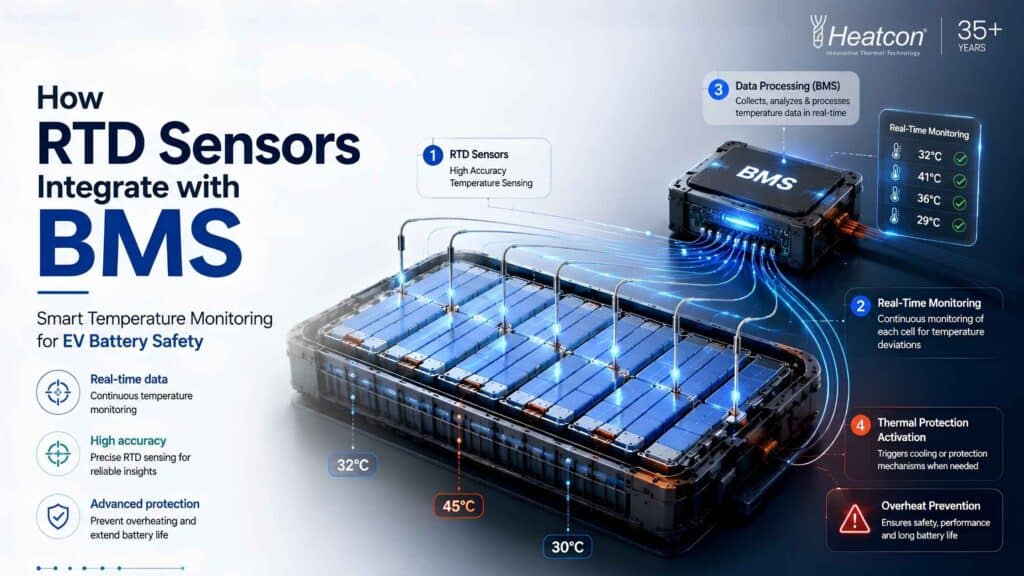
RTD Sensor for Battery Management System technology is rapidly transforming battery safety and operational efficiency. According to the International Energy Agency, global electric vehicle (EV) sales are expected to reach over 14 million units in 2024, underlining the critical role of advanced sensor-driven BMS in ensuring battery reliability and longevity. If your business or operations rely on safe, efficient, and scalable battery systems—whether in India, the US, UAE, Indonesia, Germany, South Korea, Saudi Arabia, Russia, Bahrain, Kuwait, or beyond—the integration of RTD sensors into your battery management system is not just a technical upgrade; it’s a necessity.
Understanding RTD Sensors for Battery Management Systems
An RTD Sensor for Battery Management System is a precision temperature sensor, typically made from platinum or nickel, designed to monitor and manage the thermal profile of battery packs. In BMS applications, RTDs provide highly accurate, linear, and repeatable temperature readings, which are vital for optimizing battery performance and preventing hazardous conditions such as thermal runaway.
- Platinum RTDs (Pt100, Pt1000) are widely favored for their accuracy and stability.
- They are especially effective in environments demanding quick response to temperature fluctuations.
- Custom RTDs, such as those manufactured by Heatcon Sensors, can be tailored for any battery chemistry and enclosure design, ensuring seamless integration into your battery system architecture.
With battery safety at the forefront of electric mobility and energy storage, the right RTD sensor selection can make the difference between smooth operation and costly downtime.
How Battery Management System Sensors Work
The battery management system sensor suite comprises a network of sensors—primarily for temperature, voltage, and current—strategically placed throughout the battery pack. The BMS relies on this network to gather real-time data, ensuring optimal charging, discharging, and thermal regulation.
A BMS temperature sensor, especially an RTD, plays a pivotal role by:
- Detecting hotspots and overall pack temperature.
- Triggering cooling or heating mechanisms to maintain safe operating conditions.
- Providing feedback for intelligent charge/discharge algorithms.
In high-density lithium-ion battery systems, even a minor deviation in temperature can lead to significant degradation or, in extreme cases, catastrophic failure. Therefore, integrating an accurate battery management system sensor network is not just about compliance, but about ensuring safety, performance, and ROI.
The Role of Temperature Sensors in Modern Battery Monitoring
The BMS temperature sensor is crucial in modern battery monitoring system design, as it enables predictive diagnostics and real-time control. It empowers the BMS to implement smart battery monitoring features, such as:
- Continuous thermal profiling of each cell or module.
- Data-driven thermal management strategies to extend battery life.
- Automated shutdown or isolation of faulty cells to prevent propagation of faults.
As EV battery electronics evolve, the demand for high-accuracy, robust temperature monitoring continues to rise. RTD sensors, thanks to their inherent stability and reliability, are now the cornerstone of advanced BMS temperature sensor designs worldwide.
Enhancing Battery Safety and Performance Through RTD Integration
RTD integration within a BMS provides a scalable path to maximizing battery safety and performance. Here’s how:
- Precision: RTDs deliver accurate readings across a broad temperature range, essential for critical battery chemistries.
- Reliability: Their construction resists vibration, electrical noise, and chemical exposure—key for automotive and industrial deployments.
- Customization: Heatcon Sensors specializes in custom RTD integration, ensuring the form factor, lead wire, and connector requirements match your exact BMS design, whether it’s for a stationary grid storage system or a high-performance EV.
The result? Fewer battery failures, longer system life, and compliance with international safety standards.
Communication Protocols for Battery Monitoring System Sensors
Communication protocols are the backbone of modern battery monitoring system deployments. The two most prevalent standards for transmitting sensor data from RTDs and other BMS temperature sensors are:
- CAN bus sensors: These sensors utilize the Controller Area Network (CAN) protocol, a robust, real-time communication standard widely adopted in automotive and industrial sectors. CAN bus sensors allow the BMS to rapidly poll and aggregate temperature data from multiple RTDs, supporting both centralized and distributed battery architectures.
- Modbus RTD: For larger stationary battery banks or industrial energy storage, Modbus RTD sensors offer reliable, scalable communication via the Modbus protocol. This serial communication standard is favored for its simplicity and interoperability with existing SCADA and automation platforms.
Whether you are operating in India, the US, Germany, or the Middle East, Heatcon Sensors can manufacture and supply RTDs compatible with both CAN bus and Modbus protocols, assuring seamless BMS integration worldwide.
Supporting EV Battery Electronics with RTD Sensors
EV battery electronics are among the most demanding applications for thermal management. The integration of RTD sensors enables:
- Real-time detection of cell/module thermal events for immediate response.
- Data-driven power management to prevent overcharging or deep discharge, thus extending battery lifespan.
- Compliance with stringent automotive safety standards (such as ISO 26262) through precise, traceable temperature monitoring.
Heatcon Sensors’ expertise in EV battery electronics extends to the design and supply of custom RTDs for electric buses, passenger vehicles, commercial fleets, and energy storage systems in India and globally.
Benefits of Smart Battery Monitoring with RTD Sensors
Smart battery monitoring leverages RTD sensors to deliver actionable intelligence to the BMS. The benefits include:
- Predictive maintenance through trend analysis of temperature data.
- Reduced downtime thanks to early warning of abnormal events.
- Enhanced safety and compliance with local and international standards.
- Seamless integration with IoT platforms for remote battery health monitoring.
Smart battery monitoring is not just for high-end EVs; it is increasingly vital in backup power, telecom, renewable energy, and industrial automation.
Why Partner with Heatcon Sensors for RTD and Heat Equipment
Heatcon Sensors is an established leader in the design and manufacturing of customized RTDs and temperature sensors for industrial, automotive, and energy storage applications. Here’s why they’re the preferred partner worldwide:
- Customization: Every battery pack is unique. Heatcon’s engineering team works with you to deliver RTDs that fit your exact specifications—form, fit, and function.
- Global reach: Heatcon Sensors can supply temperature sensors to any part of India, the US, UAE, Germany, South Korea, Saudi Arabia, Russia, Bahrain, Kuwait, Indonesia, and beyond.
- Comprehensive solutions: Beyond sensors, Heatcon manufactures a wide array of heat-generating equipment, including industrial furnaces, ovens, hot air blowers, electric furnaces, tubular heaters, immersion heaters, and high density cartridge heaters.
- Reliability: All products are manufactured under stringent quality control, ensuring long-term performance in even the harshest environments.
If you have not yet experienced the reliability and precision of Heatcon Sensors, you are missing out on the next level of battery performance and safety. Don’t let your operations be held back by suboptimal temperature monitoring—choose a partner trusted by battery system integrators around the world.
Getting Started with Heatcon Sensors
Ready to upgrade your battery management system sensor network with state-of-the-art RTD integration? Here’s how you can reach out to Heatcon Sensors today:
- Submit your information on the form at https://heatconsensors.com/contact-us/
- Leave a message on WhatsApp through the interface available on Heatcon Sensor’s website.
- Call for immediate assistance: +91 9164833027 or +91 9844233244
Whether you need a single prototype for a new EV battery design or large-scale sensor deployment for grid-scale energy storage, Heatcon Sensors is ready to deliver—on time, every time.
About Heatcon Sensors
Heatcon Sensors is a globally recognized manufacturer based in India, specializing in custom temperature sensors (RTDs, thermocouples, thermistors) and heat-generating equipment for industrial and scientific applications. With decades of experience, a world-class engineering team, and a commitment to quality, Heatcon Sensors delivers solutions that power the future of battery technology, energy management, and industrial process control.
From automotive giants in Germany to energy pioneers in the UAE, from EV startups in South Korea to traditional industries in India, Heatcon Sensors is the name to trust for precision, reliability, and innovation in thermal management.
Frequently Asked Questions
What is the role of an RTD Sensor for Battery Management System applications?
An RTD Sensor for Battery Management System is a precision temperature sensor that monitors the thermal conditions of individual cells or battery packs in real-time. Its main role is to provide accurate temperature data to the BMS, enabling the system to optimize battery performance, prevent overheating, and enhance safety. RTDs (Resistance Temperature Detectors) are favored for their reliability and repeatability, especially in critical battery monitoring system environments such as electric vehicles and energy storage solutions.
How do RTD sensors integrate with modern Battery Management Systems?
RTD integration into a battery management system involves connecting the temperature sensors directly to the BMS hardware, which then processes the resistance-based signals. These signals are converted into digital temperature readings, often communicated via protocols such as CAN bus sensors or Modbus RTD. This seamless integration allows the BMS to continuously track thermal profiles and take preemptive actions if unsafe conditions arise.
Why is using a battery management system sensor from Heatcon Sensors beneficial for EV battery electronics?
Heatcon Sensors provides highly accurate and reliable battery management system sensor solutions that are tailored for EV battery electronics. Their sensors ensure precise temperature readings across all cells, supporting improved battery lifespan, enhanced safety, and optimal charging/discharging cycles. Heatcon’s robust sensor construction also stands up to the challenging environments found in electric vehicles.
What communication options are available for BMS temperature sensor data?
BMS temperature sensor data can be transmitted via several industrial communication protocols. Heatcon Sensors supports both CAN bus sensors and Modbus RTD interfaces, allowing seamless integration with a wide variety of battery management platforms and smart battery monitoring systems. This flexibility enables real-time, reliable data sharing for advanced battery diagnostics and safety responses.
How does RTD integration improve overall battery monitoring system performance?
RTD integration provides precise and rapid thermal feedback, essential for a high-performance battery monitoring system. By enabling the BMS to detect even minor temperature deviations, Heatcon Sensors’ RTDs help prevent thermal runaway, optimize charging algorithms, and extend battery life. This leads to safer, more efficient, and longer-lasting battery systems.
Can Heatcon Sensors’ solutions be customized for unique battery management requirements?
Yes, Heatcon Sensors specializes in custom engineering for RTD Sensor for Battery Management System needs. Whether your application requires specific form factors, multi-point temperature arrays, or compatibility with unique EV battery electronics, Heatcon can tailor sensor assemblies to meet stringent technical and environmental demands.
What makes Heatcon’s BMS temperature sensor solutions reliable for smart battery monitoring?
Heatcon’s BMS temperature sensor solutions stand out due to their high accuracy, fast response time, and robust build quality. These features are crucial for smart battery monitoring in demanding environments, such as automotive, industrial, and renewable energy storage. The sensors are tested for durability and long-term stability to ensure consistent operation throughout the battery’s life cycle.
How does Heatcon ensure compatibility of their sensors with advanced battery management systems?
Heatcon Sensors ensures compatibility by offering RTD sensors with configurable outputs, connectors, and communication options like CAN bus sensors and Modbus RTD. Their engineering team collaborates closely with battery system designers to guarantee seamless integration, whether upgrading existing BMS architectures or developing new battery monitoring system projects.
Are Heatcon Sensors’ RTDs suitable for both stationary and mobile battery applications?
Absolutely. Heatcon Sensors’ RTDs are designed for versatility, making them suitable for stationary energy storage systems as well as mobile applications like electric vehicles. Their rugged construction, accuracy, and adaptability to various communication protocols ensure they meet the demands of any modern battery management system sensor implementation.