
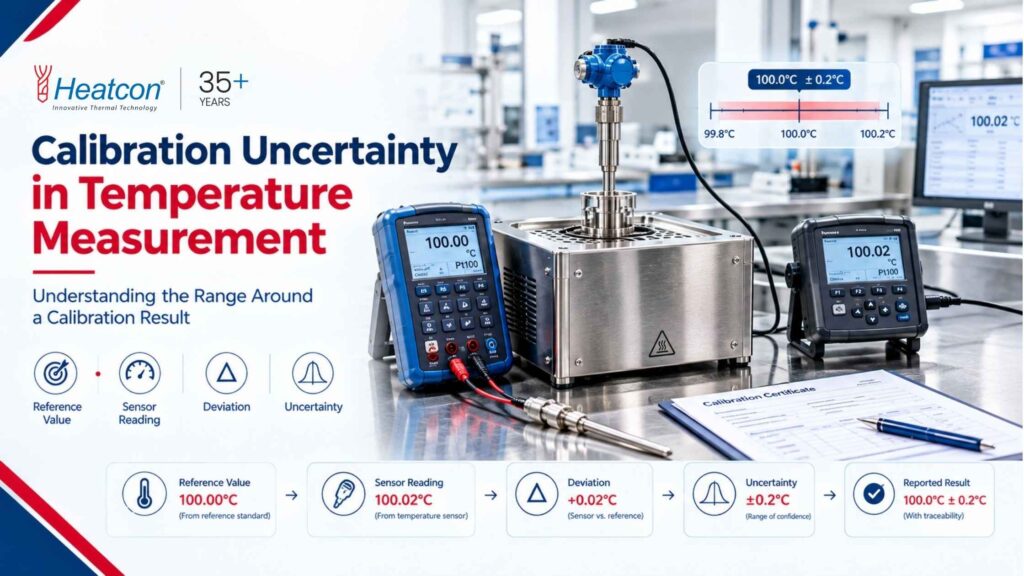
What is temperature calibration uncertainty? Temperature calibration uncertainty is a quantifiable measure of doubt about the result of a temperature calibration process. According to international standards, over 70% of industrial quality failures are linked to mismanaged instrument calibration or overlooked uncertainty—a figure that underscores the vital importance of precise uncertainty calculation in every field where temperature measurement matters. Understanding and controlling this uncertainty is the key to achieving reliable results, maintaining safety, and ensuring product quality, especially in critical industries like pharmaceuticals, food processing, and manufacturing.
Why does temperature calibration uncertainty matter?
Temperature calibration uncertainty impacts every aspect of industrial process control and product quality. Even a marginal deviation—sometimes as little as 0.1°C—can lead to rejected batches, regulatory non-conformance, and costly downtime. Whether you operate in pharmaceuticals, aerospace, power generation, or food processing, minimizing measurement uncertainty means fewer errors and greater confidence in your data. That’s why expert manufacturers like Heatcon Sensors are dedicated to providing the highest calibration accuracy for industrial temperature sensors, including RTDs and thermocouples.
What is measurement uncertainty in temperature calibration?
Measurement uncertainty is the range within which the true value of a temperature reading lies, based on all known and estimated sources of error in the measurement system. When calibrating temperature sensors, such as RTDs or thermocouples, measurement uncertainty includes:
- Instrument resolution and repeatability
- Reference standard accuracy
- Environmental influences (humidity, ambient temperature fluctuations)
- Operator skill and method variability
- Drift in sensor characteristics over time
By thoroughly analyzing each factor, organizations can achieve a lower temperature measurement uncertainty, leading to more reliable and consistent results.
How is calibration uncertainty calculated?
The process of uncertainty calculation in temperature calibration involves identifying all potential sources of error, quantifying their individual contributions (in terms of standard uncertainty), and then combining them—usually by the root-sum-square method—to arrive at a total combined uncertainty. The most common steps are:
- List all sources of calibration uncertainty (e.g., reference thermometer, display unit, environment, operator).
- Quantify each source using historical data, manufacturer certificates, or standard guidelines.
- Combine the uncertainties mathematically to obtain a combined standard uncertainty.
- Multiply by a coverage factor (typically k=2 for 95% confidence) to obtain expanded uncertainty.
For example, in a typical laboratory calibration, the combined uncertainty might be as low as 0.05°C, while in field conditions, it may increase due to environmental or handling factors.
What affects RTD uncertainty and thermocouple uncertainty?
RTD uncertainty and thermocouple uncertainty are both influenced by sensor construction, material quality, calibration procedure, and the environment in which they operate. RTDs, known for their stability, can still be affected by:
- Wire purity and insulation resistance
- Mechanical strain during installation
- Drift due to aging or repeated thermal cycling
Thermocouples, while rugged, may suffer from:
- Inhomogeneity in thermoelement alloys
- Junction contamination
- Electromagnetic interference
Heatcon Sensors’ advanced manufacturing processes and stringent quality checks are designed to minimize both RTD uncertainty and thermocouple uncertainty, ensuring you receive reliable, traceable results every time.
How does Heatcon Sensors ensure calibration accuracy?
Heatcon Sensors is India’s trusted name in customized temperature sensors and calibration solutions, supplying high-quality RTDs, thermocouples, and temperature transmitters to industrial clients throughout India and worldwide—including the US, UAE, Indonesia, Germany, South Korea, Saudi Arabia, Russia, Bahrain, and Kuwait. Here’s how we deliver industry-leading calibration accuracy:
- Use of certified reference standards traceable to international bodies such as NABL, NIST, and ISO
- State-of-the-art calibration laboratories with controlled environments
- Highly trained calibration engineers and robust procedures
- Regular participation in proficiency testing and inter-laboratory comparisons
- Continuous investment in research and process improvement
With Heatcon Sensors, you gain the confidence that your temperature calibration is not only accurate but also fully documented and traceable—vital for audits and compliance.
Where can you use Heatcon Sensors’ temperature calibration expertise?
Industries across India and the globe rely on precise temperature measurement uncertainty control for:
- Process automation and control in chemical and petrochemical plants
- Pharmaceutical research and manufacturing (GMP compliance)
- Food safety and cold chain management
- Automotive and aerospace component testing
- Power generation (thermal plants, nuclear facilities)
- Research laboratories and universities
Heatcon Sensors’ expertise isn’t limited to sensors alone. We also design and manufacture heat-generating equipment such as:
- Industrial ovens and furnaces
- Hot air blowers
- Electric furnaces
- High density cartridge heaters
- Heating mantles, immersion heaters, and custom heating systems
This integrated approach allows us to provide holistic solutions—optimizing temperature measurement and control throughout your process.
What is the process for temperature calibration at Heatcon Sensors?
Our temperature calibration process is designed for reliability, traceability, and minimal temperature calibration uncertainty:
- Assessment of the sensor or instrument to be calibrated
- Selection of reference standards and calibration method
- Multi-point comparison across the relevant temperature range
- Recording of observed values and calculation of measurement uncertainty
- Issue of a detailed calibration certificate, including all calculations and traceability information
Clients receive full transparency—ensuring confidence in every measurement and facilitating regulatory compliance worldwide.
How can you minimize temperature measurement uncertainty in your operations?
To achieve the lowest possible temperature measurement uncertainty:
- Choose high-quality sensors from trusted manufacturers like Heatcon Sensors
- Ensure regular, documented temperature calibration using certified reference standards
- Implement proper installation and handling procedures
- Control environmental conditions during measurement and calibration
- Train personnel in best practices and uncertainty calculation
By partnering with Heatcon Sensors, you benefit from decades of expertise and a commitment to excellence that directly translates to process reliability and quality assurance.
Why choose Heatcon Sensors for your temperature calibration needs?
As a leader in industrial temperature sensing and calibration, Heatcon Sensors stands apart by offering:
- Custom manufacturing of RTDs, thermocouples, and specialty sensors to your precise requirements
- Nationwide and international delivery—including to all major cities in India and global hubs like the US, UAE, Indonesia, Germany, South Korea, Saudi Arabia, Russia, Bahrain, and Kuwait
- Full support for heat-generating equipment, from design to commissioning
- Technical consultation for measurement uncertainty reduction and compliance
- Responsive customer service—reach us by web form, WhatsApp, or direct call for prompt assistance
Don’t risk process failures and compliance issues due to overlooked calibration uncertainty. Choose Heatcon Sensors as your trusted partner and experience the peace of mind that comes from true temperature calibration confidence.
Contact Heatcon Sensors today
Ready to optimize your temperature measurement and calibration accuracy? Reach out to Heatcon Sensors now:
- Submit your information via our Contact Us form
- Leave a message on WhatsApp through the interface on our website
- Call us directly at +91 9164833027 or +91 9844233244
Don’t let calibration uncertainty compromise your results—choose the experts at Heatcon Sensors, trusted by industry leaders across India and the world.
About Heatcon Sensors
Heatcon Sensors is a leading Indian manufacturer specializing in customized RTDs, thermocouples, temperature transmitters, and heat-generating equipment. With a strong focus on calibration accuracy and quality, we serve clients in India and globally, helping industries achieve precise, reliable, and compliant temperature measurement solutions.
Frequently Asked Questions
What is calibration uncertainty in temperature measurement?
Calibration uncertainty in temperature measurement refers to the doubt that exists about the result of a temperature calibration process. It quantifies the range within which the true value of the measured temperature is expected to lie, based on the limitations of the calibration method, reference standards, environment, and the instrument itself. Understanding this uncertainty is crucial for ensuring reliable and accurate temperature readings.
Why is measurement uncertainty important in temperature calibration?
Measurement uncertainty is important because it allows users to assess the level of confidence they can have in a calibration result. In temperature calibration, knowing the measurement uncertainty helps in making informed decisions about process control, product quality, safety, and compliance with industry standards.
What factors contribute to temperature calibration uncertainty?
Several factors contribute to temperature calibration uncertainty, including the accuracy of reference instruments, environmental conditions (such as temperature stability and humidity), human errors, instrument drift, and the inherent limitations of the sensor type (like RTD or thermocouple uncertainty). Each of these elements must be evaluated during the uncertainty calculation process.
How do RTD uncertainty and thermocouple uncertainty differ?
RTD uncertainty and thermocouple uncertainty both relate to the possible errors in temperature readings from these sensors, but they arise from different sources. RTDs (Resistance Temperature Detectors) typically have lower uncertainty due to their stable and repeatable resistance-temperature relationship. Thermocouples, while versatile and robust, usually present higher temperature measurement uncertainty due to issues like inhomogeneity of wires and reference junction errors. Heatcon Sensors addresses these differences by providing calibration solutions tailored to each sensor type.
How is uncertainty calculation performed in temperature calibration?
Uncertainty calculation in temperature calibration involves identifying all potential sources of error, quantifying their individual effects, and then combining them—typically using the root sum square method. This process results in a comprehensive value that represents the overall temperature calibration uncertainty for the instrument or process under test.
What is calibration accuracy and how does it relate to uncertainty?
Calibration accuracy is the closeness of the measured value to the true value during calibration. While accuracy indicates how close a measurement is to the actual value, calibration uncertainty defines the range within which the true value may lie. Both are essential for understanding the reliability of temperature calibration results.
How does Heatcon Sensors help minimize temperature measurement uncertainty?
Heatcon Sensors minimizes temperature measurement uncertainty by using high-precision reference standards, maintaining strict environmental controls, and following internationally recognized calibration procedures. Their experienced technicians and advanced calibration equipment help ensure that both calibration accuracy and overall measurement reliability are maximized for clients.
What are the benefits of regular temperature calibration for industrial sensors?
Regular temperature calibration enhances measurement confidence, ensures process consistency, reduces product defects, and supports compliance with industry standards. By understanding and controlling calibration uncertainty, companies can achieve better operational efficiency and product quality. Heatcon Sensors provides tailored calibration services to help clients realize these benefits.
Can Heatcon Sensors provide calibration certificates that specify calibration uncertainty?
Yes, Heatcon Sensors provides detailed calibration certificates for all temperature sensors calibrated, which clearly state the calibration uncertainty and the methods used for uncertainty calculation. This transparency supports audit requirements and gives customers confidence in their instrument’s temperature calibration.