
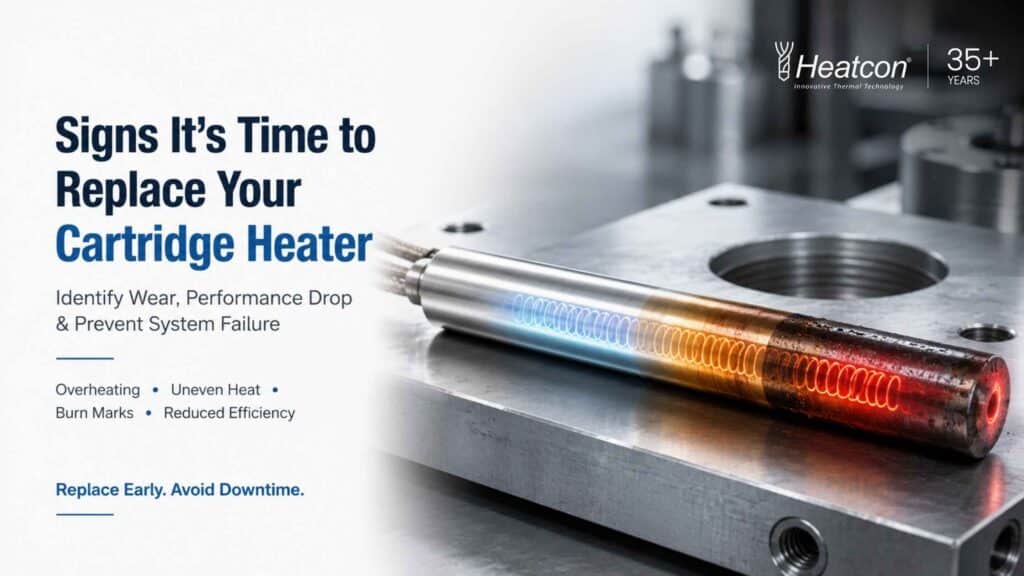
Recognizing When to Replace a Cartridge Heater
Wondering when to replace cartridge heater in your industrial equipment? Cartridge heaters are vital for achieving consistent and precise heating in industrial applications, but even the most robust units have a finite lifespan. According to industry data, over 60% of unexpected equipment downtime in manufacturing is linked to heating element failure—often due to missed replacement windows or overlooked heater replacement signs. Identifying these warning signals early can save your business from costly delays and unexpected shutdowns.
Heatcon Sensors, a renowned name in temperature sensing and heat generation, specializes in manufacturing customized RTDs, thermocouples, and cartridge heaters to meet the rigorous demands of industries worldwide. Whether you’re operating in India, the US, UAE, Indonesia, Germany, South Korea, Saudi Arabia, Russia, Bahrain, or Kuwait, understanding when to replace cartridge heater is essential for maintaining operational efficiency and safety.
Common Warning Signs That a Heater Needs Replacement
Heater replacement signs are not always obvious at first glance. However, failing to spot them early can lead to equipment inefficiency, product defects, or even hazardous working conditions. Here are the critical symptoms to watch for:
- Drop in Heating Performance: If your cartridge heater takes longer to reach the desired temperature or cannot maintain set points, it may indicate internal wear or heating element failure.
- Physical Damage or Deformation: Visible warping, swelling, or discoloration on the heater’s sheath often signals overheating or insulation breakdown—classic heater replacement signs.
- Frequent Tripping of Circuit Breakers: Electrical shorts or ground faults inside the heater can cause repeated breaker trips, posing safety risks and signaling it’s time for a replacement.
- Irregular Temperature Fluctuations: Inconsistent heating cycles or unexpected cold spots often mean the heater is no longer operating uniformly.
- Unusual Noises or Vibrations: Buzzing, humming, or rattling noises from the heater assembly can indicate internal component failure or connection issues.
Each of these signs points toward an increased risk of total heating element failure, which can halt production and compromise product quality.
The Importance of Regular Industrial Heater Maintenance
Industrial heater maintenance is the cornerstone of reliable operations. Regular inspections and proactive servicing extend heater life, minimize energy costs, and ensure compliance with safety regulations. By integrating routine checks into your maintenance schedule, you can identify heater replacement signs before they escalate into major failures.
- Preventative Measures: Cleaning buildup from the heater sheath, checking electrical connections, and monitoring insulation resistance can prevent many common issues.
- Scheduled Replacement: Even with the best care, cartridge heaters have a limited operational lifespan, typically ranging from 1,000 to 5,000 hours depending on application and conditions.
- Documentation: Keeping detailed maintenance logs helps track performance trends, making it easier to decide when to replace cartridge heater.
At Heatcon Sensors, we not only supply high-quality cartridge heaters but also offer guidance on effective industrial heater maintenance—helping industries across India and the world avoid unexpected downtime.
Practical Steps for Cartridge Heater Troubleshooting
Cartridge heater troubleshooting refers to the systematic process of diagnosing and resolving performance issues in cartridge heaters. Common troubleshooting steps include:
- Visual Inspection: Look for signs of physical damage, discoloration, or corrosion.
- Electrical Testing: Use a multimeter to check for proper resistance and continuity. Deviations from manufacturer specifications can indicate internal faults.
- Thermal Profiling: Monitor temperature output to detect uneven heating or slow ramp-up times.
- Connection Check: Ensure all wiring and terminal lugs are tight and free from oxidation.
- Insulation Resistance Testing: Low insulation resistance values are a red flag for impending heating element failure.
A systematic approach to cartridge heater troubleshooting not only resolves immediate issues but also helps in pinpointing the exact moment when to replace cartridge heater for uninterrupted operations.
Common Causes of Heating Element Failure
Heating element failure is one of the primary reasons for heater replacement. The main causes include:
- Overheating: Operating at temperatures beyond the heater’s rating accelerates insulation breakdown and wire burnout.
- Contamination: Ingress of moisture, chemicals, or dust can short-circuit the internal resistance wire.
- Improper Fit: Using a cartridge heater that is too loose or too tight for the bore can create thermal stresses and premature failure.
- Voltage Surges: Fluctuating power supply can damage heating wires and terminals.
- Mechanical Shock: Frequent removal and reinsertion, or physical impact, can compromise the heater’s internal structure.
Heatcon Sensors’ cartridge heaters are engineered for durability, yet even the best products require vigilance and timely replacement to avoid costly heating element failure.
Tips for Maximizing Cartridge Heater Lifespan
Maximizing the lifespan of your cartridge heaters is possible with a few best practices:
- Always match the heater’s watt density and voltage to your application’s specifications.
- Ensure the heater fits snugly within the bore to enable efficient heat transfer.
- Implement regular cleaning and inspection routines as part of industrial heater maintenance.
- Monitor for early heater replacement signs and replace proactively rather than reactively.
- Partner with a trusted supplier like Heatcon Sensors for technical support and custom solutions.
These steps not only optimize performance but also reduce total cost of ownership over the heater’s lifecycle.
Heatcon Sensors: Expertise in Cartridge Heaters and Temperature Sensors
Heatcon Sensors is an industry leader in the manufacture and supply of customized RTDs, thermocouples, and cartridge heaters. Our products are trusted by industrial plants in India, the US, UAE, Indonesia, Germany, South Korea, Saudi Arabia, Russia, Bahrain, Kuwait, and beyond. With over three decades of experience, we offer:
- High-density cartridge heaters designed for maximum thermal efficiency and long service life.
- Tailor-made RTDs and temperature sensors for precise process control in the harshest environments.
- Advanced heating solutions such as band heaters, strip heaters, immersion heaters, furnaces, ovens, hot air blowers, and electric furnaces.
- End-to-end technical support, from product selection to installation and troubleshooting.
- Global logistics network for timely delivery to any part of the world.
Don’t let overlooked heater replacement signs jeopardize your productivity. With Heatcon Sensors, you gain a partner committed to delivering excellence, reliability, and innovation—no matter your industry or location.
How to Access Expert Support and Replacement Solutions
If you’re experiencing any of the symptoms discussed above or need support with cartridge heater troubleshooting, contact Heatcon Sensors today. Choose from the following convenient options:
- Submit your inquiry through our contact form:
https://heatconsensors.com/contact-us/ - Chat with us on WhatsApp: Use the WhatsApp interface on our website for instant messaging support.
- Call us directly: Reach our experts at +91 9164833027 or +91 9844233244 for immediate assistance.
About Heatcon Sensors
Heatcon Sensors is a premier manufacturer and exporter of temperature sensing and heat generating solutions, including RTDs, thermocouples, cartridge heaters, band heaters, furnaces, ovens, and more. Our state-of-the-art facilities and expert engineering teams enable us to deliver custom solutions for diverse industries worldwide. Our commitment to innovation, quality, and customer satisfaction has positioned us as a preferred partner in process industries across India, the United States, UAE, Indonesia, Germany, South Korea, Saudi Arabia, Russia, Bahrain, Kuwait, and other global markets.
Frequently Asked Questions
What are the most common signs that indicate it’s time to replace a cartridge heater?
The most common heater replacement signs include inconsistent heating, prolonged warm-up times, visible corrosion or discoloration, and tripped circuit breakers. If you notice any burning smell, exposed wiring, or the heater not reaching the desired temperature, these are clear indicators of potential heating element failure . Recognizing these early can prevent costly downtime and ensure safe operation.
How do I know when to replace cartridge heater in my industrial equipment?
You should consider when to replace cartridge heater if you observe a drastic drop in performance, repeated thermostat failures, or if the heater is nearing the end of its expected service life. Regular checks as part of your industrial heater maintenance schedule will help you anticipate replacement needs before a complete breakdown occurs.
What troubleshooting steps should I take before replacing a cartridge heater?
Before opting for replacement, perform cartridge heater troubleshooting by checking electrical connections for looseness, inspecting for any physical damage, and testing the heater’s resistance with a multimeter. If the heater is within specifications but still underperforming, review voltage supply and control settings. If issues persist, it may be time to replace the unit.
Can Heatcon Sensors help with industrial heater maintenance and replacement?
Absolutely! Heatcon Sensors offers comprehensive industrial heater maintenance support, including inspection, troubleshooting, and custom cartridge heater solutions. Our team can help you identify heater replacement signs and provide expert guidance for timely replacements to ensure optimal performance and safety.
What are the risks of ignoring heating element failure in cartridge heaters?
Ignoring heating element failure can lead to process inefficiency, equipment damage, and even safety hazards such as electrical shorts or fire. Timely detection and replacement are essential for maintaining safe and reliable operations. Heatcon Sensors recommends regular monitoring and quick action if any heater replacement signs are present.
How often should cartridge heaters be checked or replaced in industrial applications?
Cartridge heaters should be inspected regularly—at least every six months—as part of your industrial heater maintenance plan. The actual replacement interval depends on usage, environmental conditions, and manufacturer recommendations. Heatcon Sensors can assist in developing a preventive maintenance schedule tailored to your specific operations.
What solutions does Heatcon Sensors provide for frequent cartridge heater failures?
Heatcon Sensors offers high-quality, custom-designed cartridge heaters engineered for durability and efficiency. We also provide expert consultation on cartridge heater troubleshooting and can recommend upgrades or design modifications to address frequent heating element failure in demanding environments.
What maintenance practices can extend cartridge heater life?
To extend cartridge heater life, ensure proper installation, avoid excessive cycling, and maintain tight contact with the heated surface. Routine industrial heater maintenance , including cleaning terminals and inspecting for wear, can prevent premature heating element failure . Heatcon Sensors can guide best practices and supply robust heater solutions.
How does Heatcon Sensors support customers after heater replacement?
After a cartridge heater is replaced, Heatcon Sensors continues to support with technical advice, documentation, and ongoing industrial heater maintenance services. We help customers optimize heater performance and provide assistance with future cartridge heater troubleshooting needs, ensuring long-term reliability.