
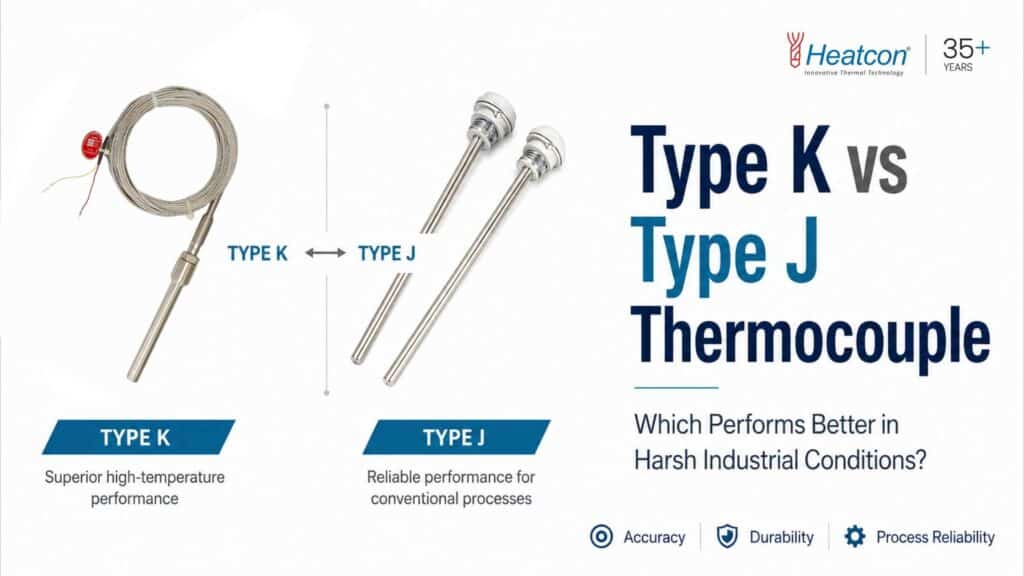
When it comes to demanding industrial environments, the choice between type k vs type j thermocouple is critical for ensuring accurate, reliable temperature measurement. Did you know that over 80% of industrial temperature monitoring setups rely on thermocouples due to their ruggedness, wide temperature range, and adaptability? In this detailed guide, we break down which thermocouple type—K or J—performs better in harsh industrial conditions, empowering you to make an informed decision that optimizes operational efficiency and safety.
What is a thermocouple and why does the type matter?
A thermocouple is a temperature sensor made by joining two dissimilar metals, generating a voltage that correlates with temperature changes. The type k vs type j thermocouple debate is central in industrial applications because each type is engineered for specific environments, temperature ranges, and chemical exposures. Selecting the right thermocouple ensures not just accurate readings but also longevity and process reliability.
What are the differences between type K and type J thermocouple?
The primary distinction in the type k vs type j thermocouple comparison lies in their material composition, temperature range, and environmental resistance:
- Type K: Composed of Nickel-Chromium (NiCr) and Nickel-Aluminum (NiAl), Type K thermocouples are renowned for their wide thermocouple temperature range (−200°C to 1260°C), excellent oxidation resistance, and stability in harsh atmospheres.
- Type J: Made of Iron and Constantan, Type J thermocouples operate best within −40°C to 750°C, making them ideal for lower temperature environments but less suitable for oxidizing atmospheres due to iron’s vulnerability to oxidation.
Which thermocouple temperature range is best for your application?
When choosing between type k vs type j thermocouple, it’s essential to match the thermocouple temperature range to your process needs:
| Thermocouple Type | Temperature Range (°C) | Atmosphere Suitability |
|---|---|---|
| Type K | −200 to 1260 | Excellent in oxidizing & inert atmospheres |
| Type J | −40 to 750 | Best in reducing, vacuum, or inert environments |
If your process frequently exceeds 750°C or operates in oxidizing conditions, Type K is typically the superior choice. For applications where cost is a concern and the temperature remains below 750°C in non-oxidizing conditions, Type J may suffice.
How to select between industrial thermocouple types for harsh conditions?
The selection of industrial thermocouple types goes beyond just temperature range—it’s about choosing the right sensor for chemical resistance, vibration tolerance, and installation constraints. Here’s a quick checklist:
- Temperature Range: Match sensor range with process max/min temperature.
- Atmosphere Compatibility: Consider oxidation, reduction, moisture, and contamination.
- Mechanical Robustness: Evaluate exposure to vibration, shock, and abrasion.
- Accuracy Requirements: Select the type that offers the desired precision.
- Response Time: Consider diameter and sheath material for fast response.
- Replacement and Maintenance: Factor in ease of replacement and long-term cost.
Why are Type K thermocouple uses so prevalent in heavy industry?
Type K thermocouple uses span an array of industries, from metallurgy and power generation to chemical processing and aerospace. Their popularity is attributed to:
- Exceptional stability across a broad temperature spectrum.
- Resilience in oxidizing atmospheres and resistance to chemical corrosion.
- Availability in various sheath materials (Inconel, stainless steel, ceramic) for tailored protection.
- Compatibility with automation and PLC systems due to standardized signal output.
For example, steel mills, glass manufacturing, and turbine monitoring rely heavily on Type K thermocouples due to their unmatched durability.
What makes Heatcon Sensors the trusted partner for custom temperature sensors?
Heatcon Sensors is a globally recognized manufacturer with an unyielding commitment to quality, precision, and customer satisfaction. We do more than supply standard sensors; we engineer customized RTDs and thermocouples tailored to your unique industrial requirements—no matter how challenging the application or environment.
- State-of-the-art manufacturing for Type K, Type J, and other industrial thermocouple types.
- Capability to custom-manufacture and supply sensors across India (Mumbai, Delhi, Bengaluru, Chennai, Hyderabad, Kolkata) and worldwide—including the US, UAE, Indonesia, Germany, South Korea, Saudi Arabia, Russia, Bahrain, and Kuwait.
- Expertise in supplying sensors for specialized industries such as oil & gas, pharmaceuticals, steel, power, food processing, and more.
- Comprehensive support—choose from submitting your requirements at our contact form, WhatsApp via our website, or immediate assistance on +91 9164833027 and +91 9844233244.
Heatcon Sensors: Beyond temperature sensing
Our expertise doesn’t stop at temperature sensors. Heatcon Sensors also manufactures a complete line of heat generating equipment, ensuring your process runs efficiently and safely:
- Industrial and laboratory furnaces
- Precision ovens for controlled heating
- High-velocity hot air blowers
- Advanced electric furnaces for metallurgical and research needs
- High density cartridge heaters for targeted, efficient heating
- Immersion heaters, band heaters, tubular heaters, and more
This integrated approach means you can source both sensors and heating equipment from a single, trusted partner—simplifying procurement, support, and maintenance.
How does Heatcon Sensors ensure reliability and global reach?
Every product, whether a standard or custom solution, is manufactured under strict quality protocols and tested for endurance in real-world conditions. With a robust logistics network, Heatcon Sensors delivers temperature sensing solutions to every corner of India and internationally—including emerging markets and established industrial hubs alike.
Our team of experts assists clients in choosing the right type k vs type j thermocouple and other industrial thermocouple types, factoring in considerations like thermocouple temperature range, chemical compatibility, and mechanical strength. With Heatcon Sensors, you’re not just buying a product—you’re gaining a technology partner committed to your long-term success.
Which thermocouple is best for harsh industrial environments?
For most harsh industrial conditions—high temperatures, oxidizing atmospheres, and fluctuating process demands—Type K thermocouples typically outperform Type J due to their wider temperature range and superior corrosion resistance. However, Type J remains a cost-effective, accurate choice for lower temperatures in non-oxidizing environments.
Ultimately, the best solution depends on your process specifics, which is why Heatcon Sensors offers personalized guidance and custom manufacturing to match your exact requirements.
About Heatcon Sensors
Heatcon Sensors is a leading manufacturer of industrial temperature sensors, customized RTDs, thermocouples, and heat generating equipment. Based in India, we serve clients worldwide, offering tailored solutions for every application, industry, and environment.
Don’t compromise on temperature measurement accuracy or equipment durability. Choose Heatcon Sensors for unmatched quality, global reach, and technical expertise. Reach out today—your process deserves the best.
Ready to upgrade your industrial temperature measurement?
- Submit your requirements at our contact form
- Message us on WhatsApp via our website
- Call us at +91 9164833027 or +91 9844233244 for immediate consultation
Frequently Asked Questions
What are the main differences between Type K and Type J thermocouples for industrial use?
The primary differences between Type K and Type J thermocouples are the metals used, temperature range, and their suitability for specific environments. Type K thermocouples (Nickel-Chromium/Nickel-Alumel) offer a broader thermocouple temperature range (-200°C to 1260°C) and excel in oxidizing and inert atmospheres. Type J thermocouples (Iron/Constantan) have a narrower range (-40°C to 750°C) and are more sensitive but less suitable for moist or oxidizing conditions due to iron’s tendency to oxidize. For harsh industrial settings, Type K is generally preferred for its durability and wider usability.
Which thermocouple performs better in harsh industrial conditions: Type K or Type J?
In demanding industrial environments, Type K thermocouples typically perform better. Their superior resistance to oxidation and high temperatures makes them ideal for harsh conditions found in many industrial applications. While Type J thermocouples are suitable for lower temperature ranges and controlled atmospheres, the robust construction of Type K makes it one of the most popular industrial thermocouple types for challenging settings.
How do the thermocouple temperature ranges compare between Type K and Type J?
The thermocouple temperature range is a crucial factor in selection. Type K thermocouples can measure temperatures from -200°C up to 1260°C, making them suitable for a wide variety of industries. In contrast, Type J thermocouples operate reliably from -40°C to 750°C, which restricts their use to moderate temperature processes. If your application requires high-temperature measurement, Type K is the better choice.
What are the typical Type K thermocouple uses in industry?
Type K thermocouple uses are extensive due to their reliability and versatility. They are commonly found in furnaces, kilns, gas turbine exhausts, chemical plants, and heat treatment operations. Their ability to withstand high temperatures and harsh environments makes them a go-to sensor for process control and safety monitoring across various industries.
Are there specific industrial thermocouple types recommended for corrosive or reducing atmospheres?
Yes, in environments that are highly corrosive or reducing, it’s crucial to select the right industrial thermocouple types. While Type K is excellent in oxidizing and inert atmospheres, it can degrade in reducing environments. Heatcon Sensors offers customized sheath materials and protection tubes for both Type K and Type J thermocouples, helping them last longer even in aggressive settings. For extremely corrosive atmospheres, other specialized types may be recommended—contact Heatcon Sensors for expert guidance.
Why should I choose Heatcon Sensors for Type K or Type J thermocouples?
Heatcon Sensors is an industry leader in precision temperature measurement solutions. The company offers a wide range of Type K and Type J thermocouples, each designed for optimal performance in harsh industrial conditions. With advanced manufacturing, strict quality control, and the ability to customize sensors for specific applications, Heatcon Sensors ensures reliable and long-lasting thermocouple performance, coupled with expert technical support.
How does Heatcon Sensors help optimize thermocouple performance in harsh conditions?
Heatcon Sensors provides solutions such as specialized sheaths, mineral insulation, and protective coatings that significantly enhance the operational life and accuracy of Type K and Type J thermocouples. Their engineering team works with clients to select the best configuration for each process, ensuring sensor durability and optimal response even in the most challenging industrial environments.
What factors should I consider when deciding between type k vs type j thermocouple?
When comparing type k vs type j thermocouple, consider the required temperature range, atmosphere (oxidizing, reducing, or corrosive), mechanical durability, and the specific industrial process. Type K is usually chosen for its higher temperature capability and robustness, while Type J is selected for moderate temperatures and where cost is a consideration. Consulting with Heatcon Sensors ensures you get the ideal solution for your application.
Can Heatcon Sensors provide custom thermocouple assemblies for unique industrial requirements?
Absolutely. Heatcon Sensors specializes in custom thermocouple assemblies, including both Type K and Type J, tailored to meet the unique demands of each industrial process. Whether you need special sheath materials, non-standard lengths, or specific mounting arrangements, the Heatcon Sensors team can design and manufacture sensors to your exact specifications.