
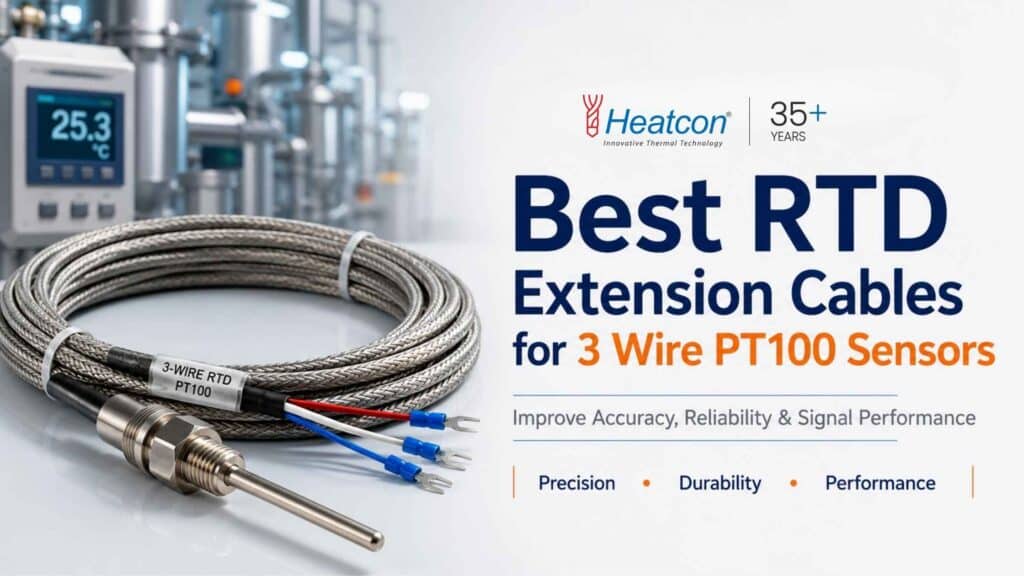
What Are The Best RTD Extension Cables For 3 Wire PT100 Sensors?
The best RTD extension cables for 3 wire PT100 sensors are those that ensure maximum signal integrity, robust EMI protection, and long-term reliability in industrial environments. According to recent market research, over 60% of industrial temperature failures are attributed to poor cable selection and installation, emphasizing the critical role of high-quality RTD extension cables. Choosing the correct extension cable can directly impact measurement accuracy, equipment lifespan, and overall process efficiency.
For industries where process control and safety are paramount, such as pharmaceuticals, power generation, and chemical manufacturing, using the right RTD extension cable is not just a technical requirement—it is a business imperative. This guide explores the essential factors to consider, the importance of shielding and EMI protection, and why Heatcon Sensors is the most trusted name for custom RTDs and industrial temperature solutions in India and globally.
Why Is RTD Extension Cable India Preferred For Industrial Applications?
RTD Extension Cable India is highly sought after due to the region’s robust industrial base, reliable manufacturing standards, and access to advanced customization by leading manufacturers like Heatcon Sensors. With the rapid expansion of India’s process industries, the demand for high-performance RTD extension cables has surged.
Indian RTD extension cables are engineered for challenging environments, ensuring consistent signal transmission between RTD sensors and control equipment. This reliability is critical for sectors operating in extreme conditions—be it refineries in Saudi Arabia, pharmaceutical plants in the United States, semiconductor facilities in South Korea, or energy infrastructure in Germany.
- Wide availability of high-grade materials and manufacturing expertise
- Customization for unique industrial requirements
- Efficient logistics supporting pan-India and global distribution
How To Choose The Right PT100 Extension Cable For Your Application?
The PT100 extension cable is a specialized cable designed to connect PT100 temperature sensors to instrumentation while preserving the sensor’s accuracy. To select the ideal cable, consider the following factors:
- Conductor Material: Copper is standard, but nickel-plated copper or silver-plated options offer enhanced corrosion resistance.
- Insulation Type: Choose from PVC, PTFE, or silicone based on temperature and chemical exposure.
- Shielding: Essential for environments with electrical noise (see shielded RTD cable below).
- Cable Construction: 3-wire cables are standard for PT100 sensors to compensate for lead resistance errors.
- Temperature Range: Ensure the cable’s rating matches your process conditions.
Heatcon Sensors offers PT100 extension cable options with precise construction and material selection, ensuring consistent and accurate readings across all environments.
What Makes Shielded RTD Cable Essential In Industrial Settings?
Shielded RTD cable is indispensable for maintaining measurement accuracy in environments exposed to electromagnetic interference (EMI). Shielding prevents external electrical noise from corrupting the low-level signals transmitted by RTD sensors, especially over long cable runs.
Industrial plants, with heavy machinery, variable frequency drives, and high-voltage equipment, generate significant EMI. Without shielded RTD cable, RTD signals may become distorted, leading to false readings and process disruptions. Heatcon Sensors manufactures shielded RTD cables with both foil and braided shields for superior EMI rejection.
How Does RTD Cable Selection Impact Sensor Performance?
RTD cable selection is crucial because the wrong choice can introduce errors, signal loss, and even sensor failure. Selecting the correct cable involves matching the cable’s electrical characteristics, insulation, mechanical strength, and environmental resistance to your application.
Heatcon Sensors supports clients with detailed consultation for RTD cable selection, considering factors such as cable length, ambient temperature, chemical exposure, and mechanical stresses. Proper selection ensures:
- Accurate temperature readings
- Reduced downtime and maintenance costs
- Compliance with industry standards and safety regulations
Why Is EMI Protection Cable Important For RTD Installations?
EMI protection cable is specifically engineered to safeguard sensitive RTD signals from electromagnetic interference. In industries like oil & gas, pharmaceuticals, and electronics manufacturing, EMI can lead to significant measurement errors or even system shutdowns.
By choosing an EMI protection cable from Heatcon Sensors, industries benefit from:
- Consistent, noise-free signal transmission
- Enhanced reliability in high-EMI environments
- Peace of mind, knowing your process is protected
What Role Does RTD Signal Cable Play In Data Accuracy?
The RTD signal cable is the physical link through which accurate temperature data is transmitted from the sensor to your monitoring system. Any compromise in cable quality or installation can degrade signal fidelity, resulting in inaccurate measurements and potential process failures.
Heatcon Sensors uses premium RTD signal cable materials and advanced construction techniques to minimize resistance, capacitance, and signal loss—delivering precise temperature readings every time.
Heatcon Sensors: Your Global Partner For Custom RTDs And Cables
Heatcon Sensors is an industry leader in designing, manufacturing, and supplying RTD extension cables, PT100 extension cable solutions, shielded RTD cable, and high-performance temperature sensors. With a legacy of serving clients in India, the United States, UAE, Indonesia, Germany, South Korea, Saudi Arabia, Russia, Bahrain, and Kuwait, Heatcon Sensors is synonymous with quality and global reach.
- Custom-manufactured RTD and thermocouple sensors for any application
- State-of-the-art heat generating equipment: industrial furnaces, ovens, hot air blowers, electric furnaces, high density cartridge heaters, and more
- Worldwide shipping and technical support
- Dedicated customer service—accessible online, via WhatsApp, or phone
Heatcon Sensors can custom manufacture and supply temperature sensors and cables to any part of India or across the globe, delivering unmatched expertise and reliability.
How To Order Your RTD Extension Cable From Heatcon Sensors?
Securing the right RTD extension cable is easier than ever with Heatcon Sensors. Choose from three convenient options:
- Submit your requirements using the online contact form.
- Leave a message on WhatsApp via the widget on the Heatcon Sensors website.
- Call directly for immediate assistance at +91 9164833027 or +91 9844233244.
Don’t leave your process reliability to chance—partner with the experts at Heatcon Sensors for tailored RTD and cable solutions.
Why Choose Heatcon Sensors For Your Temperature Sensing Needs?
Choosing Heatcon Sensors means investing in proven quality, technical expertise, and unwavering support. When temperature measurement accuracy and industrial safety are at stake, only the best will do. With decades of experience and a commitment to excellence, Heatcon Sensors stands out as the preferred choice for industries in India and worldwide.
- Expertise in RTD cable selection, design, and manufacturing
- Comprehensive EMI protection cable and shielded RTD cable offerings
- Global logistics and responsive customer service
- End-to-end solutions, from sensors to heat generating equipment
Don’t risk costly downtime or inaccurate measurements. Trust Heatcon Sensors to deliver the best RTD extension cables for 3 wire PT100 sensors—engineered for your success.
About Heatcon Sensors
Heatcon Sensors is a renowned manufacturer of temperature sensors and heat generating equipment based in India, serving clients across the globe. Specializing in RTD extension cables, PT100 extension cables, shielded RTD cables, EMI protection solutions, and custom sensor manufacturing, Heatcon Sensors supports critical industries in the US, UAE, Indonesia, Germany, South Korea, Saudi Arabia, Russia, Bahrain, and Kuwait.
The company’s product portfolio includes RTDs, thermocouples, high density cartridge heaters, industrial furnaces, ovens, hot air blowers, electric furnaces, and more—backed by trusted expertise and responsive service.
- Website: https://heatconsensors.com/
- Contact: +91 9164833027, +91 9844233244
- Facebook: Heatcon Sensors Facebook
- Instagram: Heatcon Sensors Instagram
Make the smart choice—opt for Heatcon Sensors and enjoy unmatched quality, reliability, and support for all your industrial temperature sensing requirements.
Frequently Asked Questions
What is a 3 wire PT100 RTD sensor and why is the extension cable important?
A 3 wire PT100 RTD sensor is a type of resistance temperature detector that uses three wires to compensate for lead resistance, ensuring accurate temperature measurement. The extension cable used with these sensors is crucial, as it helps maintain signal integrity from the sensor to the instrumentation. High-quality PT100 extension cable minimizes errors, reduces signal loss, and ensures that the temperature readings remain precise over longer distances.
What makes Heatcon Sensors’ RTD Extension Cables suitable for use in India?
Heatcon Sensors offers RTD Extension Cable India solutions that are specifically engineered for local standards, climatic conditions, and industrial requirements. Their cables are manufactured with high-grade insulation and conductor materials, ensuring long-term performance, reliability, and compatibility with PT100 sensors used across various Indian industries.
How do I choose the best RTD extension cable for my application?
RTD cable selection depends on several factors, including the sensor type (such as 3 wire PT100), installation environment, required cable length, and exposure to electrical noise or harsh conditions. Heatcon Sensors helps customers select the right cable by offering options with different insulation types, conductor materials, shielding, and temperature ratings to best match the specific requirements of each application.
Why is shielding important in RTD extension cables?
Shielding in an RTD extension cable is essential for protecting sensitive temperature signals from electromagnetic interference (EMI) and radio frequency interference (RFI). A shielded RTD cable, like those supplied by Heatcon Sensors, minimizes noise pickup, ensuring that the RTD signal cable transmits accurate and stable readings, especially in environments with heavy electrical equipment.
What insulation materials are recommended for PT100 extension cable?
Heatcon Sensors provides PT100 extension cable options with various insulation materials such as PVC, PTFE (Teflon), and Silicon. The choice depends on the operating temperature, chemical exposure, flexibility needs, and installation environment. PTFE is ideal for high temperatures and chemical resistance, while PVC is suitable for general-purpose applications.
How does Heatcon Sensors ensure EMI protection in their cables?
Heatcon Sensors offers EMI protection cable solutions by incorporating high-quality shielding, such as aluminum foil or braided shields, into their RTD extension cables. This construction provides an effective barrier against electromagnetic interference, which is vital for maintaining measurement accuracy in electrically noisy manufacturing environments.
Can these cables be used for both indoor and outdoor installations?
Yes, Heatcon Sensors offers RTD signal cable products that are designed for both indoor and outdoor use. Depending on the environmental conditions, you can select cables with enhanced weather resistance, UV protection, and robust insulation to ensure durability and reliable performance in all types of installations.
What certifications or standards do Heatcon Sensors’ RTD cables meet?
Heatcon Sensors’ RTD extension cables comply with international and Indian standards for safety, reliability, and performance. This includes adherence to IS, IEC, and other relevant norms, ensuring that customers receive cables that meet stringent quality requirements for industrial applications.