
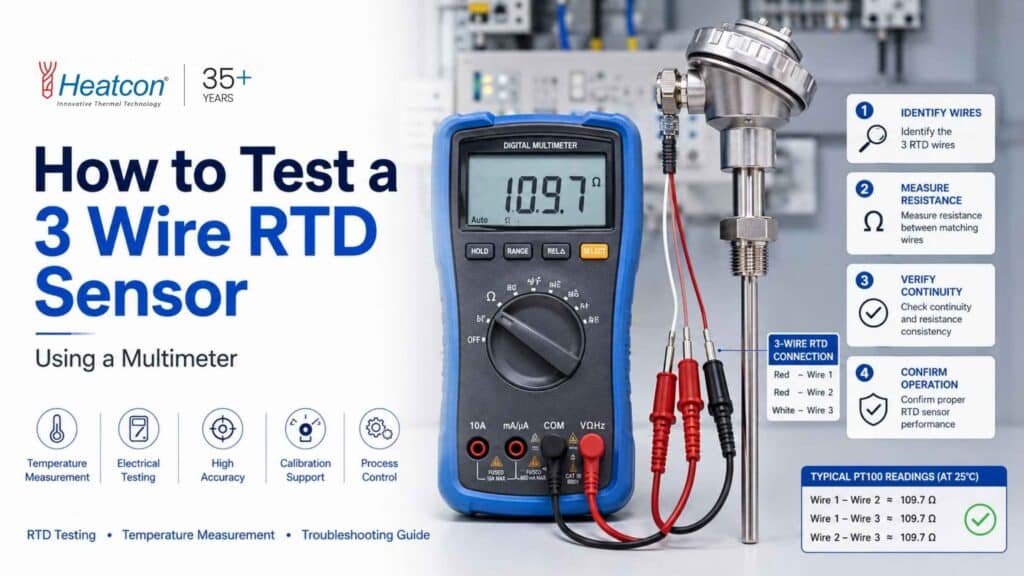
Are you seeking a reliable method to Test 3 Wire RTD Sensor with a multimeter? You are not alone—according to industry reports, over 60% of industrial temperature measurement faults are traced back to improper sensor testing and maintenance. This in-depth guide explores every aspect of 3 wire RTD sensor testing, ensuring you avoid costly downtime and harness the full potential of your industrial processes.
What Is A 3 Wire RTD Sensor And Why Is Its Testing Important?
A 3 wire RTD (Resistance Temperature Detector) sensor is a precision temperature measurement device commonly used in industries where accuracy and reliability are paramount. The three-wire configuration is specifically designed to minimize the impact of lead wire resistance, ensuring accurate readings even in harsh environments. If not tested correctly, even the best sensor can yield inaccurate temperature readings, potentially disrupting your entire production line.
How To Test A 3 Wire RTD Sensor Using A Multimeter?
To Test 3 Wire RTD Sensor, follow these steps:
- Identify the wires: Typically, two wires are of the same color (representing one side of the element), and the third wire is a different color (representing the other side).
- Set your multimeter: Switch your multimeter to the resistance (Ω) mode for PT100 multimeter testing.
- Measure resistance between pairs: Measure between each combination of the three wires (A-B, B-C, and A-C).
- Interpret results: For a PT100 RTD, the resistance between the wires should be nearly identical, with the value close to 100Ω at 0°C. Any significant deviation may indicate a problem.
This straightforward method ensures accuracy in your RTD continuity check and RTD resistance testing, catching issues before they escalate.
What Are The Common Issues Detected During PT100 Multimeter Testing?
PT100 multimeter testing can reveal several issues:
- Open Circuit: If the multimeter shows infinite resistance, the RTD sensor may have a broken wire or failed element.
- Short Circuit: Very low resistance suggests the wires are shorted, which can cause false readings.
- Lead Wire Imbalance: Unequal resistance between the wires indicates lead wire faults, which can degrade sensor accuracy.
By conducting a thorough RTD continuity check, these issues can be detected early, saving valuable operational time and resources.
Why Is RTD Resistance Testing Crucial For Industrial Applications?
RTD resistance testing is the backbone of reliable temperature measurement in critical industries such as pharmaceuticals, food processing, metallurgy, and chemical manufacturing. Inaccurate temperature sensing leads to compromised product quality, safety risks, and increased maintenance costs. Regular testing ensures your sensors deliver consistent performance, comply with industry standards, and extend their operational lifespan.
How To Perform PT100 Diagnostics For Accurate Troubleshooting?
PT100 diagnostics involves analyzing resistance readings, checking for insulation breakdown, and validating sensor response across temperature ranges. A systematic diagnostic approach includes:
- Verifying baseline resistance at 0°C (should be close to 100Ω).
- Examining sensor response by gently increasing temperature and noting proportional resistance changes.
- Comparing readings with manufacturer specifications for your specific PT100 RTD.
This process pinpoints faults with precision, enabling timely corrective action.
Who Should You Trust For Reliable RTD Sensors And Testing Expertise?
For industries demanding precision and durability, Heatcon Sensors stands as the trusted manufacturer of customized RTDs and other temperature sensors. With decades of expertise, Heatcon Sensors tailors solutions to meet unique industrial requirements, ensuring optimal performance in even the most challenging environments.
Heatcon Sensors not only excels in the manufacture of RTDs but also offers a comprehensive product lineup including:
- Furnaces
- Ovens
- Hot Air Blowers
- Electric Furnaces
- High Density Cartridge Heaters
- And other heat generating equipment
The company’s commitment to quality, precision, and service excellence has made it the preferred partner for industries across India and globally.
Where Can You Source Custom Temperature Sensors Globally?
Whether you are based in India, the United States, UAE, Indonesia, Germany, South Korea, Saudi Arabia, Russia, Bahrain, or Kuwait, Heatcon Sensors can custom manufacture and supply temperature sensors to any location. Their extensive logistics network and robust quality assurance processes ensure timely delivery and consistent performance, no matter where your operations are located.
Step-By-Step Guide: How To Test A 3 Wire RTD Sensor Using A Multimeter
To help you quickly troubleshoot and validate your RTD sensor, here’s a concise, snippet-ready summary of the process:
- Disconnect the RTD sensor from the process control or PLC system.
- Identify the three wires (usually two wires of the same color and one of a different color).
- Set your digital multimeter to the lowest resistance (Ω) range.
- Test each pair of wires (A-B, B-C, A-C) and record the readings.
- Check for continuity: All readings should be similar and close to the RTD’s base resistance (e.g., 100Ω for PT100 at 0°C).
- Interpret results: Any deviation suggests potential faults requiring further PT100 diagnostics or replacement.
By following these steps, you ensure the reliability and accuracy of your temperature measurements, reducing the risk of process disruptions.
How Can Heatcon Sensors Add Value To Your Processes?
Choosing Heatcon Sensors is more than a purchase—it’s a partnership in boosting your process efficiency and reliability. Here’s what you gain:
- Expertise: Decades of specialized knowledge in RTD manufacturing and diagnostics.
- Customization: Sensors tailored to your exact specifications, ensuring seamless integration and optimal performance.
- Global Reach: Seamless exports across India and worldwide, including all major industrial hubs.
- Comprehensive Solutions: One-stop shop for all temperature sensing and heat generating needs.
- Support: Responsive customer service ensures you are never left in the dark.
Don’t Risk Process Downtime: Act Now
Ineffective RTD testing can lead to production losses, safety hazards, and regulatory non-compliance. Don’t leave your processes to chance—partner with Heatcon Sensors and experience the difference a true industry leader can make.
How To Reach Out To Heatcon Sensors?
Ready to enhance your process reliability and access world-class temperature sensing solutions? Choose any of the following options to connect with Heatcon Sensors:
- Submit your information on the form at https://heatconsensors.com/contact-us/
- Leave a message on Whatsapp through the interface available on Heatcon Sensor’s website
- Call us directly at +91 9164833027 or +91 9844233244 for immediate assistance
Don’t settle for less—choose Heatcon Sensors for accuracy, reliability, and peace of mind.
About Heatcon Sensors
Heatcon Sensors is a globally recognized manufacturer and supplier of customized RTDs, thermocouples, and a comprehensive range of temperature sensing and heat-generating equipment. Based in India and serving clients across the globe—including the US, UAE, Indonesia, Germany, South Korea, Saudi Arabia, Russia, Bahrain, and Kuwait—Heatcon Sensors is synonymous with quality, innovation, and customer-centric solutions. Trust Heatcon Sensors to deliver excellence, wherever you are.
Frequently Asked Questions
What is a 3 wire RTD sensor and why is it commonly used?
A 3 wire RTD (Resistance Temperature Detector) sensor is a type of temperature sensor that uses three wires to compensate for lead wire resistance. This design helps improve accuracy in industrial environments by minimizing the error caused by the resistance of the connecting wires. Among the most common is the PT100 sensor, which is widely used due to its reliability and precise temperature measurement.
How do I Test 3 Wire RTD Sensor using a multimeter?
To Test 3 Wire RTD Sensor, set your multimeter to measure resistance (Ω). Identify the three wires—often two are the same color (let’s call them A and B), and the third (C) is different. Measure resistance between A-B, A-C, and B-C. The readings between A-B and A-C should be very close, as they represent the sensor plus one lead each. B-C should read just the resistance of two leads. Consistency in these readings indicates a healthy sensor. For detailed step-by-step guidance, Heatcon Sensors provides technical support and documentation tailored to your RTD model.
What is the correct procedure for PT100 multimeter testing?
For PT100 multimeter testing, first disconnect the sensor from the circuit. Set the multimeter to the lowest resistance range. Measure between each pair of wires. For a PT100 at room temperature (about 25°C), the resistance should be close to 109.7 ohms. Similar readings between the matched color wires and the third wire confirm the sensor is intact. Abnormal values may indicate open or short circuits. Heatcon Sensors can supply calibration data and replacement PT100s if needed.
How can I perform an RTD continuity check?
To conduct an RTD continuity check, use your multimeter’s continuity function. Test between each wire pair. You should hear a beep (or see continuity) between any two wires, confirming the circuit is complete. If no continuity is detected, the RTD may have an internal break. Heatcon Sensors offers diagnostic services and expert advice for troubleshooting RTD continuity issues.
What resistance value should I expect during RTD resistance testing?
During RTD resistance testing, a PT100 sensor should read approximately 100 ohms at 0°C, and about 109.7 ohms at 25°C. Any significant deviation from these values may indicate sensor damage or wiring issues. For precise temperature-to-resistance reference tables, Heatcon Sensors can provide the necessary data and technical support for your specific RTD type.
What are typical signs of a faulty RTD sensor during PT100 diagnostics?
Common signs of a faulty RTD during PT100 diagnostics include no continuity between wires, resistance values far outside the expected range, or unstable readings that change erratically. Such symptoms may result from physical damage, corrosion, or internal breaks. Heatcon Sensors can assist with expert diagnostics and recommend suitable replacement sensors if required.
Can Heatcon Sensors assist with RTD sensor testing and troubleshooting?
Absolutely. Heatcon Sensors provides technical support, troubleshooting guides, and on-site PT100 diagnostics for all types of RTDs. Whether you’re performing a simple RTD continuity check or require advanced RTD resistance testing, our team is equipped to help you ensure sensor performance and reliability.
Are there any precautions to consider when testing a 3 wire RTD sensor?
Yes. Always disconnect the sensor from live circuits before performing any tests. Avoid applying excessive voltage or current, as it may damage the sensor. Use a calibrated multimeter for accurate PT100 multimeter testing and avoid shorting the wires during measurement. For best practices, consult Heatcon Sensors’ technical resources or speak with our support team.
What solutions does Heatcon Sensors offer for RTD sensor maintenance?
Heatcon Sensors offers a wide range of services including RTD sensor selection, calibration, on-site PT100 diagnostics, and replacement solutions. Our team can help you choose the right sensor, provide guidance on how to Test 3 Wire RTD Sensor, and support you with detailed RTD resistance testing procedures to maximize accuracy and longevity in your temperature measurement applications.