
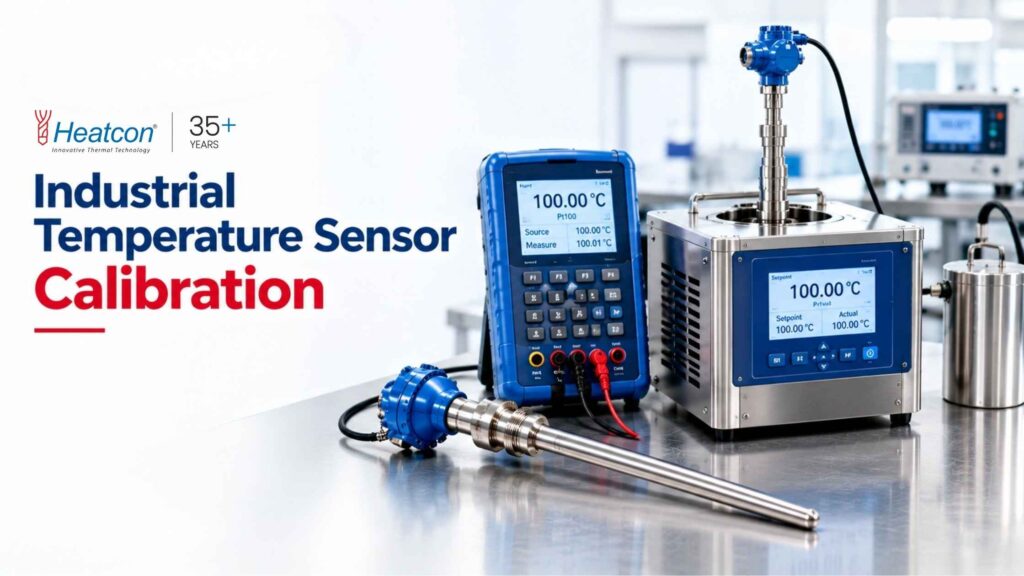
Industrial temperature sensor calibration is a cornerstone of modern manufacturing and process industries. According to the International Society of Automation, nearly 40% of process faults in critical industries can be traced back to inaccurate temperature measurements—often due to drift or improper calibration of sensors. This staggering statistic highlights why precise calibration is not just a technical formality, but a business-critical need for safety, product quality, and regulatory compliance.
What is industrial temperature sensor calibration and why is it essential?
Industrial temperature sensor calibration is the process of comparing and adjusting the output of a temperature sensor, such as an RTD or thermocouple, to ensure it accurately reflects the true temperature of the environment or process it is monitoring. Calibration directly impacts process safety, quality control, and energy efficiency, making it indispensable for sectors such as pharmaceuticals, power generation, chemical processing, food and beverage, and more.
The importance of calibration cannot be overstated. Even a minor deviation in sensor readings can lead to defective products, unsafe conditions, or costly shutdowns. For this reason, international standards and industry best practices mandate periodic calibration of all critical measurement instruments.
How does industrial sensor calibration work?
Industrial sensor calibration typically involves comparing the sensor’s reading against a reference standard in a calibration laboratory. This process ensures that the sensor’s measurements are both precise and consistent. The calibration procedure can be summarized as follows:
- The sensor (RTD, thermocouple, etc.) is exposed to a series of known temperatures using a calibration bath or dry block calibrator.
- The sensor output is recorded and compared against the reference standard.
- If discrepancies are found, adjustments (either in hardware or via software) are made to correct the sensor’s output.
- A calibration certificate is issued, detailing the process and confirming the sensor’s accuracy.
The frequency of industrial calibration depends on usage, environment, and regulatory requirements, but annual or semi-annual intervals are common in most industries.
Why sensor accuracy matters in temperature measurement
Sensor accuracy is the degree to which a sensor’s measured value conforms to the actual value. In temperature measurement, even a small error can have significant consequences:
- Batch quality in pharmaceuticals and food processing is directly tied to temperature control.
- Energy costs can increase if heating or cooling systems run inefficiently due to sensor drift.
- Product safety and regulatory compliance depend on accurate monitoring and documentation.
Regular temperature sensor calibration is the only reliable way to maintain the high sensor accuracy demanded by today’s industrial processes.
Types of temperature sensors and their calibration: RTD calibration and thermocouple calibration
The two most common sensor types in industry are RTDs (Resistance Temperature Detectors) and thermocouples. Each has unique calibration requirements:
| Sensor Type | Calibration Method | Typical Applications |
|---|---|---|
| RTD (Resistance Temperature Detector) | RTD calibration involves immersing the sensor in a temperature-stable bath and comparing its resistance reading to a traceable reference standard. | Pharmaceuticals, food processing, HVAC, laboratory research |
| Thermocouple | Thermocouple calibration requires exposing the sensor to known temperatures and comparing the millivolt output to published reference tables. | Steel, glass, ceramics, power generation, foundries |
Both RTD calibration and thermocouple calibration require specialized equipment and skilled technicians to ensure reliable results.
What role does a calibration laboratory play?
A calibration laboratory is a facility equipped with high-precision reference standards and environmental controls to perform accurate industrial sensor calibration. Trusted laboratories operate under ISO/IEC 17025 accreditation, which ensures their results are internationally recognized and meet stringent quality standards.
Laboratories use state-of-the-art dry block calibrators, calibration baths, and automated systems to eliminate human error and achieve repeatable, traceable results. The final calibration certificate provides traceability to international standards—essential for audits and regulatory compliance.
How does Heatcon Sensors support industrial calibration needs?
Heatcon Sensors is a leading Indian manufacturer specializing in customized RTDs, thermocouples, and other temperature sensors tailored for industrial requirements. With decades of experience, Heatcon Sensors has established its reputation as a trusted partner for industries demanding exceptional sensor accuracy and reliability.
Key differentiators of Heatcon Sensors:
- Customization: Heatcon Sensors can design, manufacture, and supply temperature sensors specifically built to your process requirements—whether for a local plant in India or customers worldwide including the US, UAE, Indonesia, Germany, South Korea, Saudi Arabia, Russia, Bahrain, and Kuwait.
- Comprehensive product range: The portfolio includes not only RTDs and thermocouples but also heat generating equipment such as industrial furnaces, ovens, hot air blowers, electric furnaces, and high density cartridge heaters. This breadth of expertise allows Heatcon Sensors to deliver integrated temperature solutions for even the most demanding environments.
- Quality assurance: Every product undergoes rigorous industrial calibration in a state-of-the-art calibration laboratory, guaranteeing consistent performance and compliance with global standards.
- Fast, responsive support: With dedicated teams and global logistics, Heatcon Sensors ensures timely delivery and expert technical assistance wherever you operate.
Why choose customized temperature sensor calibration from Heatcon Sensors?
Off-the-shelf sensors may not always suit your unique process needs. Heatcon Sensors works closely with clients to provide:
- Tailor-made calibration protocols that reflect your process specifics and regulatory requirements
- Sensor selection and design advice to maximize sensor accuracy and lifespan
- On-site and laboratory calibration services for both new and existing installations
- Comprehensive documentation including traceable calibration certificates
By choosing Heatcon Sensors, you minimize risk, optimize process performance, and gain peace of mind that your temperature measurement infrastructure is in expert hands.
How to get your temperature sensors calibrated or custom-manufactured by Heatcon Sensors?
Getting started with Heatcon Sensors is effortless. Choose any of the following options for immediate support:
- Submit your requirements using the easy contact form at https://heatconsensors.com/contact-us/
- Leave a message via WhatsApp using the interface available on Heatcon Sensor’s website
- Call directly for expert guidance at +91 9164833027 or +91 9844233244
Whether you require a single sensor or a complete temperature measurement solution, Heatcon Sensors ensures swift, professional service across India and internationally.
What industries benefit most from accurate temperature sensor calibration?
Temperature sensor calibration is vital in any sector where process temperature impacts product quality, safety, or regulatory compliance. These include:
- Pharmaceuticals & Biotechnology: Sterilization, mixing, fermentation, and storage
- Food & Beverage: Pasteurization, cooking, chilling, and packaging
- Steel, Glass, & Ceramics: High-temperature furnaces, annealing, and forming processes
- Power Generation: Boiler monitoring, turbine inlet temperature, cooling circuits
- Chemical Processing: Reactor control, distillation, and environmental monitoring
- Automotive & Aerospace: Test benches, engine R&D, and climate simulation
In each of these industries, even minor deviations in temperature measurement can result in significant operational or compliance risks.
How often should industrial temperature sensors be calibrated?
The optimal calibration frequency depends on several factors:
- Manufacturer recommendations
- Process criticality and safety requirements
- Environmental conditions (e.g., vibration, temperature extremes)
- Historical sensor stability and drift data
As a general guideline, most industries calibrate sensors annually or semi-annually. However, critical applications may demand more frequent checks. Heatcon Sensors can help you design a calibration schedule that balances cost, compliance, and operational risk.
About Heatcon Sensors
Heatcon Sensors is an ISO-certified manufacturer based in India, specializing in the design, production, and calibration of custom temperature sensors and heat generating solutions for process industries worldwide. With a strong presence across major cities and countries—including US, UAE, Indonesia, Germany, South Korea, Saudi Arabia, Russia, Bahrain, and Kuwait—Heatcon Sensors is trusted for its expertise in industrial temperature sensor calibration, RTD calibration, thermocouple calibration, and the supply of industrial furnaces, ovens, hot air blowers, and high density cartridge heaters.
For more information or to discuss your requirements, contact Heatcon Sensors today. Don’t leave your process performance and safety to chance—choose the experts who set the industry standard for sensor accuracy and reliability.
- Contact us online
- Message us on WhatsApp via our website
- Call +91 9164833027 or +91 9844233244 for immediate assistance
Experience the Heatcon Sensors difference—where precision meets reliability, every time.
Frequently Asked Questions
What is industrial temperature sensor calibration and why is it important?
Industrial temperature sensor calibration is the process of comparing and adjusting the readings of a temperature sensor, such as a thermocouple or RTD, to ensure it measures temperature accurately within specified tolerances. This process is crucial because accurate temperature measurement is vital for safety, product quality, and regulatory compliance in industrial environments. Heatcon Sensors offers advanced industrial sensor calibration services to help businesses maintain high standards of sensor accuracy in their operations.
How often should temperature sensors be calibrated in industrial settings?
The frequency of temperature sensor calibration depends on several factors, including the sensor type, application, regulatory requirements, and manufacturer recommendations. For most industrial applications, annual calibration is common, but critical processes may require more frequent checks. Heatcon Sensors can assist in developing a calibration schedule tailored to your specific needs, ensuring ongoing sensor accuracy and compliance.
What is the difference between RTD calibration and thermocouple calibration?
RTD calibration involves adjusting and verifying resistance temperature detectors, which operate based on the predictable change in electrical resistance of metals with temperature. Thermocouple calibration, on the other hand, deals with sensors that generate a voltage proportional to temperature differences between two junctions. Each sensor type has unique calibration requirements, and Heatcon Sensors’ calibration laboratory is fully equipped to perform both RTD calibration and thermocouple calibration with traceable standards.
What are the benefits of using a professional calibration laboratory for industrial sensor calibration?
Utilizing a professional calibration laboratory ensures that your sensors are calibrated with precision instruments and traceability to international standards. This guarantees highly reliable temperature measurement and documentation for audits. Heatcon Sensors’ laboratory provides accredited industrial calibration services, minimizing downtime and maximizing the operational efficiency of your plant.
How does Heatcon Sensors ensure sensor accuracy after calibration?
Heatcon Sensors uses certified reference instruments and follows stringent calibration procedures to guarantee sensor accuracy. After calibration, detailed reports are provided, documenting the sensor’s performance before and after adjustment. This transparency helps clients verify their instruments meet their process and compliance requirements.
Can Heatcon Sensors calibrate temperature sensors from any manufacturer?
Yes, Heatcon Sensors is equipped to perform temperature sensor calibration for all major brands and types of industrial sensors, including both RTDs and thermocouples. Our calibration laboratory is designed to handle a wide range of sensors used across various industries, ensuring flexibility and convenience for our clients.
What does a typical industrial calibration certificate from Heatcon Sensors include?
A standard calibration certificate from Heatcon Sensors details the sensor’s identification, the calibration method, environmental conditions, reference standards used, measurement results, and traceability information. This documentation supports compliance with industry regulations and quality management systems.
How does industrial sensor calibration improve process reliability?
Regular industrial sensor calibration ensures that all sensors deliver accurate and consistent readings, minimizing the risk of process deviations, equipment damage, or product quality issues. By partnering with Heatcon Sensors, industrial clients can maintain high process reliability and avoid costly downtime due to inaccurate temperature measurement.
Does Heatcon Sensors offer on-site calibration services?
Yes, Heatcon Sensors offers both in-lab and on-site industrial temperature sensor calibration services. On-site calibration minimizes equipment downtime and ensures your processes stay operational. Our team is trained to work efficiently in industrial environments, delivering calibration solutions that suit your operational needs.