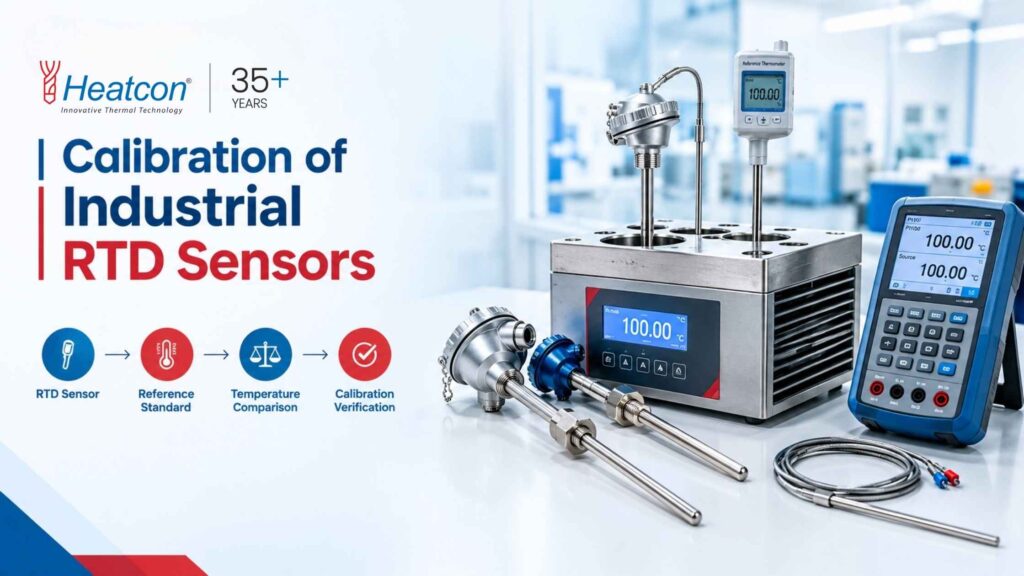
Industrial RTD sensor calibration is the backbone of accurate temperature measurement in modern industry. According to the International Society of Automation (ISA), up to 60% of process deviations in temperature-sensitive industries are linked to sensor inaccuracies and poor calibration. This statistic underscores the mission-critical importance of reliable calibration for resistance temperature detectors (RTDs) – ensuring that your processes stay safe, efficient, and compliant.
What Is Industrial RTD Sensor Calibration?
Industrial RTD sensor calibration is the process of verifying and adjusting the output of a resistance temperature detector to ensure it matches a known standard or reference. By systematically comparing the RTD’s readings with a calibrated reference, any deviation can be identified and corrected. This procedure is vital for maintaining process integrity, safeguarding product quality, and preventing costly downtime.
Why Is RTD Calibration Essential For Industry?
Reliable RTD calibration directly impacts product quality, energy consumption, safety, and regulatory compliance. In industries such as pharmaceuticals, food processing, petrochemicals, and semiconductors, even a single degree of error can result in batch failures, safety hazards, or legal challenges. Regular calibration ensures:
- Consistent RTD accuracy across all production cycles
- Early detection of sensor drift or damage
- Compliance with ISO, GMP, FDA, and other standards
- Enhanced operational efficiency and reduced wastage
With Heatcon Sensors, you’re not just buying a sensor – you’re investing in a culture of precision and accountability that extends to every corner of your operation.
How Do You Perform Temperature Sensor Calibration?
Temperature sensor calibration, including RTDs, involves several key steps:
- Preparation: Clean the sensor and ensure it is free from contaminants. Record the model (Pt100, Pt1000, etc.) and serial number.
- Reference Selection: Use a traceable reference thermometer or calibration bath with a certified accuracy.
- Measurement: Place both the RTD and reference in a controlled environment (ice point, boiling point, or calibration block). Record readings at multiple temperatures.
- Analysis: Compare RTD readings to the reference. Calculate deviations and apply corrections or adjustments if necessary.
- Documentation: Log calibration data, date, technician, and outcome for audit trails.
Heatcon Sensors offers comprehensive calibration protocols that are tailored to each customer’s unique requirements, ensuring your industrial RTD is always in peak condition.
What Are The Common Types Of RTD Sensors And Their Calibration?
RTDs are classified by the material and resistance value at 0°C, the most popular being Pt100 and Pt1000 types. Here’s a quick comparison:
| Sensor Type | Nominal Resistance (0°C) | Typical Application | Calibration Considerations |
|---|---|---|---|
| Pt100 | 100 Ω | General industrial, process control | Requires precise Pt100 calibration, especially in critical zones (-200°C to 850°C) |
| Pt1000 | 1000 Ω | HVAC, automotive, low-current circuits | Pt1000 calibration is essential for minimizing self-heating errors |
Each RTD type demands a tailored calibration approach. Heatcon Sensors specializes in both Pt100 calibration and Pt1000 calibration, ensuring your sensor delivers uncompromised performance.
How Does RTD Accuracy Impact Your Operations?
RTD accuracy defines the degree to which a sensor’s output matches the true process temperature. Errors can stem from manufacturing tolerances, installation issues, or prolonged exposure to harsh environments. Even a minor lapse in RTD accuracy can:
- Compromise product consistency
- Lead to regulatory non-compliance
- Increase maintenance costs
- Shorten equipment lifespan
By choosing Heatcon Sensors’ calibrated RTDs, you minimize risk and maximize uptime, safeguarding your reputation and bottom line.
What Is The Procedure For RTD Testing?
RTD testing is a vital step in quality assurance and involves checking the sensor’s resistance at specific temperatures. A simplified approach includes:
- Measuring resistance at 0°C (ice bath) and 100°C (boiling water) for Pt100 or Pt1000 types
- Comparing results to standard resistance values
- Identifying deviations indicating drift, contamination, or damage
RTD testing should be part of routine maintenance schedules. Heatcon Sensors’ experts can assist with on-site or laboratory RTD testing services, ensuring continuous compliance and reliability.
Why Partner With Heatcon Sensors For Custom RTDs And Calibration?
Heatcon Sensors is a leading manufacturer and exporter of customized industrial RTDs and other temperature sensors. Our strengths include:
- Custom Manufacturing: We design and build RTDs to meet specific industrial, process, and environmental needs, including high-pressure, high-temperature, and hazardous applications.
- Global Reach: Whether you are in India, the US, UAE, Indonesia, Germany, South Korea, Saudi Arabia, Russia, Bahrain, Kuwait, or anywhere globally, Heatcon Sensors can deliver precise sensors and calibration services to your doorstep.
- End-to-End Solutions: We support customers with installation, RTD calibration, temperature sensor calibration, and after-sales service.
- Heat Generating Equipment Expertise: In addition to RTDs, we manufacture high-performance furnaces, ovens, hot air blowers, electric furnaces, high density cartridge heaters, and more, ensuring a complete thermal solution for your enterprise.
- Trusted Quality: All products pass rigorous RTD testing and calibration cycles to guarantee reliability.
Don’t risk process integrity by settling for generic sensors. With Heatcon Sensors, you gain a technology partner committed to your success, offering globally benchmarked products and services.
How To Reach Heatcon Sensors For Your RTD And Calibration Needs?
Ready to upgrade your process accuracy and reliability? Contact Heatcon Sensors today for expert consultation and rapid delivery of custom sensors and calibration services. Choose your preferred option:
- Submit your details: Use our contact form at https://heatconsensors.com/contact-us/
- Leave a message: Use the WhatsApp interface on our website for instant support.
- Call us directly: +91 9164833027 or +91 9844233244 for immediate assistance.
Don’t let inaccurate temperature measurements hold you back. Rely on Heatcon Sensors for industrial RTD sensor calibration and solutions that power your growth – wherever your business is located.
About Heatcon Sensors
Heatcon Sensors is a trusted, India-based manufacturer of precision temperature sensors and heat-generating equipment, serving industries worldwide. Our product portfolio includes industrial RTDs, thermocouples, resistance temperature detector assemblies, as well as furnaces, ovens, hot air blowers, and high density cartridge heaters. With a global delivery network, advanced manufacturing, and a commitment to quality, we are the preferred partner for process industries in India, the US, UAE, Indonesia, Germany, South Korea, Saudi Arabia, Russia, Bahrain, Kuwait, and beyond.
Frequently Asked Questions
What is industrial RTD sensor calibration and why is it important?
Industrial RTD sensor calibration is the process of verifying and adjusting the accuracy of resistance temperature detectors (RTDs) used in industrial environments. Calibration ensures that the RTD provides precise temperature readings, minimizing errors and maintaining process control. Regular calibration is crucial for industries where temperature measurement accuracy directly impacts product quality, safety, and regulatory compliance.
How does Heatcon Sensors perform RTD calibration?
Heatcon Sensors uses state-of-the-art equipment and certified reference standards for RTD calibration. Each resistance temperature detector is subjected to a series of temperature points and its resistance is measured and compared against known values. Any deviation is documented, and adjustments are made where possible to ensure the RTD meets industry standards for accuracy and reliability.
What is the difference between Pt100 calibration and Pt1000 calibration?
Pt100 calibration refers to calibrating RTDs with a nominal resistance of 100 ohms at 0°C, while Pt1000 calibration is for RTDs with 1000 ohms at 0°C. Both types require precise calibration techniques, but Pt1000 sensors are often favored in applications where higher signal-to-noise ratios are needed. Heatcon Sensors offers expert calibration for both Pt100 and Pt1000 RTDs, ensuring each sensor delivers optimal performance for its intended application.
How often should industrial RTDs be calibrated?
The frequency of temperature sensor calibration depends on the application, operating environment, and required RTD accuracy. For critical industrial processes, annual or even semi-annual calibration is recommended. Less demanding environments may allow for longer intervals. Heatcon Sensors can recommend a calibration schedule tailored to your specific needs and regulatory requirements.
What factors affect the accuracy of industrial RTDs?
RTD accuracy can be influenced by factors such as sensor construction, lead wire resistance, installation environment, and mechanical stress. Drift over time due to aging or contamination can also impact performance. Regular RTD testing and calibration by professionals like Heatcon Sensors help ensure your RTDs remain within acceptable accuracy limits for your process.
Can Heatcon Sensors provide calibration certificates for compliance and audits?
Yes, Heatcon Sensors provides detailed calibration certificates with each RTD calibration service. These certificates include all relevant measurement data, traceability to national or international standards, and are suitable for quality assurance, regulatory compliance, and audit requirements.
What types of industrial RTD sensors does Heatcon Sensors calibrate?
Heatcon Sensors calibrates a wide range of RTDs, including standard Pt100, Pt1000, custom designs, and multi-point assemblies. Our team is experienced with both 2-wire, 3-wire, and 4-wire RTD configurations, ensuring precise calibration for all types of resistance temperature detectors used in industrial applications.
How do I know if my RTD needs recalibration or replacement?
Signs that your industrial RTD may need recalibration or replacement include unexpected shifts in temperature readings, increased process variability, or failed RTD testing results. If calibration reveals significant drift or damage, Heatcon Sensors can advise on whether recalibration is sufficient or if replacement is recommended to maintain process integrity.
Does Heatcon Sensors offer on-site temperature sensor calibration?
Yes, Heatcon Sensors offers both in-lab and on-site temperature sensor calibration services. Our technicians can visit your facility to calibrate resistance temperature detectors in place, minimizing downtime and ensuring your equipment continues to perform reliably within process specifications.