
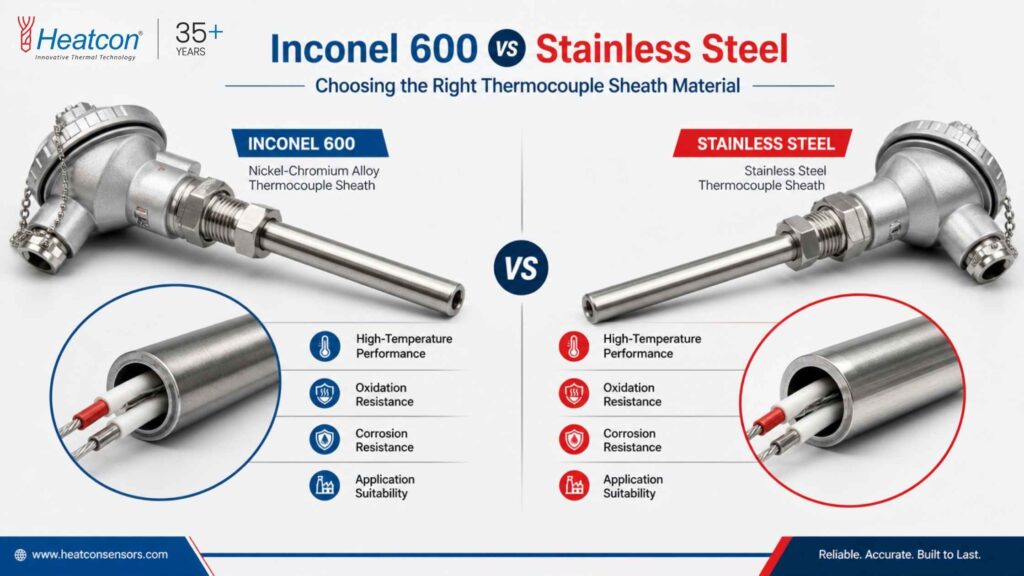
Choosing between Inconel 600 and Stainless Steel for a thermocouple sheath is a critical decision that can impact sensor longevity, process accuracy, and overall safety in industrial environments. According to the International Society of Automation, nearly 60% of premature thermocouple failures in harsh applications are attributed to incorrect sheath material selection. This statistic underscores the importance of understanding the properties and differences between inconel vs stainless steel thermocouple sheath options, so you can make the right choice for your process and avoid costly downtime.
What are the core differences between Inconel 600 and Stainless Steel thermocouple sheaths?
The main difference lies in their chemical composition and resulting resistance to temperature, corrosion, and mechanical wear. Inconel 600 is a nickel-chromium alloy engineered for exceptional oxidation and carburization resistance at elevated temperatures, whereas Stainless Steel, particularly SS316, is an iron-based alloy with good corrosion resistance, especially against chlorides and acids, but with limitations at very high temperatures.
- Inconel 600: Best for high-temperature, highly corrosive, and oxidative environments.
- SS316: Preferred for moderate temperatures, excellent against organic and inorganic acids, and cost-effective for less aggressive conditions.
The choice between these two materials can directly affect your thermocouple’s service life and reliability, especially in critical industries like petrochemicals, power generation, and metallurgy.
Why does the right thermocouple sheath matter for industrial applications?
The sheath is the first line of defense for your temperature sensor, acting as a barrier against corrosive process media, mechanical impact, and temperature extremes. Selecting the wrong sheath material can lead to rapid degradation, sensor failure, and even safety hazards. With Heatcon Sensors, you have access to the widest selection of thermocouple protection tube materials, ensuring your application is matched with the optimal solution.
What is Inconel 600 thermocouple sheath and where is it used?
Inconel 600 thermocouple sheath refers to a protective covering for thermocouples made from a nickel-chromium alloy renowned for its superior resistance to oxidation, scaling, and corrosion at temperatures up to 1150°C (2100°F). This makes it ideal for:
- Furnaces and kilns operating at high temperatures
- Petrochemical processing plants
- Heat treatment and metallurgy industries
- Power plants, especially in superheater and reheater sections
- Atmospheres containing sulfur, ammonia, and various acids
The inconel 600 thermocouple sheath is often indispensable for processes where both high temperature and aggressive chemicals are present, drastically increasing sensor service life.
What are the advantages and limitations of SS316 thermocouple sheath?
SS316 thermocouple sheath is composed primarily of iron, chromium, nickel, and molybdenum, lending it excellent resistance to pitting and crevice corrosion in chloride-bearing environments. Its main benefits include:
- Suitability for most food, pharmaceutical, and chemical processing industries
- Corrosion resistance against organic and inorganic acids, especially at moderate temperatures (up to 800°C or 1472°F)
- Cost-effectiveness for general-purpose applications
However, SS316 may not be the best choice for extremely high-temperature or highly oxidative environments, where it can suffer from rapid scaling and reduced lifespan.
How do thermocouple protection tube materials influence sensor performance?
The choice of thermocouple protection tube materials is pivotal for optimal temperature measurement accuracy and sensor longevity. Materials are selected based on:
- Temperature range (normal, elevated, or extreme)
- Chemical exposure (chlorides, acids, sulfur, etc.)
- Mechanical stresses (vibration, impact, abrasion)
- Required sensor response time and sensitivity
| Property | Inconel 600 | SS316 |
|---|---|---|
| Max Operating Temp | 1150°C (2100°F) | 800°C (1472°F) |
| Corrosion Resistance | Excellent (oxidation, carburization, sulfur, ammonia) | Good (chlorides, acids) |
| Mechanical Strength | Very High at Elevated Temps | Moderate |
| Cost | Higher | Moderate |
| Typical Applications | Furnaces, kilns, petrochemical, power, metallurgy | Food, pharma, chemical, water treatment |
For applications demanding a corrosion resistant thermocouple sheath, Inconel 600 is often the material of choice. For less aggressive settings, SS316 delivers a balanced performance at a lower cost.
When is a high temperature sheath material necessary?
If your process involves temperatures above 800°C or exposure to highly reactive media, a high temperature sheath material like Inconel 600 is essential to prevent premature sensor failure, ensure continuous operation, and safeguard personnel and equipment.
How does Heatcon Sensors help you choose the right thermocouple sheath?
Heatcon Sensors is a leading manufacturer of customized RTDs and temperature sensors for the most demanding industrial requirements. With decades of expertise, Heatcon guides clients through material selection, helping you balance performance, longevity, and cost.
- Wide selection of inconel 600 thermocouple sheath, SS316, and specialty alloys
- Tailored solutions for unique process conditions
- Global delivery across India, US, UAE, Indonesia, Germany, South Korea, Saudi Arabia, Russia, Bahrain, Kuwait, and more
- Rapid prototyping and scalable manufacturing
- Expert technical support for material compatibility and process optimization
Heatcon Sensors’ commitment to quality and precision ensures that every sensor is engineered to withstand your process environment, maximizing uptime and minimizing maintenance costs.
What are the other heat generating equipment manufactured by Heatcon Sensors?
Beyond temperature sensors, Heatcon Sensors manufactures a comprehensive range of heat generating equipment, including:
- Industrial furnaces (electric, gas, and custom designs)
- Ovens for drying, curing, and baking operations
- Hot air blowers for cleanroom and process heating
- High density cartridge heaters for localized, high-wattage heating needs
- Immersion heaters, band heaters, tubular heaters, and more
Each piece of equipment is customizable to your specific temperature, material, and spatial requirements, ensuring optimal integration into your process.
Why partner with Heatcon Sensors for your thermocouple and heating solutions?
By choosing Heatcon Sensors, you gain a partner dedicated to your operational excellence. You avoid the risks of premature sensor failure, costly downtime, and process inefficiencies.
- Custom solutions tailored to your unique application and environment
- Comprehensive product range from RTDs to specialized heat generating equipment
- Global reach: India, US, UAE, Indonesia, Germany, South Korea, Saudi Arabia, Russia, Bahrain, Kuwait, and beyond
- Decades of field-proven expertise and technical guidance
- Rapid support and after-sales service
Don’t let improper material selection compromise your process. Trust Heatcon Sensors for advanced, reliable, and durable temperature sensing and heating solutions.
How to reach Heatcon Sensors for expert guidance or orders?
Ready to optimize your sensor or heating solutions? Choose from any of the following options to connect with our experts:
- Submit your information on the contact form
- Leave a message on WhatsApp through the interface available on the Heatcon Sensors website
- Call directly for immediate assistance: +91 9164833027 or +91 9844233244
Our dedicated team will provide prompt, technical, and personalized support to address your needs—no matter your industry or location.
About Heatcon Sensors
Heatcon Sensors is an ISO-certified manufacturer based in Bangalore, India, specializing in industrial temperature sensing and heating solutions. With a global footprint and decades of experience, Heatcon delivers certified, high-precision RTDs, thermocouples, and advanced heat generating equipment tailored to every industrial sector. From automotive and aerospace to pharmaceuticals and petrochemicals, businesses worldwide trust Heatcon Sensors to keep their processes running safely and efficiently. Learn more at heatconsensors.com.
Frequently Asked Questions
What are the main differences between Inconel 600 and stainless steel thermocouple sheaths?
Inconel 600 and stainless steel are both popular thermocouple protection tube materials, but they offer different advantages. Inconel 600 thermocouple sheath is a nickel-chromium alloy known for its excellent resistance to oxidation, carburization, and chloride-ion stress-corrosion cracking, especially at high temperatures up to 1150°C. Stainless steel, including ss316 thermocouple sheath, is more cost-effective and provides good corrosion resistance in less aggressive environments, typically up to 800°C. The choice depends on your application’s temperature range and chemical exposure.
When should I choose an Inconel 600 thermocouple sheath over stainless steel?
Select Inconel 600 thermocouple sheath if your process involves high temperatures (up to 1150°C), exposure to harsh chemicals, or environments prone to oxidation or carburization. It is especially recommended for applications such as heat treatment furnaces, petrochemical processing, and reactors where a corrosion resistant thermocouple sheath is essential. For less demanding environments, stainless steel may be sufficient and more economical.
What are the strengths of ss316 thermocouple sheath for industrial use?
ss316 thermocouple sheath is widely chosen for its excellent resistance to general corrosion, especially in moist or mildly corrosive environments. It is suitable for most food, pharmaceutical, and chemical applications up to about 800°C. Its lower cost compared to Inconel makes it ideal for less severe conditions, though it may not perform as well in highly oxidizing or high-temperature environments.
How do I select the best thermocouple protection tube materials for my process?
The best thermocouple protection tube materials depend on your operating temperature, process atmosphere, and chemical exposure. For high temperature sheath material needs and aggressive conditions, Inconel 600 is recommended. For general, mild, or moderate corrosion environments, ss316 or other stainless steels may be suitable. Consulting with an expert, like the team at Heatcon Sensors, ensures you get optimal performance and longevity for your application.
Are there specific industries where Inconel 600 sheaths are preferred?
Yes, Inconel 600 is the preferred high temperature sheath material in industries such as power generation, aerospace, petrochemical, and heat treatment, where sensors are exposed to extreme temperatures and corrosive atmospheres. Its ability to resist oxidation and maintain strength at elevated temperatures makes it ideal for these critical applications.
How does Heatcon Sensors assist with choosing between Inconel and stainless steel sheaths?
Heatcon Sensors offers personalized technical support to help you compare inconel vs stainless steel thermocouple sheath options. Their team evaluates your application’s temperature, chemical exposure, and durability requirements to recommend the most suitable thermocouple protection tube materials. They also provide custom sheath solutions to maximize sensor life and performance.
What are the limitations of stainless steel sheaths in harsh environments?
While stainless steel sheaths like ss316 offer good general corrosion resistance, they may degrade in highly oxidizing, carburizing, or chloride-rich environments, especially at temperatures above 800°C. In such cases, they do not provide the same level of protection as a corrosion resistant thermocouple sheath made from Inconel 600 or other specialty alloys.
Can Heatcon Sensors provide custom sheath lengths or diameters for unique applications?
Absolutely. Heatcon Sensors offers a wide range of customizations for both Inconel 600 thermocouple sheath and ss316 thermocouple sheath, including various lengths, diameters, and end fittings. This ensures your thermocouple is perfectly suited to your process requirements, improving reliability and service life.
What makes a material a good high temperature sheath material for thermocouples?
A good high temperature sheath material must resist oxidation, maintain mechanical integrity, and prevent chemical reaction with process gases or molten materials. Alloys like Inconel 600 excel here, while stainless steels are chosen for less extreme conditions. The right choice ensures sensor accuracy and longevity.