
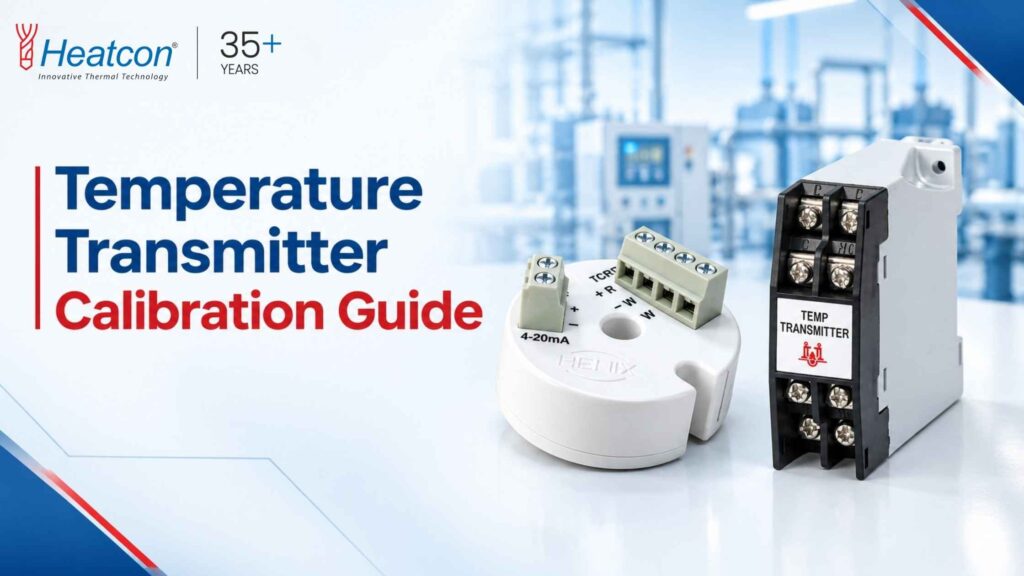
How to ensure reliable temperature transmitter calibration for industrial applications? Start with a precise calibration process that not only meets industry standards, but also guarantees consistent, accurate temperature measurement vital for safety and efficiency. Did you know that according to the International Society of Automation, up to 40% of process instrumentation errors in industrial plants are directly linked to improper or neglected calibration of transmitters? This staggering figure highlights the crucial role of rigorous calibration for critical operations worldwide.
Whether you operate in India, the US, UAE, Indonesia, Germany, South Korea, Saudi Arabia, Russia, Bahrain, or Kuwait—or anywhere else globally—Heatcon Sensors stands as your trusted partner for custom-manufactured RTDs, thermocouples, and a complete suite of temperature sensors tailored to your exact needs. With decades of expertise and a commitment to quality, Heatcon Sensors ensures your calibration processes are not just compliant, but best-in-class.
What is temperature transmitter calibration and why does it matter?
Temperature transmitter calibration is the process of verifying and adjusting the accuracy of a temperature transmitter to ensure its output precisely matches the real temperature value measured by a reference instrument. This process is essential for all types of industrial transmitter devices, including DIN rail temperature transmitter models, thermocouple transmitter units, and RTD transmitter calibration routines.
- Accuracy: Ensures that temperature readings reflect actual process conditions, preventing costly process deviations.
- Compliance: Satisfies industry regulations and quality standards for safety and performance.
- Reliability: Reduces downtime by preventing false alarms and unnecessary maintenance interventions.
- Traceability: Provides documented proof of calibration for audits and certifications.
By investing in robust calibration procedures, industries safeguard product quality, protect equipment, and maintain operational excellence. Heatcon Sensors’ custom solutions make this process seamless, whether you require on-site support or want to ship your sensors for recalibration from any part of the world.
How does the temperature transmitter calibration process work?
The standard calibration process involves comparing the output of the industrial transmitter to a highly accurate reference standard under controlled conditions. Here’s a step-by-step overview:
- Preparation: Disconnect the transmitter and ensure it is at ambient temperature. Clean all terminals and connectors.
- Connection: Attach the transmitter to a calibration bench or use a portable calibrator. For a DIN rail temperature transmitter, ensure the wiring follows manufacturer recommendations.
- Reference Setup: Use a certified reference thermometer or simulator (for RTD or thermocouple transmitter) to generate known temperature points.
- Input Simulation: Apply the reference signals (e.g., resistance for RTDs, millivolts for thermocouples).
- Output Measurement: Record the transmitter’s output signal for each reference input (commonly 4-20 mA).
- Adjustment: If deviations exceed acceptable limits, adjust the zero and span settings on the transmitter.
- Documentation: Log all results, including as-found and as-left data, for traceability.
Tip: Always follow the manufacturer’s recommended intervals and procedures for transmitter testing and calibration, as these can vary based on sensor type and application.
What are the best practices for transmitter testing and calibration?
To achieve the highest standards of accuracy and reliability in process instrumentation, consider these expert-recommended best practices:
- Use certified reference instruments traceable to national or international standards.
- Perform RTD transmitter calibration and thermocouple transmitter calibration at multiple points across the operating range.
- Document environmental conditions (humidity, ambient temperature) during calibration.
- Schedule regular calibration intervals based on application criticality and manufacturer guidance.
- Calibrate transmitters after any major maintenance or suspected fault.
- Leverage digital tools and calibration management systems for record-keeping and traceability.
At Heatcon Sensors, each custom-manufactured sensor undergoes rigorous, documented calibration before dispatch, ensuring you receive field-ready instruments that exceed industry benchmarks.
Which types of transmitters require calibration?
All types of temperature transmitters benefit from regular calibration, including:
- DIN rail temperature transmitter: Compact, modular devices mounted on standard rails for easy integration.
- Thermocouple transmitter: Designed for high-temperature processes and harsh industrial environments.
- RTD transmitter: Preferred for applications demanding high accuracy and stability over time.
- Wireless and smart transmitters: Increasingly common in IIoT and Industry 4.0 environments.
Regardless of type, Heatcon Sensors can custom-build and calibrate transmitters for your unique setup, providing robust solutions for industries across India and the globe.
How often should temperature transmitter calibration be performed?
The optimal calibration interval depends on several factors:
- Process criticality and safety requirements
- Manufacturer’s recommendations
- Operating environment (temperature extremes, vibration, humidity)
- Sensor type (RTD, thermocouple, etc.)
- Historical drift and calibration records
As a general guideline, annual calibration is common for most industrial transmitter applications. However, in safety-critical or high-precision environments, more frequent calibration may be warranted. Heatcon Sensors’ technical team can help you set up a calibration schedule tailored to your process and compliance needs.
How to choose a reliable calibration partner?
Selecting a trustworthy partner for temperature transmitter calibration is crucial. Here’s what sets Heatcon Sensors apart:
- Customized Solutions: Every sensor and transmitter can be custom-built for your exact process requirements, from simple installations to complex multi-point systems.
- Global Reach: Heatcon Sensors ships custom sensors and transmitters to India, the US, UAE, Indonesia, Germany, South Korea, Saudi Arabia, Russia, Bahrain, Kuwait, and beyond.
- Comprehensive Calibration: Each product undergoes thorough in-house calibration and comes with detailed certification.
- Innovation: Heatcon Sensors also designs and supplies heat generating equipment such as furnaces, ovens, hot air blowers, electric furnaces, and high density cartridge heaters, all integrated with world-class temperature measurement solutions.
- Responsive Service: Immediate technical support is available via web form, WhatsApp, or direct phone call, ensuring you never face downtime due to sensor issues.
With decades of experience, a commitment to continuous improvement, and a customer-centric approach, Heatcon Sensors is the clear choice for all your process instrumentation needs.
What are the common challenges in temperature measurement and calibration?
Even the most advanced systems can encounter issues. Common challenges include:
- Sensor drift over time, leading to inaccurate readings
- Electrical interference affecting signal integrity
- Installation errors, such as loose wiring or improper grounding
- Exposure to corrosive or high-vibration environments
- Lack of regular transmitter testing and documentation
Proactive calibration, robust sensor design, and expert support from manufacturers like Heatcon Sensors can mitigate these risks, ensuring your process remains safe and reliable.
Why is Heatcon Sensors the preferred choice for temperature solutions?
Heatcon Sensors is a leading manufacturer of customized RTDs, thermocouples, and temperature sensors for industrial requirements. Headquartered in India, but serving clients globally, Heatcon Sensors provides:
- End-to-end temperature measurement solutions
- Custom engineering for unique industrial challenges
- State-of-the-art calibration and certification
- Rapid delivery across continents
- Full integration with process instrumentation and control systems
Don’t let calibration errors or outdated sensors compromise your process. With Heatcon Sensors, you access world-class expertise, the latest technology, and unwavering support, all tailored to your operation.
For immediate assistance or to discuss your requirements, submit your information via our contact form, leave a message through WhatsApp on our website, or call us at +91 9164833027 or +91 9844233244. Experience the Heatcon Sensors advantage and elevate your process reliability today.
About Heatcon Sensors
Heatcon Sensors is an ISO-certified manufacturer based in India, specializing in the design, engineering, and supply of precision temperature sensors, transmitters, and heat-generating equipment. With a strong presence in India and exports to the US, UAE, Indonesia, Germany, South Korea, Saudi Arabia, Russia, Bahrain, Kuwait, and more, Heatcon Sensors is recognized for excellence in quality, innovation, and customer service. Connect with us to discover how we can help you achieve unparalleled temperature measurement accuracy in every industrial setting.
Frequently Asked Questions
What is the purpose of temperature transmitter calibration?
Temperature transmitter calibration ensures that the transmitter accurately converts the sensor signal (from an RTD or thermocouple) into a standardized output, typically 4-20 mA. Regular calibration is essential for maintaining precise temperature measurement in process instrumentation, reducing errors, and meeting industry standards.
How often should industrial transmitters be calibrated?
The calibration frequency for an industrial transmitter depends on factors like process criticality, manufacturer recommendations, and regulatory requirements. Generally, annual or semi-annual temperature transmitter calibration is recommended, but critical applications may require more frequent verification.
What is the difference between RTD transmitter calibration and thermocouple transmitter calibration?
RTD transmitter calibration involves verifying and adjusting the response of a transmitter to the resistance changes from an RTD sensor, while thermocouple transmitter calibration checks the transmitter’s response to voltage changes from a thermocouple. Each sensor type requires specific standards and simulators during transmitter testing.
What are the typical steps involved in transmitter testing and calibration?
Typical steps include isolating the transmitter, connecting a reference simulator (for RTD or thermocouple), applying known input values, checking the transmitter’s output, documenting any deviations, and adjusting the transmitter as necessary. Heatcon Sensors provides detailed guides and calibration equipment for these procedures.
Can Heatcon Sensors assist with DIN rail temperature transmitter calibration?
Yes, Heatcon Sensors offers solutions and support for DIN rail temperature transmitter calibration. Their team can recommend suitable calibration procedures, instruments, and provide DIN rail compatible transmitters designed for reliability and accuracy in industrial environments.
What solutions does Heatcon Sensors provide for temperature measurement and calibration?
Heatcon Sensors specializes in a wide range of process instrumentation, offering temperature transmitters, calibration services, and guidance for both RTD and thermocouple transmitter applications. Their products include high-accuracy transmitters, calibration kits, and expert technical support for all temperature measurement needs.
How do I know if my temperature transmitter is out of calibration?
Signs of an out-of-calibration temperature transmitter include inconsistent or drifting readings, sudden shifts in output, or failing to meet process accuracy requirements. Routine transmitter testing and comparison with reference standards are the best ways to identify calibration issues.
Are there specific calibration requirements for hazardous area transmitters?
Yes, hazardous area transmitters may require additional precautions during calibration, such as ensuring intrinsic safety, using certified equipment, and following plant safety protocols. Heatcon Sensors can assist in selecting suitable industrial transmitter models and provide advice on safe calibration practices.