
What Is The Difference Between Cartridge Heater And Tubular Heater?
When choosing the right heating solution for your industrial process, understanding the cartridge heater vs tubular heater debate is crucial. According to MarketsandMarkets, the global industrial heaters market is projected to reach USD 6.8 billion by 2025, reflecting the rising demand for precise and reliable heating in manufacturing, food processing, plastics, and more. Selecting the right heater is not just about cost—it impacts efficiency, product quality, and operational safety.
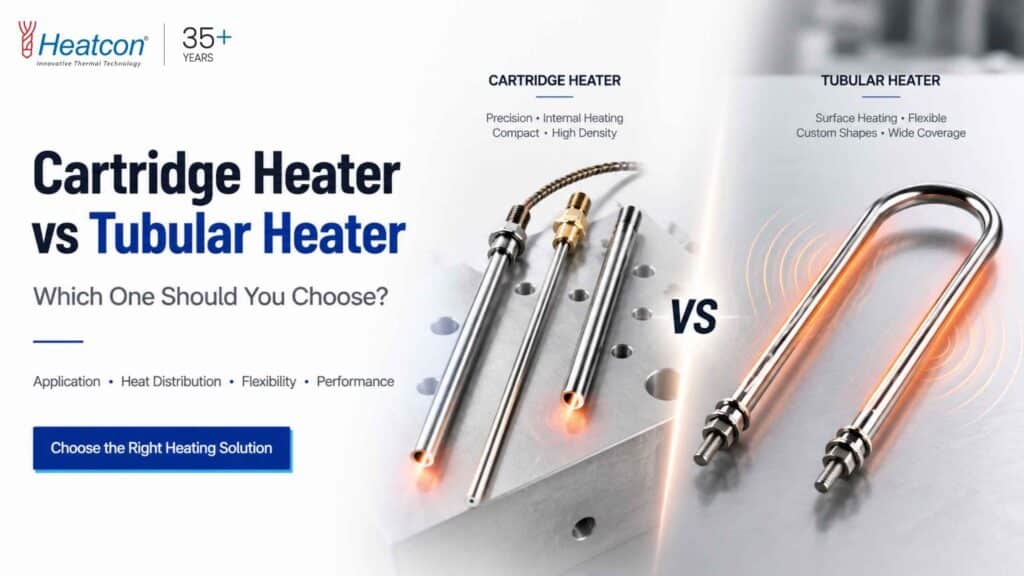
In essence, cartridge heaters are compact, high-watt density units designed for localized heating, while tubular heaters are versatile, robust, and can be shaped for a variety of heating needs. Each has unique strengths and best-use scenarios. This article unpacks the key differences, advantages, and applications of both, ensuring you make an informed heater selection for your process.
How Do Cartridge Heaters Work?
Cartridge heaters are cylindrical, tube-shaped electric heating elements that deliver concentrated heat directly to metal blocks or plates. They are typically inserted into drilled holes and provide uniform heating through direct contact. The construction involves a nichrome resistance wire wound around a ceramic core, all encased in a stainless-steel or Incoloy sheath for durability and resistance to oxidation.
- High watt density allows for rapid heating and precise control.
- Available in standard and custom diameters/lengths for different applications.
- Ideal for localized, high-temperature heating in industrial settings.
At Heatcon Sensors, cartridge heater applications are tailored to customer requirements, from plastics injection molding to packaging and laboratory equipment. The ability to customize watt density, lead configurations, and sensor integration makes these heaters a preferred choice for many industries.
What Are Tubular Heaters And How Are They Used?
Tubular heaters are some of the most adaptable electric heating elements available. They consist of a resistive coil encased in a metal tube, insulated with magnesium oxide powder. Tubular heaters can be bent into a wide variety of shapes—U, W, hairpin, or custom geometries—making them suitable for direct air, liquid, or surface heating.
- Excellent for immersion, radiant, or conduction heating.
- Available in stainless steel, Incoloy, copper, and other sheathing options.
- Used in ovens, water tanks, chemical baths, and air heaters.
For a clear tubular heater comparison, their durability and ability to withstand harsh environments make them indispensable in process heating, commercial food equipment, and HVAC systems. Heatcon Sensors can supply these heaters in custom shapes, lengths, and wattages, ensuring a perfect fit for every application.
Cartridge Heater Vs Tubular Heater: Key Differences At A Glance
Choosing between cartridge heater vs tubular heater depends on several factors. Here is a direct comparison:
| Feature | Cartridge Heater | Tubular Heater |
|---|---|---|
| Shape | Straight, cylindrical | Flexible (can be bent to various shapes) |
| Mounting | Inserted in drilled holes | Clamped, immersed, or mounted on surfaces |
| Watt Density | High (up to 60 W/in² or more) | Moderate to high, depending on design |
| Applications | Localized heating, dies, molds, platens | Air, liquid, surface heating, ovens, tanks |
| Thermal Response | Fast | Varies (generally slower due to larger mass) |
| Customizability | Diameter, length, wattage, lead wire, sensors | Shape, sheath material, length, wattage |
| Cost | Generally higher per watt | Cost-effective for large-scale heating |
This tubular heater comparison highlights why it’s essential to match the heater type to your specific process heating need.
Why Is Heater Selection So Important For Industrial Applications?
The choice between these industrial heaters affects not only the initial investment but also long-term operational costs, product quality, and safety. A poor heater selection can result in uneven heating, frequent breakdowns, energy wastage, and even hazardous conditions. At Heatcon Sensors, our team helps you navigate these choices to ensure optimal performance and reliability.
- Proper heating elements reduce downtime and maintenance costs.
- Custom solutions can enhance efficiency and product consistency.
- Compliance with safety and industry standards is ensured.
Whether your priority is high-density heating, robust construction, or corrosion resistance, Heatcon Sensors can design and deliver the right electric heating elements for your unique needs.
What Are The Typical Cartridge Heater Applications?
Cartridge heater applications span across diverse industries due to their compact size and powerful heating capabilities:
- Plastic injection molding machines (heating molds and nozzles)
- Packaging machinery (sealing bars, hot stamping)
- Medical and laboratory devices
- Hot runner systems
- 3D printers and CNC machines
- Food processing equipment
- Die-casting molds
Their ability to reach high temperatures quickly and maintain thermal stability makes them indispensable for precision heating tasks.
When Should You Choose Tubular Heaters Over Cartridge Heaters?
Tubular heaters are the ideal choice for applications where flexibility, ruggedness, and wide area coverage are needed:
- Air duct and forced air heating
- Immersion heating of water, oil, or chemicals
- Ovens and furnaces
- Defrosting and dehumidifying
- Surface heating of tanks and vessels
Their mechanical strength and adaptability to different shapes make tubular heaters suitable for demanding industrial environments.
How Does Heatcon Sensors Support Your Heater Selection Globally?
Heatcon Sensors is a leading manufacturer of customized RTDs, thermocouples, and other temperature sensors for industrial requirements. Our expertise extends far beyond just sensors—our portfolio includes the design and manufacturing of advanced industrial heaters, including both cartridge and tubular heaters, high-density cartridge heaters, electric furnaces, ovens, hot air blowers, and more.
Global Reach: We custom manufacture and supply temperature sensors and heating elements to any part of India, as well as to clients in the US, UAE, Indonesia, Germany, South Korea, Saudi Arabia, Russia, Bahrain, Kuwait, and globally. Our solutions are trusted by industries from automotive to petrochemicals, and from food processing to pharmaceuticals.
- Fast turnaround and worldwide delivery
- Custom engineering for challenging environments
- Compliance with international standards
Unmatched Customization: Whether you need specialized electric heating elements for hazardous areas, or high-precision temperature sensors for critical process heating, we are equipped to deliver. Our team works closely with you to understand your requirements, perform in-depth heater selection analysis, and recommend the optimal solution for your application.
Which Industries Benefit Most From Cartridge And Tubular Heaters?
Both cartridge and tubular heaters are foundational to modern industry. Their reliability and adaptability serve a wide spectrum of sectors:
- Manufacturing: Plastics, rubber, metalworking, 3D printing, and packaging.
- Food and Beverage: Ovens, sterilizers, food warmers, and processing tanks.
- Chemical and Pharmaceutical: Batch reactors, distillation, and drying ovens.
- HVAC and Environmental: Duct heaters, dehumidifiers, and air curtains.
- Automotive: Pre-heating fluids, engine testing rigs, and heat treating.
The versatility of these industrial heaters ensures that virtually every sector requiring controlled heat benefits from the right heater selection.
About Heatcon Sensors
Heatcon Sensors is a premier manufacturer and supplier of temperature sensors, industrial heaters, and heat generating equipment based in India, with a global footprint. Our product range includes RTDs, thermocouples, high-density cartridge heaters, tubular heaters, electric furnaces, ovens, hot air blowers, and much more. We pride ourselves on engineering excellence, innovation, and a customer-first approach.
Our commitment to quality and customization sets us apart. Every product is designed and manufactured to meet the highest international standards, ensuring reliability and precision even in the most demanding industrial environments. With a robust supply chain, Heatcon Sensors can serve customers not just in India, but across the United States, UAE, Indonesia, Germany, South Korea, Saudi Arabia, Russia, Bahrain, Kuwait, and beyond.
Don’t let suboptimal heating elements compromise your process. Choose the best—choose Heatcon Sensors.
Ready to get started? Reach out to us by submitting your information on our Contact Form, leave a message on WhatsApp via our website interface, or call us at +91 9164833027 or +91 9844233244 for immediate assistance. Our experts are ready to help you select or design the perfect heating solution for your needs.
Frequently Asked Questions
What are the main differences between cartridge heaters and tubular heaters?
The main difference in the cartridge heater vs tubular heater debate lies in their construction and application. Cartridge heaters are compact, cylindrical heating elements designed to fit into tight spaces or drilled holes and provide precise, high-density heating. Tubular heaters, on the other hand, are versatile, bendable heating elements that can be formed into various shapes for surface or immersion heating. Tubular heater comparison often focuses on flexibility and durability, while cartridge heaters excel in localized, direct heating tasks.
Which heater is more suitable for high-precision applications?
For high-precision applications, cartridge heaters are generally preferred. Their compact design and direct insertion into a component make them ideal for tasks requiring uniform and accurate temperature control. Heatcon Sensors offers a range of cartridge heaters that excel in applications such as injection molding, hot runner systems, and packaging machinery where pinpoint heating is critical.
Are tubular heaters better for large area or immersion heating?
Yes, tubular heaters are typically the better choice for large area or immersion heating. Their flexible form factor allows them to be manufactured into custom shapes, making them ideal for heating tanks, air ducts, ovens, and other large-scale industrial heaters. Heatcon Sensors can customize tubular heaters for various process heating requirements, ensuring optimal heat distribution and efficiency.
What are the typical applications for cartridge heaters?
Cartridge heater applications include plastic injection molding, die casting, sealing and packaging machines, hot stamping, and laboratory equipment. They are also used for heating platens, molds, and dies where localized, high-intensity heat is necessary. Heatcon Sensors provides cartridge heaters engineered for reliable performance in these demanding roles.
How do I choose the right heater for my process heating needs?
Heater selection depends on your application’s size, required temperature, mounting method, and heating medium (air, liquid, or solid). For localized or confined space heating, consider cartridge heaters. For surface or immersion heating over a large area, tubular heaters may be best. Heatcon Sensors’ team can assist you in assessing your requirements and recommending the ideal heating elements for your process heating challenges.
What are the advantages of using electric heating elements from Heatcon Sensors?
Electric heating elements from Heatcon Sensors are known for their reliability, efficiency, and customization options. Whether you need cartridge, tubular, or other types of industrial heaters, Heatcon ensures precise temperature control, long operational life, and compatibility with various industrial processes. Their solutions are engineered to meet stringent quality and safety standards.
Can Heatcon Sensors customize heaters for my industrial application?
Absolutely. Heatcon Sensors specializes in designing and manufacturing custom heating elements tailored to your unique process needs. Whether you require specific wattages, sizes, voltages, or shapes, their team will work closely with you to deliver solutions—be it cartridge or tubular heaters—that optimize efficiency and performance for your industrial heaters setup.
What should I consider in a tubular heater comparison for my application?
When making a tubular heater comparison, consider factors like maximum operating temperature, sheath material, watt density, and the ability to form the heater into required shapes. Also, evaluate the environment (corrosive, humid, etc.) and mounting options. Heatcon Sensors offers expertise in selecting the right tubular heater that aligns with your process and environmental conditions.
Why choose Heatcon Sensors for cartridge heater vs tubular heater solutions?
Heatcon Sensors stands out for its engineering expertise, high-quality electric heating elements, and responsive customer support. Whether you’re weighing the benefits of cartridge heater vs tubular heater for your process, Heatcon can guide you through selection, customization, and after-sales support to ensure you achieve optimal heating performance and reliability.