
What Is Thermal Shock In Semiconductor Ceramics?
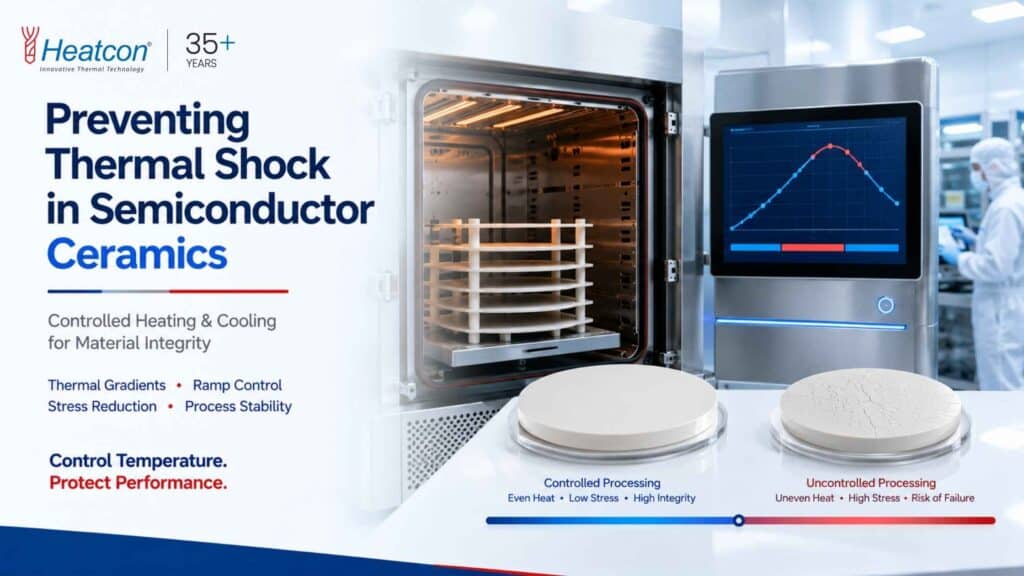
Thermal shock is a sudden change in temperature that can cause cracks or catastrophic failure in semiconductor ceramics. According to a study by the International Journal of Applied Ceramic Technology, up to 40% of ceramic component failures in semiconductor manufacturing are linked to thermal shock events. Understanding how to prevent thermal shock is critical to ensuring the longevity, quality, and performance of semiconductor devices.
At its core, thermal shock occurs when ceramics experience rapid temperature changes, leading to internal stresses that exceed their mechanical strength. This issue is especially significant in semiconductor thermal processing, where precise temperature control is essential for component reliability and process efficiency.
How Does Thermal Shock Impact Semiconductor Manufacturing?
Thermal shock can compromise the structural integrity of ceramics used in semiconductor fabrication. This not only leads to production delays and increased costs but also affects overall ceramics reliability. In high-stakes environments, such as the manufacturing of integrated circuits, even a minor crack can render an entire batch unusable.
- Increased downtime and maintenance costs
- Inconsistent product quality
- Higher rejection rates
- Potential contamination of cleanroom environments
Therefore, thermal shock prevention is not just a technical requirement—it is a critical business necessity for semiconductor manufacturers globally.
Why Is Thermal Shock Prevention Essential In Semiconductor Thermal Processing?
Effective thermal shock prevention ensures stable operations during semiconductor thermal processing. The process involves exposing materials to high temperatures in furnaces, ovens, or other heat treatment equipment. Uncontrolled thermal gradients can introduce stress fractures, significantly reducing the lifespan of ceramic components.
By integrating robust heat stress control measures and reliable temperature sensors, manufacturers can:
- Optimize yield and reduce wastage
- Ensure consistent and reproducible results
- Extend equipment life and minimize unplanned shutdowns
As the semiconductor industry races toward smaller nodes and higher device complexity, the margin for error shrinks. Manufacturers must adopt advanced solutions to remain competitive.
What Are The Best Practices For Thermal Shock Prevention?
Preventing thermal shock in semiconductor ceramics requires a holistic approach, combining material selection, process optimization, and advanced sensing technologies. Here are proven strategies:
- Careful Material Selection: Use ceramics with high thermal shock resistance, such as alumina or silicon carbide, which can withstand rapid temperature changes.
- Gradual Heating And Cooling: Implement controlled ramp-up and ramp-down cycles in furnaces and ovens to minimize temperature gradients.
- Advanced Temperature Sensing: Deploy custom RTDs, thermocouples, and other sensors to monitor real-time temperatures throughout the process.
- Regular Equipment Maintenance: Inspect and maintain heat-generating equipment like electric furnaces, hot air blowers, and high-density cartridge heaters to ensure even temperature distribution.
- Process Automation: Use programmable logic controllers (PLCs) and automation systems to reduce human error and ensure precise thermal control.
Heatcon Sensors specializes in the design and manufacture of custom temperature sensors and heat-generating equipment for semiconductor applications. This expertise ensures that every solution is tailored to the unique demands of the client, whether in India, the US, UAE, Indonesia, Germany, South Korea, Saudi Arabia, Russia, Bahrain, Kuwait, or any other part of the world.
How Does Heat Stress Control Enhance Ceramics Reliability?
Heat stress control is the practice of managing thermal gradients to prevent the development of stress fractures in ceramics. By continuously monitoring temperature and adjusting heating profiles, manufacturers can eliminate hotspots and cold zones that compromise ceramics reliability.
| Benefit | Description |
|---|---|
| Reduced Failure Rates | Minimizes equipment downtime and improves overall yield. |
| Longer Component Life | Extends the usable life of ceramic parts, reducing replacement costs. |
| Consistent Product Quality | Ensures reliable device performance and customer satisfaction. |
| Process Optimization | Enables fine-tuning of recipes for enhanced throughput and efficiency. |
Heatcon Sensors delivers the tools and expertise required to implement industry-leading heat stress control for semiconductor manufacturing worldwide.
What Is The Role Of Temperature Sensors In Semiconductor Thermal Processing?
Accurate temperature measurement is the backbone of semiconductor thermal processing. Sensors such as Resistance Temperature Detectors (RTDs), thermocouples, and infrared sensors are essential for:
- Real-time monitoring of process temperatures
- Detecting anomalies that indicate potential thermal shock
- Automating process adjustments for optimal performance
Heatcon Sensors is a global leader in the design and manufacture of customized temperature sensors, including RTDs tailored to the stringent requirements of the semiconductor industry. These sensors can be embedded in equipment like electric furnaces, ovens, hot air blowers, high density cartridge heaters, and more to ensure precise control across a range of thermal processes.
How Can Heatcon Sensors Support Your Thermal Shock Prevention Strategy?
Heatcon Sensors is a trusted partner for clients seeking to maximize ceramics reliability and prevent costly failures due to thermal shock. With decades of experience, Heatcon Sensors offers:
- Customized RTDs and thermocouples for any industrial application
- Expert consultation for selecting the right sensors and materials
- Design and manufacture of furnaces, ovens, hot air blowers, high density cartridge heaters, and specialized heating solutions
- Global supply capabilities, delivering products to India, US, UAE, Indonesia, Germany, South Korea, Saudi Arabia, Russia, Bahrain, Kuwait, and beyond
Each solution is engineered to meet the unique needs of the client, ensuring that thermal shock prevention is built into every stage of the manufacturing process.
How To Connect With Heatcon Sensors For Customized Solutions?
Don’t compromise on ceramics reliability or risk costly equipment failure due to inadequate thermal shock prevention. Heatcon Sensors is ready to provide tailored solutions for every industrial requirement.
Choose from any of the following options to reach out:
- Submit your information on our contact form
- Leave a message on WhatsApp through the interface available on the Heatcon Sensors website
- Call us at +91 9164833027 or +91 9844233244 for immediate assistance
With Heatcon Sensors, you gain access to industry-leading expertise, global reach, and a commitment to innovation that ensures your semiconductor thermal processing operations remain at the forefront of technology.
About Heatcon Sensors
Heatcon Sensors is a premier manufacturer of customized temperature sensors and heat-generating equipment, including RTDs, thermocouples, electric furnaces, ovens, hot air blowers, and high-density cartridge heaters. With a global presence, Heatcon Sensors supports clients in India, the US, UAE, Indonesia, Germany, South Korea, Saudi Arabia, Russia, Bahrain, Kuwait, and worldwide. Renowned for technical expertise, innovation, and dedication to quality, Heatcon Sensors is the trusted partner for industries demanding precision and reliability in thermal measurement and control.
Frequently Asked Questions
What is thermal shock and why is it a concern in semiconductor ceramics?
Thermal shock refers to the cracking or failure of ceramic materials caused by sudden changes in temperature. In semiconductor thermal processing, rapid heating or cooling cycles can induce extreme temperature gradients across ceramic components, making them vulnerable to fracture. This can compromise ceramics reliability and lead to costly downtime or product defects.
How does Heatcon Sensors help in thermal shock prevention for semiconductor ceramics?
Heatcon Sensors offers advanced temperature sensing and control solutions that enable precise monitoring of thermal profiles. By using custom thermocouples and temperature assemblies, Heatcon Sensors facilitates gradual heating and cooling, reducing steep temperature gradients and supporting effective thermal shock prevention in sensitive ceramic components.
What are the main causes of heat stress in semiconductor processing ceramics?
The main causes of heat stress in ceramics used in semiconductor manufacturing include rapid temperature ramps, uneven heating, and insufficient time for thermal equilibration. These thermal events can induce mechanical stresses that exceed the ceramic’s tolerance, leading to cracking or failure. Proper heat stress control is essential to prevent such issues.
Why is ceramics reliability critical in semiconductor thermal processing?
Ceramics reliability is vital because ceramic parts such as susceptors, wafer carriers, and heater components are exposed to high temperatures and harsh processing conditions. Any failure can halt production, contaminate wafers, or affect device quality. Ensuring reliable ceramics through careful temperature management is essential for continuous and defect-free semiconductor thermal processing.
What types of sensors does Heatcon Sensors recommend for monitoring ceramics during processing?
Heatcon Sensors recommends high-accuracy thermocouples, RTDs (Resistance Temperature Detectors), and custom sensor assemblies designed to withstand harsh environments. These sensors provide real-time data for precise temperature control, enabling effective heat stress control and minimizing the risk of thermal shock in ceramic components.
How can manufacturers implement effective heat stress control in ceramic-based processes?
Manufacturers can implement effective heat stress control by using advanced temperature sensors from Heatcon Sensors, optimizing ramp rates, and ensuring even temperature distribution across ceramic parts. Automated control systems and high-resolution monitoring help detect and address abnormal thermal events before they impact ceramics reliability.
What role does sensor placement play in thermal shock prevention?
Proper sensor placement is crucial for accurate temperature measurement and thermal shock prevention. Heatcon Sensors provides expert guidance on optimal sensor positioning to capture representative thermal data, helping operators fine-tune process parameters and protect ceramics from abrupt temperature fluctuations.
Can Heatcon Sensors’ solutions be customized for unique semiconductor applications?
Yes, Heatcon Sensors specializes in custom sensor solutions tailored to the specific needs of semiconductor thermal processing. From unique geometries to special material requirements, Heatcon works closely with clients to develop sensors that ensure optimal ceramics reliability and process efficiency.
What are the long-term benefits of investing in Heatcon Sensors’ technologies for thermal shock prevention?
Investing in Heatcon Sensors’ technologies results in fewer ceramic failures, improved process yields, reduced maintenance costs, and enhanced product quality. By supporting robust thermal shock prevention and heat stress control, these solutions contribute to more reliable and efficient semiconductor thermal processing operations.