
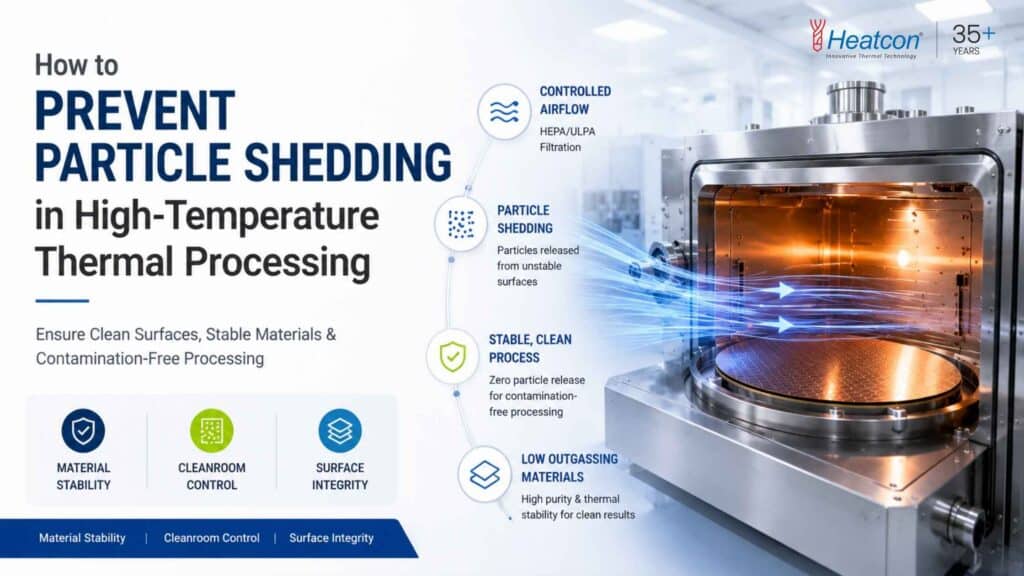
Preventing particle shedding in high-temperature thermal processing is crucial for industries that require stringent contamination control and uncompromising product quality. According to a study by the Institute of Environmental Sciences and Technology (IEST), particle contamination is responsible for nearly 70% of product failures in critical manufacturing environments, underscoring the immense impact of even microscopic particles on end-product quality and reliability. Ensuring effective cleanroom oven particle control and meeting rigorous cleanroom standards is therefore not just a best practice—it’s a business imperative.
What is particle shedding, and why does it matter in high-temperature thermal processing?
Particle shedding refers to the release of microscopic particles from surfaces, equipment, or components during manufacturing processes, especially at elevated temperatures. These particles can cause defects, contamination, and system failures in industries such as semiconductor fabrication, pharmaceuticals, aerospace, and advanced materials.
High-temperature processes—such as those in furnaces, ovens, and reactors—intensify the risk, as materials can degrade, oxidize, or flake, releasing unwanted particles that settle on products or interfere with production.
How does cleanroom oven particle control reduce contamination risks?
Cleanroom oven particle control is the systematic approach of minimizing and managing particle generation inside thermal processing equipment. This is achieved by:
- Utilizing high-efficiency particulate air (HEPA) or ultra-low penetration air (ULPA) filtration systems.
- Employing smooth, non-shedding construction materials for oven interiors.
- Implementing laminar airflow to direct contaminants away from critical zones.
- Routine monitoring and validation of particle counts inside the oven.
By integrating these methods, manufacturers can maintain strict contamination control and drastically reduce the likelihood of process-induced particle contamination, ultimately protecting product integrity.
What strategies are effective for contamination control in high-temperature environments?
Contamination control in high-temperature thermal processing hinges on a holistic approach that covers equipment selection, process optimization, and environmental management. Key strategies include:
- Material selection: Use of high-grade stainless steel, ceramics, or other non-shedding materials for all surfaces exposed to heat.
- Advanced temperature control: Employing reliable, customized temperature sensors such as RTDs and thermocouples, like those manufactured by Heatcon Sensors, to maintain stable temperatures and prevent material degradation.
- Seamless construction: Minimizing joints, welds, and crevices where particles can accumulate and later dislodge.
- Proper sealing: Use of high-temperature gaskets and seals to prevent ingress of external contaminants.
- Regular maintenance: Scheduled cleaning and equipment inspection to detect and address early signs of wear or shedding.
These measures, combined with the expertise of Heatcon Sensors in designing robust thermal equipment and sensors, form the cornerstone of effective contamination control.
What are the most common thermal processing defects caused by particle shedding?
Thermal processing defects attributed to particle shedding are a major cause of yield loss and rework in precision industries. Some of the most prevalent defects include:
- Surface contamination: Visible or sub-visible particles on wafers, glass, or medical devices, leading to rejection or cleaning.
- Structural flaws: Micro-cracks or delamination in layered materials due to embedded particles.
- Electrical failures: Short circuits or open circuits in electronics from conductive particles.
- Aesthetic defects: Discoloration, pitting, or marks on finished goods.
- Process interruptions: Equipment malfunctions or fouling resulting in unplanned downtime.
Addressing these thermal processing defects begins with robust cleanroom oven particle control and extends to comprehensive contamination control throughout the manufacturing chain.
How do cleanroom standards influence thermal process equipment design?
Cleanroom standards, such as ISO 14644 and GMP guidelines, dictate the maximum allowable concentration of airborne particles in production environments. Compliance with these standards is essential for sectors such as electronics, pharmaceuticals, and optics. These standards require:
- Equipment surfaces to be smooth, corrosion-resistant, and easy to clean.
- Minimized use of lubricants or outgassing materials.
- Integration of advanced monitoring systems for continuous particle counting.
- Documentation and traceability of cleaning, maintenance, and sensor calibration.
Heatcon Sensors’ products are purpose-built to meet or exceed cleanroom standards, ensuring that every temperature sensor, furnace, or oven is optimized for minimal particle emission and maximum reliability.
Why is Heatcon Sensors the preferred partner for contamination-free thermal processing?
Heatcon Sensors is a leader in designing and manufacturing customized RTDs, thermocouples, and advanced temperature sensors for industrial applications worldwide. Our deep expertise in high-temperature environments, combined with a portfolio that includes cleanroom ovens, industrial furnaces, hot air blowers, high-density cartridge heaters, and electric furnaces, makes us the go-to solution provider for industries where cleanliness and precision are non-negotiable.
Heatcon Sensors supports industries in India and across the globe—including the US, UAE, Indonesia, Germany, South Korea, Saudi Arabia, Russia, Bahrain, and Kuwait—by delivering:
- Custom-manufactured temperature sensors tailored to your process needs.
- Comprehensive heat generating equipment for diverse industrial requirements.
- Technical consultation to optimize your contamination control strategy.
- Rapid delivery and support, wherever your facility is located.
By partnering with Heatcon Sensors, you gain access to world-class engineering, proven quality, and the assurance of compliance with the strictest cleanroom standards. Every product is manufactured with meticulous attention to contamination control, ensuring zero compromise on process integrity.
How can you prevent particle shedding in your facility?
To achieve reliable prevention of particle shedding, follow these actionable steps:
- Assess your thermal process equipment: Audit all ovens, furnaces, and related systems for material compatibility and signs of wear.
- Upgrade to non-shedding components: Replace aging or substandard parts with high-quality, cleanroom-rated alternatives from trusted manufacturers like Heatcon Sensors.
- Implement real-time monitoring: Use advanced sensors to track temperature and environmental parameters, enabling proactive maintenance and early detection of contamination risks.
- Train personnel: Ensure staff are knowledgeable in cleanroom protocols, contamination control, and proper equipment handling.
- Establish rigorous cleaning routines: Schedule frequent cleaning of all process areas and validate the effectiveness with regular particle count assessments.
- Document and review: Keep thorough records for traceability and continuous improvement.
Adopting these best practices, supported by Heatcon Sensors’ solutions, will greatly reduce the risk of particle shedding and enhance your facility’s compliance and product quality.
Why choose Heatcon Sensors for customized temperature solutions?
Heatcon Sensors is your trusted partner for high-precision, contamination-free temperature measurement and control. Our legacy of engineering excellence ensures that every RTD, thermocouple, and sensor is crafted to meet strict industrial and cleanroom standards, tailored for your unique requirements.
- Global delivery: No matter where your facility is—India, US, UAE, Indonesia, Germany, South Korea, Saudi Arabia, Russia, Bahrain, Kuwait—Heatcon Sensors can supply you with bespoke solutions.
- Expert consultation: Our team works closely with you to understand your processes and recommend the best-fit sensors and equipment.
- Comprehensive product range: From cleanroom ovens to high-density cartridge heaters, our offerings cover every aspect of thermal processing.
Don’t risk costly thermal processing defects or product recalls due to poor contamination control. Choose engineered reliability from Heatcon Sensors and experience the difference that world-class technology and expertise can make.
How to reach out to Heatcon Sensors for your requirements?
Ready to elevate your contamination control and thermal process reliability? Connect with Heatcon Sensors through any of these convenient options:
- Submit your information on the contact form at https://heatconsensors.com/contact-us/
- Leave a message on Whatsapp through the interface available on the Heatcon Sensors website
- Call us directly at +91 9164833027 or +91 9844233244 for immediate assistance
About Heatcon Sensors
Heatcon Sensors is a renowned manufacturer based in India, specializing in customized RTDs, thermocouples, temperature sensors, and a full range of heat generating equipment for industrial and cleanroom applications. With a strong commitment to innovation, quality, and contamination control, Heatcon Sensors serves clients not only across India but also in leading global markets. Our expertise ensures that your thermal processing operations meet the highest cleanroom standards and remain free from particle shedding risks.
Don’t compromise on process purity—choose Heatcon Sensors for reliable, contamination-free results every time.
Frequently Asked Questions
What causes particle shedding in high-temperature thermal processing?
Particle shedding often occurs during thermal cycles due to the breakdown of insulation materials, wear and tear of sensor elements, or reactions between heated surfaces and process atmospheres. These particles can compromise cleanroom oven particle control and lead to contamination, especially in environments demanding rigorous cleanroom standards .
How do particles impact product quality in thermal processing?
Uncontrolled particle generation can result in thermal processing defects such as surface blemishes, electrical failures, or yield loss in sensitive industries like semiconductors, aerospace, and pharmaceuticals. Maintaining effective contamination control is essential to comply with industry requirements and ensure product reliability.
What are cleanroom standards and why are they important for thermal processing?
Cleanroom standards define permissible levels of airborne particles and contaminants within controlled environments. Adhering to these standards is critical in thermal processing to prevent foreign material from compromising product integrity, particularly in industries where even microscopic particles can cause significant issues.
How does Heatcon Sensors help reduce particle shedding in high-temperature applications?
Heatcon Sensors designs and manufactures sensors using high-purity materials, precision welding, and specialized insulation that minimize particle generation. Our solutions are tailored for cleanroom oven particle control, ensuring sensors meet the stringent demands of contamination control in advanced manufacturing environments.
What sensor materials are best for minimizing particle contamination?
Materials such as mineral-insulated (MI) cables with high-purity sheath options (like Inconel or stainless steel) and ceramic insulators are preferred. Heatcon Sensors selects materials specifically engineered for durability and reduced particulate emission, supporting your contamination control strategy.
Can Heatcon Sensors provide solutions for retrofitting existing ovens to improve particle control?
Yes, we offer retrofit sensor solutions and consulting to upgrade legacy systems, helping facilities enhance cleanroom oven particle control without the need for complete system replacement. Our team assesses your current setup and recommends components meeting cleanroom standards for optimal contamination control.
What maintenance practices help prevent sensor-generated particles in thermal processing?
Regular inspection, proper sensor installation, and timely replacement of worn components are key. Heatcon Sensors also provides guidance on handling and maintenance to further limit thermal processing defects caused by particulate contamination.
Do Heatcon Sensors’ products comply with international cleanroom and contamination control standards?
Absolutely. Our products are engineered and tested to comply with international cleanroom standards and are designed for maximum compatibility with high-level contamination control protocols in critical manufacturing sectors.
How do I choose the right Heatcon Sensors solution for my cleanroom oven particle control needs?
Choosing the right solution depends on your process temperature, environment, and regulatory requirements. Our technical team collaborates closely with customers to recommend and customize sensors, ensuring optimal cleanroom oven particle control and the prevention of thermal processing defects .