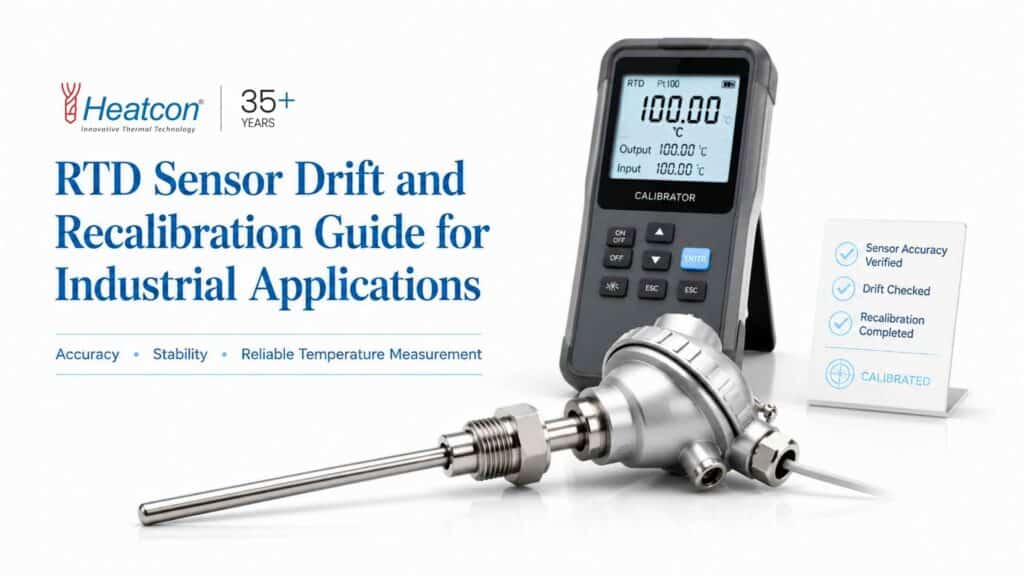
Did you know? Studies have shown that up to 70% of industrial temperature measurement errors are attributed to sensor drift and lack of regular recalibration. For industries where precision and safety are paramount, understanding how to manage RTD sensor drift and maintain recalibration is crucial. This comprehensive guide will help you master the art and science of keeping your RTD sensors performing at their best, ensuring uninterrupted operations and consistent product quality.

What Is RTD Sensor Drift And Why Is It Critical For Industrial Applications?
RTD (Resistance Temperature Detector) sensors are trusted for their accuracy and stability in measuring temperature across diverse industrial processes. However, even the most robust RTDs are susceptible to drift— a gradual deviation from their original calibration. RTD sensor drift can lead to significant errors, impacting product quality, safety, and regulatory compliance. Heatcon Sensors, a leading manufacturer of customized RTDs and temperature sensors, addresses these challenges by delivering tailored solutions for every industrial requirement across India, the US, UAE, Indonesia, Germany, South Korea, Saudi Arabia, Russia, Bahrain, Kuwait, and globally.
- Drift can cause: Inaccurate temperature readings, process inefficiencies, equipment damage, and increased operational risks.
- Industries at risk: Chemical, pharmaceuticals, food & beverage, power generation, oil & gas, and more.
- Solution: Regular recalibration and proactive maintenance, expertly provided by Heatcon Sensors’ industry-leading services.
How Does RTD Sensor Drift Calibration India Differ From Other Regions?
RTD Sensor Drift Calibration India involves adapting calibration protocols to local regulations, environmental conditions, and industry standards. Indian industries face unique challenges such as high humidity, temperature extremes, dust, and power fluctuations. Heatcon Sensors, with deep expertise in the Indian industrial landscape, customizes calibration and maintenance schedules to suit these specific demands while adhering to international standards. This ensures maximum reliability and longevity for every RTD deployed, whether in metro cities or remote industrial belts.
- Customized calibration solutions for diverse Indian climates and industries
- On-site, laboratory, and remote calibration services
- Compliance with IS, IEC, and international calibration standards
What Are The Primary Sensor Drift Causes In Industrial RTDs?
Sensor drift causes in RTDs are multifaceted and can be either intrinsic (related to sensor design and materials) or extrinsic (stemming from environmental and operational factors). Identifying these causes is the first step towards effective drift management and extending sensor lifespan.
- Mechanical Stress: Vibration, shock, and handling can physically alter the platinum wire inside an RTD, leading to resistance changes.
- Thermal Cycling: Repeated heating and cooling cycles can cause expansion and contraction, affecting calibration stability.
- Contamination: Exposure to chemical vapors, dust, or moisture can corrode sensor elements and connections.
- Electrical Interference: Surges and electromagnetic fields from nearby equipment may induce erratic readings or degrade sensor accuracy over time.
- Ageing: All sensors experience material changes over time, gradually drifting from their original calibration even under ideal conditions.
Heatcon Sensors incorporates robust design, protective sheaths, and quality manufacturing practices to minimize these causes, ensuring long-term performance and reliability.
How Often Should RTD Recalibration Intervals Be Set?
RTD recalibration intervals depend on the application, operating environment, and required accuracy. For critical processes, more frequent recalibration is essential to maintain compliance and prevent costly downtime.
| Industry/Application | Environment | Recalibration Interval |
|---|---|---|
| Pharmaceuticals | Clean Room | 6-12 months |
| Food & Beverage | High Humidity | 6-12 months |
| Chemical Processing | Corrosive | 3-6 months |
| Power Generation | Thermal Cycling | 12 months |
| General Manufacturing | Normal | 12-24 months |
Heatcon Sensors offers calibration reminders, on-site services, and digital record-keeping to help you stay compliant and never miss a recalibration deadline.
How To Perform PT100 Recalibration For Maximum Accuracy?
PT100 recalibration is the process of verifying and adjusting the resistance-temperature relationship of PT100 sensors— the most widely used RTDs in industry. Regular recalibration ensures your measurements are always within tolerance.
- Remove the PT100 sensor from the process, ensuring it is clean and free of contaminants.
- Compare the sensor’s output against a reference standard in a controlled temperature bath or dry block calibrator.
- Document any deviations and, if necessary, apply correction factors or adjust control systems accordingly.
- Reinstall the sensor and update maintenance records.
Heatcon Sensors offers state-of-the-art recalibration facilities and can dispatch trained engineers across India and internationally, ensuring your PT100 sensors always deliver precision.
What Are The Best Practices For Industrial Temperature Sensor Maintenance?
Industrial temperature sensor maintenance goes beyond recalibration—it encompasses installation, routine inspection, cleaning, documentation, and timely replacement. Adhering to best practices helps you avoid costly failures and maintain process integrity.
- Schedule periodic visual inspections for physical damage, corrosion, or loose wiring.
- Clean sensor wells and housings using appropriate, non-abrasive materials.
- Document all calibration and maintenance activities for audit and process optimization.
- Replace sensors showing excessive drift or erratic behavior, even after recalibration.
- Work with trusted partners like Heatcon Sensors for genuine, high-quality replacements and upgrades.
Proactive maintenance, combined with Heatcon Sensors’ expertise, guarantees enhanced uptime and extends the lifespan of your critical temperature measurement assets.
Why Choose Heatcon Sensors For Your RTD And Temperature Sensor Needs?
Heatcon Sensors is India’s trusted manufacturer and global exporter of customized RTDs, thermocouples, and temperature sensors. We also provide heat-generating equipment such as industrial furnaces, ovens, hot air blowers, electric furnaces, high density cartridge heaters, immersion heaters, band heaters, and more.
- Customization: Sensors engineered to your exact specifications, for any industry or application.
- Global Reach: Fast delivery across India, US, UAE, Indonesia, Germany, South Korea, Saudi Arabia, Russia, Bahrain, Kuwait, and beyond.
- Comprehensive Solutions: From initial consultation to after-sales support, including calibration and maintenance.
- Quality Assurance: Adherence to the highest international and Indian standards for safety, reliability, and accuracy.
- Innovation: Leveraging the latest technology to continuously improve sensor performance and user experience.
Don’t let sensor drift or calibration lapses put your operations at risk. Heatcon Sensors ensures you stay ahead with robust, reliable, and precise temperature measurement solutions.
Ready to upgrade your RTD sensor reliability? Submit your information on our contact form, leave a message on Whatsapp through our website, or call us directly at +91 9164833027 or +91 9844233244 for immediate assistance. Your process deserves the best—choose Heatcon Sensors.
About Heatcon Sensors
Heatcon Sensors is a leading manufacturer and exporter of customized RTDs, thermocouples, temperature sensors, and heat-generating equipment. With decades of expertise and a commitment to innovation, Heatcon Sensors serves clients across India and the globe, providing unmatched reliability, technical support, and customer satisfaction. Trust Heatcon Sensors for all your industrial temperature measurement challenges.
Frequently Asked Questions
What is RTD sensor drift and why does it happen in industrial settings?
RTD sensor drift refers to the gradual deviation of a Resistance Temperature Detector’s (RTD) output from its true value over time. In industrial environments, sensor drift causes include thermal cycling, mechanical stress, contamination, and oxidation of sensor materials. Factors like vibration, electrical interference, and prolonged exposure to harsh chemicals can also accelerate drift, making periodic recalibration critical for accurate measurements.
How often should RTD recalibration be performed in industrial applications?
The recommended RTD recalibration intervals depend on the application, operating conditions, and accuracy requirements. For demanding industrial temperature sensor maintenance, recalibration is typically advised every 6 to 12 months. However, critical processes or harsh environments may require more frequent checks. Heatcon Sensors can help you establish optimal RTD recalibration intervals to ensure compliance and reliability.
What are the common signs that an RTD sensor needs recalibration?
Signs your RTD may require recalibration include inconsistent readings, unexpected process deviations, alarms from control systems, or a noticeable shift in baseline measurements. If your process data indicates potential sensor drift or you observe discrepancies during audits, it’s time to schedule a recalibration service.
How does Heatcon Sensors support RTD Sensor Drift Calibration India for industrial needs?
Heatcon Sensors offers comprehensive RTD Sensor Drift Calibration India services, using advanced calibration equipment traceable to national and international standards. Our technicians provide on-site and off-site calibration, detailed certificates, and expert advice on sensor installation and maintenance to help minimize drift and maximize the lifespan of your RTDs.
What is the importance of PT100 recalibration in process industries?
PT100 recalibration is vital because even small measurement errors can impact product quality, safety, and process efficiency. Regular recalibration ensures your PT100 sensors provide accurate temperature readings, supporting compliance with industry standards and reducing the risk of costly downtime or product recalls.
What procedures does Heatcon Sensors recommend for industrial temperature sensor maintenance?
Heatcon Sensors recommends a proactive maintenance schedule that includes regular inspection for physical damage, cleaning of sensor surfaces, verification of connections, and scheduled recalibration. Additionally, keeping a detailed log of calibration and maintenance activities helps track sensor health and plan timely interventions.
Can Heatcon Sensors assist with sensor selection to reduce the risk of drift?
Yes, Heatcon Sensors provides expert consultation to help you select the right RTD or PT100 sensor construction, sheath material, and installation method for your specific process environment. By choosing the correct sensor upfront, you can significantly reduce long-term drift and minimize maintenance requirements.
What documentation does Heatcon Sensors provide after RTD recalibration?
After each calibration, Heatcon Sensors supplies a detailed calibration certificate that includes as-found and as-left data, uncertainty measurements, calibration standards used, and traceability information. This documentation is essential for audits, quality control, and regulatory compliance.
How can I schedule a calibration or maintenance service with Heatcon Sensors?
Scheduling a service is easy—simply contact Heatcon Sensors through our website, phone, or email. Our team will assess your requirements and recommend a suitable RTD sensor drift calibration or maintenance plan, tailored to the unique needs of your industrial operation.