
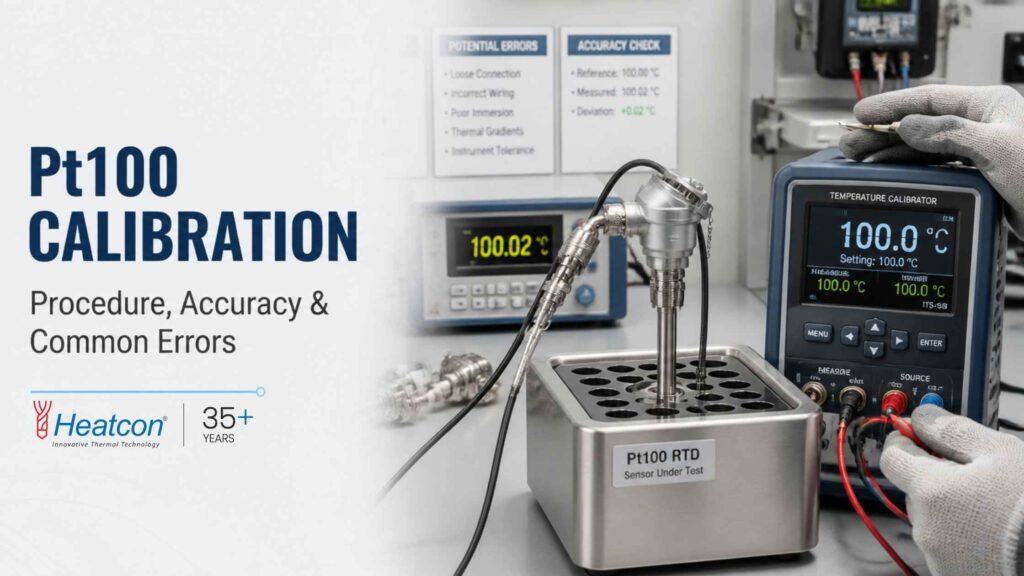
What is Pt100 calibration, and why is it crucial for your industrial processes? Pt100 calibration is the process of verifying and adjusting the readings of a Pt100 resistance temperature detector (RTD) to ensure accuracy and reliability. According to international standards, over 80% of process industries rely on precision temperature measurement—and the Pt100 sensor is one of the most widely used RTDs due to its stability, repeatability, and high accuracy. Ensuring your Pt100 sensors are correctly calibrated can mean the difference between optimal production and costly downtime, making calibration an engineering priority worldwide.
Why is Pt100 calibration essential for industrial operations?
The Pt100 temperature sensor is defined by its platinum element, which changes resistance predictably as temperature varies. Proper calibration ensures that this change in resistance translates to an accurate reading every time. In sectors like pharmaceuticals, food processing, power generation, and metallurgy, a deviation of even 0.1°C can result in product loss or safety hazards. This is why rigorous Pt100 calibration is not just a regulatory requirement, but a cornerstone of quality assurance.
How to perform Pt100 calibration procedure: Step-by-step guide
The Pt100 calibration procedure is systematic and must be meticulously followed to ensure reliable results. Below is a clearly structured guide that answers the most common calibration questions and aligns with best practices for resistance temperature detector calibration.
- Preparation: Gather all calibration equipment, including a high-accuracy temperature bath, a reference thermometer (often a high-grade standard RTD or thermocouple), a precision multimeter, and a data logger or digital display.
- Stabilization: Place the Pt100 temperature sensor and the reference thermometer in the temperature bath. Allow sufficient time for both sensors to reach thermal equilibrium at the set calibration point.
- Measurement: Record the output resistance of the Pt100 sensor and the reference value at each calibration temperature (typically 0°C, 100°C, and one or more intermediate points).
- Adjustment: If discrepancies are detected, adjust the transmitter or instrument connected to the Pt100 to correct the readings, or, if not possible, document the deviation for future compensation.
- Documentation: Log all data, including bath temperature, reference sensor readings, Pt100 readings, and environmental conditions.
- Verification: Repeat the measurements to confirm repeatability and reliability. Finalize the calibration certificate for compliance and traceability.
For industrial RTD calibration, it is vital to use traceable standards and maintain calibration records as per ISO/IEC 17025 or equivalent certifications.
What factors influence Pt100 accuracy?
Pt100 accuracy is influenced by several critical parameters:
- Element Tolerance: The inherent precision of the platinum wire (Class A vs. Class B, as per IEC 60751).
- Wiring Configuration: Two-wire Pt100s are more susceptible to lead wire resistance, while three- and four-wire configurations compensate for this error.
- Calibration Equipment: Use of high-quality, regularly calibrated reference standards and equipment.
- Environmental Conditions: External electrical noise, humidity, and temperature gradients during calibration can affect results.
- Sensor Aging: Prolonged exposure to high temperatures can alter the platinum element’s resistance characteristics.
Rigorous RTD calibration and periodic verification are essential to maintaining the highest level of RTD accuracy and minimizing drift over time.
What are the common Pt100 calibration errors, and how can they be avoided?
Pt100 calibration errors can arise from various sources. Awareness and prevention are key to maintaining measurement confidence.
- Lead Wire Resistance: Failing to account for additional resistance in two-wire Pt100 sensors can cause significant measurement errors.
- Poor Thermal Contact: If the sensor is not fully immersed or in close proximity with the reference standard, temperature gradients may lead to inaccurate readings.
- Improper Reference Standard: Using an uncalibrated or low-precision reference thermometer undermines the calibration’s validity.
- Unstable Calibration Bath: Fluctuations in the temperature bath’s control can introduce instability during measurement.
- Documentation Mistakes: Incomplete or incorrect recording of calibration data can result in lost traceability and non-compliance.
By adhering to a robust resistance temperature detector calibration protocol, employing high-quality equipment, and ensuring comprehensive documentation, these common errors can be systematically minimized.
How often should industrial RTD calibration be performed?
The recommended frequency for industrial RTD calibration depends on the application’s criticality, operating environment, and regulatory requirements. For most industrial processes, annual calibration is the standard; however, sectors with stringent quality controls or where sensors are exposed to harsh conditions may require more frequent checks—sometimes quarterly or even monthly. Regular calibration helps maintain process integrity, uphold product quality, and prevent costly downtime.
Why partner with Heatcon Sensors for Pt100 and RTD calibration solutions?
Heatcon Sensors is a leading manufacturer and supplier of customized RTDs, Pt100 temperature sensors, and other high-precision temperature measurement devices for industrial requirements. With a legacy of engineering excellence, we offer end-to-end solutions for resistance temperature detector calibration, ensuring your equipment is always performing at its peak.
- Custom Manufacturing: We design and build RTDs and Pt100 sensors to your exact specifications, tailored for diverse industrial applications.
- Global Delivery: From India to the US, UAE, Indonesia, Germany, South Korea, Saudi Arabia, Russia, Bahrain, and Kuwait, Heatcon Sensors delivers world-class sensors and calibration expertise wherever your operations are based.
- Versatile Product Range: In addition to temperature sensors, we engineer heat-generating equipment such as furnaces, ovens, hot air blowers, electric furnaces, and high density cartridge heaters—delivering a full spectrum of process heating solutions.
- Technical Expertise: Our calibration services adhere to the highest international standards, with traceability and detailed certification for every sensor.
- Responsive Support: Reach us instantly via our website’s contact form (Contact Us), WhatsApp, or by calling +91 9164833027 or +91 9844233244 for immediate assistance.
Don’t risk your process quality by overlooking calibration. With Heatcon Sensors, you gain a trusted partner dedicated to precision, reliability, and innovation—ensuring your operations always stay ahead of the curve.
What makes Heatcon Sensors the preferred choice worldwide?
Heatcon Sensors is recognized as a benchmark for quality and reliability in the field of temperature measurement and process heating. Our commitment to innovation, customization, and global reach allows us to serve process industries in every corner of the world, from large-scale manufacturing hubs in India and Germany to specialized operations in the US, Middle East, and Southeast Asia.
- ISO-Certified Manufacturing: All products are manufactured under strict quality management protocols, ensuring compliance with global standards.
- Application Expertise: We support customers in steel, cement, chemical, food, pharma, power, and automation industries with tailored solutions.
- Continuous Innovation: Our R&D team continuously develops new sensor technologies and heating solutions for evolving industrial challenges.
- Comprehensive Service: From design and manufacturing to calibration and after-sales support, Heatcon Sensors offers a one-stop solution.
About Heatcon Sensors
Heatcon Sensors is an industry-leading manufacturer and supplier of temperature sensors, RTDs, thermocouples, and heat-generating equipment, headquartered in India and supplying solutions globally. Our products are trusted by top-tier industries for their accuracy, reliability, and durability. We are dedicated to helping businesses achieve superior process control and efficiency through expert engineering and tailored solutions.
For more information, reach out via our contact form, leave a message on WhatsApp through our website, or call us directly at +91 9164833027 or +91 9844233244. Choose Heatcon Sensors for unmatched quality and service in temperature measurement and heating solutions—wherever you are in the world.
Frequently Asked Questions
What is a Pt100 calibration and why is it essential?
Pt100 calibration refers to the process of verifying and adjusting the measurement accuracy of a Pt100 temperature sensor, a widely used type of resistance temperature detector (RTD). Regular calibration is crucial because it ensures that temperature readings remain reliable and within specified tolerances. For industries where precise temperature monitoring is critical, such as pharmaceuticals or food processing, accurate Pt100 calibration prevents costly errors and maintains compliance with quality standards.
How is the Pt100 calibration procedure typically carried out?
The Pt100 calibration procedure generally involves comparing the RTD sensor’s response to a traceable temperature standard at multiple points (such as 0°C, 100°C, and a higher value depending on application). The sensor is placed in a stable calibration bath or dry block, and its resistance is measured with a calibrated instrument. Any deviation from the expected resistance values is noted and, if possible, corrected. Heatcon Sensors follows standardized procedures for industrial RTD calibration to ensure consistent accuracy.
What factors influence Pt100 accuracy during calibration?
Several factors can influence Pt100 accuracy, including the quality of the sensor, lead wire length, connection type (2-wire, 3-wire, 4-wire), and the stability of the calibration environment. Inaccurate reference standards, electrical noise, and improper handling can also affect RTD accuracy. Heatcon Sensors uses high-precision equipment and controlled environments to minimize these influences and achieve reliable Pt100 calibration results.
What are common Pt100 calibration errors and how can they be avoided?
Typical Pt100 calibration errors include incorrect wiring configuration, poor contact between the sensor and the calibration medium, using uncalibrated reference instruments, and neglecting to account for lead resistance. These can lead to significant measurement inaccuracies. To avoid such issues, Heatcon Sensors recommends following proper resistance temperature detector calibration protocols, using certified reference standards, and ensuring all equipment is in good working condition.
How often should RTD calibration be performed for industrial applications?
The frequency of RTD calibration depends on the application, regulatory requirements, and the criticality of the process. For most industrial RTD calibration scenarios, an annual calibration is typical, but more frequent checks may be required in high-precision or safety-critical environments. Heatcon Sensors provides tailored calibration schedules based on industry best practices and client needs.
What equipment is used by Heatcon Sensors for professional Pt100 calibration?
Heatcon Sensors utilizes advanced calibration baths, precision resistance bridges, and certified reference thermometers for Pt100 calibration. This high-quality equipment ensures traceability and compliance with international metrology standards, resulting in superior RTD calibration and enhanced RTD accuracy for all Pt100 temperature sensors calibrated by our team.
Can Heatcon Sensors calibrate RTDs from other manufacturers?
Yes, Heatcon Sensors offers comprehensive resistance temperature detector calibration services for Pt100 temperature sensors and other RTDs, regardless of the manufacturer. Our experienced team ensures each sensor meets stringent accuracy requirements and provides detailed calibration certificates for quality assurance.
What documentation is provided after a Pt100 calibration?
After completing a Pt100 calibration, Heatcon Sensors provides a detailed calibration certificate that includes the tested points, measured values, deviations, calibration conditions, and traceability information. This documentation is essential for audits, regulatory compliance, and maintaining high-quality standards in industrial environments.
Why choose Heatcon Sensors for Pt100 and industrial RTD calibration?
Heatcon Sensors stands out due to its commitment to precision, traceability, and customer support. Our in-depth knowledge of Pt100 calibration procedure, access to state-of-the-art equipment, and highly trained technicians ensure your Pt100 temperature sensors and other RTDs meet the highest accuracy standards with reliable documentation, minimizing Pt100 calibration errors and supporting safe, efficient operations.