
What Is Temperature Uniformity And Why Is It Vital For MEMS Manufacturing?
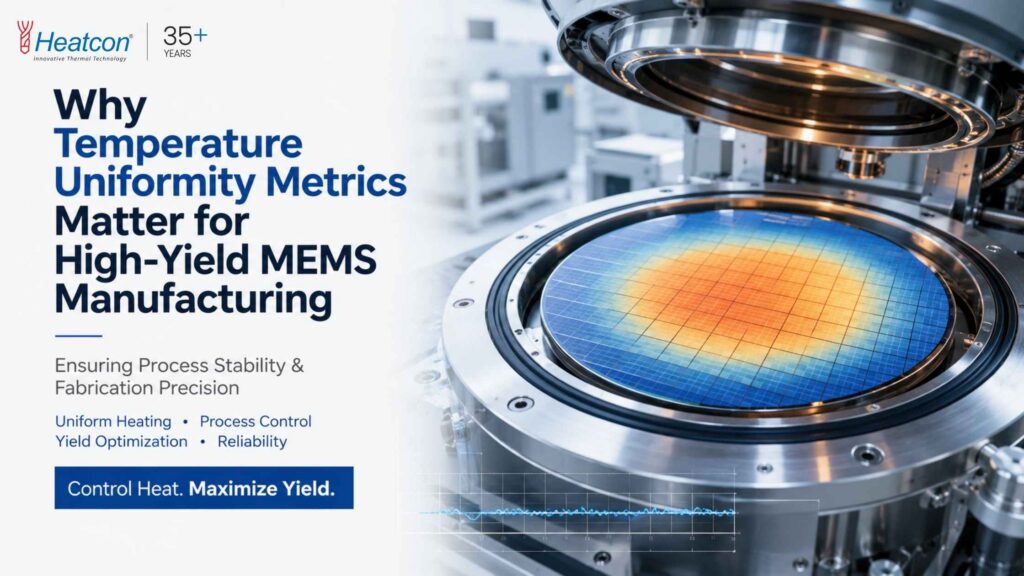
Temperature uniformity is the degree to which temperature is consistent across a given space, such as inside a cleanroom oven or furnace. In MEMS manufacturing, achieving high cleanroom oven temperature uniformity can be the difference between mass production success and costly yield losses. According to industry data, even a 2°C variation in oven temperature can result in up to a 20% decrease in MEMS device yield—highlighting just how critical precise temperature control is for high-volume, high-value manufacturing.
For micro-electromechanical systems (MEMS) fabrication, where the smallest variations impact device performance, temperature uniformity isn’t just a nice-to-have—it is an absolute necessity. This article dives deep into why temperature uniformity metrics matter for MEMS manufacturing, how they affect thermal accuracy and process stability, and how Heatcon Sensors supports manufacturers across India and the globe with customized sensor and equipment solutions.
How Does Cleanroom Oven Temperature Uniformity Affect MEMS Yields?
Cleanroom oven temperature uniformity is the backbone of reproducible MEMS device quality. In batch processing, where hundreds of wafers may be processed simultaneously, each wafer must experience the same temperature profile to ensure uniform etching, doping, or deposition. Even slight deviations can cause microstructural defects, resulting in device failure or inconsistent performance.
- Uniform wafer processing: Ensures all MEMS devices meet strict electrical and mechanical specifications.
- Reduced scrap rates: Minimizes the number of rejected wafers due to thermal non-uniformity.
- Consistent device characteristics: Maintains predictable and reliable sensor outputs in end-user applications.
Cleanroom oven temperature uniformity becomes even more crucial as device geometries shrink and process windows tighten. Without reliable uniformity, scaling up production can lead to unpredictable yields and repeated process troubleshooting.
Why Is Thermal Accuracy A Non-Negotiable In MEMS Manufacturing?
Thermal accuracy refers to the precision with which a system maintains a set temperature. MEMS manufacturing demands thermal accuracy because the electrical, mechanical, and chemical properties of microstructures depend on tightly controlled heat treatment cycles.
For example, in polysilicon deposition or annealing steps, even minor temperature inaccuracies can lead to:
- Variations in film thickness
- Inconsistent doping concentrations
- Device warping or delamination
Achieving high thermal accuracy requires advanced temperature sensing solutions. This is where Heatcon Sensors excels, providing custom-engineered RTDs, thermocouples, and specialty sensors designed for the highest level of precision. These sensors are calibrated to deliver real-time, granular temperature data, enabling precise process control and maximum device yield.
What Role Does Process Stability Play In High-Yield MEMS Manufacturing?
Process stability is the ability of a manufacturing line to consistently reproduce results over time. In MEMS manufacturing, process stability is directly tied to temperature uniformity and thermal accuracy. When these factors are tightly controlled, yield variability drops, and process drift is minimized.
Key benefits of process stability include:
- Reduced need for rework and quality checks
- Lower operating costs and downtime
- Faster time-to-market for new MEMS products
- Greater customer confidence in device performance
Heatcon Sensors supports process stability by not only supplying reliable sensors but also by offering expert consultation on sensor placement, calibration, and integration with process control systems. This holistic approach ensures every stage of MEMS manufacturing operates within optimal thermal parameters.
How Do Heatcon Sensors’ Solutions Empower MEMS Manufacturers?
Heatcon Sensors is a leading global manufacturer of customized RTDs, thermocouples, and temperature sensors tailored to the demands of industrial and MEMS manufacturing environments. With a focus on cleanroom oven temperature uniformity, our sensors are engineered to withstand harsh processing conditions and deliver uncompromised accuracy.
- Custom sensor design for unique process requirements
- Fast prototyping and delivery to any part of India, or globally to the US, UAE, Indonesia, Germany, South Korea, Saudi Arabia, Russia, Bahrain, Kuwait, and beyond
- Compliance with international quality and calibration standards (ISO, ASTM, etc.)
- Long-term support, including recalibration and troubleshooting
In addition to sensors, Heatcon Sensors designs and manufactures a wide range of heat generating equipment critical for MEMS manufacturing and other high-tech industries:
- Cleanroom ovens with advanced uniformity controls
- Electric furnaces for batch or continuous processing
- High-density cartridge heaters for localized, high-power heating
- Hot air blowers for rapid thermal cycling
- Industrial dryers, tubular heaters, immersion heaters, and more
This comprehensive product suite allows manufacturers to achieve both macro and micro-level thermal uniformity, directly translating to improved process stability and higher MEMS device yields.
How Can You Achieve Superior Temperature Uniformity In Your MEMS Facility?
Achieving best-in-class temperature uniformity in your MEMS manufacturing process involves a combination of advanced sensor technology, optimal equipment design, and rigorous process monitoring. Here’s how you can ensure superior results:
- Specify precise sensor requirements: Work with a manufacturer like Heatcon Sensors to define the exact sensor geometry, materials, and calibration needed for your unique application.
- Utilize multi-point temperature mapping: Regularly map oven and furnace chambers to identify and correct hot or cold spots.
- Integrate sensors with process control systems: Real-time data logging and feedback enable dynamic adjustments for process stability.
- Maintain and recalibrate equipment: Periodic recalibration using traceable reference standards ensures continued thermal accuracy.
- Select the right heating equipment: Choose from Heatcon Sensors’ range—ovens, furnaces, cartridge heaters, and more—to match your process size and throughput needs.
With these strategies, manufacturers can consistently meet the rigorous demands of MEMS manufacturing, from pilot runs to full-scale production.
What Are The Risks Of Ignoring Temperature Uniformity Metrics?
Ignoring or underestimating the importance of temperature uniformity metrics can have serious consequences for MEMS manufacturing operations:
- Unpredictable device failure rates
- Customer returns and warranty claims
- Wasted materials and increased scrap
- Regulatory compliance issues
- Higher production costs and reduced competitiveness
In an industry where every micron matters, neglecting these metrics is a risk no manufacturer can afford. The cost of a single failed batch can far outweigh the investment in quality sensors and uniform heating equipment.
Why Choose Heatcon Sensors For Your MEMS Manufacturing Needs?
Heatcon Sensors is a trusted partner for high-precision industries across India and the world. By investing in our custom-designed sensors and heat generating equipment, you ensure:
- Unmatched thermal accuracy and cleanroom oven temperature uniformity
- Stable, repeatable MEMS manufacturing processes
- Higher yields, lower costs, and improved ROI
- Expert support and global delivery capability
Don’t let inconsistent temperature control hold back your production goals. Choose Heatcon Sensors for proven solutions that safeguard your process stability and enhance your competitive edge.
Ready to take your MEMS manufacturing to the next level? Reach out to Heatcon Sensors today:
- Submit your information on the contact form
- Leave a message on Whatsapp via our website interface
- Call us directly at +91 9164833027 or +91 9844233244 for immediate assistance
About Heatcon Sensors
Heatcon Sensors is an industry leader in the design and manufacture of temperature sensors and heat generating equipment for demanding industrial applications. Based in India and serving clients worldwide, Heatcon Sensors specializes in custom RTDs, thermocouples, and sensor assemblies for MEMS manufacturing, process industries, and research laboratories. The company’s product range also includes advanced furnaces, ovens, cartridge heaters, and hot air blowers, all engineered to deliver superior temperature uniformity and process reliability.
With a reputation for technical excellence, responsive customer support, and global reach, Heatcon Sensors is your trusted partner for all your high-precision temperature control needs.
Frequently Asked Questions
Why is temperature uniformity so important in MEMS manufacturing?
Temperature uniformity is crucial in MEMS manufacturing because even small temperature variations inside a cleanroom oven can lead to inconsistencies in device properties, yield loss, and failure to meet tight process specifications. Consistent temperature profiles ensure that all wafers or components are processed identically, supporting both process stability and high-volume, high-quality output.
What are temperature uniformity metrics and how are they measured?
Temperature uniformity metrics quantify the variation in temperature throughout a cleanroom oven during processing. These metrics are measured by placing multiple sensors at strategic points inside the oven and recording temperature over time. The difference between the highest and lowest readings within a defined area and time interval represents the uniformity, directly impacting process stability and product quality.
How does poor temperature uniformity affect MEMS device yield and reliability?
Poor temperature uniformity can cause variations in critical MEMS features, such as thin film thickness, doping concentration, or material properties. This leads to device defects, lower yields, and potential reliability issues in the field. Achieving excellent thermal accuracy is essential to minimize costly rework, scrap, and customer returns.
What challenges do manufacturers face in achieving cleanroom oven temperature uniformity?
Manufacturers face challenges such as airflow obstructions, heating element placement, oven loading patterns, and equipment aging. These factors can create localized hot or cold spots, making it difficult to maintain precise cleanroom oven temperature uniformity without advanced monitoring and control solutions.
How does Heatcon Sensors help improve temperature uniformity in MEMS processes?
Heatcon Sensors provides high-precision thermal sensors and custom sensor arrays designed for accurate mapping and monitoring of temperature inside ovens. Their solutions enable real-time feedback and advanced process control, ensuring that MEMS manufacturing environments achieve the required thermal accuracy for every batch.
What types of sensors and solutions does Heatcon Sensors offer for process stability?
Heatcon Sensors offers a wide range of thermocouples, RTDs, and custom temperature sensing solutions tailored for cleanroom oven mapping and continuous process monitoring. These products are engineered to deliver robust performance, rapid response, and exceptional accuracy—ensuring optimal process stability and repeatability in MEMS manufacturing.
How can manufacturers validate and document oven uniformity for quality audits?
Using Heatcon Sensors’ calibrated sensor arrays, manufacturers can perform comprehensive oven qualification studies and generate precise reports documenting cleanroom oven temperature uniformity. This data supports compliance with industry standards and ensures traceability for quality management and customer audits.
Can Heatcon Sensors customize solutions for unique MEMS manufacturing requirements?
Absolutely. Heatcon Sensors works closely with MEMS manufacturers to design and implement sensor systems that address specific oven configurations, wafer sizes, and process constraints. Their engineering team ensures that each solution delivers the thermal accuracy and process stability needed for high-yield production.