
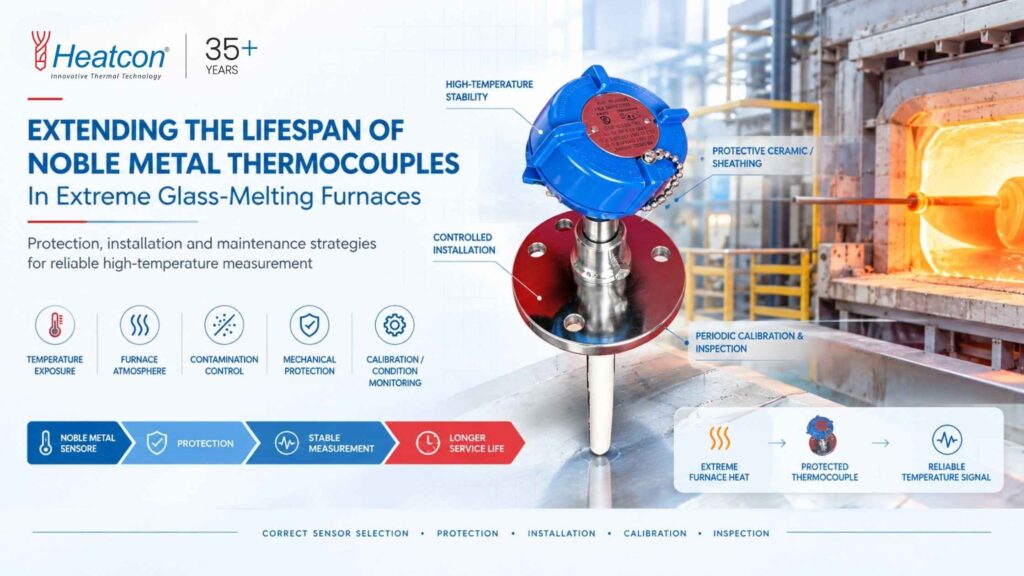
What Are Glass Furnace Thermocouples And Why Is Their Lifespan Crucial?
Glass furnace thermocouples are specialized temperature measurement devices designed to withstand the harsh, corrosive, and high-temperature environments of glass-melting furnaces. According to industry reports, over 70% of glass production downtime is directly linked to unreliable or failing temperature sensors, leading to significant production losses and quality risks. With the average glass furnace operating continuously at temperatures exceeding 1500°C, investing in the right thermocouple technology and ensuring its longevity is not just beneficial—it is essential for uninterrupted production and consistent glass quality.
Precision in temperature monitoring enables glass manufacturers to control melt homogeneity, minimize energy consumption, and prevent costly batch defects. Choosing and maintaining the right glass furnace thermocouples can translate directly into higher yields, lower maintenance costs, and improved product quality.
How Do Noble Metal Thermocouples Work In Glass-Melting Furnaces?
Noble metal thermocouples, most commonly the Type R thermocouple and Type S thermocouple, are the gold standard for high-temperature glass furnaces. These thermocouples use platinum and platinum-rhodium alloys, providing exceptional resistance to oxidation and contamination at extreme temperatures. Their robust construction enables repeatable and accurate readings, even in aggressive glass-melting atmospheres.
- Type R thermocouple: Composed of platinum-13% rhodium vs. platinum, ideal for continuous use up to 1600°C.
- Type S thermocouple: Composed of platinum-10% rhodium vs. platinum, widely used in glass and metal industries for its stability.
These sensors are trusted globally for their combination of durability and precision, making them indispensable for glass manufacturers targeting consistent, high-quality output.
What Causes High Temperature Sensor Drift In Glass Furnaces?
High temperature sensor drift refers to the gradual deviation of a sensor’s output from its true value due to prolonged exposure to harsh furnace conditions. This drift is a critical concern in glass production, as even minor deviations can result in out-of-spec products or furnace damage.
Common causes include:
- Prolonged exposure to high temperatures: Accelerates degradation of thermocouple materials.
- Contamination: Glass vapor, dust, and corrosive agents can infiltrate the protective sheath, attacking the noble metals.
- Mechanical stress: Thermal expansion and contraction cycles can cause micro-cracks in the sensor or sheath.
- Oxygen partial pressure variations: Lead to oxidation or reduction of the thermocouple wires, affecting their output.
Addressing high temperature sensor drift through robust design and regular maintenance is vital to extend thermocouple lifespan and minimize costly recalibration or replacements.
How Can Noble Metal Thermocouple Calibration Enhance Lifespan?
Noble metal thermocouple calibration is the process of verifying and adjusting a sensor’s output to ensure it matches the actual furnace temperature. Regular calibration is the cornerstone of reliable glass furnace operation, directly influencing yield, energy efficiency, and equipment longevity.
- Initial calibration: Performed before installation to establish a performance baseline.
- Routine recalibration: Scheduled as part of preventive maintenance, often every 6-12 months, to catch drift before it impacts production.
- In-situ calibration: Some advanced systems allow for on-site calibration without removing the thermocouple, reducing downtime.
With expert calibration services, glass manufacturers can trust their temperature readings and maximize the operational life of their sensors.
What Are The Best Practices To Maximize Glass Furnace Temperature Sensor Lifespan?
Extending the lifespan of a glass furnace temperature sensor involves more than just selecting the right sensor. It requires a holistic approach to installation, operation, and maintenance. Here are the proven strategies:
- Use high-quality protection tubes: Choose materials like platinum, ceramic, or silicon carbide to shield the sensor from contaminants and mechanical damage.
- Optimize insertion depth: Position the sensor where it is exposed to representative furnace temperatures, but not so deep that it faces unnecessary wear from direct contact with molten glass.
- Implement scheduled maintenance: Inspect and clean sensors regularly to remove buildup and check for signs of corrosion or mechanical fatigue.
- Invest in robust signal processing: Use high-quality instrumentation to minimize noise and maximize data accuracy, even in electrically noisy furnace environments.
- Partner with a trusted sensor manufacturer: Opt for custom solutions tailored to the specific glass furnace environment, as offered by Heatcon Sensors.
By adhering to these steps, glass manufacturers can significantly improve sensor reliability and reduce the frequency of costly replacements.
Why Choose Heatcon Sensors For Glass Furnace Thermocouples?
Heatcon Sensors is a leading manufacturer of customized RTDs, thermocouples, and temperature sensors, delivering state-of-the-art solutions for industrial applications worldwide. With decades of expertise in high-temperature sensor technology, Heatcon Sensors stands out for its commitment to quality, innovation, and customer service.
- Custom manufacturing: Every glass furnace is unique. Heatcon Sensors can design and build thermocouples tailored to your specific furnace dimensions, temperature ranges, and environmental conditions.
- Global reach: Whether you operate in India, the US, UAE, Indonesia, Germany, South Korea, Saudi Arabia, Russia, Bahrain, Kuwait, or anywhere else, Heatcon Sensors can supply and support your operation with precision-engineered sensors.
- Comprehensive product range: In addition to glass furnace thermocouples, Heatcon Sensors manufactures industrial ovens, hot air blowers, electric furnaces, high density cartridge heaters, and other heat generating equipment essential for process industries.
- Technical support: Access expert advice on installation, calibration, and maintenance to ensure you get the longest possible service life from your sensors.
Don’t risk your production quality or profitability with generic sensors. Choose Heatcon Sensors for reliable, long-lasting temperature measurement solutions.
How To Order Or Get Support From Heatcon Sensors?
Heatcon Sensors offers multiple convenient ways to connect and receive personalized assistance:
- Submit your information: Fill out the contact form for a quick response.
- WhatsApp: Leave a message using the WhatsApp interface on the Heatcon Sensors website.
- Immediate assistance: Call +91 9164833027 or +91 9844233244 to speak directly with an expert.
With fast turnaround times and global shipping, Heatcon Sensors ensures your operation remains productive and your glass furnace temperature sensor needs are met—no matter where you are.
About Heatcon Sensors
Heatcon Sensors is an internationally recognized manufacturer based in Bangalore, India, specializing in the design and production of temperature sensors, RTDs, thermocouples—including glass furnace thermocouples—and heat generating equipment. Serving industries across India, the US, UAE, Indonesia, Germany, South Korea, Saudi Arabia, Russia, Bahrain, and Kuwait, Heatcon Sensors upholds the highest standards of precision, reliability, and customer support.
For advanced, custom-built temperature monitoring solutions and a dedicated partner in your industrial success, trust Heatcon Sensors—where your operational excellence begins.
Frequently Asked Questions
What are the main reasons for premature failure of thermocouples in glass-melting furnaces?
The harsh operating conditions inside glass-melting furnaces—such as extreme temperatures, corrosive vapors, and chemical attack from molten glass—can cause accelerated degradation of thermocouple wires. This results in oxidation, contamination, and drift in measurement accuracy, leading to reduced lifespan of glass furnace thermocouples. Additionally, mechanical stress during installation or operation can further shorten their service life.
How do Heatcon Sensors help extend the lifespan of noble metal thermocouples in extreme furnace environments?
Heatcon Sensors offers advanced protective sheaths, high-purity insulating materials, and optimized thermowell designs that shield noble metal thermocouples from direct exposure to corrosive glass melts and furnace atmospheres. These solutions reduce contamination, slow degradation, and minimize high temperature sensor drift, ensuring longer operational life and more reliable measurements.
Why is regular calibration important for noble metal thermocouples in glass furnaces?
Regular noble metal thermocouple calibration is essential because even high-grade platinum-rhodium sensors can experience drift due to prolonged exposure to extreme temperatures and aggressive atmospheres. Scheduled calibration ensures their readings remain accurate and helps detect early signs of sensor deterioration, allowing for proactive maintenance and reduced downtime.
What are the differences between Type R and Type S thermocouples for glass furnace applications?
Both Type R thermocouple (Platinum-13% Rhodium/Platinum) and Type S thermocouple (Platinum-10% Rhodium/Platinum) are widely used in glass furnace temperature sensor applications due to their stability at high temperatures. Type R offers slightly higher output voltage and better performance at elevated temperatures, while Type S is preferred for its long-term stability and is commonly used for reference standards. Heatcon Sensors can help you select the best type based on your specific furnace requirements.
What is high temperature sensor drift and how can it be minimized?
High temperature sensor drift refers to the gradual deviation in a thermocouple’s output over time when exposed to extreme heat. This is caused by changes in alloy composition, contamination, and microstructural changes in the thermocouple wires. Heatcon Sensors addresses this by using high-purity noble metals, superior protective sheaths, and strict manufacturing controls, which collectively minimize drift and maintain reliable performance in glass production.
How can the maintenance frequency of glass furnace temperature sensors be optimized?
Maintenance frequency can be optimized by selecting robust sensor designs from Heatcon Sensors, implementing regular calibration schedules, and monitoring sensor output for early signs of drift or failure. Using advanced materials and construction methods, such as improved sheath integrity and high-purity insulation, also contributes to longer intervals between maintenance cycles for glass furnace temperature sensors.
What role do protective sheaths play in the durability of glass furnace thermocouples?
Protective sheaths act as the first line of defense against direct contact with molten glass, corrosive gases, and mechanical abrasion inside the furnace. Heatcon Sensors provides custom-engineered sheaths made from high-performance ceramics and specialty alloys, which significantly enhance the lifespan and measurement stability of glass furnace thermocouples.
Can Heatcon Sensors provide customized solutions for unique glass-melting furnace requirements?
Yes, Heatcon Sensors specializes in designing and manufacturing custom thermocouple assemblies, including bespoke sheath materials, sensor geometries, and connection heads. Whether you need a Type S thermocouple with enhanced protection or integrated features for automated monitoring, Heatcon Sensors tailors solutions to meet the challenging demands of your specific glass-melting process.