
What Is Sensor Drift And Why Is Calibration Essential?
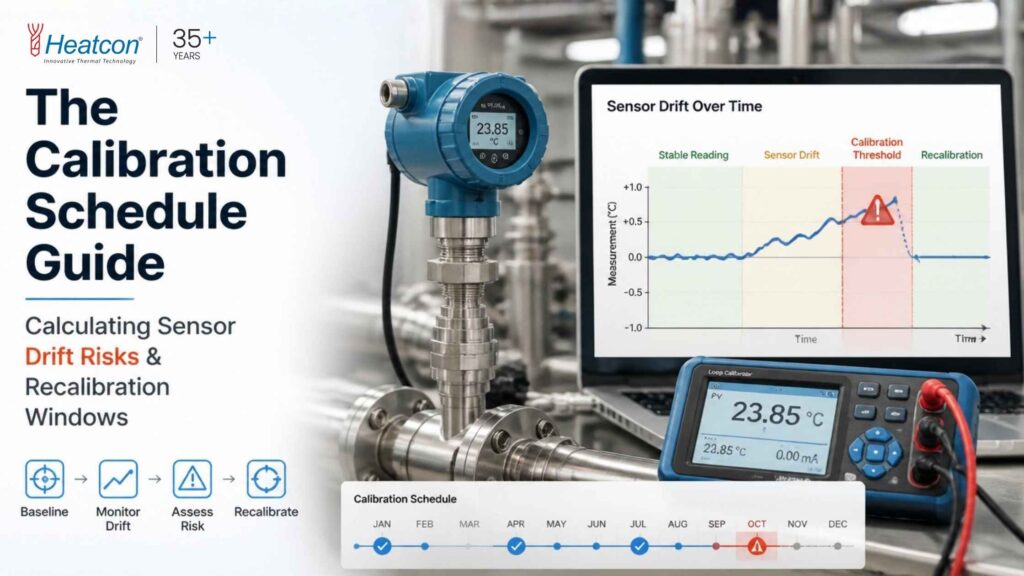
Sensor drift is the gradual deviation of a sensor’s output from its standard reference value over time, directly impacting measurement accuracy. According to a recent industry survey, up to 40% of uncalibrated industrial sensors exhibit significant drift within the first year of operation, leading to compromised product quality, safety risks, and regulatory non-compliance.
In industries where precision is paramount—such as pharmaceuticals, food processing, and energy—overlooking regular calibration can result in costly shutdowns and product recalls. Understanding the risks associated with temperature sensor drift and implementing a robust calibration schedule is critical to maintaining operational excellence.
How To Determine The Optimal Temperature Sensor Calibration Interval?
The temperature sensor calibration interval is the predetermined period between successive calibrations of a temperature sensor. Determining the right interval is a balancing act: calibrate too often and you incur unnecessary downtime; calibrate too infrequently and you risk inaccurate measurements.
- Regulatory requirements: Many industries are governed by strict guidelines mandating calibration intervals, often annually or bi-annually.
- Sensor type and application: RTDs, thermocouples, and thermistors each exhibit unique drift behaviors. For example, thermocouples may require more frequent checks in high-temperature applications.
- Operating environment: Harsh or variable environments accelerate sensor degradation, demanding shorter calibration intervals.
- Manufacturer recommendations: Leading manufacturers like Heatcon Sensors provide guidance tailored to your process and environment.
Heatcon Sensors specializes in helping you determine the temperature sensor calibration interval that aligns with your industry standards, process needs, and sensor technology, ensuring peak operational reliability.
What Should An Instrumentation Calibration Checklist Include?
An instrumentation calibration checklist is a critical tool for ensuring comprehensive and consistent calibration procedures. A well-developed checklist should address:
- Identification of all sensors and instruments requiring calibration
- Verification of calibration standards and reference equipment
- Step-by-step procedural instructions for each sensor type
- Documentation requirements, including calibration certificates and traceability records
- Post-calibration validation and performance checks
- Action plans for out-of-tolerance findings
Heatcon Sensors supports clients in India, the US, UAE, Indonesia, Germany, South Korea, Saudi Arabia, Russia, Bahrain, and Kuwait with tailored instrumentation calibration checklist templates, ensuring seamless audits and regulatory compliance.
How Does RTD Drift Rate Affect Measurement Accuracy?
The RTD drift rate refers to the rate at which a Resistance Temperature Detector (RTD) sensor’s output diverges from its true value over time. Factors influencing drift rate include sensor material, process environment, and electrical stress.
- Platinum RTDs typically exhibit lower drift rates than other materials, making them ideal for high-precision applications.
- Frequent thermal cycling and exposure to contaminants can accelerate RTD drift.
Monitoring RTD drift rate is essential for critical processes. Heatcon Sensors provides detailed drift data and customized RTDs designed for minimal drift, supported by regular calibration and drift-tracking programs.
What Is The NABL Calibration Procedure For Temperature Sensors?
The NABL calibration procedure ensures that all calibrations meet the stringent standards set by the National Accreditation Board for Testing and Calibration Laboratories (NABL). This internationally recognized protocol encompasses:
- Use of traceable reference standards
- Controlled environmental conditions during calibration
- Comprehensive documentation and audit trails
- Periodic proficiency testing for calibration personnel
Heatcon Sensors partners with NABL-accredited laboratories to offer certified calibration services, giving global clients confidence in their measurement integrity and compliance—vital for exports to the US, Europe, and Middle East markets.
How To Calculate Calibration Frequency For Industrial Sensors?
Calibration frequency is the rate at which a sensor should be recalibrated to maintain optimal performance. Key considerations include:
- Historical drift data and process criticality
- Manufacturer’s recommendations and industry best practices
- Regulatory mandates and safety standards
- Environmental and operational stressors
For new installations, a more frequent calibration frequency is often advisable, relaxing intervals once stability is established. Heatcon Sensors helps organizations develop evidence-based calibration schedules, reducing risk and maximizing uptime.
What Is An Effective RTD Calibration Schedule?
An effective RTD calibration schedule is built on a foundation of risk assessment, regulatory compliance, and process requirements. It should:
- Define calibration intervals based on drift history and process impact
- Include both preventive and corrective calibration actions
- Be adaptable to changes in process conditions or sensor technology
Heatcon Sensors supports clients with cloud-based calibration tracking tools and reminders, ensuring your RTD calibration schedule is never missed—whether you operate in India, US, UAE, or anywhere worldwide.
Why Is Thermocouple Calibration Crucial For Industrial Safety?
Thermocouple calibration is essential for maintaining safe and efficient industrial processes. Even minor errors in thermocouple readings can result in significant deviations in process temperature, potentially causing:
- Product quality failures
- Equipment damage
- Safety hazards for personnel
- Regulatory non-compliance
Regular thermocouple calibration using traceable standards ensures your processes remain within safe operating limits. Heatcon Sensors supplies both standard and custom thermocouples, as well as calibration services, to clients across the globe.
What Is Industrial Sensor Calibration And Who Needs It?
Industrial sensor calibration is the process of verifying and adjusting sensors used in manufacturing, energy, pharmaceuticals, and other sectors to ensure measurement accuracy. Calibration is necessary for:
- Maintaining product quality and consistency
- Ensuring compliance with industry standards
- Reducing costly downtime and rework
- Protecting personnel and equipment
Heatcon Sensors is a leading manufacturer and supplier of customized RTDs, thermocouples, thermistors, and other temperature sensors, as well as heat-generating equipment such as industrial furnaces, ovens, hot air blowers, electric furnaces, and high-density cartridge heaters. We serve clients in India and export to the US, UAE, Indonesia, Germany, South Korea, Saudi Arabia, Russia, Bahrain, Kuwait, and beyond.
How To Reach Out For Calibration Support And Customized Sensors?
Missing out on a robust calibration schedule can lead to increased operational risks, process inefficiencies, and costly compliance issues. Heatcon Sensors offers expert guidance, calibration services, and custom sensor manufacturing, ensuring your facility is always audit-ready and operating at peak performance.
- Submit your requirements via our contact form
- Message us directly on WhatsApp through our website interface for real-time support
- Call us on +91 9164833027 or +91 9844233244 for immediate assistance
Don’t let inaccurate measurements jeopardize your operations. Trust Heatcon Sensors for unparalleled expertise in calibration, drift management, and temperature sensing solutions—wherever your facility is located.
About Heatcon Sensors
Heatcon Sensors is a global leader in the design, manufacture, and calibration of temperature sensors and heat-generating equipment for industrial use. Based in India, with a rapidly expanding international footprint, Heatcon Sensors is renowned for its commitment to innovation, reliability, and customer-centric service. Our products power industries in India, US, UAE, Indonesia, Germany, South Korea, Saudi Arabia, Russia, Bahrain, Kuwait, and beyond.
For world-class solutions in temperature sensing and calibration, connect with Heatcon Sensors—the partner you can trust for precision, compliance, and operational excellence.
Frequently Asked Questions
How do I determine the optimal temperature sensor calibration interval for my process?
The ideal temperature sensor calibration interval depends on several factors, including the sensor type (RTD, thermocouple, etc.), process criticality, environmental conditions, and historical drift data. Heatcon Sensors provides expert consultancy to analyze your application and recommend a calibration frequency tailored to your needs, helping to minimize temperature sensor drift and maintain product quality. For highly regulated industries, more frequent intervals are often advised, whereas less critical processes may allow for longer windows.
What is included in an effective instrumentation calibration checklist?
An effective instrumentation calibration checklist should cover pre-calibration verification, device identification, environmental condition assessment, calibration against certified standards, documentation of results, and post-calibration validation. Heatcon Sensors follows this approach to ensure comprehensive industrial sensor calibration, guaranteeing traceability and compliance with industry standards.
How does the RTD drift rate impact recalibration scheduling?
The RTD drift rate measures how much the sensor’s accuracy changes over time. A higher drift rate means the sensor will require more frequent recalibration to maintain accuracy. Heatcon Sensors provides detailed drift analysis, enabling you to design an RTD calibration schedule that proactively mitigates measurement errors and reduces downtime.
What is the NABL calibration procedure and why is it important?
The NABL calibration procedure follows strict protocols set by the National Accreditation Board for Testing and Calibration Laboratories (NABL). It ensures traceability to international standards, providing documented proof of accuracy for temperature sensors and other instruments. Heatcon Sensors offers NABL-accredited calibration services, which are essential for regulatory compliance and audit readiness.
How does Heatcon Sensors address temperature sensor drift in industrial environments?
Heatcon Sensors addresses temperature sensor drift by utilizing high-quality sensors, recommending optimized calibration frequency, and offering advanced drift monitoring solutions. Our team can evaluate sensor performance in your specific environment and implement best practices to minimize measurement uncertainties and extend recalibration windows.
How often should I perform thermocouple calibration in my facility?
The frequency of thermocouple calibration depends on process criticality, temperature ranges, and historical drift data. Heatcon Sensors recommends reviewing calibration results regularly and adjusting intervals based on observed sensor stability. In demanding industrial applications, annual or even semi-annual calibration may be necessary to ensure reliable measurements.
What factors influence my RTD calibration schedule?
Factors such as the RTD’s drift rate, process temperature fluctuations, mechanical stress, and exposure to contaminants all influence your RTD calibration schedule. Heatcon Sensors helps you analyze these factors and establish a risk-based calibration plan that maintains accuracy while optimizing operational efficiency.
Why is industrial sensor calibration critical for quality assurance?
Industrial sensor calibration ensures that your measurement instruments provide accurate and reliable data, which is essential for process control, regulatory compliance, and product quality. Heatcon Sensors’ calibration services help you avoid costly errors caused by sensor drift and maintain trust in your measurement systems.