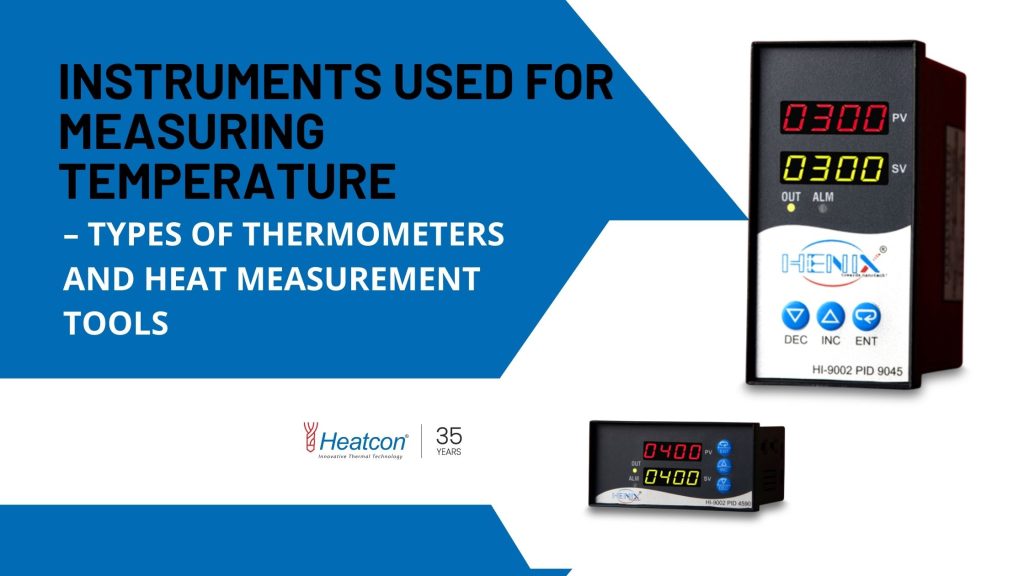
instruments used for measuring temperature

Instruments Used for Measuring Temperature – Types of Thermometers and Heat Measurement Tools

Temperature measurement is an essential part of various industries, scientific research, and everyday life. According to a study, nearly 85% of industrial processes require precise temperature monitoring to ensure efficiency and safety. The instruments used for measuring temperature vary in complexity, ranging from simple mercury thermometers to advanced infrared sensors. In this comprehensive guide, we will explore different types of thermometers, their applications, and why precise temperature measurement is crucial.

Understanding Temperature Measurement

Temperature measurement is fundamental in fields such as healthcare, food safety, metallurgy, and environmental monitoring. A heat measuring device is required to monitor temperatures accurately, ensuring that processes are conducted under optimal conditions. Whether it is a laboratory experiment or an industrial furnace, selecting the right heat measurement tool is crucial.

Types of Temperature Measuring Instruments

The room temperature measuring device is commonly used in homes and offices to maintain comfort levels, while industrial sensors measure extreme temperatures in manufacturing processes. Below are the primary thermometer types names and their respective applications:

1. Mercury Thermometers

One of the oldest and most reliable temperature measurement tools, mercury thermometers are used in medical, industrial, and meteorological applications. However, due to safety concerns, their use has been restricted in many regions.

2. Digital Thermometers

These thermometers provide quick and accurate readings using electronic sensors. They are commonly used as a temperature checker device in hospitals, homes, and food industries.

3. Infrared Thermometers

Infrared thermometers allow non-contact temperature measurement, making them ideal for industrial and medical applications. These are widely used in detecting fevers and in monitoring heat emissions from machinery.

4. Resistance Temperature Detectors (RTDs)

RTDs are among the most accurate temperature sensors used in industrial applications. Heatcon Sensors specializes in manufacturing customized RTDs to meet specific industrial requirements.

5. Thermocouples

Thermocouples are widely used in industrial settings due to their durability and ability to measure extreme temperatures. Heatcon Sensors supplies high-quality thermocouples across India and globally.

Applications of Temperature Measurement

Temperature measurement is crucial in various sectors, from healthcare to manufacturing. A room temperature machine is essential for climate control, while high-precision thermometers monitor temperature-sensitive industrial processes.

How to Measure the Temperature Accurately

Understanding how to measure the temperature correctly ensures accuracy and reliability. It involves selecting the right thermometer, calibrating it properly, and considering environmental factors.

Why Choose Heatcon Sensors?

Heatcon Sensors is a leading manufacturer of customized temperature sensors, including RTDs and thermocouples. With a vast supply network, we provide precision-engineered sensors to every part of India and across the globe. Whether in Mumbai, Chennai, Dubai, or New York, Heatcon Sensors ensures high-quality, reliable temperature measurement solutions.

Which instrument is used to measure temperature? The instrument used to measure temperature is called a thermometer. It includes devices such as digital thermometers, infrared thermometers, RTDs, and thermocouples, each designed for specific applications.

Temperature measurement is essential across industries, healthcare, and research. Selecting the right temperature measuring instrument ensures accuracy and efficiency.

Types of Temperature Measuring Instruments

Mercury Thermometers

Traditional thermometers that use mercury expansion to measure temperature.

Digital Thermometers

Provide fast and accurate readings using electronic sensors.

Infrared Thermometers

Allow non-contact temperature measurement for industrial and medical use.

RTDs (Resistance Temperature Detectors)

Highly accurate sensors used in industrial applications.

Thermocouples

Durable instruments capable of measuring extreme temperatures.

Applications of Temperature Measurement

  • Healthcare
  • Industrial manufacturing
  • Food processing
  • Aerospace & defense
  • Research laboratories

How to Measure Temperature Accurately

  • Use the correct instrument
  • Calibrate regularly
  • Avoid environmental interference
  • Follow proper techniques

Why Choose Heatcon Sensors?

Heatcon Sensors offers precision temperature measurement solutions with over 30 years of expertise, NABL-accredited calibration, and applications across critical industries.


Frequently Asked Questions (FAQ)

1: What are the different instruments used for measuring temperature?
The instruments used for measuring temperature include traditional mercury thermometers, digital thermometers, infrared thermometers, thermocouples, RTDs, and thermal cameras. Each of these has its specific applications depending on accuracy, range, and industrial requirements.
2: What is a heat measuring device?
A heat measuring device is a tool used to determine the temperature of an object, environment, or process. These devices can be contact-based or non-contact-based and are essential in industrial and scientific applications.
3: What is a heat measurement tool and how does it work?
A heat measurement tool is any device that assesses the heat levels in a given medium. It works based on the principles of thermal expansion, electrical resistance, or infrared radiation detection.
4: Which is the best room temperature measuring device?
A room temperature measuring device can range from simple digital thermometers to advanced smart sensors integrated into HVAC systems. Choosing the right one depends on precision, response time, and ease of use.
5: What is a temperature checker device used for?
A temperature checker device is commonly used in medical, industrial, and home environments to ensure temperature control. These devices provide quick readings and are essential for monitoring temperature-sensitive applications.
6: How does a room temperature machine function?
A room temperature machine is typically an air-conditioning or heating unit integrated with temperature sensors. It helps maintain a stable indoor climate by automatically adjusting temperature settings.
7: What are the common thermometer types names used today?
There are several thermometer types names, including mercury thermometers, alcohol thermometers, digital thermometers, infrared thermometers, RTDs, thermocouples, and bimetallic strip thermometers.
8: How to measure the temperature correctly?
Understanding how to measure the temperature correctly requires selecting the right instrument, proper calibration, and environmental considerations. For industrial applications, using an accurate and well-calibrated device such as an RTD or thermocouple is recommended.

Solutions Offered by Heatcon Sensors

Heatcon Sensors is a leading manufacturer of temperature measurement solutions, including customized RTDs, thermocouples, and infrared sensors. Our solutions cater to industrial, scientific, and commercial needs, ensuring precision and reliability.

Why Choose Heatcon Sensors?

  • Customized temperature sensors for any industrial application.
  • Reliable supply chain for deliveries across India and worldwide.
  • High-quality standards ensuring accurate and durable instruments.

Whether you require a precise heat measurement tool or a complex industrial RTD system, Heatcon Sensors has the expertise and resources to deliver high-quality solutions globally.

temperature measuring instruments

Temperature Measuring Instruments – Types and Tools for Accurate Heat Measurement

Accurate temperature measurement is crucial in various industries, from manufacturing and pharmaceuticals to food processing and meteorology. According to the International Energy Agency (IEA), nearly 50% of global industrial energy consumption depends on precise heat control, making temperature measuring instruments essential tools for ensuring efficiency and safety.

Understanding Temperature Measuring Instruments

The term temperature measuring instruments refers to a broad range of devices designed to assess and monitor temperature in various environments. These instruments play a vital role in maintaining process control, ensuring quality, and preventing equipment failure due to overheating.

Industries such as aerospace, automotive, metallurgy, and HVAC rely heavily on temperature measurement instruments for precise readings. Companies like Heatcon Sensors specialize in manufacturing customized sensors, including RTDs (Resistance Temperature Detectors) and thermocouples, tailored to meet specific industrial requirements.

Types of Temperature Measurement Instruments

There are multiple types of temperature instruments available, each with unique features suited for specific applications. Some of the most commonly used instruments include:

  • Thermocouples: Highly versatile sensors used in industries where rapid temperature fluctuations occur.
  • RTDs (Resistance Temperature Detectors): Preferred for their accuracy and stability over a wide temperature range.
  • Infrared Thermometers: Non-contact devices useful for measuring surface temperatures.
  • Thermistors: Temperature-sensitive resistors that provide high precision in narrow ranges.

Common Instruments Used for Measuring Temperature

Different industries use a variety of instruments used for measuring temperature based on their specific needs. For instance:

  • Manufacturing plants utilize RTDs and thermocouples for process control.
  • Medical facilities rely on digital and infrared thermometers for patient care.
  • Environmental scientists use data loggers to monitor climate changes.

Heatcon Sensors provides a wide range of temperature measuring instruments that cater to the unique demands of industries worldwide, ensuring reliability and accuracy.

Choosing the Right Heat Measuring Device

When selecting a heat measuring device, factors such as measurement range, accuracy, response time, and environmental conditions should be considered. Industries requiring real-time monitoring often opt for thermocouples, while laboratories prefer RTDs for their precision.

Essential Heat Measurement Tool for Various Applications

A heat measurement tool is vital in applications such as:

  • Metallurgy: Ensuring the correct heat treatment of metals.
  • HVAC Systems: Maintaining efficient heating and cooling systems.
  • Pharmaceuticals: Regulating temperatures for drug manufacturing.

Reliable Temperature Checking Device for Industrial Use

Industrial processes require a dependable temperature checking device to maintain efficiency and prevent overheating. Heatcon Sensors manufactures high-quality thermocouples and RTDs designed for extreme conditions, ensuring businesses receive accurate temperature data.

Exploring Thermometer Types Names

Understanding thermometer types names is essential for selecting the right instrument. Some of the common types include:

  • Digital Thermometers: Used in medical and industrial applications.
  • Infrared Thermometers: Ideal for non-contact measurements.
  • Bimetallic Strip Thermometers: Found in household appliances.
  • Gas Thermometers: Used in high-precision laboratories.

Heatcon Sensors – Custom Temperature Sensor Manufacturers

Heatcon Sensors specializes in designing and supplying temperature sensors worldwide, including India, the USA, Canada, Germany, Australia, and the UAE. Whether you need customized thermocouples, RTDs, or infrared sensors, Heatcon Sensors ensures top-tier quality and global shipping capabilities.

To Summarize

Accurate temperature measurement is indispensable across industries, ensuring safety, efficiency, and product quality. With advancements in sensor technology, businesses can now rely on high-precision temperature measuring instruments tailored to their needs. Heatcon Sensors leads the industry in providing customized solutions, ensuring accuracy and reliability in every application.

pyrometer working principle

Working Principle of Pyrometer: Complete Guide to Non-Contact Temperature Measurement

The working principle of pyrometer is based on detecting thermal radiation emitted by an object to measure its temperature without physical contact. This non-contact temperature measurement method is widely used in industries where surfaces are extremely hot, moving, or inaccessible.

Pyrometers play a critical role in industrial temperature measurement, ensuring safety, precision, and real-time monitoring in applications like furnaces, molten metals, glass manufacturing, and semiconductor industries.

What is a Pyrometer?

A pyrometer is a device used for temperature measurement without contact by sensing infrared or visible radiation emitted by an object.

  • No physical contact required
  • Measures extremely high temperatures (up to 3200°C)
  • Fast response for real-time monitoring
  • High accuracy in industrial environments

Working Principle of Pyrometer

The pyrometer working principle is based on Planck’s Law of Blackbody Radiation, which states that every object emits radiation depending on its temperature.

Step-by-Step Working:

  1. Radiation Emission: Every object emits infrared radiation based on its temperature.
  2. Detection by Sensor: The pyrometer uses infrared sensors or thermopile detectors to capture radiation.
  3. Signal Conversion: The radiation is converted into an electrical signal.
  4. Temperature Calculation: The signal is processed using emissivity correction.
  5. Display Output: The temperature is displayed digitally.

This process enables accurate infrared temperature measurement even in hazardous conditions.

Types of Pyrometers & Their Working

Infrared Pyrometer

An infrared pyrometer detects infrared radiation and is widely used for non-contact temperature measurement in HVAC, electrical systems, and manufacturing.

Optical Pyrometer

An optical pyrometer compares brightness with a calibrated light source and is used in high-temperature industries like steel and glass manufacturing.

Radiation Pyrometer

A radiation pyrometer measures total emitted radiation and is ideal for surfaces with varying emissivity.

What is Emissivity in Pyrometer?

Emissivity is the ability of a surface to emit thermal radiation and is a critical factor in accurate pyrometer temperature measurement.

  • Value ranges from 0 to 1
  • Incorrect emissivity leads to inaccurate readings
  • Essential for industrial temperature accuracy

Industrial Applications of Pyrometers

Pyrometers are widely used in various industries:

  • Metallurgy & steel plants
  • Glass manufacturing
  • Ceramics & kilns
  • Textile processing
  • Automotive testing
  • Semiconductor manufacturing

Advantages of Pyrometer

  • Non-contact temperature measurement
  • High-speed response (milliseconds)
  • Safe for extreme environments
  • Suitable for moving objects
  • High accuracy

Limitations of Pyrometers

  • Affected by emissivity variations
  • Dust and smoke can impact readings
  • Requires calibration for accuracy

Why Choose Heatcon Sensors?

Heatcon Sensors is a trusted manufacturer of industrial pyrometers in India, offering advanced solutions for high-temperature environments.

  • Infrared, optical & fiber optic pyrometers
  • Temperature range up to 3200°C
  • Fast response (60 ms – 240 ms)
  • Industrial-grade IP-rated sensors
  • RS485, 4–20 mA, and analog outputs

With over 30+ years of expertise, Heatcon Sensors serves industries like metallurgy, aerospace, and manufacturing.

FAQs

What is the working principle of a pyrometer?

A pyrometer works by detecting infrared radiation emitted by an object and converting it into temperature readings without physical contact.

Why is a pyrometer used?

It is used for measuring high temperatures where contact-based sensors are not practical or safe.

What is emissivity in pyrometer?

Emissivity is the ability of a surface to emit thermal radiation and directly affects temperature measurement accuracy.

What is the difference between a pyrometer and a thermometer?

A pyrometer measures temperature without contact, while a thermometer requires direct contact.

Conclusion

Understanding the working principle of a pyrometer helps industries improve safety, accuracy, and efficiency in high-temperature environments. With advanced infrared temperature measurement technology, pyrometers are essential tools for modern industrial processes.